
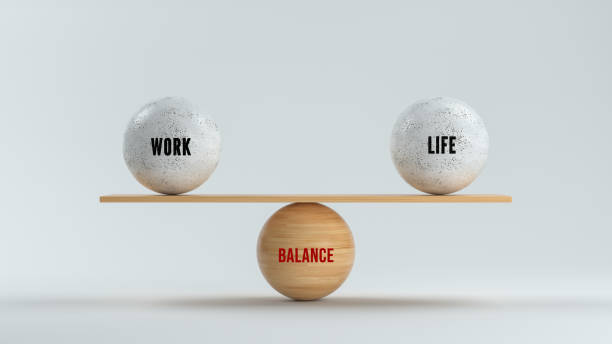
One of the lessons I have learned about demanding careers is that work can consume as much of your life as you allow it to consume. There is always another phone call to return, another email to answer, another meeting to attend, another client who needs something, and another project that feels urgent. If we are not careful, productivity can become the measurement we use for our entire life, and eventually everything outside of work begins receiving whatever time and energy happen to be left over.
I prefer to think about work-life integration rather than perfect work-life balance. Balance can suggest that every area of life should receive equal time every day, and I do not believe that is realistic. There will be seasons when the business requires more attention. There will also be times when family, health, faith, rest, or personal responsibilities need to take priority. The objective is not perfect equality. The objective is to make sure one area of life does not continuously consume everything else.
That begins with prioritization. Being busy and being productive are not the same thing. I can spend an entire day answering messages, attending meetings, and reacting to other people’s priorities without accomplishing the few things that actually move my life or business forward. That is why I believe we have to decide what is important before the day begins deciding for us.
I encourage people in high-pressure careers to identify the responsibilities that truly require their attention and separate them from activities that can be delegated, scheduled differently, automated, or eliminated. Everything that appears on our calendar is not equally valuable. Some activities produce revenue. Some strengthen important relationships. Some require our personal judgment. Others exist because we have simply developed the habit of doing them.
Time management is therefore not just about finding more hours. It is about deciding what deserves the hours we already have.
I also believe in protecting blocks of focused time. Constant interruptions make it difficult to do meaningful work. If every notification, phone call, email, and message receives an immediate response, we may appear available while becoming increasingly ineffective. There should be periods during the day when important work receives our full attention, followed by designated times for communication and follow-up.
The same discipline applies outside of work. Family time should not always become the place where unfinished business is completed. It is difficult to be fully present with the people we care about when we are physically in the room but mentally answering emails, thinking about tomorrow’s meeting, or checking the phone every few minutes.
That is where boundaries become important.
A boundary is not a declaration that work no longer matters. It is a decision that work has a place. There may be legitimate emergencies that require immediate attention, especially when we carry significant professional responsibilities. But if everything is treated as an emergency, then we have not created a boundary; we have created permanent availability.
Technology has made this more difficult because work can now follow us everywhere. The office can be in our pocket, on the kitchen table, beside the bed, or with us while we are supposedly taking time away. We have to make conscious decisions about when we will respond, when we will disconnect, and which situations actually require immediate access to us.
I also think we have to become comfortable saying no. Many people become overwhelmed not because they lack discipline but because they have accepted more responsibilities than any reasonable schedule can support. Every yes has a cost. Saying yes to another committee, project, client, meeting, or obligation means that time will come from somewhere else.
That does not mean becoming selfish or unavailable. It means understanding capacity. A person who continuously overcommits eventually begins disappointing people because there is simply not enough time or energy to fulfill every commitment well.
Another important part of work-life integration is recognizing that rest is not wasted time. People working in competitive careers sometimes treat exhaustion as evidence of commitment. I do not. There is nothing impressive about repeatedly pushing yourself to the point where your judgment, health, patience, creativity, and relationships begin deteriorating.
Rest supports performance. Exercise supports performance. Time with family supports perspective. Reflection supports decision-making. Faith, community, friendships, and interests outside of work remind us that our professional title is only one part of who we are.
The goal is not to become less ambitious. I believe ambition and discipline can coexist with a meaningful personal life. But success has to be defined broadly enough that achieving one objective does not require destroying everything else that matters.
Ultimately, work-life integration requires intentional choices. We have to decide what deserves our attention, establish boundaries around what does not, manage our calendars according to priorities, and recognize when our current pace is no longer sustainable.
A high-pressure career can create tremendous opportunities, but it should not require us to surrender our entire lives to maintain it. I want to work hard, pursue excellence, meet my responsibilities, and accomplish meaningful things. But I also want to remain present for the people, relationships, values, and experiences that give those accomplishments meaning.
The real objective is not separating work from life completely, but building a life in which meaningful work has an important place without taking every place.
Thank you for taking the time to read and reflect. I write to help people think clearly about money, business, real estate, and life — not from theory, but from decades of lived experience.
If you are navigating a financial decision, building a business, considering homeownership, or simply trying to make better use of your time and resources, I invite you to engage further.
Subscribe to The Power Is Now TV to connect with me live every weekday, Monday through Friday, from 10:00 AM to 11:00 AM PST, as we record television shows across the Power Is Now TV Network. As a subscriber, you can participate in live tapings, engage in real-time discussions, and connect directly with industry leaders.
Visit ThePowerIsNow.com to access real estate magazines, books, podcasts, television shows, and exclusive media content focused on homeownership, business, and wealth-building.
For personalized support, consulting, and advisory services in real estate, mortgages, business, and personal finance, visit EricFrazier.com to schedule a consultation and learn more about my work as your trusted advisor in business and wealth.
Eric Lawrence Frazier, MBA
Your trusted advisor in business and wealth
www.ericfrazier.com | www.thepowerisnow.com
NMLS #461807 | CA DRE #01143484
Schedule a consultation: https://calendly.com/ericfrazier/real-estate-mortgage-consultation-clients