
Proposition 37: The Real Buyer Pool
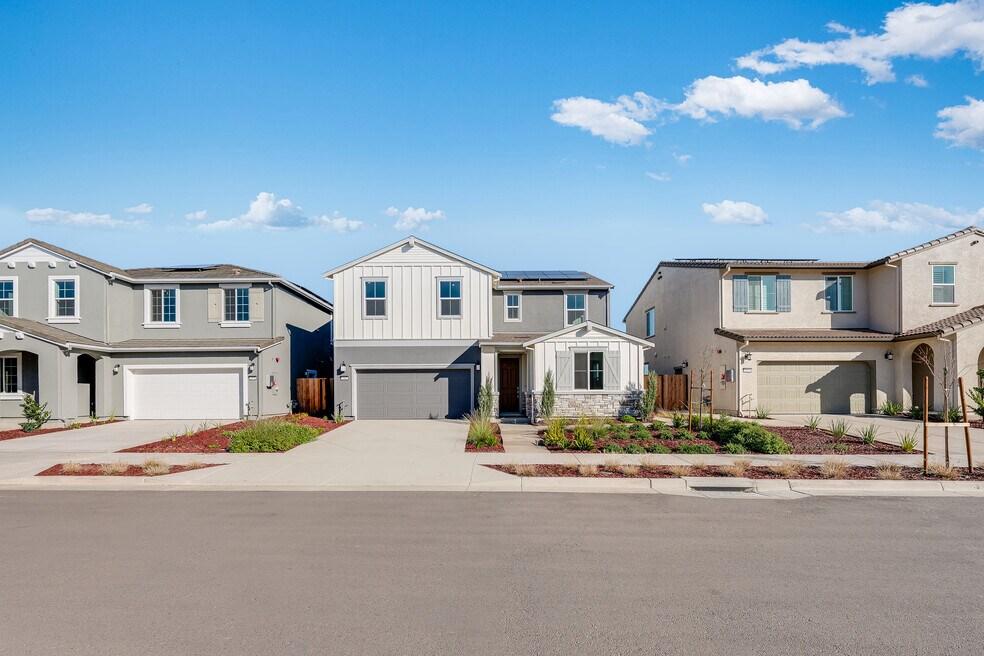
Proposition 37 presents an appealing promise: make homeownership possible for Californians who have been priced out of the market. But a smaller down payment cannot, by itself, make a home affordable. The cost of buying is only the first financial test. The more consequential question is whether the household can sustain ownership long after the closing. The desire to own a home is not proof of the ability to purchase one. Neither is an income that falls below a government program’s ceiling. Credit, available cash, existing debts, the property price and the complete monthly payment determine whether a purchase can be completed. A household must then be able to carry that obligation without sacrificing its financial stability. Parts Two, Three and Four addressed the income limits, proposed second mortgage and prices of newly constructed homes in ten California counties. Those findings lead to the central question of this chapter: how many households can buy and keep a home through Proposition 37, and how many additional homeowners will California actually gain? Ninety-One Percent Eligible. How Many Can Buy? The Public Policy Institute of California recently published an analysis by Eric McGhee that gets to the heart of this question. Using 2024 household data, PPIC estimated that 91 percent of California renters would satisfy Proposition 37’s income test.¹ That is an enormous potential audience. But here is the second finding. Under PPIC’s mortgage-payment assumptions, 56 percent of California renters could not afford a home priced at an entry-level benchmark. Its accompanying technical note defines that benchmark as the lowest tenth of home values reported by owners in the 2020–2024 American Community Survey—not the observed selling prices of newly constructed homes. The researchers used a 36 percent income-based payment screen and modeled mortgages at approximately 7 percent. Their test is an analytical affordability screen, rather than a determination of whether any particular borrower would receive loan approval. Consider the contrast: 91 percent pass the income test, while a majority face a serious payment barrier even at the lower end of local new-home prices. Eligibility is not affordability. A program can reach an enormous population on paper while leaving the price of the available homes beyond the means of many qualifying families. The statewide finding is consequential without dividing renters into education or demographic categories: income eligibility reaches a far larger group than the number able to afford the monthly cost of an entry-level newly built home. PPIC combined 2020–2024 Census household microdata with 2024 HUD income limits and FHFA loan limits. It tested an illustrative 7 percent, 30-year mortgage, 20 percent down payment and maximum housing payment of 36 percent of monthly income. The second mortgage was counted as debt. These assumptions reveal an affordability barrier, but they are not the final financing terms of Proposition 37 and do not establish how many applicants will receive approval.¹ The Requirements That Shrink the Pool Qualifying for a mortgage requires more than meeting a program’s income limit. Before a household receives a loan, several conditions must be satisfied. Proposition 37 would generally require at least one year of California residency, a qualifying income below 200 percent of applicable area median income, occupancy as a primary residence and a buyer contribution of at least 3 percent. The property must be a qualifying newly constructed home, or an eligible conversion being sold for the first time, within a county-based price limit.² That gets someone through the program’s broad entrance gate. The household still needs an acceptable first mortgage, sufficient credit and documented income, manageable existing debt, cash for its contribution and other transaction expenses, and the ability to carry the second mortgage under the terms CalHFA ultimately offers. For a $700,000 purchase, the 80 percent first mortgage is $560,000, the 17 percent second is $119,000, and the buyer must contribute $21,000—3 percent of the price. That contribution goes toward the purchase, not the closing expenses. The Consumer Financial Protection Bureau estimates closing costs of another 2 to 5 percent, or $14,000 to $35,000 here. At an illustrative 3 percent, total cash required is $42,000 before credits. Seller, builder and agent contributions may cover permitted closing expenses, within loan-program limits; lender credits may also help, sometimes at the price of a higher interest rate. None substitutes for the required buyer contribution.⁷ ⁹ Eligible families must also be able to find a suitable new home near their work, children’s schools and family support. A household that qualifies financially for a home two hours from its job still has a practical decision to make. Inventory, commuting costs and location belong in the buyer-pool analysis. Payment Shock: The Increase a Family Must Carry Consider a household paying $3,000 in rent and facing $5,000 in total ownership expenses. That is $2,000 more each month, or $24,000 annually. The new payment is 166.7 percent of rent, meaning a 66.7 percent increase—not 166.7 percent more. That increase will vary from one county, home and household to another. Payment shock includes both mortgages, taxes, insurance, assessments and realistic maintenance costs; the increase depends on the household and the property. In Part Four, the Riverside County numbers showed how a 3 percent contribution can coexist with a burdensome monthly obligation. Payment shock asks what changes from the household’s current circumstances, not merely whether a lender’s debt-to-income calculation passes. Different underwriting programs consider housing-payment history in different ways; there is no single universal cutoff. A mortgage can qualify on paper even when the household budget cannot withstand the higher payment. Gross Income Is Not Spendable Income A debt-to-income calculation based on gross income does not reveal the whole household budget. Payroll taxes, health insurance, retirement deductions, childcare, transportation, food and utilities all affect what remains. Suppose a family takes home $8,000 a month, pays $3,000 in rent and spends $4,000 on other necessities. It has $1,000 left. Raise housing to $5,000 without changing anything else and that cushion becomes a $1,000 monthly deficit. No favorable qualifying ratio changes that arithmetic. That is the difference between mortgage
Proposition 37: The Ten-County Affordability Test
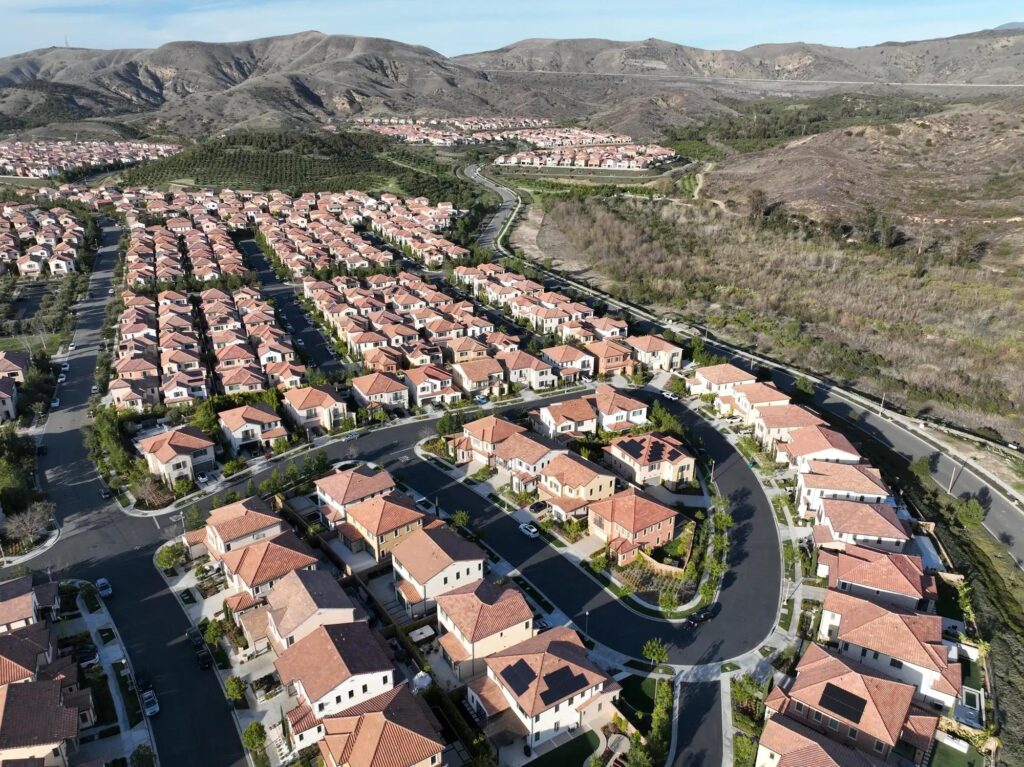
Now we come to the numbers. In Part Two, I explained how 200 percent of area median income determines the upper boundary for eligibility. In Part Three, we examined the second mortgage, its possible interest rates and the pressure monthly payments can put on a household’s cash flow. The next step is to take those calculations into the real housing market. I promised to examine ten of California’s largest counties, and that is what we are going to do. I want readers to see actual homes and communities being advertised by builders, rather than one statewide average that conceals the differences between Fresno, Riverside, Los Angeles and Santa Clara County. One thing becomes clear before we even calculate the payments. Home prices vary dramatically across California, and so do household incomes. A financing program that looks reasonable in one county can look entirely different in another. That is why the same promise of 17 percent assistance deserves a county-by-county examination. Where the Home Prices Come From We identified one advertised newly constructed home or community starting price in each of the ten counties, using the builders’ own websites. Some prices refer to a floor plan with possible lot premiums or additional solar costs; others refer to a specific advertised inventory home. They are examples of what buyers were being offered when the information was collected on October 21, 2026. I want to make good use of these numbers. They give us actual price points for the financing discussion. A countywide median would require a broader study of builders, active inventory and completed transactions. That separate research is already identified. Here we can take a specific advertised price, apply the same financing assumptions in each county and see what happens to the household payment. We also have to remember that a builder may advertise one amount while the purchaser ultimately pays more for a particular lot, options, required solar equipment, assessments or homeowners association costs. That distinction matters especially in California, where new communities can carry significant recurring assessments and fees. How We Calculated the Payments The model begins with the structure we examined in Part Three. The family contributes 3 percent of the purchase price. The first mortgage finances 80 percent at an illustrative 7.40 percent fixed rate over 30 years. The second mortgage finances the remaining 17 percent and is paid over 15 years. For our principal comparison, the second carries the same 7.40 percent rate as the first. Golden State Finance Authority has historically used that equal-rate, 15-year amortizing second-mortgage structure in assistance programs, although its actual assistance loans are substantially smaller. We also calculate a second mortgage at 9.40 percent as a higher-rate stress test. That two-percentage-point increase is our assumption for understanding sensitivity, rather than a published Proposition 37 rate.¹² To the combined principal and interest, we add annual property taxes at an assumed 1.20 percent of the advertised price and hazard insurance at an assumed 0.35 percent. For a straightforward comparison, we use 31 percent of gross household income as our housing-expense screen. That is a financial planning benchmark used in this analysis. Mortgage approval depends on the lender’s actual qualifying ratios, other debts, assets and the program’s eventual rules. We compare the income required under that screen with twice each county’s 2026 four-person AMI benchmark from California’s Department of Housing and Community Development.¹¹ The county examples are measured on the same terms. HOA dues, Mello-Roos and other special assessments, maintenance, utilities, other debts and closing costs would add to the family’s real financial obligations. What the Ten Counties Show In each county, the figures below give the builder’s advertised price, the modeled monthly housing expense with the 7.40 percent second mortgage, the annual household income required for our 31 percent housing screen, and the illustrative 200 percent AMI ceiling. The higher-rate 9.40 percent second mortgage is shown as the final monthly figure. What stands out to me is the variation. Under these selected prices and financing assumptions, the income needed under our 31 percent screen exceeds the illustrated program ceiling in Los Angeles, Orange, Riverside and Alameda counties. In the higher-rate second-mortgage scenario, Santa Clara joins them. These are findings about ten selected price examples, each with different locations and home types. They tell us where affordability questions become pressing and why actual second-mortgage terms will matter. Let’s Look More Closely at Riverside Riverside is a useful example because it brings the issue into focus. Taylor Morrison advertised a new Plan 1 home for $684,990. The four-person AMI benchmark is $106,500, so this home is priced at approximately 6.43 times that family’s annual median income. Here is the financing. Three percent buyer cash would be $20,549.70, before closing costs. The first mortgage, at 80 percent, would be $547,992. The second mortgage, at 17 percent, would be $116,448.30. Using 7.40 percent for the first mortgage over 30 years, principal and interest come to approximately $3,794 monthly. A 15-year second at the same rate adds another $1,073. Our modeled property tax is about $685 monthly, and insurance adds about $200. Together, that is approximately $5,752 a month for housing before the expenses we have excluded. A family earning Riverside’s four-person AMI receives $8,875 in gross income monthly. The modeled housing payment consumes about 64.8 percent of gross income. If take-home pay is hypothetically 75 percent of gross, that family has about $6,656 deposited each month. Housing would take approximately 86.4 percent of that money. Think about everything the family still needs to pay for. Now move the income up to twice the AMI, or $213,000 per year. That same $5,752 monthly housing expense represents about 32.4 percent of gross income. Under our 31 percent housing screen, the family would need approximately $222,652 annually. That is about $9,652 above the illustrative $213,000 income ceiling. A lender might approve a family with a housing ratio above 31 percent, depending on actual debt, income and underwriting rules. That is why the calculation is a financial-pressure
Proposition 37: The Second Mortgage Is Still a Mortgage

The Question I Am Asking In Part Two, I examined who could qualify for Proposition 37 and whether qualifying income translates into the ability to purchase a home. Now I want to examine the debt itself. California is considering authorizing up to $25 billion in revenue bonds to finance second mortgages for eligible buyers of qualifying new homes. The program is intended to make financing more affordable and encourage construction.¹ Those are worthwhile objectives, but I want to know what they mean at the kitchen table after the buyer receives the keys. Here is my working hypothesis: Making more money available to purchase an expensive home does not necessarily make that home more affordable. A loan can help a family get through the front door while adding debt that must be paid during the years that follow. If California’s objective is to expand homeownership, I want to know whether this financing creates additional homeowners who would otherwise remain outside the market—and whether they can afford to stay. My concern comes from years in mortgage banking and real estate. I have seen people qualify for loans that left very little room in their monthly budgets. I have also seen assistance make the difference for a family with dependable income and insufficient savings. Both experiences matter. This installment puts those competing possibilities into numbers. A Home Price Is Not a Down Payment Consider a newly constructed home priced at $700,000. For this illustration, the buyer contributes 3%, or $21,000. The first mortgage covers 80%, or $560,000. A second mortgage covers 17%, or $119,000. Together, those amounts pay the entire $700,000 purchase price. The buyer has reduced the immediate down-payment obstacle, but also begins ownership owing $679,000 across two mortgages. Proposition 37 would authorize the California Housing Finance Agency to issue up to $25 billion in revenue bonds. Borrowers’ mortgage payments, rather than direct state appropriations, would support repayment. CalHFA would determine the actual rates, amortization schedules and other loan terms. The authorized amount is a ceiling, not a guarantee that $25 billion in bonds will be sold or that a fixed number of homes will be financed.¹ There is nothing imaginary about the second mortgage. The Golden State Finance Authority’s Platinum Standard program already uses a 15-year, fully amortizing assistance second mortgage with an interest rate matching its first mortgage and monthly payments. Its assistance is generally much smaller—up to 5% of the first mortgage—not 17% of the purchase price.³ The example is useful for understanding payments, but it is not a prediction of Proposition 37’s eventual terms. What Happens to the Closing Costs? Now comes an obstacle the down-payment illustration does not solve. A buyer needs money not only for the purchase price but also for lender charges, title and escrow, prepaid taxes, insurance and other settlement expenses. California’s Department of Real Estate describes closing costs of roughly 3%–7% of the purchase price.² On a $700,000 home, that is a planning range of $21,000–$49,000, although actual charges and credits will differ. At a 4% illustration, closing costs total $28,000. Add the buyer’s $21,000 contribution and the potential cash requirement reaches $49,000 before permitted credits or financing adjustments. The family’s down payment may be only 3%, yet its total cash need is much greater. That is the distinction I want readers to see. I went back to the actual text of Proposition 37. Section 51515.05(b) requires CalHFA to adopt closing-cost rules and permits it to authorize use of the second mortgage toward closing costs when the agency determines that the interests of borrowers and bond investors are balanced.¹ That is significant flexibility, but every dollar still has to be accounted for. If $28,000 of the $119,000 second mortgage goes toward closing costs, only $91,000 remains available for the home price. The transaction must replace the missing $28,000 of purchase funding through an allowable source. Perhaps the builder gives a credit. Perhaps the lender offers a credit in exchange for a higher interest rate. Perhaps another assistance organization provides a third mortgage, whether payable monthly or deferred until sale or refinancing. Each choice changes the family’s finances. Borrowing enough to close may solve the cash shortage while increasing the obligations the household carries into ownership. How Assistance Can Change the First Mortgage California already provides an illustration of that trade-off. CalHFA’s Zero Interest Program, or ZIP, offers a deferred closing-cost loan at 0% stated interest. Its own borrower acknowledgment also says choosing ZIP results in a higher interest rate on the first mortgage.⁴ An apparently free subordinate loan can therefore be accompanied by greater financing expense elsewhere in the transaction. On CalHFA’s October 22, 2026, posted rate sheet, a standard CalHFA Conventional loan without its down-payment assistance was listed at 7.125%, while CalPLUS Conventional with 2% ZIP was listed at 7.875%, and with 3% ZIP at 8.250%, before considering the distinct terms and fees of those programs.¹² The exact packages are not interchangeable. My point is that the consumer needs to see the complete payment structure, not only the advertised rate on one piece of it. The Monthly Cost of Owning the Home Consider the monthly cost of the $700,000 purchase. Assume a $560,000 first mortgage at 7.40% for 30 years. Principal and interest are approximately $3,877 monthly. Assume a $119,000 second mortgage at the same 7.40% rate for 15 years. That adds approximately $1,096. Combined mortgage principal and interest are about $4,974. These are illustrative rates, not terms announced for Proposition 37. Then come the other obligations. Assume 1.20% of the price for annual property taxes, or $700 a month. That is an illustrative assumption, close to Riverside County’s historical average, but rates and special assessments vary by parcel and county.⁵ Assume 0.35% of the price for annual homeowners insurance, approximately $204 monthly, and $400 for HOA dues. The resulting estimated monthly housing obligation is about $6,278, before maintenance, utilities, Mello-Roos or other special assessments, solar financing and existing consumer debt. The insurance estimate deserves special attention.
Proposition 37: Who Can Actually Afford the Home?
As voting day approaches, every single morning I wake up thinking about Proposition 37 and working on this series. November 3 is getting closer, and I am increasingly aware that Californians need time to read, understand and think about what they are being asked to approve. Each day, another question comes to mind, and I find myself going back to the research, trying to make sense of the numbers and what they mean for the people who want to own a home. Then I settle into my normal morning routine: a cup of coffee and Good Morning America, observing the antics of Mike, Robin and George, catching the weather and the news. This morning, a headline about the housing market caught my attention. Pending home sales had fallen 7.3 percent in September, reaching the lowest reading since the National Association of Realtors began tracking the index in 2001.¹ Mortgage interest rates were hovering around 7.4 percent.² I have spent much of my professional life in mortgage banking, real estate and finance, so I understood the significance of those numbers. But my thoughts immediately turned to the families who are trying to make ends meet and still hold on to the hope of owning a home. What a year this has been. Interest rates are rising. The cost of living continues to weigh on families. Political division, war with Iran and other conflicts around the world, tariff disputes with trading partners, particularly Canada, and the price of gasoline, groceries and everyday necessities have made this an exhausting year. We are raising children, caring for parents, paying bills and trying to plan for the future. Meanwhile, another election is upon us, and we have to decide which leaders and which proposals deserve our confidence. I found myself asking a question that troubles me: How much more can we take? I suspect a great many of us will be voting angry this year. I know I am. I am angry about the distance between what we are promised and what we actually experience. Every major announcement raises another question for me. What is the real objective? Who benefits? How will we measure success? I want our elected leaders to succeed, because when they solve real problems, our lives get better. I also want to know that the proposals placed before us have been subjected to serious financial analysis. That brings me to Proposition 37. We are being asked to authorize as much as $25 billion in revenue bonds to support the purchase of newly constructed homes.³ The number is enormous. The promise is attractive. California needs more homeowners. The question that has stayed with me since Part One is whether this financing structure actually puts more families into homes they can afford, and whether the increase is meaningful enough to justify the program. Here is what frightens me. Most of us have jobs to do, families to care for and bills to pay. We have limited time to read the voter guide, study the law and work through the financial details of every proposition. We see a headline promising $25 billion to help people buy homes, and it can sound as though the state is giving people money. But the assistance proposed here is another mortgage. The buyer would borrow that money and owe it back. The payments are supposed to help repay the bond investors. That financing could help a family with sufficient income and limited cash to close. I can see the value in that. My fear is that a measure like this could pass largely because the headline sounds generous, while many of us never get the chance to examine the debt and the actual payments. That is why I keep going back to the numbers. I want us to understand what we are being asked to authorize and whether it will make a meaningful difference in homeownership. From Part One to the Numbers In Part One, “Before California Votes, Show Us What We Are Being Asked to Approve,” I explained Proposition 37’s proposed $25 billion revenue-bond financing program and laid out the questions we will examine throughout this series. That first article establishes the questions driving this series. The central question now is how many California families can actually afford the homes this financing is intended to help them purchase. We will look at the second mortgage in Part Three and the advertised prices of new homes in ten counties in Part Four. First, let’s examine the income requirement. What Does 200 Percent of Area Median Income Mean? Proposition 37 sets an income ceiling based on twice the applicable area median income. People hear “200 percent” and sometimes assume it means almost everyone qualifies. The arithmetic is simple, but its consequences deserve attention. Area median income, or AMI, is a housing-program benchmark tied to an area and family size. In statistics, a median is the midpoint of a distribution. The published housing-program benchmark can also reflect adjustments required by state and federal rules. It differs from a simple average, which adds incomes together and divides by the number of households or people being measured. It also differs from the salary earned by just one member of a household. CalHFA’s eventual program rules will determine the income schedule and family-size adjustments that apply. Let’s use Riverside County. I’ve lived here for close to 30 years, so I know the area. According to California’s Department of Housing and Community Development, the 2026 AMI benchmark for a four-person family is $106,500.⁴ Multiply that figure by two: $106,500 × 200% = $213,000. A four-person household earning $100,000 falls below that illustrated limit. A four-person household earning $225,000 falls above it. That is what the 200 percent provision does: it establishes an upper boundary for income eligibility. CalHFA’s eventual implementation will determine the precise applicable limit for each applicant. Now look at the question I am asking. How many families earning less than $213,000 can actually afford a newly constructed home in Riverside
Proposition 37: Before California Votes, Show Us What We Are Being Asked to Approve

Part One of Seven: Housing, Homeownership, and the Responsibility to Understand Before We Vote The general election is coming much faster than I anticipated. November 3 is almost here, and thank God I vote by mail because I need the ballot sitting in front of me, the Official Voter Information Guide beside it, and a computer nearby. I need time to stop, read something again, look something up, question what I just read, and occasionally discover that what I thought I understood the first time was not quite right. That happened almost immediately. I was moving through the propositions, saw Proposition 45, and for a moment thought, forty-five propositions? I had simply lost count. There are fourteen statewide propositions on California’s November 3, 2026 ballot, not forty-five. Five were placed on the ballot by the Legislature and nine qualified through the initiative process. California’s numbering system added to my confusion because proposition numbers are not restarted at one for every election. I am glad I checked, but the experience bothered me for a larger reason. Fourteen statewide propositions are still a great deal to ask voters to understand when they are also being asked to evaluate candidates, judges, local measures and everything else appearing on their ballot. California is an expensive place to live. Many households are surviving on two incomes because one is simply not enough. People are working, commuting, raising children, caring for parents, operating businesses and trying to keep their financial lives together. Somewhere inside of all of that, democracy asks them to become amateur lawyers, economists, budget analysts and policy researchers long enough to understand what government is asking them to approve. Where do people find the time—not merely to read the voter guide, but to understand it? Reading what a proposition says it will do is not the same thing as determining whether it can do it. Understanding requires us to ask whether the assumptions are reasonable, who benefits, who pays, what happens if the assumptions are wrong, what happened when similar ideas were tried before, and whether the proposed solution actually addresses the problem its proponents say they are trying to solve. Increasingly, politics has become a collection of soundbites. We hear a phrase, a promise, an accusation or a slogan and are expected to make a decision from it. Even an official voter guide, as necessary and valuable as it is, cannot perform every piece of economic and policy analysis a serious voter may reasonably want before giving government permission to act. I will admit that there were periods in my life when I did not do this level of work. I had far less time than I have today. I was working, raising a family, building businesses, serving on boards, dealing with clients, making payroll, paying bills and living the same kind of busy life millions of Californians are living now. There were propositions I did not fully understand, and when I could not determine what government was asking me to authorize—particularly when taxes, borrowing or bonds were involved—my instinct was caution. Sometimes I voted no because I did not understand enough to vote yes. That may not be the ideal way to make public-policy decisions, but it says something important about democracy. Voting is a right, but an informed vote requires time, attention and knowledge that we cannot assume every citizen possesses. If government or the proponents of a measure want the consent of the people, then I believe they have an obligation to make their case clearly enough that an ordinary voter can determine what he or she is actually consenting to. The privilege of voting is one of the things I cherish about being an American citizen. We are celebrating 250 years of this extraordinary and imperfect experiment in self-government. The ballot is not ceremonial. It is not a public-opinion survey. It is an instrument through which citizens exercise authority, and authority should not be exercised casually. That is why, as I work through these propositions, I am going to write about them. I am not approaching them as a party operative. I want to read what the State says, examine the underlying law, test the economics, distinguish promises from evidence, and explain what I find in language that ordinary people can understand. Agreement is not the price of admission. The objective is to give the reader enough information to think independently. Because I have spent much of my professional life in mortgage banking, real estate, finance and housing, Proposition 37 was the obvious place to begin. A Housing Proposal That Sounds Reasonable Until the Numbers Begin My first reaction to Proposition 37 was favorable because California unquestionably needs more housing and more pathways to sustainable homeownership. We need a market in which teachers, nurses, firefighters, government employees, tradespeople, professionals and working families are not required to become extraordinarily wealthy merely to purchase a home reasonably close to where they live and work. I also know from experience that getting someone into a house is not the same thing as creating sustainable homeownership. I have watched borrowers qualify for payments that later became burdens. I have lived through housing booms, mortgage crises, foreclosure waves, refinancing booms and periods when entire financing models disappeared. Whenever someone tells me a financial product will make housing affordable, I have learned not to begin with the assistance. I begin with the price of the house, then the income of the household, then the cost of the debt. Proposition 37 would authorize the California Housing Finance Agency, CalHFA, to issue up to $25 billion in revenue bonds. The proceeds could finance secondary mortgages covering up to 17 percent of the price of a qualifying newly constructed home. The buyer would contribute at least 3 percent, while a first mortgage would finance the remainder. Borrowers would have to satisfy residency and owner-occupancy requirements and generally could not earn more than 200 percent of the area median income, adjusted for household size. The bonds are