
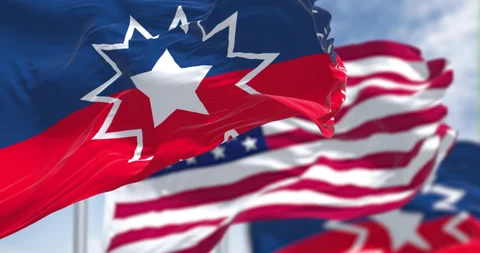
A federal holiday that isn’t fully honored nationwide, and the uncomfortable geography of who gets the day of
When President Biden signed the Juneteenth National Independence Day Act into law on June 17, 2021, the narrative that followed was largely one of triumph. A long-overdue federal recognition. A bipartisan moment, the bill passed the Senate unanimously and the House 415-14. A country finally acknowledging, in law, the significance of June 19, 1865. What got far less attention in that celebratory moment was a quieter, more complicated reality: the federal government declaring something a holiday does not mean the country actually observes it. And four years on, the gap between what Juneteenth is on paper and what it is in practice for millions of Americans remains wide, revealing and largely undiscussed.
The federal holiday designation covers federal employees. For everyone else, it depends entirely on where you live, and in a substantial portion of the United States, the answer is that Juneteenth is not a day off, not a state holiday, and not a protected observance in any meaningful legal sense.
What “Federal Holiday” Actually Means
This is the foundational confusion most Americans carry about Juneteenth and about federal holidays in general. A federal holiday designation applies specifically to federal government offices and employees. While Juneteenth became a U.S. federal holiday in 2021, private businesses are not automatically required to give employees the day off. Whether a company observes Juneteenth as a paid holiday depends on federal and state regulations and company policies.
In other words, the same bill that made national headlines as a historic moment of recognition created a binding obligation for approximately 2 million federal workers and a voluntary suggestion for the other 155 million employed Americans. The holiday exists at the federal level. Whether it reaches the people who need to observe it most depends entirely on the decisions of fifty separate state governments and millions of individual employers.
Only 28 states have recognized Juneteenth as a permanent state holiday, with the remaining states doing so in less formal ways or on a year-to-year basis. The federal holiday designation doesn’t automatically make it a state holiday. That means in roughly 22 states, depending on how you count incomplete recognitions and governor’s proclamations, a significant portion of state employees, teachers, DMV workers, state university staff, public health workers, were expected to clock in on June 19th as if it were an ordinary Thursday.
The States That Said No, and the States That Said Nothing
States with no official provision for Juneteenth include Alaska, Arizona, Arkansas, Florida, Hawaii, Indiana, Iowa, Kansas, Kentucky, Mississippi, Montana, New Hampshire, North Carolina, North Dakota, Oklahoma, South Carolina, Wisconsin and Wyoming. This is not a trivial list. It includes some of the most populous states in the South, the geographic region most directly implicated in the history Juneteenth commemorates.
Florida’s approach is particularly illustrative. Governor Ron DeSantis issued a proclamation recognizing Juneteenth in 2020 but has not done so since. Florida does recognize the day slavery ended in the state, but marks it as “Emancipation Day,” celebrated in May, rather than as Juneteenth, and it is not a paid holiday. The state has effectively created its own parallel commemoration, one that coincidentally avoids using the word “Juneteenth” and grants no one a day off.
The Alabama story is particularly layered. For years, Black Democratic legislators in Alabama fought to make Juneteenth a state holiday and were repeatedly blocked. When the state House finally passed a bill in 2025, it came after years of proposals that were either rejected or, in one particularly striking year, required to be paired with Jefferson Davis’ Birthday, forcing Black lawmakers to decide whether to support a bill that treated the emancipation of their ancestors and the birthday of the slaveholder who fought to keep them enslaved as equivalent holidays deserving equal status. Several Black Democrats said publicly they struggled with whether to support the legislation under those conditions.
The Confederate Holiday Comparison
Perhaps no detail in the geography of Juneteenth recognition makes the political stakes clearer than the Confederate holiday comparison. Mississippi and Alabama each celebrate three Confederate holidays as paid days off for state employees, including Robert E. Lee Day, Confederate Memorial Day and Jefferson Davis’ Birthday.
Let that sit for a moment. In states where state legislators have repeatedly blocked or delayed making Juneteenth a paid holiday, citing costs, lack of public interest, or the administrative burden of another day off, those same states already give their employees paid days off to commemorate the man who was president of the Confederacy, the general who led Confederate armies, and the fallen soldiers of a war fought to preserve slavery.
That trend infuriates Black leaders and community organizers who view making Juneteenth a paid holiday as the bare minimum state officials can do to help honor an often overlooked and ignored piece of American history. The argument that states cannot afford another holiday rings particularly hollow when the states making that argument are already funding three paid days of Confederate commemoration annually.
Several states, including Arkansas, Georgia, Kentucky, North Carolina, South Carolina, Tennessee and Texas, commemorate Confederate holidays throughout the year. These are not obscure holdovers from another era that nobody actually takes. They are scheduled, paid, institutionally supported days off on the state government calendar. Juneteenth, in many of the same states, is not.
The Private Sector Gap
The picture becomes even more uneven when you move from state employees to private sector workers, the majority of the American workforce. The share of large employers offering Juneteenth as a paid holiday rose from 9% in 2021 to about 33% in 2022, then 39% in 2023, and 41% in 2024, before flattening and, in 2025, beginning to pull back as DEI rollbacks took effect.
Even at the peak, that meant more than half of private sector workers had no paid Juneteenth holiday. And the workers least likely to receive the day off, those in lower-wage service jobs, retail, manufacturing, and agriculture, are often the same workers with the strongest historical and familial connection to what the holiday commemorates. The people for whom Juneteenth is most personally meaningful are frequently the people least likely to be able to observe it.
Some states have given certain government workers the day off but haven’t declared Juneteenth a holiday at the state level. California state employees can choose to take Juneteenth off in lieu of a personal holiday. This kind of arrangement, where the day is available but not guaranteed, where honoring it comes at the personal cost of losing a different personal day, is itself a kind of symbolic statement about the holiday’s status. You can have Juneteenth, but you have to give something else up to get it.
Why This Gap Matters Beyond the Calendar
The argument for why state-level recognition matters is not simply about who gets a day off. It is about what gets institutionalized and what gets taught. When a state formally closes its offices for a holiday, it sends a signal, through schools, through government communications, through the routine machinery of civic life, that this date is significant. Students notice when schools close. Communities notice when government buildings go dark. The formal recognition creates the occasion for the conversations, ceremonies, and education that give a holiday meaning beyond its calendar entry.
Although almost every state recognizes Juneteenth in some fashion, many have been slow to do more than issue a proclamation or resolution. A proclamation, in practice, is a press release. It changes nothing about who goes to work on June 19th, nothing about whether schools hold history lessons that day, nothing about whether the cultural infrastructure of observance, the community events, the family traditions, the civic acknowledgment, develops in those communities.
The MLK Day comparison is instructive here. The effort to recognize Martin Luther King Jr. Day at the state level recalls the drawn-out battles over recognizing the holiday after it was established federally in 1983, setting off bitter debates in states over whether to enact their own holidays. It took decades for MLK Day to become universally observed. Some states resisted for years, and the resistance itself became part of the record, a documented accounting of which governments prioritized honoring which history. The same accounting is happening now with Juneteenth, and the record is being written in real time.
A country that declares itself committed to remembering the end of slavery, but leaves the actual enforcement of that remembrance optional, state by state, employer by employer, is not quite making the statement it thinks it is. The holiday exists. For too many Americans, especially in the South, it exists the way the Emancipation Proclamation existed in Texas in 1863, legally real, and practically invisible.
Thank you for taking the time to read and reflect. I write to help people think clearly about money, business, real estate, and life, not from theory, but from decades of lived experience.
If you are navigating a financial decision, building a business, considering homeownership, or simply trying to make better use of your time and resources, I invite you to engage further.
Subscribe to The Power Is Now TV to connect with me live every weekday, Monday through Friday, from 10:00 AM to 11:00 AM PST, as we record television shows across the Power Is Now TV Network. As a subscriber, you can participate in live tapings, engage in real-time discussions, and connect directly with industry leaders.
Visit ThePowerIsNow.com to access real estate magazines, books, podcasts, television shows, and exclusive media content focused on homeownership, business, and wealth-building.
For personalized support, consulting, and advisory services in real estate, mortgages, business, and personal finance, visit EricFrazier.com to schedule a consultation and learn more about my work as your trusted advisor in business and wealth.
Eric Lawrence Frazier, MBA Your trusted advisor in business and wealth www.ericfrazier.com | www.thepowerisnow.com NMLS #451807 | CA DRE #01143484 Schedule a consultation: https://calendly.com/ericfrazier/real-estate-mortgage-consultation-clients
References
Congressional Research Service. (2024). Juneteenth: Fact sheet (R44865). Federation of American Scientists. https://sgp.fas.org/crs/misc/R44865.pdf
Congress.gov. (2025). Juneteenth: Fact sheet. Library of Congress. https://www.congress.gov/crs-product/R44865
Lyman, B. (2025). Alabama House approves bill making Juneteenth state holiday. Yahoo News. https://www.yahoo.com/news/alabama-house-approves-bill-making-163534436.html
NewsNation. (2025, June 19). Is Juneteenth a paid holiday? https://www.newsnationnow.com/us-news/holidays/is-juneteenth-a-paid-holiday/
NewsNation. (2024, June 19). Juneteenth: Which states recognize it as a paid holiday? https://www.newsnationnow.com/race-in-america/juneteenth-which-states-recognize-paid-holiday/
Pew Research Center. (2023, June 9). More than half of states now recognize Juneteenth as an official holiday. https://www.pewresearch.org/short-reads/2023/06/09/more-than-half-of-states-now-recognize-juneteenth-as-an-official-holiday/
The Associated Press. (2022, June 17). States’ failure to make Juneteenth a paid holiday infuriates Black leaders, community organizers. AOL News. https://www.aol.com/states-failure-juneteenth-paid-holiday-194055792.html