
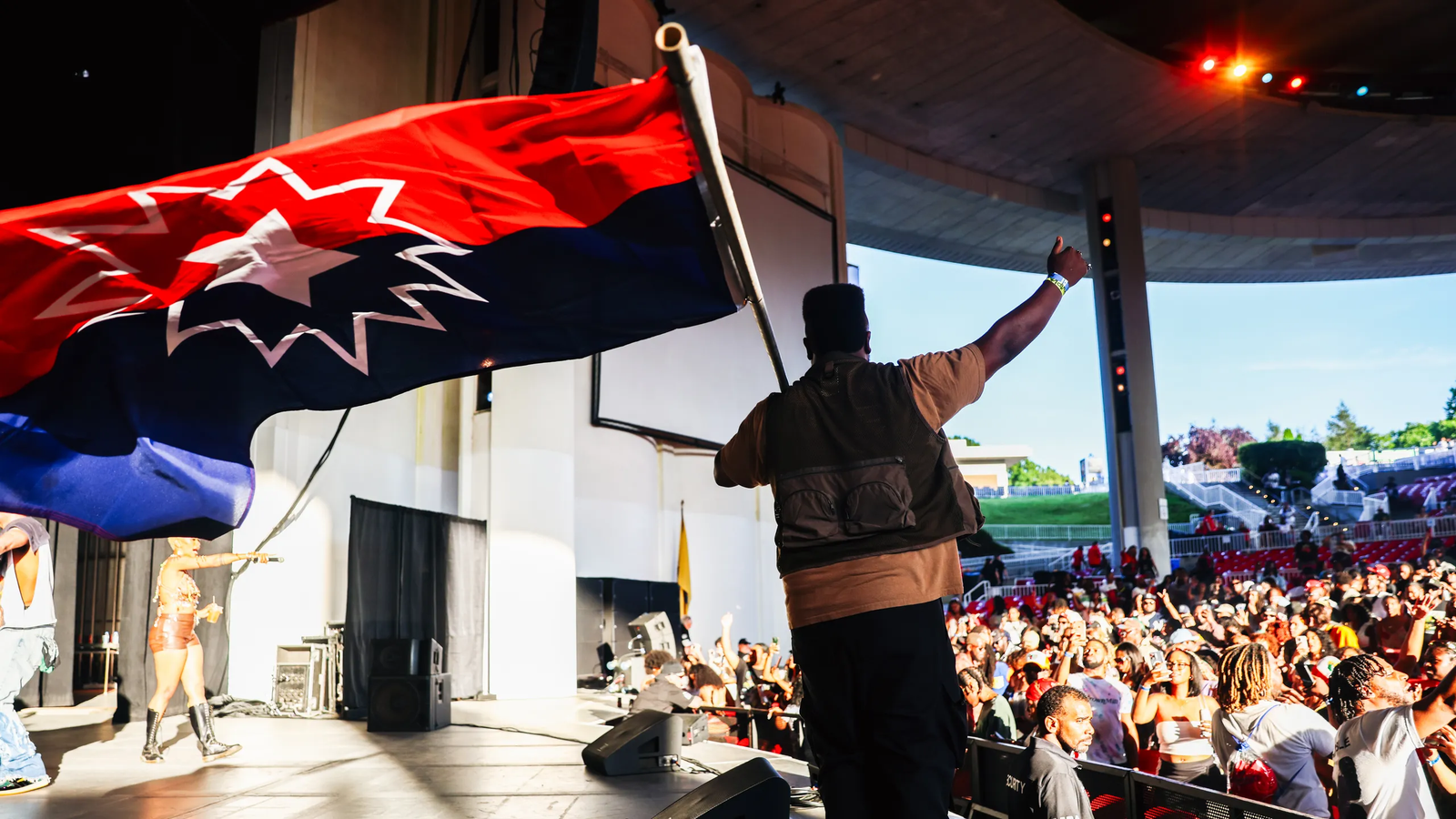
City by city, venue by venue — how Juneteenth 2025 shrank in plain sight, and what that silence cost
The story of how Juneteenth gets diminished does not happen in one dramatic announcement. There is no single moment, no one villain, no press conference where the holiday is officially declared unwanted. It happens incrementally, through a spreadsheet in Denver showing sponsor after sponsor clicking decline, through a Facebook post in Plano, Illinois announcing that no event will be held this year, through an email to a San Diego nonprofit informing them that their $25,000 arts grant “no longer aligns” with the agency’s priorities. It happens in the gap between what a celebration used to be and what it became in 2025.
That gap is the story. And it is far more detailed than most national coverage has captured.
From Growth to Retreat: The Arc in Numbers
To understand how sharp the 2025 decline was, you need the context of what preceded it. By 2021, more than half of all states had declared Juneteenth an official holiday or observance. Cities like New York, Chicago, and Los Angeles hosted large-scale public celebrations. In smaller Illinois towns like Plano and Elgin, community organizers held block parties, history panels, and musical performances, efforts often led by Black community leaders working in tandem with local governments. Corporate money was flowing. Governments were issuing proclamations. The holiday appeared, after 156 years, to finally be gaining the mainstream recognition Black communities had always known it deserved.
Then the political atmosphere shifted. The steepest corporate growth in Juneteenth recognition happened before and immediately after its federal designation, and it slowed sharply once the holiday became part of the regular calendar. Then 2025 brought a visible pullback. Corporate sponsors withdrew from public events across the country. A study found that 15% of organizations said they would stop recognizing identity and heritage events amid the wider backlash against DEI programs.
What that percentage looks like in actual communities is a different and more human kind of accounting.
Plano, Illinois: The First City That Stopped
Plano, Illinois holds a particular symbolic weight in this story, it was the first city in the state to officially adopt Juneteenth as a holiday. Jamal Williams, the first Black member of Plano’s city council and an organizer of the city’s Juneteenth events for years, watched the celebration’s attendance fall from 1,100 people in 2022 to roughly 500 in 2024. In 2025, he decided not to hold an event in Plano at all, citing a lack of sponsors willing to participate, though he supported an event in nearby Yorkville.
His explanation for what happened was direct and painful. “I got labeled as someone that only wanted to support the Black community, not necessarily the people in Ward 2, which I was elected to do,” Williams said. Read that again. An elected official in a city that pioneered Juneteenth recognition in its state was made to feel, by his own constituency, that organizing a celebration of emancipation was a partisan act, something that divided rather than united. The social pressure to step back was not a government mandate. It was a community climate.
Bend, Oregon: When Safety Becomes the Reason
The Juneteenth cancellation in Bend, Oregon hit differently from the others, because the reason given was not budget cuts or sponsor withdrawals. It was physical safety.
The Father’s Group, which organizes Bend’s annual Juneteenth celebration at Drake Park, an event that had drawn an average of 15,000 people in past years, canceled in April 2025. The group stated: “In today’s increasingly volatile political climate, with rising incidents of racial aggression and threats, particularly toward Black and Latino communities, safety must come first.”
Kenneth Adams, the executive director of The Father’s Group, explained that it was not possible to move the event to a more secure private location given the crowd size. He said: “It’s better to be safe than sorry. I literally have witnessed people being accosted just for walking down the street, and getting yelled at because they look a certain way, or they come from a certain country.”
Central Oregon had been dealing with a steady series of high-profile racist incidents in the years leading up to the cancellation, from racial slurs being screamed during a Bend public meeting to rocks being thrown at a mariachi band in Redmond. The cancellation was not an overreaction to an abstract threat. It was a measured response to a documented pattern of racial violence in the specific geographic area where the celebration was supposed to take place.
In 2025, in the United States of America, Black community organizers canceled a celebration of freedom because they were afraid their community would be attacked for gathering in a public park. That sentence should not require emphasis. It should speak loudly enough on its own.
Denver, Colorado: The Flagship That Shrank
Denver’s Juneteenth Music Festival is one of the largest and longest-running Juneteenth events in the country, anchored in the historically Black Five Points neighborhood. In 2025, the festival was reduced from a two-day event to a single day due to a more than 60% drop in corporate sponsorship, leaving an $80,000 funding gap even after scaling back. Executive Director Norman Harris attributed the shortfall to “shifting corporate priorities,” noting that several long-standing sponsors had reduced or withdrawn their support.
Harris credited grassroots donors and small businesses for stepping in when larger backers stepped aside, a detail that matters, because it tells you who actually shows up when the corporate logos disappear. Not the Fortune 500 companies that had been buying naming rights to Juneteenth stages for the previous three years. Small businesses. Individual donors. Community members who understood what the event meant and dug into their own pockets to keep it alive.
San Diego: When the Federal Government Pulls the Grant
The Cooper Family Foundation, which organizes one of the largest Juneteenth celebrations in San Diego, received an email from the National Endowment for the Arts in May 2025 informing them that their $25,000 grant was being rescinded. The email stated that the event “no longer aligned” with the agency’s priorities.
Maliya Jones, who works for the foundation, said the grant money went toward paying for arts and dance performers. Marla Cooper, who leads the foundation, responded: “That’s $25,000 we have to figure out how we’re going to pay for. We will always have Juneteenth. And we will work it out.”
The event happened. The family covered the gap themselves.
That phrase, “no longer aligned with the agency’s priorities,” is worth dwelling on. The National Endowment for the Arts, a federal agency, determined that a Juneteenth celebration featuring arts and dance performers celebrating the emancipation of enslaved people did not align with what the United States government considered worth funding in 2025. The arts grant for a freedom celebration was canceled in the same political moment that a freedom celebration in Oregon was canceled over fear of racial violence. These are not unconnected events.
New Jersey: Federal Spaces Become Unwelcoming
The chilling effect reached beyond budget lines. Reggie Johnson, president of the NAACP Metuchen Edison Piscataway Area Branch in New Jersey, had to move his organization’s annual Juneteenth celebration to a smaller location after staff at the federal site where it was previously held expressed uncertainty about hosting it.
Nobody told the federal site to refuse. No memo banned Juneteenth events from that specific location. The staff simply looked at the political environment, the executive orders, the DIA memo, the public statements from senior officials about “identity months” being “dead,” and decided they weren’t sure whether hosting a Juneteenth event was still something they were allowed to do.
That is a chilling effect. Not a ban. A climate in which the people responsible for decisions are afraid to make the wrong one, and err on the side of exclusion.
What Gets Lost When a Celebration Shrinks
There is a tendency in coverage of these events to focus on logistics, the funding gap, the venue change, the reduced attendance. But what actually gets lost when a Juneteenth celebration goes from 15,000 people in a park to a canceled event is harder to quantify.
In towns like Plano and Elgin, community organizers had built Juneteenth celebrations that included history panels and educational programming, spaces where Black history was transmitted directly, in public, to community members who might not encounter it anywhere else in their civic life. When those events shrink or disappear, the knowledge they carried does not find another venue automatically. It just does not get transmitted.
Juneteenth remains a powerful moment of reflection, resilience, and resistance. Across the country, Black communities are honoring Freedom Day not just with celebration but with continued organizing, cultural expression, and calls to action. The holiday is not dead. But the infrastructure that made it accessible, visible, and communally meaningful, the stages and the grants and the park permits and the corporate logos, has been deliberately and systematically made smaller.
And the people who built those celebrations from nothing, over decades, before any corporation or government noticed the holiday existed, are rebuilding again. Because that, too, is part of the history.
Thank you for taking the time to read and reflect. I write to help people think clearly about money, business, real estate, and life, not from theory, but from decades of lived experience.
If you are navigating a financial decision, building a business, considering homeownership, or simply trying to make better use of your time and resources, I invite you to engage further.
Subscribe to The Power Is Now TV to connect with me live every weekday, Monday through Friday, from 10:00 AM to 11:00 AM PST, as we record television shows across the Power Is Now TV Network. As a subscriber, you can participate in live tapings, engage in real-time discussions, and connect directly with industry leaders.
Visit ThePowerIsNow.com to access real estate magazines, books, podcasts, television shows, and exclusive media content focused on homeownership, business, and wealth-building.
For personalized support, consulting, and advisory services in real estate, mortgages, business, and personal finance, visit EricFrazier.com to schedule a consultation and learn more about my work as your trusted advisor in business and wealth.
Eric Lawrence Frazier, MBA
Your trusted advisor in business and wealth
www.ericfrazier.com | www.thepowerisnow.com
NMLS #461807 | CA DRE #01143484
Schedule a consultation: https://calendly.com/ericfrazier/real-estate-mortgage-consultation-clients
References
ABC News. (2025, June 19). Juneteenth festival organizers focus on ‘resilience’ amid attacks on DEI initiatives. https://abcnews.go.com/Business/wireStory/juneteenth-festival-organizers-focus-resilience-amid-attacks-dei/story?id=122967626
Brown, S. M. (2025, June 19). Cities across the U.S. shrink or cancel Juneteenth events as DEI support wanes. San Diego Voice & Viewpoint. https://sdvoice.info/cities-across-the-u-s-shrink-or-cancel-juneteenth-events-as-dei-support-wanes/
Central Oregon Daily. (2025, April 8). Bend Juneteenth event canceled over safety concerns. https://www.centraloregondaily.com/news/local/bend-drake-park-juneteenth-canceled/article_abe30dff-1308-4572-807d-13411101280c.html
CNN. (2025, June 19). How cities are scaling back Juneteenth celebrations after Trump-era DEI rollbacks. https://www.cnn.com/2025/06/18/us/juneteenth-cancelations-trump-dei-rollbacks
CultureAlly. (2025). How to celebrate Juneteenth at work. https://www.cultureally.com/blog/how-to-celebrate-juneteenth-at-work
Lathan, N., & The Associated Press. (2025, June 16). Trump’s anti-DEI wave extends to Juneteenth celebrations as corporate sponsors pull out of major events. Fortune. https://fortune.com/2025/06/16/trump-dei-juneteenth-events-corporate-sponsors-funding
Sullivan, M. (2025, June 17). From celebration to cancellation: How Juneteenth became a casualty of America’s reactionary turn. The Progressive. https://progressive.org/latest/from-celebration-to-cancellation-how-juneteenth-became-a-casualty-of-americas-reactionary-turn-sullivan-20250617/