
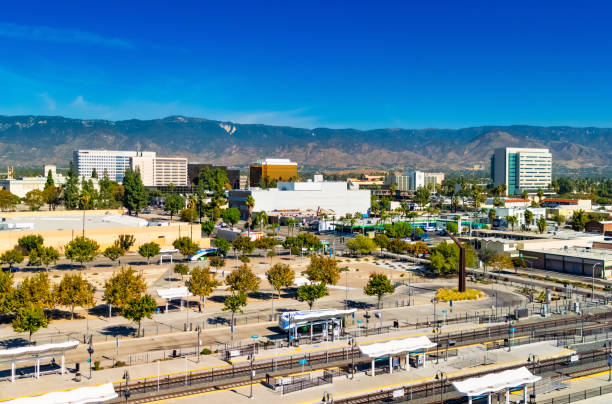
San Bernardino County represents one of the most important affordability-driven housing markets in California, and in many ways, it functions as a key pressure valve for the broader Southern California real estate system. As coastal counties continue to experience elevated pricing and constrained supply, San Bernardino has become a primary destination for households seeking relatively lower-cost homeownership options within commuting distance of major employment centers. By 2026, this dynamic remains firmly in place, but the market is no longer defined by rapid expansion alone; instead, it is shaped by stabilization patterns, shifting affordability thresholds, and a growing dependence on logistics-based economic activity that supports housing demand.
What distinguishes San Bernardino County from many other California regions is the combination of large geographic scale, comparatively lower median home values, and steady population growth supported by migration from Los Angeles, Orange County, and even parts of coastal San Diego. However, rising interest rates over recent years have moderated buyer capacity, resulting in slower appreciation and more balanced transaction behavior. While the county is still more affordable than coastal markets, it is not immune to affordability stress, as household income levels struggle to keep pace with long-term housing cost increases.
Here’s what’s happening in the San Bernardino County housing market through pricing trends, inventory behavior, transaction activity, and broader economic forces shaping long-term real estate conditions.
Pricing Behavior: Mild Decline Within a Long-Term Growth Structure
San Bernardino County’s housing market in 2026 is best understood as being in a mild correction-to-stabilization phase rather than a downturn. Recent federal and regional housing data indicate that the median existing single-family home price sits around $500,000 to $548,000 depending on dataset timing and measurement method, reflecting a slight year-over-year decline of approximately 1% or less in some reporting periods. Despite this short-term softening, long-term trends remain strongly positive, with home values increasing significantly over the past decade, driven by population growth and structural demand shifts across Southern California.
The key factor influencing pricing behavior is affordability compression. Higher mortgage rates compared to prior ultra-low-rate cycles have reduced purchasing power, effectively placing a ceiling on rapid appreciation. However, there is no evidence of widespread distress selling, which prevents steep declines. Instead, pricing adjusts gradually as sellers recalibrate expectations to match buyer capacity. This creates a controlled environment where values remain historically elevated but move within a tighter and more predictable range.
Inventory Conditions: Balanced Supply with Market Fragmentation
Inventory in San Bernardino County reflects a more balanced structure compared to coastal California markets, but it is not uniform across all subregions. The county maintains a relatively large housing stock exceeding 700,000 housing units, which allows for a more fluid transaction environment compared to constrained coastal metros. However, the actual absorption of this inventory varies significantly depending on location, price point, and commuter accessibility.
In high-demand submarkets closer to employment corridors such as Ontario and Rancho Cucamonga, homes tend to move faster and attract stronger competition. In contrast, more remote inland areas experience longer marketing periods and higher sensitivity to price adjustments. This uneven absorption pattern creates a fragmented inventory landscape where market conditions differ widely within the same county. Overall, the county remains neither oversupplied nor undersupplied, but instead operates in a condition of relative equilibrium with localized pressure points.
Transaction Activity: Stable Volume Supported by Regional Migration
Despite slower price appreciation, San Bernardino County continues to demonstrate steady transaction activity, supported by ongoing migration from higher-cost California regions. According to regional economic analysis, home sales activity has remained relatively stable in recent cycles, with occasional increases driven by shifts in mortgage rates and affordability windows across the Inland Empire region.
This migration-driven demand remains one of the most important structural supports for the housing market. Households moving from coastal counties continue to view San Bernardino as a more attainable entry point into homeownership, particularly for single-family detached housing. However, the intensity of this migration has moderated compared to previous expansion cycles, meaning demand is present but more financially disciplined.
Homes that are correctly priced continue to sell within reasonable timeframes, while overpriced listings tend to remain on the market longer, reflecting a more selective buyer pool and reduced urgency in purchase decisions.
Economic Influence: Logistics and Housing Interdependence
One of the defining features of San Bernardino County is the strong relationship between housing and logistics-driven economic activity. The county serves as a major inland distribution hub for Southern California, with warehousing, transportation, and supply chain operations playing a central role in employment and income stability. This economic base directly supports housing demand by providing steady job creation in sectors that do not require high-cost coastal access.
At the same time, this economic structure also introduces volatility sensitivity. When broader economic conditions slow, logistics demand can fluctuate, which in turn affects housing confidence and buyer activity. However, over the long term, the logistics sector continues to provide a consistent employment foundation that supports population retention and gradual housing demand growth.
Affordability Pressure: A Long-Term Structural Challenge
Although San Bernardino County remains more affordable than Los Angeles or Orange County, affordability pressure is still a significant issue. Recent housing indicators show that household income levels are increasingly strained by rising housing costs, with a growing share of households spending a high proportion of income on housing expenses. Even with lower median home prices relative to coastal counties, entry-level affordability remains challenging for many residents.
Rental costs also contribute to this pressure, with rising rents over the past decade limiting the ability of households to transition into homeownership. While there have been short-term stabilizations in rent growth, the long-term trajectory still reflects significant upward pressure, which reinforces the county’s role as both an affordable alternative and a region facing its own internal affordability constraints.
San Bernardino County’s real estate market in 2026 reflects a transition into stability after years of expansion and rapid affordability-driven demand. While home prices have softened slightly in some segments, the broader market remains structurally supported by migration from coastal California, logistics-based employment, and long-term population growth. Inventory conditions are balanced but uneven across subregions, and transaction activity continues at a steady pace, indicating a functioning and liquid housing market.
For buyers, the current environment offers more negotiating power and expanded inventory options. For sellers, accurate pricing and market alignment are essential to avoid extended time on market. Overall, San Bernardino continues to serve as a critical affordability hub within Southern California, but it is increasingly shaped by disciplined buyer behavior and long-term structural economic constraints.
Thank you for taking the time to read and reflect. I write to help people think clearly about money, business, real estate, and life — not from theory, but from decades of lived experience.
If you are navigating a financial decision, building a business, considering homeownership, or simply trying to make better use of your time and resources, I invite you to engage further.
Subscribe to The Power Is Now TV to connect with me live every weekday, Monday through Friday, from 10:00 AM to 11:00 AM PST, as we record television shows across the Power Is Now TV Network. As a subscriber, you can participate in live tapings, engage in real-time discussions, and connect directly with industry leaders.
Visit ThePowerIsNow.com to access real estate magazines, books, podcasts, television shows, and exclusive media content focused on homeownership, business, and wealth-building.
For personalized support, consulting, and advisory services in real estate, mortgages, business, and personal finance, visit EricFrazier.com to schedule a consultation and learn more about my work as your trusted advisor in business and wealth.
Eric Lawrence Frazier, MBA
Your trusted advisor in business and wealth
www.ericfrazier.com | www.thepowerisnow.com
NMLS #461807 | CA DRE #01143484
Schedule a consultation: https://calendly.com/ericfrazier/real-estate-mortgage-consultation-clients
References
California Association of Realtors. (2026). San Bernardino County housing market indicators. https://www.car.org
San Bernardino County Community Indicators. (2026). Residential real estate market data report. https://indicators.sbcounty.gov/economy/residential-real-estate-market/
U.S. Census Bureau. (2026). QuickFacts: San Bernardino County, California. https://www.census.gov/quickfacts/fact/table/sanbernardinocountycalifornia
Southern California Association of Governments (SCAG). (2025). Regional economic analysis: Riverside and San Bernardino counties. https://scag.ca.gov