
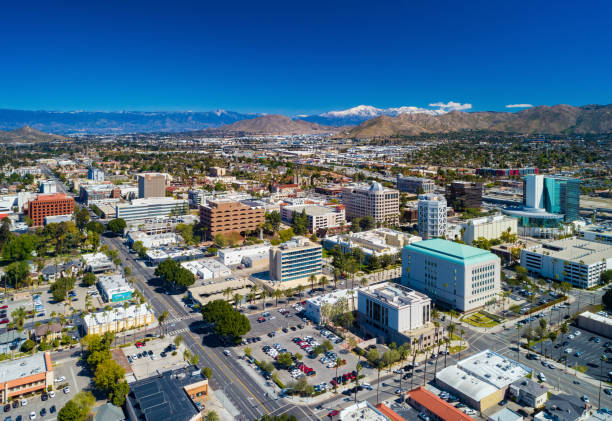
Economic expansion is often expected to bring housing stability. When jobs increase, wages rise, and new industries take root, homeownership typically follows. In San Bernardino County, that relationship is breaking down. The county has become one of California’s most active logistics hubs, driven by warehouse expansion, distribution centers, and transportation-linked employment growth. Yet despite this job creation, homeownership remains increasingly out of reach for a large share of the workforce.
The contradiction is becoming more visible: employment is rising, but housing access is not improving at the same pace. Workers filling essential logistics roles are often earning wages that do not align with local housing costs, especially as prices and borrowing expenses remain elevated. This creates a structural disconnect between economic activity and residential stability.
Understanding this gap requires looking beyond job numbers alone. It involves examining wage structures, housing prices, and the financial thresholds required to qualify for ownership in a market where employment growth does not automatically translate into affordability.
Logistics Expansion and Job Growth Concentration
San Bernardino County has become a central node in the national logistics network. Supported by its geographic position and access to major transportation corridors, the county has seen significant growth in warehousing, distribution, and freight-related employment over the past decade.
Major logistics parks and fulfillment centers have expanded across cities such as Ontario, Fontana, and Rialto, bringing thousands of jobs into the region. In recent years, logistics-related employment has accounted for a substantial portion of new job creation, with warehouse and transportation roles representing one of the fastest-growing employment categories in the county.
However, much of this growth is concentrated in hourly wage positions. While these jobs provide steady employment, they do not typically offer income levels aligned with Southern California housing costs. The result is a labor market that is expanding in size but not in purchasing power.
Wage Reality vs. Housing Costs
The core issue in San Bernardino County is not employment availability—it is wage alignment. Many logistics and warehouse positions in the region pay between $18 and $25 per hour, depending on role, experience, and employer. On an annual basis, this translates to approximately $37,000 to $52,000 for full-time workers.
At the same time, median home prices in the county have risen significantly, with many areas now ranging between $500,000 and $650,000. Even with moderate price variation across submarkets, the income required to qualify for a home purchase far exceeds what most logistics workers earn.
For example, a $550,000 home with a 20% down payment results in a loan of $440,000. At a 6.75% mortgage rate, monthly principal and interest payments alone are approximately $2,850. After adding property taxes, insurance, and maintenance, total monthly housing costs can reach $3,600 or more.
To qualify under standard lending guidelines, a household would generally need to earn between $130,000 and $150,000 annually. This is nearly three times the income of many logistics workers in the region. Even dual-income households working in similar wage brackets often fall short of the threshold required for mortgage approval.
The Structural Barrier to Homeownership
The disconnect between wages and housing prices creates a structural barrier that cannot be resolved through employment growth alone. While job creation improves economic activity, it does not automatically improve housing access when wages remain static relative to property values.
In San Bernardino County, this barrier is reinforced by several factors. First, housing supply remains constrained in affordable segments, limiting entry-level options. Second, rising interest rates have increased monthly payment requirements, effectively raising the income threshold for qualification. Third, competition from higher-income buyers and investors in certain submarkets has placed additional upward pressure on prices.
These combined forces create a situation where working in the county does not guarantee the ability to live in it as a homeowner. Many workers commute long distances from more affordable inland or desert communities, further separating employment centers from residential ownership opportunities.
A Growing Divide Between Economic Output and Housing Access
The logistics sector contributes significantly to San Bernardino County’s economic output, yet the benefits are not evenly distributed in terms of housing access. Employment growth has strengthened the county’s role in regional and national supply chains, but housing affordability has not kept pace with this expansion.
This disconnect is visible in homeownership rates, which remain below statewide averages in several working-class communities within the county. It is also reflected in rental demand, which continues to increase as more workers remain unable to transition into ownership.
The broader implication is that job growth alone is no longer a sufficient indicator of housing stability. Without corresponding wage growth or more affordable housing development, economic expansion can coexist with housing strain rather than alleviate it.
San Bernardino County’s housing market highlights a growing structural imbalance in modern regional economies. While logistics and warehouse employment continues to expand, the income generated by these jobs is not enough to support homeownership under current market conditions.
The result is a clear separation between work and ownership: people are increasingly employed within the county but unable to afford to live there as homeowners. Rising prices and higher financing costs have widened this gap, reinforcing a system where economic growth does not automatically translate into residential access.
Until wage growth, housing supply, or financing conditions shift in a meaningful way, the divide between logistics-driven employment and housing affordability is likely to persist.
Eric Lawrence Frazier Advisory Services Research Team
Thank you for taking the time to read and reflect. I write to help people think clearly about money, business, real estate, and life — not from theory, but from decades of lived experience.
If you are navigating a financial decision, building a business, considering homeownership, or simply trying to make better use of your time and resources, I invite you to engage further.
Subscribe to The Power Is Now TV to connect with me live every weekday, Monday through Friday, from 10:00 AM to 11:00 AM PST, as we record television shows across the Power Is Now TV Network. As a subscriber, you can participate in live tapings, engage in real-time discussions, and connect directly with industry leaders.
Visit ThePowerIsNow.com to access real estate magazines, books, podcasts, television shows, and exclusive media content focused on homeownership, business, and wealth-building.
For personalized support, consulting, and advisory services in real estate, mortgages, business, and personal finance, visit EricFrazier.com to schedule a consultation and learn more about my work as your trusted advisor in business and wealth.
Eric Lawrence Frazier, MBA
Your trusted advisor in business and wealth
www.ericfrazier.com | www.thepowerisnow.com
NMLS #461807 | CA DRE #01143484
Schedule a consultation: https://calendly.com/ericfrazier/real-estate-mortgage-consultation-clients
References
U.S. Bureau of Labor Statistics. (2026). Occupational Employment and Wage Statistics: San Bernardino County Logistics and Transportation Sector. Retrieved from https://www.bls.gov/oes/current/oes_ca.htm
California Employment Development Department. (2026). San Bernardino County Industry Employment Data. Retrieved from https://www.labormarketinfo.edd.ca.gov
U.S. Census Bureau. (2026). QuickFacts: San Bernardino County, California. Retrieved from https://www.census.gov/quickfacts/sanbernardinocountycalifornia