
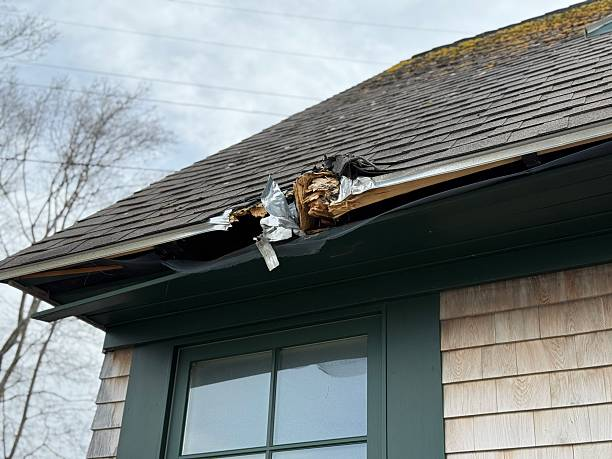
Homeownership decisions are often framed around purchase price, interest rates, and long-term appreciation, but an increasingly important factor is shaping whether a property can even remain insured in the first place: its physical condition. Insurance markets, particularly in high-risk regions, are no longer treating coverage as automatic. Instead, underwriting decisions are becoming more closely tied to how well a property is maintained, how resilient it is to environmental risks, and whether it meets evolving safety standards.
Recent developments from the California Department of Insurance highlight this shift through its “Insurance Surge Expanding Options for Californians in Wildfire Distressed Areas” initiative. The state reported that 11 homeowners insurance groups, along with two major commercial insurers, have committed to expanding coverage availability as part of the broader Sustainable Insurance Strategy. This expansion is intended to increase access in wildfire-distressed areas where coverage has become more limited in recent years.
However, increased availability does not guarantee universal access. Instead, insurers continue to evaluate individual properties based on risk characteristics that include structural condition, mitigation measures, and exposure to environmental hazards. This means that deferred maintenance is no longer just a repair issue—it is increasingly an underwriting issue that can influence insurability, pricing, and long-term financial stability.
Why Property Condition Is Now Central to Insurance Decisions
Insurance underwriting has traditionally considered factors such as location, claims history, and construction type. While these remain important, insurers are increasingly placing greater emphasis on property-level condition as a direct indicator of risk exposure. This shift is especially visible in regions affected by wildfire risk, where physical vulnerability can dramatically influence loss severity.
Recent regulatory actions in California reflect this evolution. Under the Sustainable Insurance Strategy, insurers are being encouraged—and in some cases required—to expand coverage in high-risk areas in exchange for broader market participation commitments.
Despite these efforts, insurers still retain the ability to assess individual properties based on risk mitigation. This means that even within expanding markets, homes with poor maintenance conditions may face higher premiums, limited coverage options, or in some cases, difficulty securing standard insurance altogether.
The key change is not that insurance is disappearing, but that access is becoming more conditional. Property condition is now part of the risk equation in a way that directly affects insurability outcomes.
Deferred Maintenance as an Underwriting Risk Factor
Deferred maintenance is no longer viewed solely as a cosmetic or financial inconvenience. It is increasingly recognized as a contributor to loss severity during insured events. A home with an aging roof, outdated electrical system, or unmanaged vegetation presents a higher probability of damage during extreme weather or fire exposure.
In wildfire-prone areas, regulatory frameworks such as California’s insurance reforms emphasize mitigation and property hardening as part of improving insurability. Insurers operating under these frameworks are required to consider forward-looking risk models rather than relying only on historical losses.
This shift means that property condition is now evaluated through a preventative lens. A well-maintained home is not just less expensive to repair—it is statistically less likely to generate large claims. As a result, insurers increasingly differentiate between properties based on maintenance quality, even within the same geographic area.
Examples of condition-related underwriting concerns include roof age and material type, exposed wiring or outdated electrical panels, plumbing integrity, and vegetation proximity to structures. Each of these factors contributes to how insurers assess the likelihood of claim severity.
The Link Between Maintenance and Insurance Availability
One of the most significant developments in recent years is the growing connection between property condition and insurance availability itself. In some markets, particularly those with elevated wildfire exposure, insurers have reduced exposure or withdrawn from segments of the market, creating tighter underwriting standards for remaining carriers.
Regulatory efforts are attempting to reverse this trend by encouraging insurers to expand coverage in distressed regions. As part of California’s insurance market reforms, several carriers have committed to issuing new policies in wildfire-prone areas as part of a structured agreement with regulators.
However, expanded availability does not eliminate underwriting scrutiny. Even as more insurers re-enter or expand in these markets, individual property assessments remain central to approval decisions. Homes that demonstrate strong maintenance and mitigation practices are more likely to qualify for standard coverage, while properties with deferred maintenance may be directed toward higher-cost or limited coverage options.
This creates a dual outcome: broader market access at the system level, but increasingly selective access at the property level.
Why Maintenance Now Affects Financing and Resale Value
Insurance is closely linked to both financing and property value. Most mortgage lenders require active insurance coverage as a condition of loan approval. If a property becomes difficult to insure, it can also become more difficult to finance or refinance.
Additionally, insurance costs are increasingly factored into buyer affordability calculations. Higher premiums reduce purchasing power, which can affect resale demand and pricing dynamics. A property with higher perceived insurance risk may experience downward pressure on value even if its physical structure remains intact.
This means that deferred maintenance can have a cascading financial effect. What begins as a repair issue can evolve into an insurance issue, which can then become a financing issue, ultimately affecting marketability and valuation.
The Shift Toward Risk-Based Property Management
The broader trend emerging from insurance market changes is a shift toward risk-based property management. Homeownership is increasingly being evaluated not only in terms of acquisition and appreciation but also in terms of ongoing risk exposure.
Properties that are actively maintained, upgraded, and protected against environmental hazards are positioned more favorably within this system. Maintenance is no longer just about preserving comfort or aesthetics; it is becoming part of a structured approach to maintaining financial access to insurance and credit markets.
This shift places greater importance on proactive decision-making. Homeowners are now incentivized to address potential risks before they become underwriting concerns rather than after problems arise.
The connection between property condition and insurability is becoming more direct and more consequential. As insurance markets adapt to increased environmental risk and evolving regulatory frameworks, underwriting decisions are increasingly influenced by how well a property is maintained and how effectively it mitigates potential losses.
Recent developments in California illustrate this trend, where insurers are expanding coverage options in wildfire-distressed areas while continuing to evaluate individual properties based on condition and risk exposure.
The implication for homeowners is clear: maintenance is no longer solely about preserving physical structure. It is now a critical factor in determining whether a property remains insurable, financeable, and marketable over time. Deferred maintenance does not simply create repair costs—it can create access barriers to essential financial systems tied to homeownership.
In this environment, maintaining a property is not just an operational responsibility. It is a financial safeguard that directly influences long-term ownership stability.
Thank you for taking the time to read and reflect. I write to help people think clearly about money, business, real estate, and life — not from theory, but from decades of lived experience.
If you are navigating a financial decision, building a business, considering homeownership, or simply trying to make better use of your time and resources, I invite you to engage further.
Subscribe to The Power Is Now TV to connect with me live every weekday, Monday through Friday, from 10:00 AM to 11:00 AM PST, as we record television shows across the Power Is Now TV Network. As a subscriber, you can participate in live tapings, engage in real-time discussions, and connect directly with industry leaders.
Visit ThePowerIsNow.com to access real estate magazines, books, podcasts, television shows, and exclusive media content focused on homeownership, business, and wealth-building.
For personalized support, consulting, and advisory services in real estate, mortgages, business, and personal finance, visit EricFrazier.com to schedule a consultation and learn more about my work as your trusted advisor in business and wealth.
Eric Lawrence Frazier, MBA
Your trusted advisor in business and wealth
www.ericfrazier.com | www.thepowerisnow.com
NMLS #461807 | CA DRE #01143484
Schedule a consultation: https://calendly.com/ericfrazier/real-estate-mortgage-consultation-clients
References
California Department of Insurance. (2026). Insurance surge expanding options for Californians in wildfire distressed areas. Retrieved August 26, 2026, from https://www.insurance.ca.gov/0400-news/0102-alerts/2026/
Stanford Woods Institute for the Environment. (2026). California’s home insurance crisis is spreading beyond wildfire country. Retrieved August 26, 2026, from https://woods.stanford.edu/news/californias-home-insurance-crisis-spreading-beyond-wildfire-country
Environmental Defense Fund. (2026). Reducing risk today will fix California’s insurance crisis for future generations. Retrieved August 26, 2026, from https://blogs.edf.org/climate411/2026/08/11/reducing-risk-today-will-fix-californias-insurance-crisis-for-future-generations/