
San Diego County Housing Market: Price Resilience vs Transaction Slowdown Across Micro-Market Segments

San Diego County’s housing market continues to present one of the clearest examples of a divided real estate structure in Southern California. On the surface, prices remain relatively strong and stable, supported by limited inventory and long-term coastal demand. However, beneath this pricing stability, transaction activity has slowed in a way that signals shifting buyer behavior and increasing friction in the closing process. The result is a market that appears steady in valuation but less active in execution. Recent late summer 2026 data shows that homes are still maintaining strong price levels, yet fewer transactions are closing compared to earlier cycles. This divergence between pricing resilience and declining sales volume reflects broader affordability constraints driven by elevated mortgage rates and tightening buyer qualification standards. At the same time, San Diego’s internal market structure is becoming more segmented, with coastal, inland, and condo markets each responding differently to current conditions. Understanding these micro-market differences is essential to interpreting the true direction of the county’s housing landscape. Coastal Submarkets: Price Stability with Limited Turnover San Diego’s coastal regions, including areas such as La Jolla, Del Mar, and coastal Carlsbad, continue to demonstrate strong price resilience even as transaction volume softens. According to recent Realtor.com August 2026 data, median listing prices across San Diego County remain near $899,000, with coastal submarkets significantly higher depending on proximity to the ocean. While prices remain elevated, the pace of transactions has slowed, with many listings taking approximately 45 days or longer to reach contract stage. The key dynamic in coastal areas is limited inventory turnover. Homeowners with historically low mortgage rates are reluctant to sell, contributing to a “hold effect” that keeps supply tight. This structural constraint supports pricing stability even when demand softens. However, the number of closed transactions is no longer matching prior-year activity levels, indicating that buyer participation is more selective and less urgent. This creates a coastal market where values remain firm, but liquidity is reduced, resulting in fewer deals closing within shorter timeframes. Inland Submarkets: Increased Flexibility but Slower Buyer Conversion Inland areas such as Escondido, Riverside-adjacent North County corridors, and parts of East County are experiencing a different dynamic. These regions typically offer more affordability compared to coastal zones, yet even here, buyer conversion rates have slowed due to mortgage rate sensitivity. Recent California Association of REALTORS® data indicates that while inventory has not surged dramatically, it has increased enough to extend negotiation timelines. Properties in these inland submarkets are more likely to experience price adjustments before closing, particularly if initial listing prices exceed buyer expectations. Days on market in these areas often exceed county averages, reflecting the more cautious nature of affordability-driven demand. Unlike coastal markets, inland areas are not fully supported by wealth-driven buyers, making them more sensitive to financing conditions. As a result, even modest changes in interest rates have a noticeable impact on transaction speed and offer volume. Condo and Attached Housing Segment: Emerging First-Time Buyer Activity The condo and townhome segment is showing a different pattern compared to both coastal and inland detached housing markets. Recent data trends, supported by regional MLS reporting, indicate a gradual increase in buyer interest for attached housing, particularly among first-time buyers and downsizers who are priced out of single-family home ownership. This segment is seeing relatively higher transaction activity compared to detached homes, even though pricing growth is more subdued. Condo listings are also experiencing slightly longer market times in some submarkets, but they remain more accessible entry points into the San Diego housing market. A key driver is affordability substitution, where buyers accept smaller units or shared amenities in exchange for improved price alignment. However, even in this segment, financing constraints remain a limiting factor, meaning demand is present but not fully converting at previous cycle levels. This creates a “mid-speed market” where activity is stable but not accelerating. Pricing Resilience vs Transaction Decline: The Core Market Split The most important structural trend in San Diego County is the widening gap between price stability and transaction volume decline. According to Zillow and Redfin aggregated data for late summer 2026, median prices remain relatively stable year-over-year, while closed sales have declined compared to prior periods. National housing data reinforces this trend, showing U.S. existing-home sales falling to a 3.98 million annualized pace in August 2026, the lowest level in over a year, while inventory rose to 1.62 million units. San Diego reflects this national pattern in a more concentrated form. Prices remain supported by structural scarcity in desirable submarkets, but affordability constraints are limiting the number of qualified buyers. This creates a condition where homes are valued consistently but exchanged less frequently. The result is a market that is stable in valuation terms but weakening in liquidity terms, a distinction that is critical for understanding real market health. San Diego County’s housing market is currently defined by a clear split between pricing strength and declining transaction velocity. Coastal areas continue to support high values due to scarcity and long-term demand, while inland and attached housing segments reflect slower absorption driven by affordability constraints. Across all submarkets, the most consistent trend is reduced buyer urgency, which is extending market times and lowering transaction frequency. This environment does not indicate broad price deterioration but rather a shift toward lower liquidity and more selective participation. The key takeaway is that pricing strength alone no longer reflects market momentum. Instead, transaction activity and buyer conversion rates provide a more accurate measure of current conditions. San Diego remains structurally strong, but its market rhythm has clearly slowed. Thank you for taking the time to read and reflect. I write to help people think clearly about money, business, real estate, and life — not from theory, but from decades of lived experience. If you are navigating a financial decision, building a business, considering homeownership, or simply trying to make better use of your time and resources, I invite you to engage further. Subscribe to The Power Is Now TV to connect with me live
San Diego County Real Estate Market 2026: Tight Supply, Strong Demand, and a Two-Speed Housing Economy

San Diego County continues to stand as one of California’s most resilient and consistently competitive housing markets. With a population exceeding 3 million residents and a housing landscape shaped by coastal demand, military stability, biotech expansion, and cross-border economic activity, the county rarely experiences extreme swings in either direction. Instead, it tends to move in controlled cycles defined by inventory availability, interest rate pressure, and localized demand patterns. As of 2026, San Diego’s real estate market is best described as structurally tight but behaviorally selective. Prices have remained elevated, with median home values consistently hovering around the mid-to-high $900,000 range, while inventory levels remain constrained compared to historical norms. At the same time, buyer activity has not disappeared; instead, it has become more strategic, with stronger competition in certain price tiers and slower movement in others. This article examines the current San Diego County housing environment in detail, focusing on pricing behavior, inventory pressure, buyer demand patterns, and the emerging segmentation between property types and price ranges shaping the market today. Pricing Trends: Elevated Values With Narrow Movement San Diego County’s housing market continues to operate at a high baseline price level, with median home values around $934,000 to $952,000 depending on market segment and reporting period . What stands out most is not dramatic appreciation, but the lack of meaningful correction despite broader affordability pressure. Year-over-year price movement has remained relatively flat, ranging from 0% to +3.9% depending on data set and timeframe, showing that the market is neither overheating nor declining sharply . Instead, pricing is stabilizing within a narrow corridor. This stability is largely driven by long-term homeowner equity positions and limited forced selling. Even in higher interest rate conditions, sellers are generally not under distress, which prevents downward pricing spirals. However, affordability constraints are limiting upward momentum, creating a market that is holding value rather than expanding rapidly. Inventory Conditions: Persistent Scarcity Defines Competition One of the most important structural characteristics of San Diego’s housing market is low inventory relative to demand. Active listings remain below long-term historical norms, with approximately 8,000 to 10,000 homes available at any given time depending on seasonal conditions . Months of supply remains firmly in seller-favored territory, typically between 2.5 and 3 months, which indicates a market where demand continues to outpace available housing. Even when new listings enter the market, they are often absorbed quickly, particularly in well-located neighborhoods. Detached single-family homes remain especially constrained, while attached units such as condos and townhomes show relatively more balance. This imbalance creates a two-layer market where property type strongly influences competition levels. The low inventory environment continues to support pricing stability even when buyer demand softens slightly. Buyer Behavior: Competitive but More Calculated Buyer behavior in San Diego County has shifted away from aggressive bidding wars toward more measured and selective purchasing decisions. While competition still exists, especially for well-priced homes in desirable school districts or coastal-adjacent areas, buyers are taking longer to evaluate options. Homes that are correctly priced still move quickly, often going under contract in approximately 20 to 30 days on average . However, overpriced listings tend to remain on the market significantly longer, reflecting a more disciplined buyer pool. Roughly 35% to 40% of homes still sell above list price in competitive segments, showing that demand has not disappeared but has become more targeted. Buyers are now prioritizing value alignment, long-term affordability, and property condition rather than engaging in across-the-board bidding escalation. This shift signals a more rationalized market environment compared to previous peak-cycle behavior. Market Segmentation: A Clear Two-Speed Housing Structure One of the defining features of San Diego County’s 2026 housing market is the emergence of a two-speed structure based on property type and price tier. Detached single-family homes remain highly competitive due to limited supply, with inventory in some periods falling by nearly 25% year-over-year, tightening conditions further in this segment. These properties continue to command stronger pricing power and faster absorption. In contrast, attached properties such as condos and townhomes show more balance, with inventory levels stabilizing and months of supply approaching more neutral conditions. This segment experiences longer marketing times and fewer bidding scenarios. Price tier performance also varies significantly. Mid-tier homes continue to attract the strongest demand, while lower-tier housing experiences longer days on market and more price sensitivity. Luxury properties maintain stability but move at a slower pace, reflecting selective buyer behavior. This segmentation has become one of the most important dynamics shaping transaction outcomes in the county. Transaction Activity and Market Flow Despite affordability challenges, San Diego County continues to show healthy transaction volume, with thousands of monthly sales occurring across all property types. Recent data indicates year-over-year growth in closed sales and pending transactions in several reporting periods, suggesting sustained market activity rather than stagnation. Homes that are priced appropriately continue to sell within a reasonable timeframe, while the overall pace of the market remains steady rather than accelerated. This indicates a market that is functioning normally, but under tighter financial constraints for buyers. The balance between supply compression and steady demand has prevented sharp price declines, even as interest rate conditions reduce purchasing power. San Diego County’s real estate market in 2026 reflects a stable but structurally constrained environment. Prices remain elevated but largely flat, inventory continues to sit below historical norms, and buyer activity remains selective rather than aggressive. The most important takeaway is the increasing segmentation of the market, where property type and price tier now determine competition levels more than broad market conditions. For buyers, patience and precise targeting are essential in navigating this environment. For sellers, strategic pricing is critical to avoid extended time on market. Investors and analysts should focus on micro-market differences rather than countywide averages, as conditions vary significantly between detached homes, attached units, and pricing tiers. Thank you for taking the time to read and reflect. I write to help people think clearly about money, business, real estate, and life — not from theory, but from decades of
The $300,000 Barrier: Why Coastal San Diego Homeownership Now Requires Elite Incomes in 2026
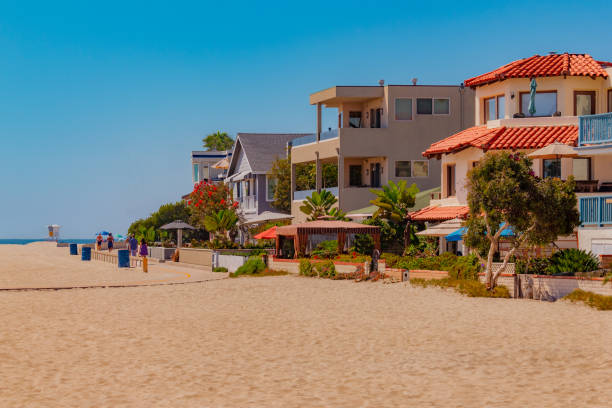
San Diego County’s coastline has long carried a premium, defined by limited land, strong demand, and a lifestyle that continues to attract high-income buyers. In 2026, that premium has reached a point where affordability is no longer just a pricing issue—it has become a qualification barrier. The challenge is no longer simply whether a home is expensive, but whether buyers can meet the financial thresholds required to secure financing in a high-rate environment. Median home prices across coastal communities such as La Jolla, Del Mar, and Encinitas now exceed $1.8 million, with many properties trading well above $2.5 million. At the same time, mortgage rates have stabilized between 6.5% and 7%, significantly increasing the cost of borrowing compared to the sub-3% environment seen just a few years ago. This shift has created a widening gap between household incomes and mortgage qualification requirements. Buyers who might have qualified in 2021 are now priced out not because of listing prices alone, but because financing standards have tightened relative to income. The result is a housing market where eligibility itself has become the primary constraint. The True Cost of Coastal Ownership To understand the scale of the challenge, it is necessary to break down the financial requirements for purchasing a typical coastal home in San Diego County. With a median coastal price of approximately $1.9 million, a buyer putting down 20%—roughly $380,000—would need to finance about $1.52 million. At a 6.75% interest rate on a 30-year fixed mortgage, the monthly principal and interest payment alone would reach approximately $9,850. When property taxes are added, at an average rate of 1.1%, the annual tax burden comes to about $20,900, or $1,740 per month. Insurance and maintenance costs can conservatively add another $600 to $800 monthly, bringing the total housing cost to nearly $12,400 per month. Lenders typically require that housing costs do not exceed 28% to 31% of a borrower’s gross monthly income. Using a 30% benchmark, a buyer would need to earn approximately $41,300 per month, or just under $500,000 annually, to comfortably qualify for this property. This figure places coastal homeownership far beyond the reach of the typical San Diego household. The county’s median household income sits near $95,000, meaning the income required for coastal ownership is more than five times the median. Even dual-income households earning a combined $200,000 fall significantly short of qualifying thresholds. Mortgage Rates and the Redefinition of Eligibility The current affordability crisis is not driven by home prices alone. Mortgage rates have fundamentally altered the qualification landscape. A comparison illustrates the magnitude of this shift. In 2021, a $1.52 million loan at a 3% interest rate would have resulted in a monthly payment of approximately $6,400. At that level, the required annual income to meet a 30% debt-to-income ratio would have been around $256,000. By 2026, the same loan at 6.75% increases the monthly payment by over $3,400, raising the required income by nearly $240,000. This represents a 93% increase in income required to qualify for the same property, without any change in price. Debt-to-income ratios further complicate eligibility. Many borrowers carry additional obligations, including student loans, auto loans, and credit card balances. Lenders often cap total debt obligations at 43% to 45% of gross income. For a buyer already allocating $12,400 monthly to housing, even modest additional debts can push them beyond allowable limits, disqualifying them entirely. As a result, qualification is increasingly limited to high-net-worth individuals, executives, and buyers with significant liquidity. Cash buyers have also become more prominent in coastal transactions, accounting for an estimated 28% to 32% of sales in certain high-end submarkets. A Market Defined by Exclusion The consequences of this financing reality are visible across San Diego County’s housing market. Coastal areas continue to command strong prices, but transaction volume has become more selective. In 2025, sales in the $2 million-plus segment declined by approximately 7%, even as prices remained stable or increased slightly. Meanwhile, the pool of eligible buyers has narrowed sharply. First-time buyers are effectively absent from coastal markets, while move-up buyers face significant barriers due to the cost of trading up into higher-rate mortgages. Many homeowners who secured low-interest loans between 2020 and 2022 are choosing to stay in place rather than re-enter the market at current rates, further reducing supply. This dynamic has created a bifurcated market. Coastal properties remain expensive and relatively stable, but accessibility has diminished to a small segment of the population. Inland markets, while more affordable, are experiencing their own pressures as displaced demand shifts away from the coast. Affordability as a Qualification Crisis Framing the issue as a pricing problem alone misses the core challenge. Even if coastal home prices were to decline by 10%, the impact on affordability would be limited. A $1.9 million home dropping to $1.71 million would still require a loan exceeding $1.36 million, resulting in monthly payments above $8,800 at current rates. The required income would remain well above $400,000 annually. This highlights a critical point: affordability in 2026 is driven as much by financing conditions as by property values. Mortgage rates, underwriting standards, and income thresholds are now the primary determinants of market access. Without a significant decline in interest rates or a substantial increase in incomes, the gap between qualification requirements and household earnings is unlikely to close. This suggests that the current affordability constraints are not temporary but structural. San Diego County’s coastal housing market illustrates a broader shift taking place across high-cost regions. Homeownership is no longer defined solely by the ability to meet a purchase price; it is defined by the ability to qualify under increasingly demanding financial conditions. With required incomes approaching $500,000 for typical coastal properties, the market has effectively moved beyond the reach of even well-compensated professionals. Mortgage rates have amplified this divide, turning affordability into a question of eligibility rather than aspiration. Until financing conditions ease or incomes rise significantly, coastal homeownership will remain concentrated among a narrow group of buyers. For the broader market, the challenge
Coastal Development Shifts in San Diego County—How New Housing Exemptions Are Reshaping Supply Along the Coast

San Diego County has long faced one of the most complex housing challenges in California. With over 70 miles of coastline, strict environmental protections, and strong demand from both residents and investors, building new housing near the coast has historically been difficult, expensive, and time-consuming. For decades, coastal permitting requirements—particularly those governed by the California Coastal Commission—have slowed development and limited supply in some of the most desirable areas of the region. That dynamic is beginning to change. Recent legislative updates between 2024 and 2026 have introduced targeted exemptions and streamlining measures aimed at accelerating housing production, even in coastal zones. These changes are not removing environmental protections entirely, but they are redefining how projects are reviewed, approved, and challenged. At the same time, San Diego’s housing market continues to face intense pressure, with median home prices exceeding $900,000 and average rents approaching $3,000 per month. Understanding how these policy shifts are influencing coastal development is critical for anyone involved in real estate. This article examines the evolving regulatory framework, its impact on housing supply, and what it means for developers, investors, and buyers navigating San Diego’s coastal market. The Coastal Constraint: Why Development Has Been Limited San Diego’s coastal housing shortage is rooted in a combination of geography and regulation. Coastal zones are governed by the California Coastal Act, which prioritizes environmental preservation, public access, and scenic protection. While these goals are important, they have also introduced layers of review that can extend project timelines significantly. In many coastal areas, developers have faced approval timelines ranging from 18 to 36 months, with additional risk of appeals that can delay projects even further. These delays increase carrying costs, which in turn raise the final price of housing. Construction costs in coastal San Diego currently range between $350 and $500 per square foot, significantly higher than inland areas. As a result, new housing supply in coastal communities such as La Jolla, Del Mar, and Encinitas has remained limited. This supply constraint has contributed to sustained price growth, with some coastal submarkets experiencing annual appreciation rates of 5% to 7% even in a higher interest rate environment. New Legislative Changes and Coastal Exemptions Recent housing legislation has introduced targeted exemptions designed to reduce barriers for certain types of development in coastal areas. One of the most notable changes allows qualifying housing projects—particularly those that meet affordability or density requirements—to bypass portions of the traditional coastal permitting process. These exemptions apply primarily to infill projects located within existing urbanized areas, especially those near transit or previously developed land. In practical terms, this means that developers can avoid full coastal development permits in some cases, reducing approval timelines to as little as 9 to 15 months. Additionally, reforms have limited the scope of appeals that can be filed against qualifying projects. Historically, appeals to the Coastal Commission have been a major source of delay. By narrowing the grounds for appeal, recent legislation has reduced uncertainty and improved project feasibility. These changes are not universal. Environmentally sensitive areas and projects that do not meet specific criteria still require full review. However, for a growing segment of developments, the path forward is becoming more predictable. Impact on Housing Supply and Market Dynamics The early effects of these reforms are beginning to appear in San Diego’s housing data. Between 2024 and 2025, coastal-adjacent building permits increased by approximately 10%, with a noticeable uptick in multifamily and mixed-use developments. This increase in supply is modest relative to overall demand, but it represents a shift in a market that has historically been constrained. In neighborhoods where new development is taking place, there are early signs of stabilization in rent growth. Average rent increases have slowed from nearly 8% annually in 2022 to around 4% in 2025. Home prices, however, remain elevated. The median home price in San Diego County continues to hover between $900,000 and $950,000, with coastal properties often exceeding $1.5 million. Limited inventory, combined with strong demand, continues to support high valuations despite broader economic pressures. Opportunities for Developers and Investors For developers, the most significant advantage of these policy changes is reduced risk. Shorter approval timelines and fewer legal challenges make it easier to move projects from concept to completion. This is particularly important in a market where financing costs remain high, with commercial loan rates often exceeding 6.5% in 2025. Infill development near the coast is becoming increasingly attractive, especially for projects that meet affordability thresholds or incorporate higher density. Developers are also exploring mixed-use projects that combine residential units with retail or office space, maximizing land use in high-value areas. Investors are taking note of these shifts. Land prices in coastal-adjacent areas have increased by approximately 7% to 9% over the past year, reflecting growing interest in development opportunities. At the same time, rental properties near the coast continue to generate strong returns, with average monthly rents ranging from $3,000 to $4,500 depending on location and property type. Ongoing Challenges and Limitations Despite these positive developments, significant challenges remain. Community opposition continues to play a role in shaping development outcomes, particularly in high-income coastal neighborhoods where residents are resistant to increased density. Environmental considerations also remain a central factor. Projects located in sensitive habitats or areas at risk of coastal erosion still face strict oversight, and compliance costs can be substantial. Additionally, rising insurance costs related to climate risk are beginning to affect both development feasibility and long-term investment returns. Interest rates and construction costs continue to add pressure as well. Even with streamlined approvals, the financial viability of projects depends on careful planning and market conditions. San Diego County’s coastal housing market is entering a period of gradual but meaningful change. Recent legislative reforms are reducing some of the barriers that have historically limited development, opening the door for increased housing production in areas where supply has long been constrained. While these changes are not a complete solution to the region’s housing challenges, they represent an important step toward a more balanced