
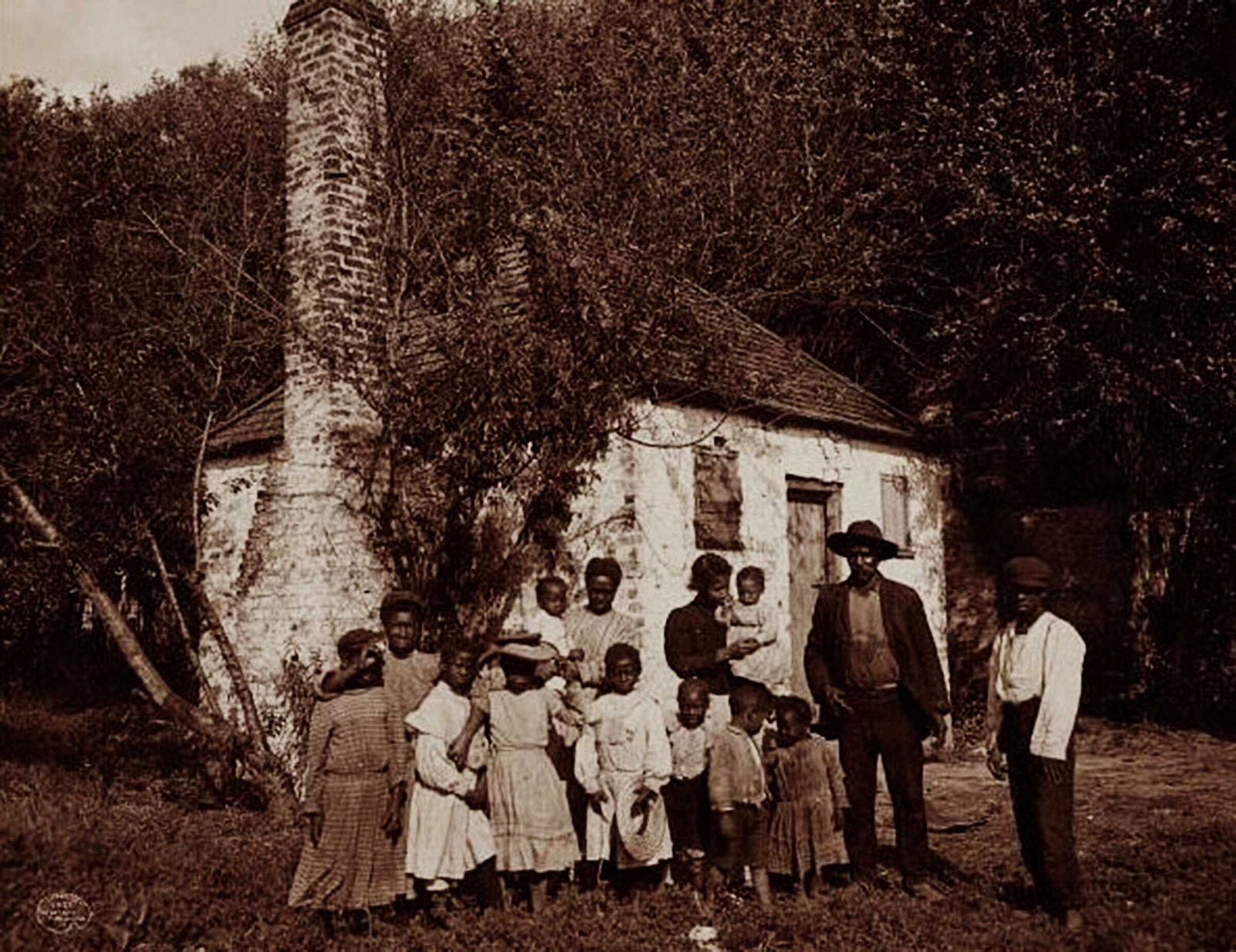
The emancipation of enslaved people came with a promise of economic foundation. That promise was broken within the year, and the bill has been accumulating ever since.
The emancipation of enslaved people came with a promise of economic foundation. That promise was broken within the year — and the bill has been accumulating ever since.
There is a version of the Juneteenth story that ends on June 19, 1865 — Union troops arrive in Galveston, General Order No. 3 is read aloud, 250,000 enslaved people in Texas learn they are free, and the chains come off. That version is incomplete to the point of being misleading. Because what happened on June 19, 1865 was not the end of an injustice. It was the beginning of a new phase of it — one in which the same people who had been enslaved for generations were declared legally free and then immediately stripped of the material foundation that would have made that freedom real.
Understanding that sequence — emancipation followed by systematic dispossession followed by 160 years of compounding economic disadvantage — is essential to understanding why the conversation about reparations is not separate from Juneteenth. It is the logical continuation of it.
The Promise: 40 Acres and a Mule
The story begins, as so many pivotal American stories do, with a promise made and broken in quick succession.
In January 1865, as the Civil War neared its end, Union General William T. Sherman met with a group of Black ministers in Savannah, Georgia. He asked them directly what freed people needed. Their answer, as recorded in history, was unambiguous: land. “The way we can best take care of ourselves is to have land and turn it and till it by our own labor,” said the Reverend Garrison Frazier, spokesperson for the group.
On January 16, 1865, Sherman signed Field Order 15, reserving 400,000 acres of Confederate land along the Atlantic coast for distribution to freed Black families in parcels of 40 acres each. As many as 40,000 freedmen settled on the redistributed land in the months that followed, building homes, planting crops, and beginning to construct the economic foundation that genuine freedom required.
The promise was the first systematic attempt to provide a form of reparations to newly freed slaves, astonishingly radical for its time, proto-socialist in its implications. What most people don’t know is that the idea was generated by Black leaders themselves, not handed down by a benevolent government, but demanded and articulated by the people who needed it most.
It lasted less than a year.
President Andrew Johnson, who had owned slaves and publicly shared his beliefs in white supremacy, overturned Field Order 15 before the end of 1865 and returned the 400,000 acres to the Confederate landowners and traitors who had originally owned it. The long-term financial implications of this reversal are staggering: by some estimates, the value of 40 acres and a mule for those 40,000 freed families would be worth $640 billion today.
That figure, $640 billion, is not an abstraction. It represents generational wealth that was promised, created, and then seized back by a government that had just spent four years fighting a war ostensibly to end slavery. The people who had been enslaved were freed with their bodies. The economic foundation of that freedom was taken back within months.
What Followed the Betrayal
The revocation of Field Order 15 was not an isolated decision. It was the first in a long chain of structural choices that would systematically prevent Black Americans from building the wealth that every other group of Americans was being helped to accumulate.
The betrayal did not stop with 40 acres and a mule. America doubled down on keeping Black people from owning land and building wealth through Jim Crow laws that restricted where Black people could live, own businesses, and buy property, through redlining that saw banks and the federal government deny Black families access to home loans and insurance, through racially restrictive covenants that barred Black families from buying homes in entire neighborhoods.
Each of these mechanisms did not just prevent Black wealth accumulation in the moment. They prevented the transmission of that wealth across generations, which is precisely how wealth works in America. White families who bought homes in restricted neighborhoods in the 1940s and 1950s, subsidized by federal mortgage programs that explicitly excluded Black applicants, passed those homes to their children and grandchildren. The wealth compounded. The exclusion compounded too.
From 2019 to 2022, the mean gap in net worth between Black and white households grew from $841,900 to $1.15 million, a 38 percent increase that far outpaced inflation during the same period. The modern racial wealth gap is not shrinking. It is growing.
Today, only 44% of Black individuals own a home compared to nearly 73% of white individuals, a gap that is a direct vestige of discriminatory housing practices such as redlining. In 2022, for every $100 in wealth held by white households, Black households held only $15.
These numbers are not the result of individual choices or cultural differences. They are the documented, measurable outcome of policy decisions made across generations, beginning with Andrew Johnson’s return of the 40 acres in 1865, continuing through the Federal Housing Administration’s explicitly racist lending policies of the mid-20th century, and extending to the present day through the compounding logic of inherited wealth.
H.R. 40: Thirty-Six Years of Asking to Be Heard
The legislative response to this history has been, to put it diplomatically, slow. H.R. 40, the Commission to Study and Develop Reparation Proposals for African Americans Act, was designed to address the fundamental injustice, cruelty, brutality, and inhumanity of slavery, its subsequent racial and economic discrimination against African Americans, and the impact of these forces on living African Americans, to make recommendations to Congress on appropriate remedies.
This bill does not propose direct payments. It does not define a reparations program. It proposes, simply, a commission to study whether one is warranted. And yet, the legislation has a 36-year legislative journey, led originally by Congressman John Conyers and later by Congresswoman Sheila Jackson Lee, during which it was introduced in every Congress and never debated on the House floor.
Ahead of Juneteenth 2025, Congresswoman Ayanna Pressley announced growing support for H.R. 40, with the legislation now having the support of more than 100 national and grassroots organizations and 85 members of Congress. “The state of our reparations movement is strong and in this moment of heightened anti-Blackness in America, we are more resolved than ever,” said Pressley. “H.R. 40 is racial justice, economic justice, and a moral imperative.”
Eighty-five members of Congress. Out of 535. For a bill that only asks for a study. The gap between the scale of the injustice and the pace of the legislative response is itself a data point worth sitting with.
The Double Standard That Nobody Wants to Name
Reparations researcher Dreisen Heath has pointed to a critical inconsistency: “For over 30 years, the federal government has actively blocked merely a study and recommendations on the issue of reparations for Black people via H.R. 40, but yet the federal government has routinely paid reparations to white veterans exposed to toxic waste waters, 9/11 victims, and other injured, non-Black communities.” Heath argues that it is “never too late to repair state-sanctioned violations.”
The argument is historically grounded. In April 1862, Washington, D.C., saw fit to compensate former slave owners for lost “property”, the enslaved people who were freed under the Compensated Emancipation Act. The government paid the enslavers. It did not pay the enslaved. That transaction is not an abstraction from a distant past. It is the literal foundation of the argument that the United States government has an established practice of paying reparations, it just has never paid them to the right people.
What Juneteenth Has to Do With All of This
The connection between Juneteenth and reparations is not rhetorical. It is structural. Juneteenth commemorates the moment that legal freedom arrived for the last enslaved people in America. But legal freedom, without economic foundation, is a different kind of bondage. Former slaves theoretically gained ownership of their bodies, yet lost large-scale access to land. They exited the status of property only to enter an economy where former masters retained the soil, the capital, the tools, the courts, the militias, the contracts, and most local power.
A Juneteenth that is observed without a serious engagement with reparations misses the point. Juneteenth serves as a reminder of the ongoing legacy of racial injustice and the need to address its lingering impacts. By championing reparations, we acknowledge the horrors of slavery and recognize the resilience of Black people who continue to suffer at the hands of America’s choices. We also take a crucial step toward healing and reconciliation as we work toward an America as good as its ideals.
On our current trajectory, it would take at least five centuries to close the Black-white wealth divide, more than twice as long as the United States of America has existed. Efforts to address the racial wealth gap will have to confront the many centuries of enslavement and disenfranchisement that produced it.
Five centuries. To close a gap created in two and a half centuries of deliberately withheld freedom, compounded by 160 years of systematically denied economic opportunity. The holiday celebrates the arrival of legal freedom. The reparations conversation is about whether that freedom was ever made economically real. The answer, measured in the $1.15 million average wealth gap between Black and white households in 2022, is that it has not been.
The debt is documented. The bill is due. And Juneteenth, properly understood, is not a celebration that the debt has been paid. It is an annual reminder that it has not.
Thank you for taking the time to read and reflect. I write to help people think clearly about money, business, real estate, and life, not from theory, but from decades of lived experience.
If you are navigating a financial decision, building a business, considering homeownership, or simply trying to make better use of your time and resources, I invite you to engage further.
Subscribe to The Power Is Now TV to connect with me live every weekday, Monday through Friday, from 10:00 AM to 11:00 AM PST, as we record television shows across the Power Is Now TV Network. As a subscriber, you can participate in live tapings, engage in real-time discussions, and connect directly with industry leaders.
Visit ThePowerIsNow.com to access real estate magazines, books, podcasts, television shows, and exclusive media content focused on homeownership, business, and wealth-building.
For personalized support, consulting, and advisory services in real estate, mortgages, business, and personal finance, visit EricFrazier.com to schedule a consultation and learn more about my work as your trusted advisor in business and wealth.
Eric Lawrence Frazier, MBA
Your trusted advisor in business and wealth
www.ericfrazier.com | www.thepowerisnow.com
NMLS #461807 | CA DRE #01143484
Schedule a consultation: https://calendly.com/ericfrazier/real-estate-mortgage-consultation-clients
References
Addo, F. R., Darity, W. A., & Myers, S. L. (2024). Setting the record straight on racial wealth inequality. AEA Papers and Proceedings, 114, 169–173. https://news.duke.edu/stories/2024/06/10/u-s-racial-wealth-gap-is-persistent-and-growing-new-research-finds/
Brookings Institution. (2024, January 18). Black wealth is increasing, but so is the racial wealth gap. https://www.brookings.edu/articles/black-wealth-is-increasing-but-so-is-the-racial-wealth-gap/
Heath, D., as cited in MSNBC Opinion. (2025). There’s no better time than Juneteenth to demand reparations for African Americans. https://www.ms.now/opinion/msnbc-opinion/juneteenth-reparations-bill-cori-bush-rcna89625
History.com Editors. (2025, January 31). The short-lived promise of ’40 Acres and a Mule’. HISTORY. https://www.history.com/articles/40-acres-mule-promise
Leadership Conference on Civil and Human Rights. (2024, June 19). Juneteenth reflections: Revisiting reparations. https://civilrights.org/blog/juneteenth-reflections-revisiting-reparations/
National Farmers Union. (2020, June 19). Juneteenth and the broken promise of “40 Acres and a Mule”. https://nfu.org/news/juneteenth-and-the-broken-promise-of-40-acres-and-a-mule/
Pressley, A. (2025, June 18). Ahead of Juneteenth, momentum grows for H.R. 40 [Press release]. U.S. House of Representatives. https://pressley.house.gov/2025/06/18/ahead-of-juneteenth-momentum-grows-for-h-r-40-pressleys-historic-reparations-legislation