
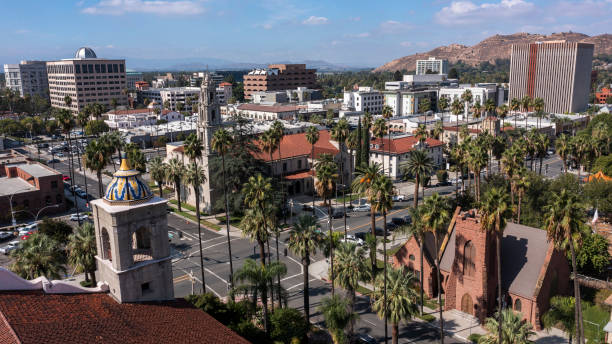
Riverside County continues to play a central role in California’s housing narrative, particularly as affordability pressures push buyers further inland from coastal markets. As part of the Inland Empire, the county has evolved from being viewed primarily as a commuter region into a major residential and logistics-driven housing ecosystem. In 2026, the real estate market reflects a complex balance between steady population growth, moderated pricing, and a shifting demand structure influenced by interest rates and long-term affordability concerns.
Unlike coastal California markets where price levels remain extremely high and supply remains tightly constrained, Riverside operates in a more fluid environment where inventory is relatively higher, price adjustments are more visible, and buyer competition fluctuates depending on interest rate sensitivity. Despite this, the county has not experienced a structural downturn. Instead, it is undergoing a normalization phase where price growth has slowed, demand has become more selective, and sellers are adjusting expectations to align with broader economic conditions.
This article provides a detailed examination of Riverside County’s 2026 housing market, focusing on pricing behavior, inventory trends, transaction activity, and the evolving role of affordability migration in shaping long-term real estate patterns.
Pricing Behavior: Mild Declines Mask a Stabilizing Market Structure
Riverside County’s housing market is currently operating within a moderate pricing correction phase rather than a downturn. Recent data places the average home value at approximately $610,000 to $650,000 depending on city and measurement index, reflecting a year-over-year change ranging between -0.1% and -1.1% across different reporting datasets. While this indicates slight softening, the broader structure of the market remains stable when viewed over a multi-year horizon.
What is particularly important in Riverside is that pricing adjustments are not driven by distress but by affordability recalibration. Higher borrowing costs have reduced the maximum purchasing power for many households, which in turn has created downward pressure on pricing growth rather than outright price collapse. At the same time, seller equity positions remain relatively strong, preventing forced sales or widespread discounting.
This creates a market environment where prices are adjusting at the margins rather than collapsing in segments, reinforcing the idea of stabilization rather than decline.
Inventory Conditions: Balanced Supply with Regional Variation
Inventory levels in Riverside County remain significantly higher than those found in coastal California markets, which introduces a more balanced dynamic between buyers and sellers. Active listings have ranged from approximately 9,000 to over 13,000 units countywide depending on seasonal cycles and reporting methods. This level of supply gives buyers more choice compared to tighter metropolitan markets such as San Diego or Orange County.
However, this does not mean the market is oversupplied. Instead, it reflects a healthy but uneven inventory distribution, where some submarkets experience faster absorption while others linger longer on the market. Well-priced homes in commuter-friendly areas tend to move more quickly, while overpriced listings face extended marketing periods.
Median days on market typically range between 30 and 60 days depending on the dataset and location within the county, which signals a market that is neither overheated nor stagnant. This balance is important because it demonstrates that supply and demand are relatively aligned, even if pricing momentum has slowed.
Buyer Migration: Inland Movement Continues to Shape Demand
One of the defining structural forces in Riverside County is ongoing migration-driven demand from coastal California markets. Many households continue relocating from Los Angeles, Orange County, and San Diego in search of more attainable homeownership opportunities. This migration pattern has been one of the primary drivers of long-term demand stability in the Inland Empire.
However, in 2026, this migration effect has become more selective. Instead of broad-based movement, buyers are now highly sensitive to interest rates, job stability, and total monthly housing costs. As a result, demand remains present but less aggressive than in previous expansion cycles.
This shift has created a more segmented buyer pool, where entry-level and mid-tier properties attract the most activity, while higher-priced inland homes experience slower absorption. The migration trend remains intact, but its intensity has moderated compared to earlier periods of rapid inland expansion.
Pricing Segmentation: Neighborhood-Level Divergence Becomes More Visible
Riverside County is increasingly defined by micro-market divergence, where pricing and demand vary significantly across cities and even within neighborhoods. Cities such as Temecula, Corona, and parts of Riverside proper tend to command higher price points, often exceeding $700,000 to $875,000 in certain submarkets, while more affordable areas remain closer to the $450,000 to $600,000 range depending on property type.
This divergence reflects differences in school districts, commuter access, housing stock, and buyer preference. It also highlights the growing importance of localized analysis when evaluating Riverside County real estate, as countywide averages often mask significant internal variation.
In practical terms, this means two homes in the same county can experience entirely different market conditions based solely on micro-location and price tier positioning.
Transaction Activity: Steady Sales Despite Market Cooling
Despite slower price appreciation, transaction activity in Riverside County remains relatively strong. Recent data shows year-over-year increases in home sales volume, with thousands of properties continuing to change hands monthly across the county. This indicates that demand has not weakened significantly but has instead adjusted to new pricing and financing conditions.
Homes that are priced appropriately continue to attract multiple offers, with a notable percentage still selling at or near list price in competitive segments. However, the proportion of listings requiring price reductions has increased, signaling a more disciplined buyer environment where overpricing is quickly penalized by extended time on market.
The overall transaction flow suggests a market that is active, functional, and responsive rather than distressed or stagnant.
Riverside County’s real estate market in 2026 reflects a transition toward equilibrium rather than disruption. Prices have softened slightly in some segments, but the broader market remains structurally stable due to continued migration-driven demand and relatively balanced inventory conditions. Buyers now benefit from more options and greater negotiation power, while sellers must adopt more precise pricing strategies to remain competitive.
The most important takeaway is that Riverside is no longer defined solely by rapid expansion or affordability-driven boom cycles. Instead, it has matured into a more segmented and behavior-driven market where micro-location, pricing accuracy, and financing conditions play a central role in determining outcomes.
Thank you for taking the time to read and reflect. I write to help people think clearly about money, business, real estate, and life — not from theory, but from decades of lived experience.
If you are navigating a financial decision, building a business, considering homeownership, or simply trying to make better use of your time and resources, I invite you to engage further.
Subscribe to The Power Is Now TV to connect with me live every weekday, Monday through Friday, from 10:00 AM to 11:00 AM PST, as we record television shows across the Power Is Now TV Network. As a subscriber, you can participate in live tapings, engage in real-time discussions, and connect directly with industry leaders.
Visit ThePowerIsNow.com to access real estate magazines, books, podcasts, television shows, and exclusive media content focused on homeownership, business, and wealth-building.
For personalized support, consulting, and advisory services in real estate, mortgages, business, and personal finance, visit EricFrazier.com to schedule a consultation and learn more about my work as your trusted advisor in business and wealth.
Eric Lawrence Frazier, MBA
Your trusted advisor in business and wealth
www.ericfrazier.com | www.thepowerisnow.com
NMLS #461807 | CA DRE #01143484
Schedule a consultation: https://calendly.com/ericfrazier/real-estate-mortgage-consultation-clients
References
U.S. Department of Housing and Urban Development. (2026). Housing affordability and market indicators dataset. https://www.huduser.gov/portal/datasets/hads.html
U.S. Census Bureau. (2026). American Community Survey: Riverside County housing and demographic trends. https://www.census.gov/programs-surveys/acs
California Department of Housing and Community Development. (2026). State housing market and affordability reports. https://www.hcd.ca.gov