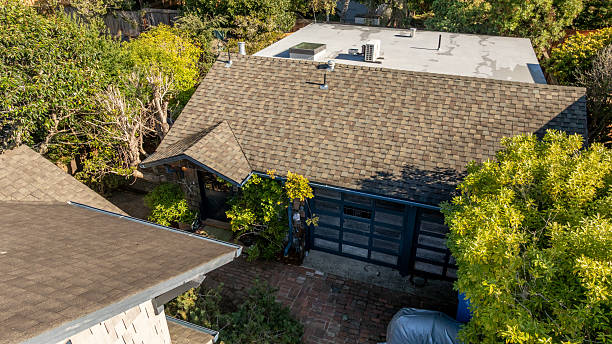
Riverside County has become one of the most closely watched real estate markets in Southern California, largely because it sits at the intersection of affordability pressure and policy-driven housing expansion. As coastal counties like Los Angeles and Orange continue to experience extreme price escalation, Riverside has absorbed a steady wave of migration from buyers seeking more attainable entry points into homeownership and investment properties.
At the same time, California’s evolving housing laws are reshaping how property owners can maximize land use. Two of the most impactful tools driving this shift are SB9 lot splits and Accessory Dwelling Units (ADUs). Both strategies are designed to increase housing supply on existing residential land, but they function very differently in practice. SB9 focuses on subdividing land and creating additional primary units, while ADUs add secondary living spaces without changing the underlying parcel structure.
In Riverside County, where single-family zoning still dominates but development pressure is increasing, the comparison between these two approaches has become a defining issue for homeowners, builders, and investors in 2026. Understanding how each option performs in terms of cost, approval speed, and long-term value is essential for anyone navigating this evolving market.
Understanding the Two Housing Strategies
SB9 Lot Splits: Creating New Parcels and Ownership Paths
SB9 allows qualifying homeowners in single-family zones to split one parcel into two and build up to two units per lot, effectively creating up to four housing units in total under specific conditions. This law applies across California, including Riverside County, though local restrictions and eligibility rules still apply.
To qualify, properties must meet strict criteria related to zoning, environmental risk, and land conditions. For example, parcels located in high fire zones, flood areas, or protected environmental regions may be excluded or require additional approvals. Even when eligible, SB9 developments are processed through ministerial review, meaning cities cannot require public hearings or discretionary approvals, which significantly reduces political delays.
However, the process is still complex in practice. Developers must handle utility separation, new parcel mapping, and infrastructure adjustments, all of which add cost and time. In Riverside County, SB9 is often viewed as a long-term value strategy rather than a quick development solution.
ADUs: Incremental Density on Existing Lots
Accessory Dwelling Units (ADUs) operate under a different framework. Instead of dividing land, they add secondary housing units—either attached, detached, or converted structures—on an existing parcel.
California state law requires cities and counties to allow ADUs with streamlined approvals and minimal barriers. In Riverside, homeowners can typically build at least one ADU on a residential lot, with setbacks as low as four feet and simplified permitting processes compared to traditional development.
ADUs can reach up to 1,200 square feet depending on design and local compliance, and they are increasingly used for rental income, multigenerational housing, or long-term property value enhancement.
Unlike SB9, ADUs do not require land subdivision, making them significantly easier and faster to implement.
Cost and Feasibility Comparison in Riverside County
SB9 Costs and Complexity
SB9 projects tend to be capital-intensive. Costs include:
- Land surveying and subdivision mapping
- Utility separation for new parcels
- Infrastructure extensions (water, sewer, electrical)
- Construction of additional primary units
In many cases, total development costs can exceed six figures before construction even begins. Additionally, financing can be more complex because lenders evaluate SB9 projects similarly to small-scale subdivisions rather than simple home improvements.
The upside, however, is long-term value creation. A successful SB9 project can effectively transform a single property into two independently sellable assets, significantly increasing total property value.
ADU Costs and Accessibility
ADUs are generally more cost-effective and accessible. In Riverside County, basic detached ADUs often range from moderate to high five-figure or low six-figure construction budgets depending on size, materials, and utility connections. Converted garage units tend to be the most affordable entry point.
Because ADUs do not require land division, permitting is faster and financing is simpler. Many homeowners use equity lines of credit or construction loans to fund projects. The return is typically generated through rental income rather than property division.
Market Trends Driving Both Strategies
Several key trends are influencing the growing use of both SB9 and ADUs in Riverside County:
1. Inland Migration
Riverside continues to absorb demand from Los Angeles and Orange County, where median home prices often exceed $1 million. This migration increases rental demand and makes ADU construction financially attractive.
2. Affordability Pressure
With interest rates remaining elevated through 2025–2026, buyers are relying more on multi-unit strategies to offset mortgage costs. ADUs are particularly popular because they generate immediate rental income.
3. State Housing Mandates
California’s broader housing strategy continues to push for increased density through both subdivision (SB9) and incremental development (ADUs), ensuring both tools remain relevant in long-term planning.
Key Differences in Practical Outcomes
In Riverside County, the distinction between SB9 and ADUs is not just legal—it is strategic.SB9 is about ownership expansion
It creates additional parcels and long-term equity growth but requires more capital and patience.
- ADUs are about income generation
They provide faster returns through rental income and are easier to implement on most properties.
In many cases, homeowners are now combining both strategies—using SB9 for long-term wealth building while adding ADUs for immediate cash flow.
Riverside County sits at a critical point in California’s housing evolution. As demand continues to shift inland, property owners are increasingly looking for ways to maximize value from existing land. SB9 lot splits and ADUs represent two very different but complementary strategies that reflect this new reality.
SB9 offers long-term structural transformation of property ownership, while ADUs provide immediate, flexible income opportunities. Neither approach is universally better; instead, their value depends on financial goals, property conditions, and development capacity.
What is clear is that Riverside is no longer just an affordability alternative—it is becoming a laboratory for California’s new housing model, where land use, policy, and investment strategy are increasingly intertwined.
Thank you for taking the time to read and reflect. I write to help people think clearly about money, business, real estate, and life — not from theory, but from decades of lived experience.
If you are navigating a financial decision, building a business, considering homeownership, or simply trying to make better use of your time and resources, I invite you to engage further.
Subscribe to The Power Is Now TV to connect with me live every weekday, Monday through Friday, from 10:00 AM to 11:00 AM PST, as we record television shows across the Power Is Now TV Network. As a subscriber, you can participate in live tapings, engage in real-time discussions, and connect directly with industry leaders.
Visit ThePowerIsNow.com to access real estate magazines, books, podcasts, television shows, and exclusive media content focused on homeownership, business, and wealth-building.
For personalized support, consulting, and advisory services in real estate, mortgages, business, and personal finance, visit EricFrazier.com to schedule a consultation and learn more about my work as your trusted advisor in business and wealth.
Eric Lawrence Frazier, MBA
Your trusted advisor in business and wealth
www.ericfrazier.com | www.thepowerisnow.com
NMLS #461807 | CA DRE #01143484
Schedule a consultation: https://calendly.com/ericfrazier/real-estate-mortgage-consultation-clients
References