
Homeownership Part 2: 62% Say Buying a Home Is Unrealistic. Who’s Paying Attention?

You need to be logged in to view this content. Please Log In. Not a Member? Join Us
HOMEOWNERSHIP PART 1: The American Dream Is Aging Out

There was a time when buying your first home was something you did in your late twenties. Maybe early thirties if life got complicated. It was one of those assumed steps, finish school, get a job, get a place. The kind of thing your parents did, and their parents before them, without too much drama about whether it was actually achievable. That timeline is gone. The median age of a first-time homebuyer in the United States has reached 40 years old, up from 33 in 2020. That’s a seven-year jump in just half a decade. To put it in historical context, the average American in 1980 became a first-time homeowner around age 29. Today’s first-time buyer is closer to a parent dropping a kid off at college than a young adult planting roots. And while that shift may look like a footnote in a quarterly housing report, what it represents is far more serious, a fundamental disruption to the way Americans have traditionally built wealth, stability, and a financial foundation for the next generation. A number that doesn’t tell the whole story on its own To be fair, there’s some debate in the research community about the exact figure. Some datasets put the median closer to 33, largely unchanged over the past decade, depending on how “first-time buyer” is defined and which survey methodology is used. But even those more conservative estimates point to the same underlying trend: first-time buyers are entering the market later, in smaller numbers, and under significantly more financial strain than they were twenty years ago. The homeownership rate for Americans 35 and under stood at 37.9% in the fourth quarter of 2025, up slightly from a five-year low of 36.3%, a modest recovery, likely tied to a brief easing in mortgage rates. But for the 35-to-44 age group, the rate sits at 60.9%, a full nine percentage points below the 25-year high of 70.1% recorded in early 2005. The direction is clear even when the exact numbers are contested. What isn’t debated is the broader affordability picture. Home prices have surged more than 50% since 2020. The minimum recommended household income to purchase a median-priced starter home hit approximately $86,000 in 2025, a threshold that exceeds the earnings of a large portion of first-time buyers. The median down payment climbed to around $30,400, representing roughly 14.4% of a home’s purchase price. For a household earning $65,000 a year and paying $1,800 a month in rent, those numbers don’t come together in a few years. They come together over a decade, if they come together at all. The weight of everything stacking at once Price is only part of the story. What’s really driving first-time buyers to the sidelines is the accumulation of financial pressures that have hit younger generations simultaneously and with unusual force. Student loan debt is one of the most significant. Many Millennials and Gen Z adults entered the workforce already carrying five- and six-figure balances before earning a meaningful paycheck. That debt doesn’t just shrink a monthly budget, it directly affects credit profiles, debt-to-income ratios, and the practical ability to qualify for a competitive mortgage. A 26-year-old with $60,000 in student debt isn’t just financially stretched. They are structurally disadvantaged in a mortgage application compared to someone who graduated without that burden, even if their income is identical. Then there’s the rental trap. In most metro markets, rents have risen fast enough that saving for a down payment while paying monthly rent has become a genuine challenge even for middle-income earners. According to survey data, 66% of renters identified saving for a down payment as the biggest barrier to homeownership, while 55% pointed to limited access to loan assistance programs, and 41% cited confusion about the mortgage process itself. These aren’t low-income renters exclusively, they’re working adults earning reasonable salaries who are still falling short of the finish line. Add to this the broader erosion of disposable income. Grocery prices, healthcare costs, childcare, and transportation have all climbed sharply over the same period that housing became less affordable. The financial slack that allowed previous generations to save aggressively in their mid-twenties simply doesn’t exist for a large portion of today’s young workforce. Survey data shows that only 36% of Americans believe they can currently afford to buy a home, down from 51% the previous year, and only 32% are actively setting money aside for a down payment. 1.82 million households that don’t exist One of the starkest ways to understand what this delay actually means is through the concept of “missing households”, adults who would, under normal market conditions, have formed independent households by now, but instead remain living with parents or in shared arrangements out of financial necessity. In 2025, an estimated 1.82 million Millennial and Gen Z households were missing, the highest count recorded in four years. Among Americans between 18 and 44, the share living with parents is 2.7 percentage points higher than it was during the 2010 to 2014 period. That’s not a rounding error. That’s a generation deferring adulthood, not because they want to, but because the market hasn’t left them much of a choice. This has real economic consequences beyond the individuals involved. Missing households mean lower demand for furniture, appliances, and home goods. They mean less neighborhood formation, fewer community anchors, and reduced civic investment. The downstream effects of a generation delayed from homeownership ripple outward in ways that don’t show up in housing market reports. The compounding cost of a late start The reason this matters beyond individual frustration is simple: homeownership has historically been the primary mechanism through which American families build and transfer wealth. The equity that accumulates in a home over 20 or 30 years is, for most middle-class households, the backbone of whatever financial stability they eventually pass on. When you buy your first home at 40 instead of 30, you’re not just ten years behind on that clock. You’re likely still managing other financial obligations, raising children, paying
Financing Barriers in San Bernardino County’s 2026 Housing Market—When Affordability Isn’t the Real Problem

San Bernardino County continues to stand out in California’s real estate landscape as one of the most affordable entry points into homeownership within Southern California. Median home prices in early 2026 remain in the range of approximately $490,000 to $550,000 depending on the city and property type, which is significantly lower than neighboring Los Angeles and Orange Counties where prices often exceed $1 million. On the surface, this gap suggests opportunity for first-time buyers and investors seeking value-driven markets. However, affordability alone does not determine accessibility. In practice, many buyers in San Bernardino are finding that the greatest challenge is not the listing price of homes, but the ability to qualify for financing under current lending conditions. Elevated interest rates, stricter underwriting standards, and rising debt-to-income expectations have created a financial environment where even moderately priced homes can be difficult to secure. As a result, the county is experiencing a shift in market behavior. Homes may be priced within reach, yet monthly payments, qualification thresholds, and lending requirements are increasingly acting as the true barriers to entry. This dynamic has reshaped how buyers approach the market in 2026, making financing—not pricing—the central issue in San Bernardino real estate. The Illusion of Affordability in a High-Rate Environment At first glance, San Bernardino County appears more accessible than much of California. Recent market data shows median home values hovering around the mid-$500,000 range, with some areas slightly lower depending on condition and location. Compared to coastal counties, this pricing structure should theoretically support strong first-time buyer activity. However, the affordability equation changes significantly when interest rates are factored in. With 30-year fixed mortgage rates remaining elevated in the 6% to 7% range throughout 2025 and into 2026, monthly payment obligations have increased substantially compared to the previous low-rate cycle. A $500,000 home purchased with a standard 20% down payment can result in monthly mortgage payments exceeding $3,200 to $3,800 once taxes and insurance are included. For many households, this pushes total housing costs well beyond comfortable debt-to-income ratios. This creates a situation where homes are technically affordable in price, but not in monthly payment structure. Debt-to-Income Ratios: The Real Gatekeeper Lenders in 2026 continue to rely heavily on debt-to-income (DTI) ratios to determine borrower eligibility. While conventional lending guidelines often target a DTI ceiling around 43%, many borrowers in San Bernardino are approaching or exceeding this threshold due to existing consumer debt and rising living expenses. What makes this particularly important in the Inland Empire is the income-to-cost imbalance. While home prices are lower than coastal markets, median household incomes have not increased at the same pace as borrowing costs. This creates a squeeze where even modest mortgage payments consume a larger share of monthly income than in previous cycles. In practical terms, two households with identical income profiles may see very different outcomes depending on existing credit card debt, auto loans, and student loan obligations. This makes mortgage approval less predictable and more sensitive to financial structure rather than just income level. Credit Standards and Lending Tightening Another major factor shaping San Bernardino’s housing market is the tightening of credit standards. While lending is not historically restrictive, banks have become more cautious in response to interest rate volatility and broader economic uncertainty. Borrowers with credit scores below the mid-700s are increasingly facing higher interest rate adjustments, stricter reserve requirements, or in some cases, loan denial despite having sufficient income on paper. This creates a tiered buyer pool where financially stronger applicants are able to move forward, while middle-tier borrowers are often pushed out of the market. The result is a narrowing of the qualified buyer base, even in a region traditionally known for accessibility. The Impact on Market Activity San Bernardino’s housing market reflects these financing constraints in several measurable ways. Homes are still selling, but transaction volume is uneven and highly sensitive to rate changes. Recent data shows that homes can remain on the market for extended periods when priced even slightly above buyer qualification thresholds. In many cases, sellers are adjusting prices multiple times before securing offers, particularly in older housing stock or properties requiring repairs. Cash buyers and investor groups have become more prominent in this environment, as they are less dependent on traditional financing structures. At the same time, rental demand remains relatively strong. Monthly rents averaging around the mid-$2,000 range have created an alternative pressure point, where some households opt to rent longer rather than commit to high monthly mortgage obligations under current lending conditions. First-Time Buyers and the Qualification Gap First-time buyers are the most affected segment in San Bernardino County’s current market. Many households can afford down payments or meet basic price expectations, but fall short when evaluated under full underwriting standards. This “qualification gap” is driven by several factors: High existing consumer debt obligations Limited savings for reserves required by lenders Interest rate sensitivity increasing monthly payment burdens Stricter documentation requirements for self-employed borrowers As a result, many potential buyers remain in a holding pattern, waiting for either rate relief or income growth before entering the market. Investor Activity and Market Adaptation While owner-occupant buyers face challenges, investor activity continues to play a stabilizing role in San Bernardino’s housing market. Cash-heavy investors are often better positioned to acquire properties quickly, particularly those needing renovation or repositioning. This has created a bifurcated market structure where traditional buyers face financing constraints, while investors operate with greater flexibility. Over time, this dynamic can influence neighborhood composition, rental supply, and long-term pricing stability. San Bernardino County’s 2026 housing market demonstrates a critical shift in how affordability is defined. While home prices remain comparatively accessible within Southern California, financing conditions have become the primary barrier to entry. Rising interest rates, stricter lending standards, and higher debt-to-income expectations have redefined what it means to “qualify” for a home. The result is a market where opportunity exists on paper, but access is determined by financial structure rather than price alone. For buyers, this means preparation and financial positioning are
Mortgage Delinquencies Are Low—but the Warning Signal Is Underneath the Headline

Mortgage performance data is often interpreted through a single headline number, but that surface-level reading can hide important shifts underneath. While overall delinquency rates may appear stable or even improving in the short term, the deeper breakdown of loan performance can tell a more complex story about household financial pressure and emerging vulnerability in parts of the borrower population. Recent results from the Mortgage Bankers Association’s National Delinquency Survey for the second quarter of 2026 show that the overall mortgage delinquency rate declined slightly to 4.37%, down seven basis points from the previous quarter. At first glance, this suggests a stable housing finance environment. However, the same report also shows that the delinquency rate remains 44 basis points higher than a year earlier, indicating that year-over-year stress is still building in the system. More importantly, seriously delinquent loans have increased for four consecutive quarters, pointing to growing strain beneath the surface. This combination of stable headline performance and rising severe delinquency highlights an important distinction in housing finance: not all borrowers experience market conditions in the same way. Understanding what is driving this divergence requires looking beyond the headline rate and focusing on financial resilience, household buffers, and exposure to economic shocks. The Meaning Behind Stable Delinquency Rates A delinquency rate of 4.37% suggests that the majority of homeowners are still keeping up with their mortgage obligations. In isolation, this number could be interpreted as a sign of stability in the housing finance system. However, mortgage performance data is layered, and the distribution of stress matters as much as the overall rate. The fact that delinquency is slightly lower than the previous quarter indicates short-term improvement in payment performance. However, the year-over-year increase of 44 basis points signals that underlying pressure has not fully eased. More importantly, the increase in seriously delinquent loans for four consecutive quarters suggests that while many borrowers are managing payments, a smaller segment is falling further behind. This divergence is often the first stage of financial stress becoming more concentrated. Rather than widespread default risk, the pattern points to growing vulnerability within specific household segments. Why Some Households Are Becoming More Vulnerable The current mortgage environment is shaped by multiple overlapping pressures that extend beyond the mortgage payment itself. While borrowers may qualify for a loan under underwriting standards, ongoing affordability depends on broader financial stability. Several factors are contributing to increased vulnerability: Emergency savings depletion after periods of higher inflation and elevated living costs Rising insurance premiums, particularly in regions exposed to climate-related risks Higher property tax assessments tied to earlier home value appreciation Maintenance and repair costs that increase with aging housing stock Income variability, especially among households with gig-based or variable earnings Employment uncertainty, which directly affects repayment capacity Even if mortgage payments remain consistent, these additional pressures can reduce household flexibility. When combined, they make it more difficult for borrowers to absorb unexpected financial shocks. The Importance of Seriously Delinquent Loans One of the most important warning signals in the latest data is the continued rise in seriously delinquent loans. These are typically borrowers who are significantly behind on payments, often 90 days or more. While the overall delinquency rate provides a broad snapshot, the serious delinquency category reveals where financial stress is becoming structural rather than temporary. A four-quarter increase in this segment suggests that some households are not just experiencing short-term cash flow issues but are facing sustained difficulty in maintaining mortgage payments. Historically, increases in serious delinquency often appear before broader stress becomes visible in foreclosure trends or forced sales activity. However, this does not necessarily imply an immediate housing downturn. Instead, it reflects uneven financial resilience across different borrower groups. Why Strong Home Prices Do Not Eliminate Risk A common misconception is that stable or rising home prices automatically protect households from financial stress. While equity can provide a buffer, it does not eliminate monthly payment pressure or liquidity constraints. Even homeowners with positive equity can experience difficulty meeting obligations if income stability weakens or expenses rise faster than expected. In such cases, equity alone does not resolve short-term cash flow challenges. This is why delinquency trends can rise even in environments where housing values remain relatively firm. Price stability and borrower stability are related but not identical. Financial Resilience Matters More Than Qualification The current environment highlights an important distinction between qualifying for a mortgage and sustaining homeownership over time. Underwriting standards focus on whether a borrower can afford a loan at the point of origination. However, long-term success depends on whether the household maintains sufficient liquidity after closing. Key indicators of stronger financial resilience include: Adequate emergency savings covering several months of expenses Stable employment or diversified income sources Conservative debt levels beyond the mortgage Ability to absorb increases in insurance or maintenance costs Financial flexibility to handle temporary income disruptions Without these buffers, households become more sensitive to economic shifts, even if they were initially approved for financing under standard guidelines. The latest mortgage delinquency data presents a nuanced picture. While the overall delinquency rate has edged down to 4.37%, underlying indicators show increasing stress in the form of rising year-over-year delinquency and a fourth consecutive quarterly increase in seriously delinquent loans. This divergence suggests that financial pressure is not widespread but is becoming more concentrated among vulnerable households. Rather than signaling a systemic breakdown in mortgage performance, the data points to a growing gap in financial resilience. Many homeowners continue to manage payments successfully, while others face increasing difficulty absorbing economic shocks such as rising costs, income variability, and unexpected expenses. The key takeaway is that mortgage stability depends on more than the ability to qualify for a loan. It depends on long-term financial capacity to withstand change. In that sense, the most important risk factor in today’s housing market is not price movement or interest rates alone, but household liquidity and financial preparedness beyond the mortgage payment itself. Thank you for taking the time to read and reflect. I write to
The Votings Right Act Part 3: When Race Becomes Politics – Footnotes
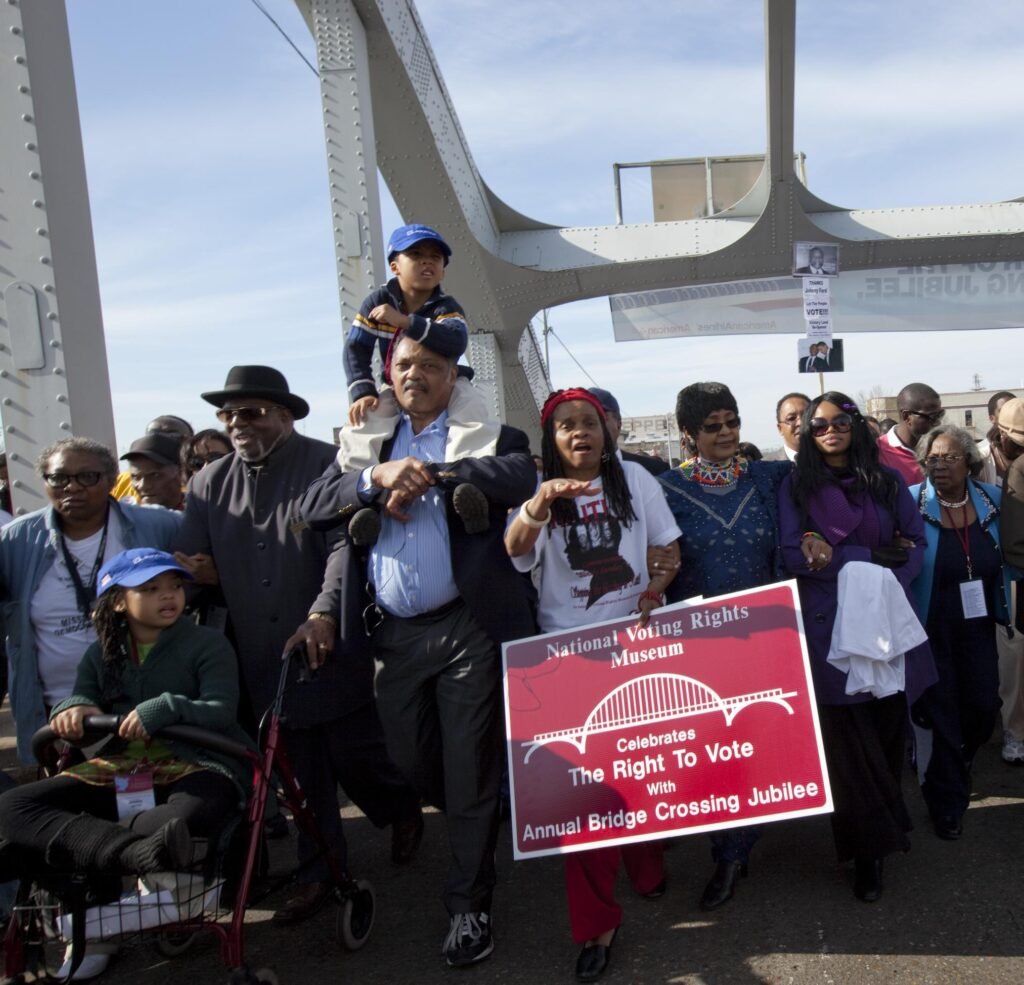
U.S. Department of Justice. “About Section 5 of the Voting Rights Act.”https://www.justice.gov/crt/about-section-5-voting-rights-act Supreme Court of the United States. Shelby County v. Holder, 570 U.S. 529 (2013).https://www.supremecourt.gov/opinions/12pdf/12-96_6k47.pdf Pew Research Center. “Partisanship by Race, Ethnicity and Education.” 2024.https://www.pewresearch.org/politics/2024/04/09/partisanship-by-race-ethnicity-and-education/ NAACP. “NAACP Files Federal Lawsuit Challenging Tennessee’s Racially Discriminatory Congressional Map.” 2026.https://naacp.org/articles/naacp-files-federal-lawsuit-challenging-tennessees-racially-discriminatory-congressional Supreme Court of the United States. Louisiana v. Callais (2026).https://www.supremecourt.gov/opinions/25pdf/24-109_21o3.pdf U.S. Department of Justice. “About Section 5 of the Voting Rights Act.”https://www.justice.gov/crt/about-section-5-voting-rights-act Supreme Court of the United States. Shelby County v. Holder.https://www.supremecourt.gov/opinions/12pdf/12-96_6k47.pdf Pew Research Center. “Partisanship by Race, Ethnicity and Education.”https://www.pewresearch.org/politics/2024/04/09/partisanship-by-race-ethnicity-and-education/ NAACP. “NAACP Files Federal Lawsuit Challenging Tennessee’s Congressional Map.”https://naacp.org/articles/naacp-files-federal-lawsuit-challenging-tennessees-racially-discriminatory-congressional
The Votings Right Act Part 3: When Race Becomes Politics – Poem
They Changed the Map but Not the Game The law was signed to change the land, to break the grip of Southern hands, so Black Americans could finally stand, with equal rights the law had planned. For years the South denied the vote, with threats and fear at every poll, through crooked laws and shifting goals, they fought to keep us from control. They changed the map but not the game, just gave the old rules newer names, and hid old power behind new claims, while saying race was not to blame. No burning cross stood in the square, no sheriff’s dogs were waiting there, yet maps were drawn with careful care, to split Black voices everywhere. In Tennessee the lines were split, in Alabama courts still sit, while Louisiana battles it, and race hides deep in politics. They changed the map but not the game, just gave the old rules newer names, and hid old power behind new claims, while saying race was not to blame. The lines were drawn to shift the weight, to move the power, seal the fate, to guard old power within the state, while courts still wrestle claims of hate. The old attacks were harsh and plain, today they hide through laws and claims, through maps designed to shift the game, while saying race was not the aim. And if we fail to teach what’s true, the past returns in something new, because old fears still travel through the laws and maps we still live through. They changed the map but not the game, just gave the old rules newer names, and hid old power behind new claims, while saying race was not to blame. Eric Lawrence Frazier Poet
The Votings Right Act Part 3: When Race Becomes Politics
Section 5, Section 2, and the Illusion of a Level Playing Field By Eric Lawrence Frazier, MBA The Voting Rights Act of 1965 has me wrestling with myself. I am trying to understand how this country arrived at this moment, and I am trying to remove myself, as much as I can, from the emotional and cultural history that naturally influences how I see this issue. That is not easy for me, because this law is not merely a statute sitting in a federal code book. It is tied to blood, humiliation, exclusion, resistance, and a long history of African Americans being told in one form or another that citizenship existed on paper but not in practice. Still, I want to understand the other side of the argument. I want to ask whether America has changed enough that the extraordinary protections of the Voting Rights Act, especially Section 5 and the enforcement strength of Section 2, are no longer necessary in the way they once were. I have to acknowledge what the Voting Rights Act accomplished. Black political representation in America is not what it was in 1965. There are African Americans in Congress, in mayoral offices, in state legislatures, in county offices, and throughout public life. Black political organizing is alive, sophisticated, and influential. It would be foolish for me to pretend the law did not change America. It did. The question is whether its success proves that its protections can now be weakened, or whether its success proves that federal protection was the reason progress happened in the first place. That is where the argument becomes complicated. The conservative response to the question “Has America forgotten?” is essentially, “No, America has not forgotten; America has changed.” Their position is that we are no longer living in the 1890s, the 1920s, the 1930s, the 1940s, or the early Jim Crow years when states openly used poll taxes, literacy tests, intimidation, violence, and fraud to block Black citizens from voting. Their position is that Black citizens can vote today, that Black candidates can win office today, that Black voters have substantial political influence today, and that states should not remain under extraordinary federal supervision forever because of sins committed generations ago. That argument deserves to be stated fairly because many Americans believe it sincerely. But fairness requires more than stating the argument. Fairness also requires examining what that argument leaves out. The question is not whether America has changed. America has changed. The question is whether the incentives that once made voter suppression politically useful have disappeared. The question is whether the structures that translate population into political power have become neutral. The question is whether states with long histories of racial exclusion can now be trusted to redraw political maps, move district lines, and restructure voting power without federal oversight when race and party identity remain deeply intertwined. This is where I believe the modern debate becomes intellectually dishonest. The new language is not always racial. It is political. States no longer need to say they are weakening Black voting power. They can say they are pursuing partisan advantage. They can say they are protecting incumbents. They can say they are drawing lawful maps based on political data. They can say race was not the motive. But in much of the South, race and party are not separate realities floating in different universes. They are often joined at the hip by history, geography, housing patterns, church networks, school systems, and voting behavior. Pew Research Center has reported that Black voters remain overwhelmingly Democratic, while white voters are much more likely than voters in other racial and ethnic groups to associate with the Republican Party. In the 2024 presidential election, Reuters reported Edison Research exit-poll results showing Donald Trump winning white voters while Kamala Harris won the overwhelming majority of Black voters. That does not mean every white Republican is racist. It does not mean every Black Democrat votes only because of race. It does not mean political identity is reducible to skin color. But it does mean that in states where Black voters are heavily Democratic and white voters are heavily Republican, a map drawn to weaken Democrats may also weaken Black political power. That is the uncomfortable reality many legal arguments try to avoid. If the state says, “We are not targeting Black voters; we are targeting Democrats,” the response cannot simply be, “Fine, then race is irrelevant.” In some places, that distinction may be legally convenient, but socially and historically false. This is the heart of Part Three. The Voting Rights Act was born because states learned how to use law, procedure, timing, geography, fear, and bureaucracy to achieve racial exclusion without always announcing racial hatred as their official policy. Section 5 was created precisely because Congress understood that after one discriminatory device was struck down, another could appear. Preclearance required certain jurisdictions with documented histories of discrimination to obtain federal approval before changing voting rules. The burden was on the state to show the change would not discriminate. That mattered because it stopped harm before it happened, instead of forcing Black voters to suffer the injury first and litigate later. In Shelby County v. Holder, the Supreme Court did not strike down Section 5 by name. It invalidated the Section 4 coverage formula that determined which jurisdictions had to seek preclearance. The practical effect was devastating because Section 5 could no longer operate without a valid coverage formula. The Court reasoned that the formula relied on outdated data and that conditions in the covered jurisdictions had changed substantially. That was the legal theory. But from the perspective of civil-rights enforcement, the ruling removed the fire alarm because there had been fewer fires while the alarm was working. The recent decision in Louisiana v. Callais has intensified this crisis. In that case, the Supreme Court’s majority described Section 2 as designed to enforce the Constitution “not collide with it,” while warning that lower courts had applied
The Voting Rights Act Part 2: Have We Forgotten Why the Voting Rights Act Exists? – Footnotes
Rothstein, R. (2017). The color of law: A forgotten history of how our government segregated America. W. W. Norton & Company. Voting Rights Act of 1965, 52 U.S.C. § 10301 (1965).https://www.archives.gov/milestone-documents/voting-rights-act History.com Editors. (n.d.). Selma to Montgomery march.https://www.history.com/topics/black-history/selma-montgomery-march U.S. Department of Justice. (n.d.). History of federal voting rights laws.https://www.justice.gov/crt/history-federal-voting-rights-laws Library of Congress. (n.d.). Fifteenth Amendment to the U.S. Constitution.https://www.loc.gov/rr/program/bib/ourdocs/15thamendment.html Shelby County v. Holder. (2013). Oyez.https://www.oyez.org/cases/2012/12-96 Brnovich v. Democratic National Committee. (2021). Oyez.https://www.oyez.org/cases/2020/19-1257 Lyndon B. Johnson. (1965). The American Promise speech.https://www.lbjlibrary.org/learn/about-lbj/american-promise
The Voting Rights Act Part 2: Have We Forgotten Why the Voting Rights Act Exists?
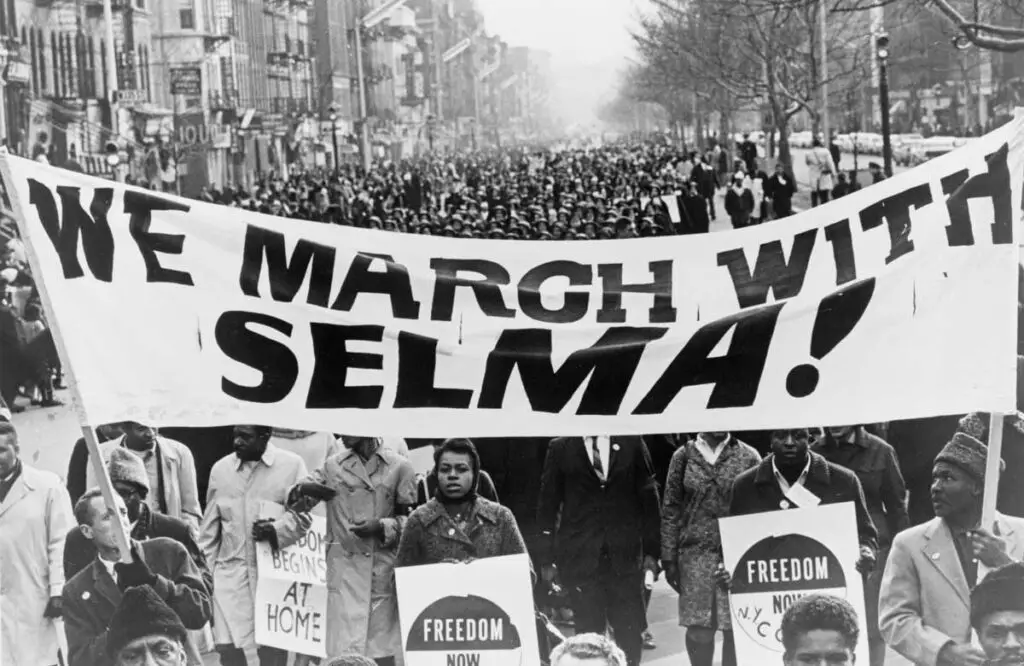
Have We Forgotten? Have we forgotten the bridge and the blows? Have we forgotten the fear Black folks know? Have we forgotten the blood and the cries? Have we forgotten America’s lies? My grandmother lived through laws that told her where she could not stand, where she could not eat or vote, where she was unwelcome in this land. My grandfather worked through pain while carrying dreams he could not touch, because in the eyes of many Americans his Black skin alone was simply too much. Have we forgotten the bridge and the blows? Have we forgotten the fear Black folks know? Have we forgotten the blood and the cries? Have we forgotten America’s lies? They said the Constitution promised freedom, said justice belonged to every man, yet Black Americans kept discovering their “freedom” came with a backhand. A hand that blocked the ballot box, a hand that enforced the racial line, a hand that called oppression “order” while stealing dignity one law at a time. Have we forgotten the bridge and the blows? Have we forgotten the fear Black folks know? Have we forgotten the blood and the cries? Have we forgotten America’s lies? There were children raised in terror, raised hearing hatred at the door, raised watching crosses burn and Black men hang because America allowed the horror. There were fathers forced to whisper, “There are places you should not go,” because freedom in this country depended on what white people would allow you to know. Have we forgotten the bridge and the blows? Have we forgotten the fear Black folks know? Have we forgotten the blood and the cries? Have we forgotten America’s lies? I was bused across the city to a school far from my home, a Black child inside a history I was too young then to fully know. I sat inside those classrooms as the only Black face anyone could see, living through federal integration without anybody explaining it to me. Have we forgotten the bridge and the blows? Have we forgotten the fear Black folks know? Have we forgotten the blood and the cries? Have we forgotten America’s lies? A nation without memory becomes a nation led by fear, where truth is slowly buried more deeply every year. And when the past is forgotten, its truth is soon replaced, because history left untended becomes history erased. Now I speak to my grandchildren while they are still young enough to hear, because silence between generations has cost our people far too dear. I want them to know the story, to know what people sacrificed to do, so nobody can rewrite the suffering or hide what this country put us through. Have we forgotten the bridge and the blows? Have we forgotten the fear Black folks know? Have we forgotten the blood and the cries? Have we forgotten America’s lies? Eric Lawrence Frazier Poet
THE END OF AN ERA: Part One — Callais and the Quiet Burial of the Voting Rights Act
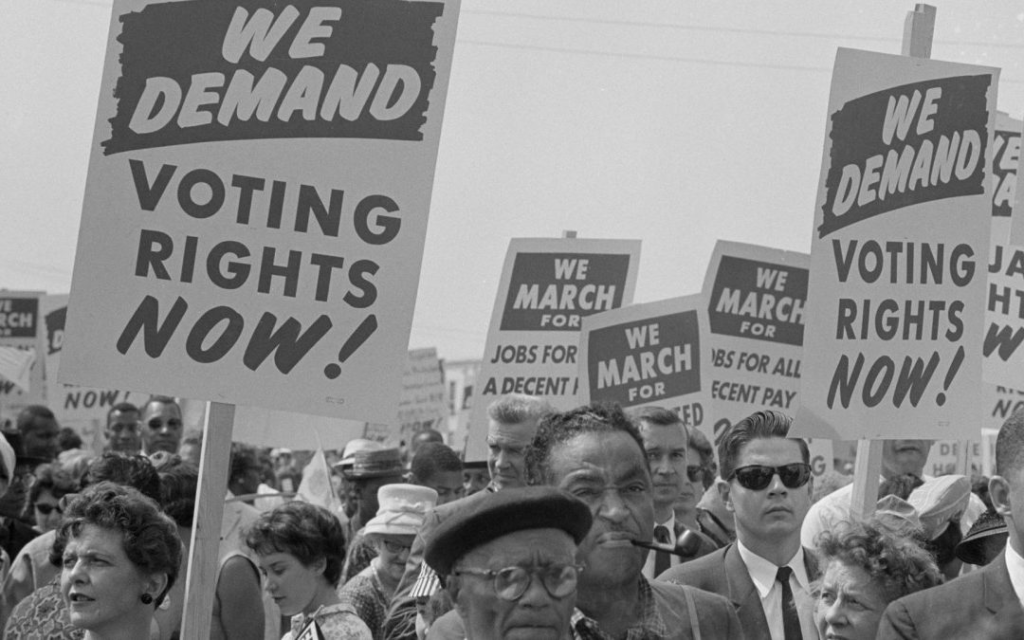
I am sitting in my office. I see the MSN newsfeed pop-up. The announcement is the Supreme Court ruling on the Voting Rights Act. I just started shaking my head. Where in the heck is this country going? Oh my God. That moment was Wednesday, April 29, 2026. The Supreme Court of the United States, by a vote of six to three, in Louisiana v. Callais, gutted what was left of Section 2 of the Voting Rights Act of 1965.1 Justice Samuel Alito wrote the majority opinion. Justices Sonia Sotomayor, Elena Kagan, and Ketanji Brown Jackson dissented. The dissent was sharp. The majority was quiet, technical, and devastating Election-law scholar Richard Hasen called it “one of the worst Supreme Court rulings of the last century.” He wrote a follow-up calling Alito a “coward” for the way the opinion avoided naming what it did. What makes Callais different from other six-to-three decisions is not the vote count. It is the silence. The majority did not announce the burial of the Voting Rights Act. It buried it quietly, the way a body is buried at night, so the neighbors will not see. What Callais Actually Did Section 2 of the 1965 Voting Rights Act prohibits voting practices or procedures that discriminate on the basis of race, color, or membership in a language minority group. After the Supreme Court gutted Section 5’s preclearance regime in Shelby County v. Holder in 2013, Section 2 became the last federal statutory tool with real enforcement teeth against racial vote dilution. The framework for proving a Section 2 violation came from Thornburg v. Gingles in 1986, which built on the rejection of intent-only standards in Mobile v. Bolden. The Gingles framework asked three threshold questions: is the minority group sufficiently large and geographically compact to constitute a majority in a single-member district; is it politically cohesive; and does the white majority vote sufficiently as a bloc to usually defeat the minority’s preferred candidate. Callais did not formally overrule Gingles. It did something more useful for those who wanted Gingles dead. It raised the burden of proof at every threshold step until the framework no longer functions as a remedy. Plaintiffs must now demonstrate not merely that the three Gingles preconditions are met, but that the challenged district was drawn with a level of racial intent that approaches the standard required to invalidate a law under the Equal Protection Clause. The Court did not say Section 2 is dead. It said Section 2 lives, but only when the plaintiff can prove what is almost impossible to prove. This is the technique. The Roberts Court has refined it for thirteen years. Shelby County did not strike Section 2; it struck the preclearance formula in Section 4(b), which made Section 5 enforceable. Rucho v. Common Cause in 2019 did not strike partisan gerrymandering claims; it ruled them nonjusticiable in federal court. Students for Fair Admissions did not strike the Fourteenth Amendment’s equal protection guarantee; it reinterpreted what the guarantee permits in the admissions context. Each ruling preserves the formal text and removes the operational tool. Callais is the same technique applied to what was left of the Voting Rights Act. The Quiet Burial The public has not been told what happened. Most morning news on April 29 led with other stories. Most evening cable coverage gave the decision two segments, then moved on. The headlines used the language of legal commentary: “limits Section 2,” “narrows voting rights claims,” “raises burden on plaintiffs.” None of them said what Hasen said: this is one of the worst rulings of the last century.2 Burying a thing quietly is not new. The Civil Rights Cases of 1883 quietly buried the Civil Rights Act of 1875 by ruling that the Fourteenth Amendment did not reach private discrimination. Plessy v. Ferguson in 1896 quietly buried the equal-protection promise of the Reconstruction Amendments by ratifying “separate but equal.” The Compromise of 1877 quietly buried Reconstruction itself by withdrawing federal troops from the South in exchange for the presidency. Each of those quiet burials was followed by decades of harm that did not have to happen. What Callais shares with those earlier quiet burials is the technique of formal preservation paired with operational destruction. The Civil Rights Act of 1875 remained on the books after 1883; it was simply unenforceable. Section 2 of the Voting Rights Act remains on the books after April 29, 2026; it is simply unenforceable in the way it was meant to be enforced. The text is undisturbed. The function is gone. The Price Never Paid Before going further into where Callais leads, the price never paid must be named. In 1860, the assessed market value of enslaved people in the United States was approximately $3.5 billion. That figure was roughly eighty percent of the gross domestic product of the country at the time. In present-day dollars, scaled to GDP share rather than to the consumer price index, the value approached twenty-two trillion dollars. That wealth was not paid to the people whose bodies and labor produced it. It was paid to the people who claimed to own them, when it was paid at all, as in the District of Columbia Compensated Emancipation Act of April 16, 1862, which paid up to three hundred dollars per enslaved person to loyal slaveholders and nothing to the people freed. Between 1934 and 1968, the Federal Housing Administration insured approximately $120 billion in home mortgages. Less than two percent of that volume went to non-white borrowers. In CPI-adjusted dollars, the white-only share of FHA-insured mortgage credit during those thirty-four years approaches $2.6 trillion. The gap was not the consequence of private prejudice. It was the consequence of explicit federal underwriting policy that defined Black neighborhoods as risk and refused to insure mortgages in them. Richard Rothstein documents this in The Color of Law. 15 Ira Katznelson documents the same pattern across the New Deal and the GI Bill in When Affirmative Action Was White. The Federal