THE END OF AN ERA: Part One – Footnotes
Callais and the Quiet Burial of the Voting Rights Act 1. Louisiana v. Callais, slip opinion, 608 U.S. ___ (Apr. 29, 2026), https://www.supremecourt.gov/opinions/25pdf/24-109_21o3.pdf; SCOTUSblog case page, https://www.scotusblog.com/cases/louisiana-v-callais/; Amy Howe, “In major Voting Rights Act case, Supreme Court strikes down redistricting map challenged as racially discriminatory,” SCOTUSblog, April 29, 2026, https://www.scotusblog.com/2026/04/in-major-voting-rights-act-case-supreme-court-strikes-down-redistricting-map-challenged-as-racia/. 2. Richard L. Hasen, “Callais: SCOTUS’ Voting Rights Act ruling is the worst decision in a century,” Slate, April 29, 2026, https://slate.com/news-and-politics/2026/04/scotus-voting-rights-section-two-ruling-history-worst-century.html. 3. Richard L. Hasen, “The Slaying of the Voting Rights Act by the Coward Samuel Alito,” Slate, April 30, 2026, https://slate.com/news-and-politics/2026/04/supreme-court-analysis-coward-samuel-alito-callais.html. See also Mary Louise Kelly interview with Hasen, “After Supreme Court ruling, what’s the future of the Voting Rights Act?” NPR All Things Considered, April 29, 2026, https://www.npr.org/2026/04/29/nx-s1-5804515/after-supreme-court-ruling-whats-the-future-of-the-voting-rights-act; “‘If You Can Keep It’: The Supreme Court And The Voting Rights Act,” NPR 1A, May 4, 2026, https://www.npr.org/2026/05/04/nx-s1-5810197/if-you-can-keep-it-the-supreme-court-and-the-voting-rights-act. 4. Voting Rights Act of 1965, 52 U.S.C. § 10301 et seq.; National Archives Milestone Documents, https://www.archives.gov/milestone-documents/voting-rights-act. 5. Shelby County v. Holder, 570 U.S. 529 (2013), Cornell LII, https://www.law.cornell.edu/supremecourt/text/12-96; Justia, https://supreme.justia.com/cases/federal/us/570/529/. 6. Thornburg v. Gingles, 478 U.S. 30 (1986), Cornell LII, https://www.law.cornell.edu/supremecourt/text/478/30; Justia, https://supreme.justia.com/cases/federal/us/478/30/. 7. Mobile v. Bolden, 446 U.S. 55 (1980), Cornell LII, https://www.law.cornell.edu/supremecourt/text/446/55; Justia, https://supreme.justia.com/cases/federal/us/446/55/. 8. Rucho v. Common Cause, 588 U.S. ___ (2019), Justia, https://supreme.justia.com/cases/federal/us/588/18-422/. 9. Students for Fair Admissions, Inc. v. President and Fellows of Harvard College, 600 U.S. 181 (2023), Cornell LII, https://www.law.cornell.edu/supremecourt/text/20-1199; Justia, https://supreme.justia.com/cases/federal/us/600/20-1199/. 10. Civil Rights Cases, 109 U.S. 3 (1883), Cornell LII, https://www.law.cornell.edu/supremecourt/text/109/3; Justia, https://supreme.justia.com/cases/federal/us/109/3/. 11. Plessy v. Ferguson, 163 U.S. 537 (1896), Cornell LII, https://www.law.cornell.edu/supremecourt/text/163/537. 12. C. Vann Woodward, Reunion and Reaction: The Compromise of 1877 and the End of Reconstruction (Boston: Little, Brown, 1951; rev. ed., New York: Oxford University Press, 1991), ISBN 9780195064230. See also Joseph Crespino, In Search of Another Country: Mississippi and the Conservative Counterrevolution (Princeton: Princeton University Press, 2007), ISBN 9780691122090, on the longer arc of southern political accommodation and its national consequences. 13. Edward E. Baptist, The Half Has Never Been Told: Slavery and the Making of American Capitalism (New York: Basic Books, 2014), ISBN 9780465049660. The $3.5 billion 1860 valuation and its share of GDP are widely documented in the slavery-and-capitalism literature, including Baptist. 14. District of Columbia Compensated Emancipation Act of April 16, 1862, National Archives Featured Document, https://www.archives.gov/exhibits/featured-documents/dc-emancipation-act; primary text and commission records, U.S. Senate, https://www.senate.gov/artandhistory/history/common/civil_war/DCEmancipationAct_FeaturedDoc.htm. 15. Richard Rothstein, The Color of Law: A Forgotten History of How Our Government Segregated America (New York: Liveright / W. W. Norton, 2017), ISBN 978-1-63149-285-3, ch. 4 on FHA underwriting. 16. Ira Katznelson, When Affirmative Action Was White: An Untold History of Racial Inequality in Twentieth-Century America (New York: W. W. Norton, 2005), ISBN 978-0-393-05213-8. 17. Aditya Aladangady, Andrew C. Chang, and Jacob Krimmel, “Greater Wealth, Greater Uncertainty: Changes in Racial Inequality in the Survey of Consumer Finances,” FEDS Notes, Board of Governors of the Federal Reserve System, October 18, 2023, https://www.federalreserve.gov/econres/notes/feds-notes/greater-wealth-greater-uncertainty-changes-in-racial-inequality-in-the-survey-of-consumer-finances-20231018.html. 18. H.R. 40, Commission to Study and Develop Reparation Proposals for African Americans Act, first introduced in the 101st Congress (1989) by Rep. John Conyers (D-MI), reintroduced in every Congress since; bill history, https://www.congress.gov/. 19. Executive Order 14151, “Ending Radical and Wasteful Government DEI Programs and Preferencing,” 90 Fed. Reg. 8339 (Jan. 29, 2025), https://www.federalregister.gov/documents/2025/01/29/2025-01953/ending-radical-and-wasteful-government-dei-programs-and-preferencing. 20. Executive Order 14173, “Ending Illegal Discrimination and Restoring Merit-Based Opportunity,” 90 Fed. Reg. 8633 (Jan. 31, 2025), https://www.federalregister.gov/documents/2025/01/31/2025-02097/ending-illegal-discrimination-and-restoring-merit-based-opportunity. 21. Executive Order 14160, “Protecting the Meaning and Value of American Citizenship,” January 20, 2025, American Presidency Project, https://www.presidency.ucsb.edu/documents/executive-order-14160-protecting-the-meaning-and-value-american-citizenship. 22. Executive Order 14281, “Restoring Equality of Opportunity and Meritocracy,” 90 Fed. Reg. 17537 (Apr. 28, 2025), https://www.federalregister.gov/documents/2025/04/28/2025-07378/restoring-equality-of-opportunity-and-meritocracy. 23. Memorandum from Attorney General Pam Bondi to All Department of Justice Employees, “Ending Illegal DEI and DEIA Discrimination and Preferences,” February 5, 2025, U.S. Department of Justice, Office of the Attorney General, https://www.justice.gov/ag/media/1388501/dl?inline=. 24. Memorandum from Charles Ezell, Acting Director, U.S. Office of Personnel Management, to Heads and Acting Heads of Departments and Agencies, “Initial Guidance Regarding DEIA Executive Orders,” January 21, 2025, https://www.opm.gov/media/e1zj1p0m/opm-memo-re-initial-guidance-regarding-deia-executive-orders-1-21-2025-final.pdf. 25. U.S. Department of Justice, Office of Public Affairs, “Department of Justice Terminates Environmental Justice Settlement Agreement, Advancing President Trump’s Mandate to End Illegal DEI and Environmental Justice Policies,” April 11, 2025, https://www.justice.gov/opa/pr/department-justice-terminates-environmental-justice-settlement-agreement-advancing-president. 26. U.S. Department of Housing and Urban Development, “Affirmatively Furthering Fair Housing Revisions,” Interim Final Rule, 90 Fed. Reg. 11006 (Mar. 3, 2025), https://www.federalregister.gov/documents/2025/03/03/2025-03360/affirmatively-furthering-fair-housing-revisions. 27. U.S. Department of Housing and Urban Development, “HUD’s Implementation of the Fair Housing Act’s Disparate Impact Standard,” Proposed Rule, 91 Fed. Reg. 1700 (Jan. 14, 2026), https://www.federalregister.gov/documents/2026/01/14/2026-00590/huds-implementation-of-the-fair-housing-acts-disparate-impact-standard. 28. National Fair Housing Alliance, “House Appropriations Committee’s Cuts to Fair Housing Funding Leaves Disabled Veterans, Seniors, and Others Unprotected from Housing Discrimination,” https://nationalfairhousing.org/house-appropriations-committees-cuts-to-fair-housing-funding-leaves-disabled-veterans-seniors-and-others-unprotected-from-housing-discrimination/. 29. Office of the Comptroller of the Currency, Board of Governors of the Federal Reserve System, and Federal Deposit Insurance Corporation, “Community Reinvestment Act Regulations,” Notice of Proposed Rulemaking, 90 Fed. Reg. 33902 (July 18, 2025), https://www.federalregister.gov/documents/2025/07/18/2025-13559/community-reinvestment-act-regulations; OCC Bulletin 2025-18, https://www.occ.gov/news-issuances/bulletins/2025/bulletin-2025-18.html. 30. U.S. Department of Homeland Security, “Termination of the Designation of Haiti for Temporary Protected Status,” 90 Fed. Reg. 54733 (Nov. 28, 2025), https://www.federalregister.gov/documents/2025/11/28/2025-21379/termination-of-the-designation-of-haiti-for-temporary-protected-status. 31. Polo Rocha, “How Trump is turning fair-lending law on its head,” American Banker, March 18, 2026, https://www.americanbanker.com/news/how-trump-is-turning-fair-lending-law-on-its-head. 32. Polo Rocha, “CFPB finalizes new ECOA rule in major fair-lending pivot,” American Banker, April 22, 2026, https://www.americanbanker.com/news/cfpb-finalizes-new-ecoa-rule-in-major-fair-lending-pivot. 33. Evan Weinberger, “US Fair-Lending Enforcement Curbed Under Trump, CFPB’s Final Rule,” Bloomberg Law, January 14, 2026, https://news.bloomberglaw.com/banking-law/us-fair-lending-enforcement-curbed-under-trump-cfpbs-final-rule. 34. Civil Rights Act of 1866, U.S. House of Representatives History, Art & Archives, “The Civil Rights Bill of 1866,” https://history.house.gov/Historical-Highlights/1851-1900/The-Civil-Rights-Bill-of-1866/. 35. United States Senate, “Civil Rights Filibuster Ended,” June 10, 1964, https://www.senate.gov/about/powers-procedures/filibusters-cloture/civil-rights-filibuster-ended.htm.
The Tree Knows

I was speaking to my sister Lisa the other day and we found ourselves having one of those conversations that begins casually but slowly moves into deeper water before you even realize it. We were talking about faith, where it comes from, why we believe what we believe, and how much of what we call belief is inherited long before it is consciously examined. Somewhere in the middle of that conversation, I shared with her that I think I am entering a new season in my life, perhaps even a new journey altogether, a journey of discovery and inquiry unlike anything I have honestly allowed myself to experience before. Not because I suddenly became intelligent enough to ask questions, but because I finally became conscious enough to sit still with them. My parents did not discourage inquiry. In fact, they encouraged debate, but the debate was always built upon one primary assumption: that the Bible was the infallible Word of God. We argued over the interpretation of scripture, not over its origin. We debated theology, doctrine, prophecy, salvation, and faith, but we never seriously examined the compilation of the canon itself, the apocryphal writings, the historical development of the text, the councils that selected the books, the veracity of the claims, or the reliability of the history surrounding them. Those subjects were never discussed because we were never exposed to that level of critique, examination, or historical inquiry. Why would we have questioned the authority of the very source we held in the highest reverence? The Bible was sacred. Not merely respected, but sacred. It simply was not conceivable to us that the source itself would ever become the subject of examination. My father was a preacher and a serious student of the scriptures. I was in awe of his memory and wanted to be just like him. We could open the Bible to almost any passage and he could preach on it for an hour without notes. That was how knowledgeable he was. Perhaps that is one of the reasons I never seriously challenged what he taught me concerning spiritual matters because every question I ever brought him, whether it concerned faith, theology, suffering, God, or life itself, he always seemed to have an answer. The truth is I did not yet possess the intellectual capacity to know what questions to ask. I lacked the life experience, the emotional maturity, the theological training, the understanding of my own cultural history and spirituality, and perhaps most importantly, the consciousness necessary to contemplate existence itself at a deeper level. Even as a grown man, married with children, I was still very much a spiritual child. I did not yet know enough about being alive to ask myself why I was alive at all. So here I sit at sixty-four years of age, speaking this essay into my phone — that is how I write these days — after raising four daughters, loving five grandchildren, preaching more sermons than I could possibly count as a minister of the Gospel of Jesus Christ, and somehow finding myself sitting with questions I never seriously permitted myself to confront with the level of honesty, seriousness, and depth of understanding I have now. I know some people reading this, especially those who know me personally, are probably feeling uncomfortable right now. Truthfully, I’m uncomfortable too. How the heck did I get here? Some of you may already be concluding that I am losing my faith. Others may be leaning in with curiosity saying, “Okay Eric, what are we doing here? Where are you going with this?” Those would be my friends. And the honest answer is that I am not entirely sure where all of this leads. I only know I can no longer pretend these questions are not there. I can no longer hold without examination everything I inherited from my father, my church, and my spiritual heritage simply because it was handed to me with sincerity and conviction. These questions are real, and they are deeply personal. There is something profoundly unsettling about becoming aware of your own existence. I do not mean becoming aware of your responsibilities, your career, your race, your religion, your politics, or your social identity. I mean becoming aware that you are here at all. That you are somehow alive inside a body you did not create, breathing air you did not manufacture, standing on a planet suspended in a universe you did not design, participating in an experience no human being fully understands. The older I get, the stranger that realization becomes. In fact, I am beginning to think the greatest mystery confronting humanity is not death but consciousness itself. The fact that we are aware enough to ask questions about our own awareness may be the strangest thing about us. For most of my life, I inherited explanations before I inherited inquiry. The Bible was presented to me not as one framework among many but as absolute truth, final truth, divine truth, the kind of truth that settled all major questions concerning God, life, morality, salvation, suffering, eternity, and the purpose of human existence itself. And for many years that was enough because children rarely possess the intellectual freedom necessary to interrogate the structures handed to them by the people they trust most. Faith, at least initially, is inherited long before it becomes examined. But life has a way of introducing questions that inherited certainty struggles to answer cleanly. Death introduces questions. Suffering introduces questions. Watching children die introduces questions. Watching disease slowly consume the body introduces questions. Watching loneliness destroy people introduces questions. Eventually every honest human being, regardless of religion, encounters moments where existence itself begins pressing against the boundaries of inherited explanation. Some people respond by clinging more tightly to certainty. Others begin questioning everything. Most people, if they are honest, fluctuate somewhere between the two. What interests me now is not merely whether particular religious claims are true or false, although those
THE TREE KNOWS – POEM

The tree does not debate the river. It does not gather the other trees together to construct arguments proving the water exists. It drinks. It receives. It stands in silent participation with something older than memory and deeper than language. Its leaves do not resist the wind. They move with it, yielding without shame, dancing without fear, as though surrender itself were wisdom. And I stand before it, sixty-four years old, a preacher of sermons, a carrier of scriptures, a defender of doctrines I inherited before I inherited consciousness itself, and suddenly I realize the tree may understand something I do not. Not intellectually. Not philosophically. Not through books or councils or creeds. But through being. The river was flowing before the tree understood it. The sun was shining before human beings developed language to describe it. Life was already happening before we built religions explaining life. And somewhere in the silence between the bark and the leaves, between the roots and the water, between the wind and the movement, I sense a form of knowing so ancient and intuitive that human thought cannot fully reach it. The tree knows exactly what it is. Not with words. Not with theology. Not with argument. It simply participates in existence without dividing itself against existence. And perhaps that is why I cannot stop thinking about it. Because after all the sermons, all the scriptures, all the debates, all the inherited certainties, all the attempts to explain God, life, death, suffering, salvation, eternity, and the strange burden of being human, I find myself longing not for more answers, but for more harmony. More stillness. More awareness. More presence. Somewhere deep within myself beyond fear, beyond doctrine, beyond performance, beyond the desperate need to always be certain, I know intuitively that I want to become more like that tree. A living thing standing quietly beside the river, fully alive, fully present, fully participating in the mystery of existence. A. Eric Lawrence Frazier Poet
THE TREE KNOWS – FOOTNOTES
Biblical References The Holy Bible, Psalm 1 (King James Version). The Holy Bible, Psalm 23 (King James Version). References Bruce M. Metzger, The Canon of the New Testament: Its Origin, Development, and Significance (Oxford: Clarendon Press, 1987). Bart D. Ehrman, Misquoting Jesus: The Story Behind Who Changed the Bible and Why (New York: HarperOne, 2005). Elaine Pagels, The Gnostic Gospels (New York: Random House, 1979). Karen Armstrong, A History of God (New York: Ballantine Books, 1993). Jaroslav Pelikan, The Christian Tradition: A History of the Development of Doctrine, Vol. 1 (Chicago: University of Chicago Press, 1971). Consciousness / Existential Philosophy References Viktor Frankl, Man’s Search for Meaning (Boston: Beacon Press, 1946). Søren Kierkegaard, Fear and Trembling (1843; repr., New York: Penguin Classics, 2003). Martin Heidegger, Being and Time (1927; repr., New York: Harper Perennial, 2008). Alan Watts, The Wisdom of Insecurity (New York: Vintage Books, 1951). Thomas Merton, New Seeds of Contemplation (New York: New Directions, 1961). Nature / Spiritual Reflection References Henry David Thoreau, Walden (Boston: Ticknor and Fields, 1854). Ralph Waldo Emerson, Nature (Boston: James Munroe and Company, 1836). Howard Thurman, Meditations of the Heart (Boston: Beacon Press, 1953).
The Voting Rights Act Part 2: Have We Forgotten Why the Voting Rights Act Exists?
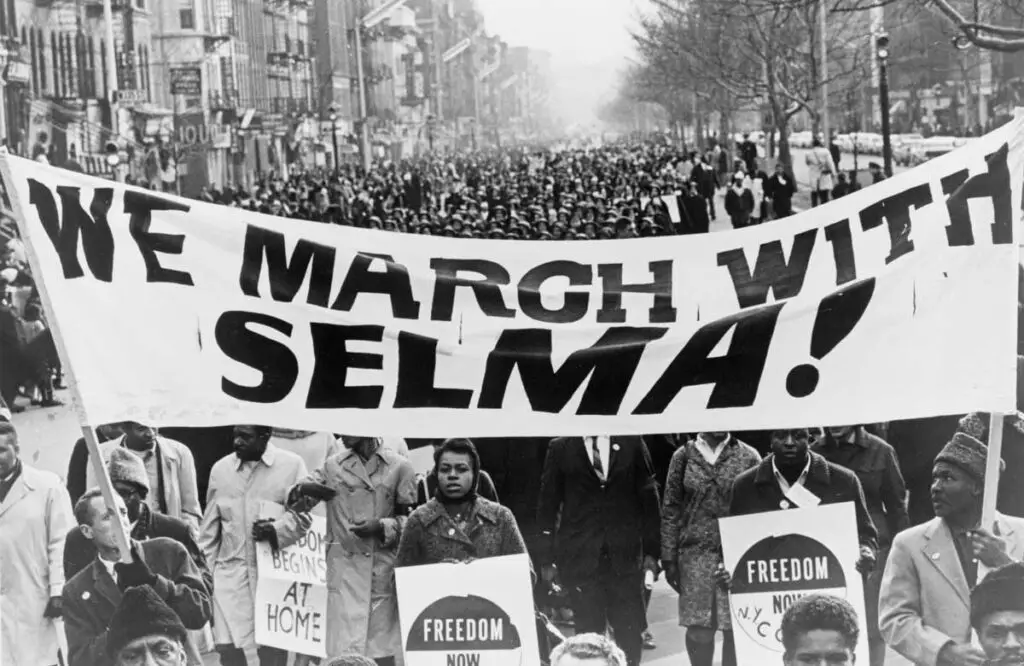
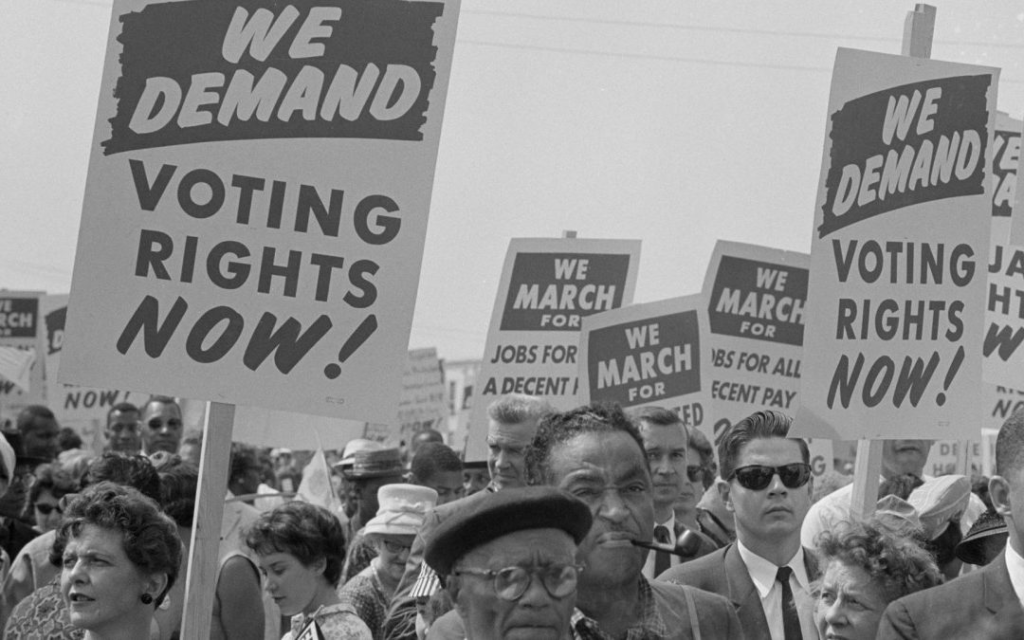
A Second Reflection on Memory, History, and the American Conscience By Eric Lawrence Frazier, MBA After publishing my first essay on the recent Supreme Court rulings involving the Voting Rights Act of 1965, I continued thinking about what had happened and about my own reaction to it. I kept asking myself where this country is going. Does America remember why we had the Voting Rights Act in the first place? Do our elected officials remember? Do the courts remember? More importantly, do ordinary Americans remember what African Americans actually experienced in this country before these protections were passed into law? My original assumption was that people already understood this history. I assumed most Americans knew why the Voting Rights Act became necessary. I assumed people understood what conditions existed before 1965 and why the federal government finally concluded it had to intervene directly in state election systems. But the more I talked about it with family and friends, the more it became evident to me that many people simply do not know the history well enough to understand what is happening now. That realization changed the direction of this essay completely. So I decided to focus on explaining this history, especially for younger generations who may have heard the phrase “Voting Rights Act” but certainly do not know much about Section 5 or Section 2. In my first article I wrote with the assumption that everybody already understood that history, and that simply is not the case. Because if people do not understand the conditions that produced the law, then they cannot possibly understand why so many people are alarmed as portions of that law continue to be weakened today. Perhaps we have forgotten. Or perhaps many Americans never truly knew. Most Americans have heard reporters discuss the Voting Rights Act. They have heard political commentators argue about Sections 2 and 5. They have heard Supreme Court decisions discussed on television. But if you stopped many Americans on the street and asked them to explain what the law actually was, why it became necessary, or what was happening in America before it was passed, I seriously doubt many people could explain it clearly. We cannot intelligently discuss the dismantling of voting-rights protections if we first do not understand what America was like before those protections existed. I have five grandchildren now. One is in the second grade, one is in the fourth grade, and one is in the sixth grade. I have two more grandchildren who have not started school yet. They are only one and two years old. The other three are not too young to understand fairness, injustice, exclusion, and basic human dignity. As I started writing this essay, I realized that I do not want them to miss the opportunity to understand what is happening in this country while it is happening. I have a tremendous opportunity right now as a grandfather to explain these things to them while they are still young enough to build historical understanding into the foundation of how they see the world. Children already understand one of the most important principles at the center of this entire conversation: fairness. Children know when they are being treated unfairly. They know when rules are uneven. They know when somebody is being excluded or mistreated. Anybody who has ever raised children already knows this because children constantly announce it to their parents: “That’s not fair.” So if you explain to a child that there was a time in America when Black people could not freely vote, could not eat in certain restaurants, could not stay in certain hotels, could not attend certain schools, and could not even drink from the same water fountains as white Americans, most children immediately recognize that something is wrong with that picture, whereas adults sometimes do not because adults become conditioned by repetition. We hear historical facts repeated so casually that eventually we stop feeling the weight of what those facts actually mean. To understand the Voting Rights Act, we first have to go back to the end of slavery itself. Slavery officially ended in the United States in 1865 after the Civil War. Then, in 1870, America passed the Fifteenth Amendment to the United States Constitution. The Fifteenth Amendment said states could not deny citizens the right to vote because of race or because they had previously been enslaved. In plain English, Black men were now officially supposed to have the constitutional right to vote. But having rights written on paper and being allowed to use those rights in real life are two completely different things. Although African Americans technically had voting rights after 1870, many states — especially throughout the South — had absolutely no intention of allowing Black citizens to participate equally in American democracy. Slavery had ended, but the desire to maintain racial control had not ended. The belief in white superiority had not ended. The fear of Black political participation had not ended.So instead of openly saying “Black people cannot vote,” states created systems designed to make voting difficult, humiliating, dangerous, or almost impossible. And all of this was happening during a period when segregation controlled almost every aspect of Black life. African Americans often could not eat in certain restaurants. They could not stay in certain hotels. They could not attend certain schools. They could not use certain public bathrooms. They drank from separate water fountains marked “Colored.” They sat in separate sections of buses and trains. In many cities Black families could not buy homes in white neighborhoods because banks, governments, and real estate companies blocked them systematically through redlining, racial covenants, lending discrimination, and intimidation.¹ Children today need to understand this clearly because segregation is often taught in sanitized language that makes it sound like a minor inconvenience rather than what it actually was: a complete social system designed to constantly remind African Americans that they were considered inferior and unwelcome in large parts of American society. Voting restrictions became part
THE END OF AN ERA: Part One — Callais and the Quiet Burial of the Voting Rights Act – Poem
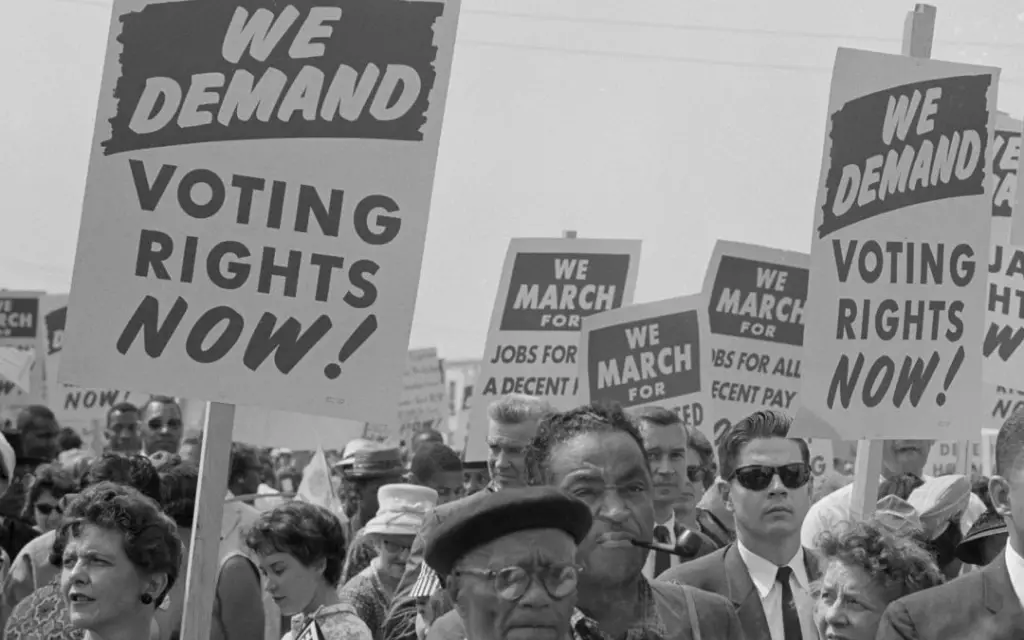
Before They Erased the Story Slaves were freed when the war was done,yet the hatred of us was not done,Emancipation kept us on the run,our fight for real freedom had just begun. The law declared that we could vote,but much of America answered “No,”with threats and fear at every poll,our votes were stolen, denied our role. The price was paid with tears and cries,with broken bones and stolen lives,now truth is drowned beneath new lies,while fading history slowly dies. There were children raised in fear,with burning crosses drawing near,Black bodies hanging year by year,while mobs stood watching without tears. The schools were poor, the roads were worn,our hopes were bruised, our pride was torn,yet every child that still was borncarried dreams despite the scorn. The price was paid with tears and cries,with broken bones and stolen lives,now truth is drowned beneath new lies,while fading history slowly dies. When children do not know the pain,the lies return and rise again,and buried truth left unexplainedbecomes a wound passed down in shame. Because forgotten sacrificebecomes the ground where hatred thrives,and rights once bought through blood and criescan slowly die before our eyes. I can see the marchers walk,the praying, singing, freedom talk,the beaten bodies bruised and mauled,while hate swung clubs to make them fall. Now I speak so kids can know,what hatred tried to hide below,because forgotten truths grow old,when history’s pain is left untold. The price was paid with tears and cries,with broken bones and stolen lives,now truth is drowned beneath new lies,while fading history slowly dies. Eric Lawrence Frazier Poet
Fair Housing Series Part 10: The Fair Housing Act at 58
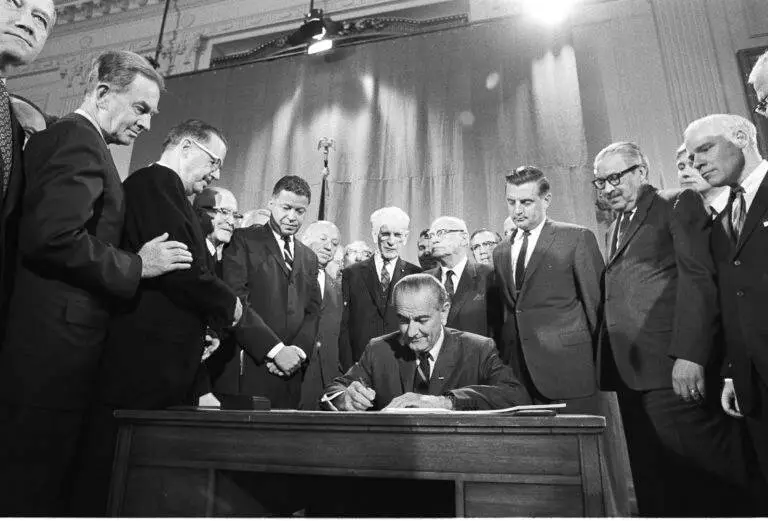
What We Have, What We’ve Lost, and What We Must Build. By Eric Lawrence Frazier, MBA The Fair Housing Act of 1968 was passed to stop the riots. That is the honest accounting of its origins. The bill had been stalled in Congress for two years. It moved in the week after the assassination of Dr. Martin Luther King Jr., as American cities burned for the second consecutive year. President Johnson signed it seven days after Dr. King was killed, on April 11, 1968. The people who voted for it and the president who signed it were responding to social pressure, not moral conviction. It was a concession. It was designed to appease. And yet. It had an impact. The explicit forms of discrimination that were commonplace in 1968 — the posted signs, the written restrictive covenants, the openly stated refusals — have been substantially eliminated from legal practice. The law stopped the major crimes. It gave us just enough to continue our pursuit. It was not what it should have been. But it was not nothing. The Real Story Is Not the Gap The racial homeownership gap is wider today than it was in 1968. Black homeownership stands at 44.7 percent. White homeownership stands at 73.8 percent. The gap has widened by approximately five percentage points in fifty-eight years. That is the failure. That is the evidence of what the law left undone. But that is not the whole story. And it is not the most important story. The real story is that we are here. Full participants. We cannot be denied our seat at the table of American prosperity. We cannot be excluded from the pursuit of the American dream of homeownership and freedom. We will have our share of what this country promises for everyone. That claim — that insistence — is the story. Not the gap. This is not a perfect union. Someone might argue it is not even a union. But we are the melting pot. We are part of this country’s history, its culture, its economy, and its future. And it has been the rule of law — imperfect, contested, never fully delivered, but present — that has kept us engaged in the process rather than outside of it. Not the goodwill of the men who govern. Not their moral evolution. The rule of law. That is what we have and what we defend. This Too Shall Pass The current administration has mounted the most comprehensive rollback of fair housing enforcement since the Act’s passage. Zero charges filed. One hundred and fifteen cases closed. HUD’s enforcement staff cut by half. The disparate impact doctrine targeted for elimination. The Equal Access Rule halted. Guidance to state agencies threatening to cut off funding unless they stop enforcing their own laws. This too shall pass. Administrations come and go. Laws come and go. Every protection we have ever been given has been contested, reduced, or reversed at some point in the cycle. And every time, we are still here when the cycle turns. We were here before this administration. We will be here after it. The law outlasts the lawmaker. The Constitution outlasts the president. And the people whose determination produced the law outlast all of it. What the Ancestors Built Without Any Law The Fair Housing Act could be abolished tomorrow. If it were, it would not stop us. It would not stop us because it did not create us. We were building before it existed. Our ancestors built cities. They built businesses. They bought land. They built farms. They invented. They created institutions of learning and commerce and culture. They did all of this without the protection of a fair housing law, without the protection of any law, without the protection of a government that recognized their humanity. They built under conditions of legal slavery, legal segregation, legal exclusion, and systematic violence. They built anyway. That is the legacy I carry. Not the law. The determination that produced the law, that existed before the law, and that will continue after the law regardless of what any administration does to it. The spirit of our ancestors is not contained in a statute. It is in us. It has always been in us. Grateful for the Law. More Grateful for the Legacy. I am grateful for the Fair Housing Act. I am grateful for every case it won, every family it protected, every discriminator it held accountable, every settlement it produced. I am grateful for the legal infrastructure that, at its best, gave individual buyers a remedy and put institutions on notice that their practices had consequences. That mattered. That still matters. We should fight to preserve and strengthen it. But I am more grateful for the legacy. The legacy of a people who refused to accept that circumstances determined outcomes. Who refused to let the verdict of the system become the verdict on their lives. Who found a way around every wall, through every barrier, in spite of every policy designed to hold them back. That is what this six-year series has been about. Not just the law. The people. The families who sat across the table from me — and later on the other side of a Zoom screen — who came with a goal and a determination and asked me to help them get there. The buyers who pooled resources with their families to get into markets that priced them out individually. The families who held through down markets and came out with equity. The first-generation buyers who built the foundation no one had built before them, so that the next generation would have a starting point. I am determined to live my best life in these United States of America. That determination does not come from the Fair Housing Act. It comes from thirty-five years of watching what people can build when they decide to build it. It comes from the ancestors. It comes from knowing that the power was never in
Fair Housing Series Part 10: The Fair Housing Act at 58 – Footnotes
What We Have, What We’ve Lost, and What We Must Build. Civil Rights Act of 1968 (Fair Housing Act), Pub. L. No. 90-284, 82 Stat. 73 (1968). Signed by President Lyndon B. Johnson on April 11, 1968, seven days after the assassination of Dr. Martin Luther King Jr. The bill had been stalled in Congress for two years. Its passage followed the urban uprisings of 1967 and 1968 in Newark, Detroit, and more than 100 other American cities. The Senate passed the bill on April 10, 1968. The House passed it on April 11. Johnson signed it the same day. National Fair Housing Alliance, 2024 Fair Housing Trends Report, Washington D.C.: NFHA, 2024. Between 1968 and 2024, the Fair Housing Act has produced more than 200,000 documented fair housing complaints, generated billions of dollars in settlements and damages, and been used to challenge and dismantle explicitly discriminatory practices in lending, real estate, rental, insurance, and zoning. The explicit forms of discrimination that were commonplace in 1968 — posted signs, written restrictive covenants, openly stated refusals — have been substantially eliminated from legal practice. U.S. Census Bureau, “Quarterly Residential Vacancies and Homeownership,” Q4 2024. Black homeownership rate: 44.7 percent. White homeownership rate: 73.8 percent. Gap: 29.1 percentage points. At the time of the Fair Housing Act’s passage in 1968, the Black homeownership rate was approximately 41.9 percent and the white rate was approximately 65.9 percent, producing a gap of approximately 24 percentage points. The gap has widened by approximately 5 percentage points in 58 years. Executive Order No. 14281: Restoring Equality of Opportunity and Meritocracy, April 23, 2025; HUD proposed rule eliminating disparate impact regulation, January 2026; HUD staff reductions of approximately 50 percent, February–March 2025. The current administration’s actions represent the most comprehensive rollback of fair housing enforcement infrastructure since the Act’s passage. Wilkerson, Isabel. The Warmth of Other Suns: The Epic Story of America’s Great Migration (New York: Random House, 2010). Between 1915 and 1970, approximately six million Black Americans migrated from the South to Northern and Western cities, building communities, businesses, and institutions under conditions of legal segregation, economic exclusion, and systematic violence. The accumulation of wealth, culture, and community infrastructure under those conditions represents the historical precedent for what determination without government protection can accomplish. Frazier, Eric Lawrence, MBA. The Power Is Now Media 2026 Fair Housing and Homeownership Series, Essays 1–10. Riverside, CA: The Power Is Now Media, 2026. This series represents the sixth consecutive year of fair housing programming produced by The Power Is Now Media, reaching homebuyers, housing professionals, real estate practitioners, and policymakers across the country through television, podcast, streaming platforms, and digital publication.
Fair Housing Series Part 9: The First-Generation Homebuyer – Footnotes

What Nobody Told You. Build It on a Rock. By Eric Lawrence Frazier, MBA What I wish someone had told them is the same thing I wish someone had told me. That money is a tool — a precious resource, as necessary for survival as any physical necessity — and that you cannot have enough of it, which means you need to learn how to manage it. How to save it. How to spend it, and what to spend it on. How to attach your income, which creates the money, to assets you can acquire and hold, which build the wealth that creates even more money. Financial literacy. That is what was not told to them. And it was not told to them because their parents were financially illiterate. And their parents were financially illiterate because their grandparents were financially illiterate. The ignorance is not a character failure. It is an inheritance. And it compounds with every generation that passes without someone breaking the cycle. The evidence of financial illiteracy in America is measured in trillions. Total household debt has reached nearly eighteen trillion dollars. Student loan debt alone stands at 1.61 trillion. Credit card balances are at their highest recorded level. Bankruptcies increased sixteen percent in 2024. Repossessions, defaults, mortgage delinquencies among first-time buyers rising year over year. The foundation was sand. The wind is blowing. Nine Out of Ten Are Not Ready Nine times out of ten, someone who walks into my office today is not ready to buy a home. And I send them away. Not because I do not want to do business with them. Not because I do not care about their goal. But because I refuse to put a family in a home they are going to lose. The days when I would close a deal just to close a deal are over. A commission that comes from putting an unprepared buyer into a mortgage they cannot sustain is not a transaction I want on my record. The person sitting across from me — or on the other side of the Zoom screen, because that is the table today — deserves a home they will hold for the rest of their working life, pay off, and pass to their children. Not a transaction that becomes the greatest financial mistake they ever made. What prepared looks like is specific. Credit score above the qualifying threshold. Consumer debt eliminated or substantially reduced. Twelve months of household income in savings before beginning the homebuying process. Down payment sourced and seasoned. Income fully documented. Debt-to-income ratio leaving room to absorb the unexpected — because the unexpected always arrives. That is the buyer I am working for. That is the transaction that matters. The Intergenerational Problem The problem runs deeper than individual unpreparedness. The financial literacy gap is intergenerational. Adults who grew up in households without financial conversations are three times more likely to carry high-interest consumer debt. The first-generation homebuyer in Black and Hispanic communities faces not only the standard barriers to homeownership — the credit, the savings, the debt-to-income ratios — but also the absence of the informal advisory network that transfers financial knowledge within families that have owned property across generations. The white family that has owned real estate for three generations passes something down that has nothing to do with down payment assistance. They pass down the knowledge of how to evaluate a neighborhood, how to negotiate an offer, how to build a relationship with a lender, how to hold an asset through a down market, what a title company does and why it matters, what homeowner’s insurance covers and what it does not. They pass down the vocabulary of wealth building. The first-generation buyer arrives without that vocabulary. That is why my entire practice has focused around financial literacy and education. Before the application. Before the pre-approval. Before the home search begins. Understand the money. Build the foundation. The house can come after the foundation is in place. Not before. The Rock and the Sand The biblical principle is precise: the wise man who builds his house upon a rock will be able to withstand whatever comes. The foolish man who builds his house upon sand — at the first sign of wind, at the first sign of financial pressure, at the first unexpected expense — that house will fall. This is the American economy. This is the American people. Houses and lives built on sand — on consumer debt and student loans and mortgages approved at the maximum qualifying ratio with nothing in reserve. The first medical bill. The first job loss. The first car repair that the emergency fund does not exist to cover. The wind blows and the house falls. The rock is financial literacy. Savings. A reasonable relationship with spending. Living within your income and your means. Not as a punishment, but as the prerequisite to everything else you want to build. The family that has no debt and twelve months of savings does not lose their home when the unexpected arrives. The family that bought at the maximum qualifying ratio with nothing in reserve is one medical emergency away from foreclosure. Build it on a rock. That is the only message that matters. Everything else — the credit score, the down payment, the mortgage product, the neighborhood — is downstream of that foundation. Get the foundation right first. The house will stand. Poetry says the rest. Build It on a Rock Nobody told them what I wish that someone had told me. That money is a tool as necessary as can be. You cannot have enough of it and you must learn its name. How to save it, spend it, manage it — that is the whole game. Their parents never told them because their parents never knew. And grandparents before them were financially illiterate too. The ignorance was not their fault but it compounds each year. And the evidence shows up in the debt and in
Fair Housing Series Part 9: The First-Generation Homebuyer
What Nobody Told You. Build It on a Rock. Federal Reserve Bank of New York, Center for Microeconomic Data: Household Debt and Credit Report Q4 2024, February 2025. Total household debt in the United States reached $17.94 trillion in Q4 2024. Student loan debt stands at $1.61 trillion. Credit card balances stand at $1.17 trillion, the highest recorded level. Auto loan debt stands at $1.66 trillion. American Bankruptcy Institute, 2024 Annual Business and Consumer Bankruptcy Filing Statistics, January 2025. Total bankruptcy filings increased 16.2 percent in 2024 compared to 2023, with consumer filings rising to 517,858 — the highest level since 2020. Chapter 7 liquidations represented 67 percent of all consumer filings. Consumer Financial Protection Bureau, Consumer Credit Trends: Mortgage Delinquencies and Defaults, Q3 2025. Mortgage delinquency rates among first-time buyers increased 18 percent between 2022 and 2025, with the primary contributing factors identified as insufficient cash reserves at closing, inability to absorb unexpected home maintenance costs, and debt-to-income ratios at or near qualifying maximums. National Association of Realtors, Profile of Home Buyers and Sellers 2024, November 2024. Forty-three percent of first-time buyers report that the primary barrier to earlier homeownership was inadequate savings for down payment and closing costs. Among buyers who purchased with less than 5 percent down, 34 percent reported financial stress within the first two years of ownership attributable to insufficient reserves. National Financial Educators Council, Financial Literacy Survey 2024. The survey found that financial illiteracy cost the average American $1,819 in 2023. Among adults aged 18–24, 78 percent reported receiving no formal financial education from either school or family. The intergenerational transmission of financial illiteracy is documented: adults who grew up in households without financial conversations are three times more likely to carry high-interest consumer debt. Urban Institute, The Opportunity Costs of Financial Illiteracy Among Black and Hispanic Households, 2023. The study documents that Black and Hispanic households are disproportionately affected by financial illiteracy because they are less likely to have inherited financial knowledge from prior generations of homeowners and investors. The first-generation homebuyer in these communities faces not only the standard barriers to entry but also the absence of the informal advisory network that transfers financial knowledge within families that have owned property across generations. Matthew 7:24–27 (NIV). “Therefore everyone who hears these words of mine and puts them into practice is like a wise man who built his house on the rock. The rain came down, the streams rose, and the winds blew and beat against that house; yet it did not fall, because it had its foundation on the rock. But everyone who hears these words of mine and does not put them into practice is like a foolish man who built his house on sand.”