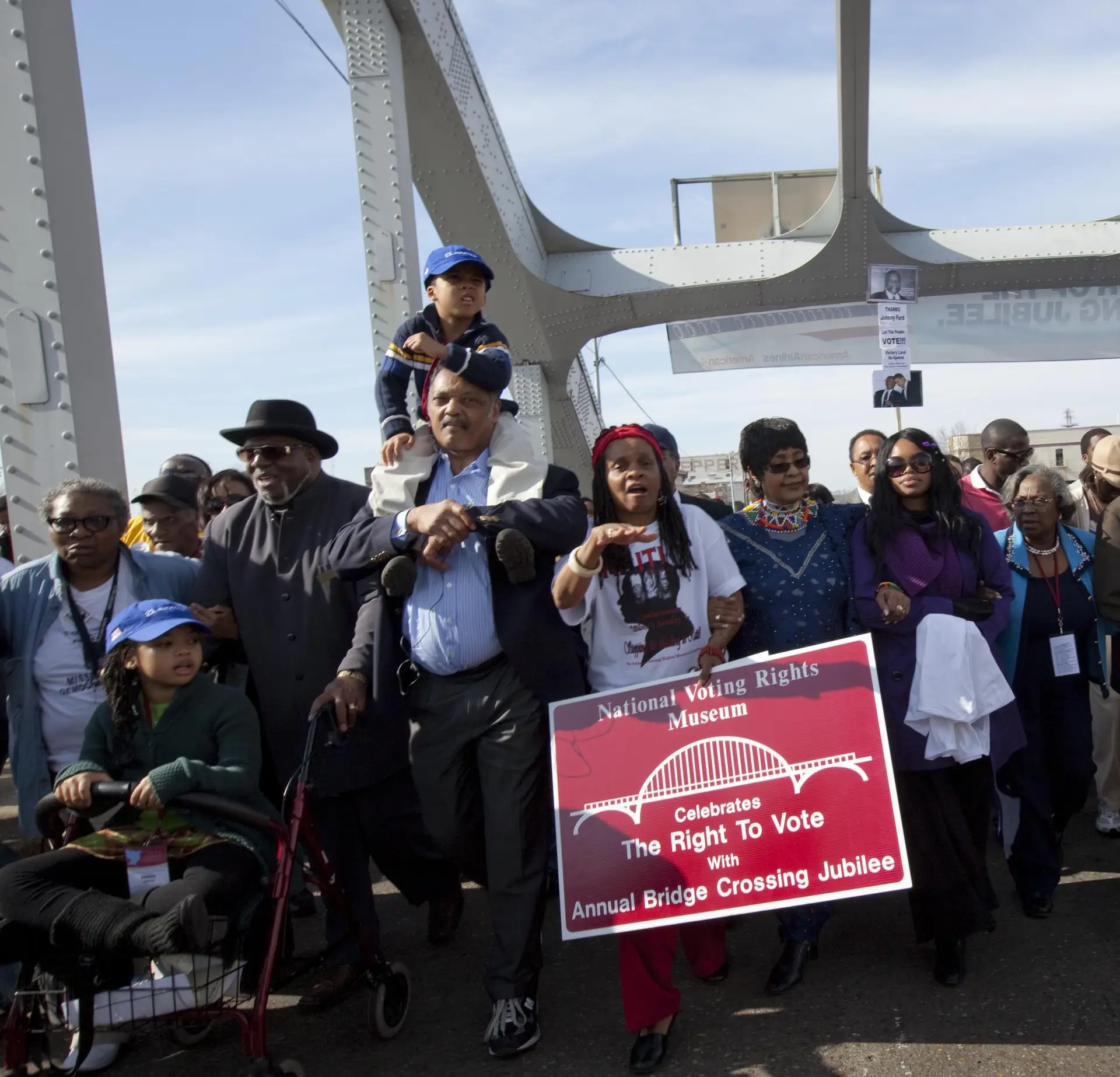
The Votings Right Act Part 3: When Race Becomes Politics

byfsxlsabtqgydxgflgilh2rm73fnqgemxvdb9nl1bdjm3om1iydjrlfqu82x3fhcf koiwsgkdpv5hg8 xfubj1kpsfxnbfilupknkwvysau45ck7ki ajpcr97soeu72oowmwopgugadzwzgwy4shhekwoat0ccchyssnrsgaxnbupugkx siqhgfervy6

Section 5, Section 2, and the Illusion of a Level Playing Field

By Eric Lawrence Frazier, MBA

The Voting Rights Act of 1965 has me wrestling with myself. I am trying to understand how this country arrived at this moment, and I am trying to remove myself, as much as I can, from the emotional and cultural history that naturally influences how I see this issue. That is not easy for me, because this law is not merely a statute sitting in a federal code book. It is tied to blood, humiliation, exclusion, resistance, and a long history of African Americans being told in one form or another that citizenship existed on paper but not in practice. Still, I want to understand the other side of the argument. I want to ask whether America has changed enough that the extraordinary protections of the Voting Rights Act, especially Section 5 and the enforcement strength of Section 2, are no longer necessary in the way they once were.

I have to acknowledge what the Voting Rights Act accomplished. Black political representation in America is not what it was in 1965. There are African Americans in Congress, in mayoral offices, in state legislatures, in county offices, and throughout public life. Black political organizing is alive, sophisticated, and influential. It would be foolish for me to pretend the law did not change America. It did. The question is whether its success proves that its protections can now be weakened, or whether its success proves that federal protection was the reason progress happened in the first place.

That is where the argument becomes complicated. The conservative response to the question “Has America forgotten?” is essentially, “No, America has not forgotten; America has changed.” Their position is that we are no longer living in the 1890s, the 1920s, the 1930s, the 1940s, or the early Jim Crow years when states openly used poll taxes, literacy tests, intimidation, violence, and fraud to block Black citizens from voting. Their position is that Black citizens can vote today, that Black candidates can win office today, that Black voters have substantial political influence today, and that states should not remain under extraordinary federal supervision forever because of sins committed generations ago. That argument deserves to be stated fairly because many Americans believe it sincerely.

But fairness requires more than stating the argument. Fairness also requires examining what that argument leaves out. The question is not whether America has changed. America has changed. The question is whether the incentives that once made voter suppression politically useful have disappeared. The question is whether the structures that translate population into political power have become neutral. The question is whether states with long histories of racial exclusion can now be trusted to redraw political maps, move district lines, and restructure voting power without federal oversight when race and party identity remain deeply intertwined.

This is where I believe the modern debate becomes intellectually dishonest. The new language is not always racial. It is political. States no longer need to say they are weakening Black voting power. They can say they are pursuing partisan advantage. They can say they are protecting incumbents. They can say they are drawing lawful maps based on political data. They can say race was not the motive. But in much of the South, race and party are not separate realities floating in different universes. They are often joined at the hip by history, geography, housing patterns, church networks, school systems, and voting behavior. Pew Research Center has reported that Black voters remain overwhelmingly Democratic, while white voters are much more likely than voters in other racial and ethnic groups to associate with the Republican Party. In the 2024 presidential election, Reuters reported Edison Research exit-poll results showing Donald Trump winning white voters while Kamala Harris won the overwhelming majority of Black voters.

That does not mean every white Republican is racist. It does not mean every Black Democrat votes only because of race. It does not mean political identity is reducible to skin color. But it does mean that in states where Black voters are heavily Democratic and white voters are heavily Republican, a map drawn to weaken Democrats may also weaken Black political power. That is the uncomfortable reality many legal arguments try to avoid. If the state says, “We are not targeting Black voters; we are targeting Democrats,” the response cannot simply be, “Fine, then race is irrelevant.” In some places, that distinction may be legally convenient, but socially and historically false.

This is the heart of Part Three. The Voting Rights Act was born because states learned how to use law, procedure, timing, geography, fear, and bureaucracy to achieve racial exclusion without always announcing racial hatred as their official policy. Section 5 was created precisely because Congress understood that after one discriminatory device was struck down, another could appear. Preclearance required certain jurisdictions with documented histories of discrimination to obtain federal approval before changing voting rules. The burden was on the state to show the change would not discriminate. That mattered because it stopped harm before it happened, instead of forcing Black voters to suffer the injury first and litigate later.

In Shelby County v. Holder, the Supreme Court did not strike down Section 5 by name. It invalidated the Section 4 coverage formula that determined which jurisdictions had to seek preclearance. The practical effect was devastating because Section 5 could no longer operate without a valid coverage formula. The Court reasoned that the formula relied on outdated data and that conditions in the covered jurisdictions had changed substantially. That was the legal theory. But from the perspective of civil-rights enforcement, the ruling removed the fire alarm because there had been fewer fires while the alarm was working.

The recent decision in Louisiana v. Callais has intensified this crisis. In that case, the Supreme Court’s majority described Section 2 as designed to enforce the Constitution “not collide with it,” while warning that lower courts had applied Section 2 in ways that forced states into race-based decision-making. Supporters of the ruling argue that it restores constitutional colorblindness and prevents race from controlling district design. Voting-rights advocates argue that it weakens one of the last remaining federal tools available to challenge racial vote dilution after Shelby County. Reuters described the Roberts Court as taking a “wrecking ball” to the Voting Rights Act, while noting the conservative legal argument that race-based districting itself creates constitutional problems.

That is the legal debate. But the political reality is more direct. If race and party overlap heavily in a state, then a political map can reduce Black influence without ever using racial language. That is what makes the modern problem so difficult. The old South said the quiet part loudly. The modern South has lawyers. It has consultants. It has demographic software. It has partisan data. It has the language of neutrality. It can say the motive is politics while the effect lands on race.

This is why current litigation matters so much. Tennessee is now facing lawsuits over a newly enacted congressional map that civil-rights groups say dismantles the state’s only majority-Black district in Memphis and dilutes the voting strength of Black Tennesseans. The NAACP’s announcement states that the lawsuit challenges a map that “dismantles the state’s only majority-Black district and dilutes the voting strength of Black Tennesseans.” The ACLU’s Sherman v. Hargett case similarly challenges Tennessee’s new congressional redistricting map on behalf of Memphis voters and civil-rights organizations. Reporting on the Tennessee litigation states that the challenged map split majority-Black, majority-Democratic Memphis into three districts. That is exactly the kind of fact pattern that makes it impossible to separate race from party cleanly.

Alabama presents the same fundamental problem. After years of litigation over Alabama’s congressional map, the Supreme Court recently set the stage for Alabama to eliminate one of two largely Black congressional districts before the 2026 midterm elections, with the Associated Press reporting that the change could create an opening for Republicans to gain an additional House seat. Civil-rights groups denounced the order, stating that it created a path for Alabama to reinstate a 2023 map that a district court had found unconstitutional and intentionally discriminatory. Alabama is not a theoretical case study. Alabama is the continuing argument in living form.

The national reaction is now moving beyond courtrooms. The NAACP has launched its “Out of Bounds” campaign urging Black athletes, families, alumni, and fans to withhold support from public universities in Southern states the organization says are attacking Black voting rights. The campaign’s own language is blunt: “No Representation. No Recruitment. No Revenue.” The campaign targets states including Alabama, Florida, Georgia, Louisiana, Mississippi, South Carolina, Tennessee, and Texas, and it asks Black athletes and supporters to use the economic power of college sports to protest maps and policies that weaken Black political representation. House Democratic Leader Hakeem Jeffries reportedly described the moment as a “Jackie Robinson moment” and characterized the fight as an unprecedented attack on Black political representation.

Justice Ketanji Brown Jackson has also warned that the Supreme Court risks being seen as political after recent voting-rights decisions, a concern reported after her dissent against the conservative majority in a case allowing Louisiana to move quickly with new voting maps. Whether one agrees with her legal analysis or not, the concern cannot be dismissed casually. When the Court repeatedly narrows the tools used to protect minority representation, while the immediate political beneficiaries are often the same states and parties seeking more favorable maps, ordinary citizens are not irrational for wondering whether law and politics are merging in ways that make constitutional language feel distant from lived reality.

The Republican answer is that Democrats are also redistricting aggressively. That argument is not imaginary. Democrats have pursued their own map advantages in states where they control the process, and the current national battle over House control has pushed both parties into increasingly aggressive redistricting strategies. Reuters recently reported on the Supreme Court rebuffing Virginia Democrats in a redistricting dispute and described the broader national context as both parties reshaping maps to gain advantage. That must be admitted because credibility requires acknowledging partisan hypocrisy where it exists.

But there is a difference between partisan hardball in general and racially consequential partisan hardball in states with a documented history of suppressing Black political power. If California Democrats redraw a map to help Democrats, that may be partisan manipulation. If Tennessee, Alabama, Louisiana, Mississippi, Georgia, or South Carolina redraw maps in ways that weaken Black voting influence, the historical context is not incidental. Those states are not blank pages. They are the very terrain that produced the need for federal voting-rights protection. Their history is not an insult. It is evidence.

The harder question is whether federal law can recognize that reality without trapping the country permanently in racial categories. That is the philosophical argument behind the conservative position. At some point, they argue, the Constitution cannot require states to continue making race-conscious decisions to correct past discrimination. At some point, they argue, equal protection requires government to stop sorting people by race. That argument has moral appeal on the surface because most people want to believe that the law should treat citizens as citizens, not as racial blocs.

But colorblindness becomes dangerous when it asks the law to ignore the very conditions that make political power unequal. If neighborhood segregation shaped where Black voters live, and if voting behavior is strongly correlated with race because of lived historical experience, and if district lines can crack or pack those voters in ways that reduce their influence, then refusing to look at race does not make the system neutral. It may simply make the injury harder to name. The law can close its eyes and call that blindness principle, but the people living under the map still know whether their power was preserved or reduced.

African Americans make up a minority of the national population. Pew estimated that Black Americans numbered about 48.3 million in 2023, or 14.4 percent of the United States population. The Census Bureau’s QuickFacts lists Black alone as 13.7 percent of the national population. Those numbers matter because democracy is not only about the right to cast a ballot. It is also about whether communities can translate votes into representation. If a community is large enough to influence an election but district lines are drawn to divide that community into pieces, the formal right to vote remains while political power is weakened.

That is what I believe people are missing. The modern question is not whether Black people can stand in line and vote. The question is whether their votes can be arranged into political irrelevance. A locked door is easy to see. A manipulated map is harder to explain to a child, but the effect can be just as real. The old suppression was often visible. The new suppression may be mathematical.

This is why Section 5 mattered. It forced states with records of discrimination to explain changes before those changes took effect. Without preclearance, voters must often sue after the damage is done. Litigation takes time. Elections occur on fixed schedules. Maps can shape representation for years while cases move slowly through the courts. Even when plaintiffs eventually win, the political consequences of the challenged map may already have occurred.

Section 2 was supposed to remain as a nationwide protection against discriminatory voting practices. But if Section 2 is interpreted so narrowly that plaintiffs must prove intent in ways states can avoid by using partisan language, then the protection becomes symbolic. America has been here before. The Fifteenth Amendment promised voting rights in 1870, but Black citizens were still blocked for nearly a century because rights without enforcement are promises without power.

That is the part that troubles me most. The federal government has always been complicated in Black history. It has failed us often. It has betrayed us often. But when meaningful civil-rights breakthroughs came, they almost always required federal intervention. The end of slavery required federal war power and constitutional amendment. The dismantling of school segregation required federal courts. The enforcement of voting rights required federal law. The protection of fair housing required federal statute. Black Americans did not achieve substantive citizenship because states suddenly became morally enlightened. Federal power intervened because state power had become the machinery of exclusion.

So when I hear that the South no longer needs federal voting oversight, I want to believe that. I would love to believe that. I would love to live in a country where Section 5 is truly unnecessary because the behavior that required it has disappeared. But the current litigation makes that belief difficult. Tennessee, Alabama, Louisiana, and other states are not merely having abstract debates in law-school classrooms. They are fighting over maps, districts, Black voting strength, and political control right now.

That brings me back to the question that began this series: has America forgotten? The answer from opponents of strong Voting Rights Act enforcement is, “No, America has not forgotten. America has moved on.” My response is that moving on is not the same as being healed. Progress is not the same as safety. Representation is not the same as protection. A law can succeed enough to create visible gains and still remain necessary because the incentives to undermine those gains remain alive.

Race and politics are now being treated as if they can be separated neatly by legal language. In some places, perhaps they can. But in the South, after slavery, Reconstruction, Redemption, Jim Crow, Massive Resistance, segregation, and decades of racially polarized voting, the separation is not so clean. Political maps do not float above history. They sit directly on top of it.

That is why I cannot accept the argument that this is only politics. Politics is the vehicle. Race is the roadbed. Party is the language. Power is the objective. If Black voters are overwhelmingly aligned with one party, and white voters are disproportionately aligned with the other, then weakening one party’s voting strength in certain districts may also weaken Black voting strength. That is not a conspiracy theory. That is how numbers, geography, and history work together.

The danger now is that the law may become too polite to say what the map is doing. We may reach a point where everybody can see the racial consequence but nobody can prove the racial intent to the satisfaction of a court. If that happens, America will not have eliminated racial vote dilution. It will have taught racial vote dilution how to speak in partisan language.

I do not write this as someone who wants to accuse every Republican voter of racism. That would be lazy and historically unserious. I know Black Republicans exist. I know conservative Black voters exist. I know many white Republicans sincerely believe they are defending constitutional principles. I also know Democrats draw self-serving maps when they have power. None of that changes the central issue. A fair analysis must distinguish between individual motive and structural outcome. The question is not whether every participant carries racial hatred in the heart. The question is whether the system allows racial power to be weakened while hiding behind political vocabulary.

That is the conversation America needs to have and does not want to have. We cannot discuss voting rights as if numbers have no history. We cannot discuss party affiliation as if race did not shape political realignment. We cannot discuss Southern redistricting as if Black citizens are paranoid for remembering what Southern governments did when they had power without federal supervision. We cannot ask African Americans to forget the purpose of the Voting Rights Act while the same states that made it necessary are again fighting over the political strength of Black communities.

I am trying to be neutral, but neutrality may be impossible when one side of the scale is loaded with history. There are moments when neutrality becomes another name for refusing to remember. There are moments when calling something “political” becomes a way to avoid calling it racial. There are moments when asking Black people to prove intent becomes a demand that we find a written confession before the law will believe what the map already shows.

The better question is not whether America is the same country it was in 1965. It is not. The better question is whether America has become different enough to remove the guardrails that helped make it different. That is where I remain unconvinced. The current news cycle is not calming my concern. It is sharpening it. When civil-rights organizations are suing over maps, when the NAACP is calling for economic pressure against Southern public universities, when Justice Jackson is warning about the Court’s legitimacy, and when states are moving quickly to redraw lines after federal protections are weakened, I cannot say the danger has passed.

I can say America has changed. I cannot say the old incentives are dead.

And if the old incentives are not dead, then weakening the Voting Rights Act is not simply a legal adjustment. It is an invitation. It tells states that the burden has shifted. It tells voters they must fight after the injury. It tells communities they must prove what power already understands. It tells Black America that the federal government, once again, is stepping back and asking us to trust institutions that history has taught us to watch carefully.

We have been here before. We were told after Reconstruction that the states could manage freedom. Then came Black Codes, convict leasing, disenfranchisement, lynching, segregation, and nearly a century of exclusion. We were told after civil-rights victories that the country had turned a corner. Then came resistance, backlash, coded language, and new strategies. Now we are being told that race-conscious voting protections are no longer needed because America is different.

America is different because people fought, marched, litigated, organized, bled, and died to make it different. The protection did not appear after the change. The protection helped create the change. Removing the protection and then pointing to the change as proof that protection is unnecessary is the kind of logic that only works if one forgets how the change was achieved.

That is why Part Three matters. Part One warned about the quiet dismantling. Part Two asked whether America remembered why the law existed. Part Three asks whether the new language of politics is becoming the old machinery of race. That is the issue. That is the question. And if America cannot answer it honestly, then we are not merely forgetting history. We are giving history permission to return wearing a better suit.

Poetry Says the Rest

References

Thank you for taking the time to read and reflect seriously on the historical realities that continue shaping our nation today. I write not simply to react to headlines, but to help preserve memory, awaken historical consciousness, and encourage thoughtful conversations across generations.

Please share this essay with your family, your children, your grandchildren, your classrooms, your churches, and your communities. These conversations matter. History matters. Memory matters. And our willingness to confront truth honestly will determine what kind of future we leave behind.

Subscribe to The Power Is Now TV to connect with me live every weekday, Monday through Friday, from 10:00 AM to 11:00 AM PST, as we record television shows across The Power Is Now TV Network. As a subscriber, you can participate in live tapings, engage in real-time discussions, and connect directly with industry leaders.

Visit ThePowerIsNow.com to access real estate magazines, books, podcasts, television shows, and exclusive media content focused on homeownership, business, and wealth-building.

For personalized support, consulting, and advisory services in real estate, mortgages, business, and personal finance, visit EricFrazier.com to schedule a consultation and learn more about my work as your trusted advisor in business and wealth.

Eric Lawrence Frazier, MBA
Your trusted advisor in business and wealth
www.ericfrazier.com | www.thepowerisnow.com
NMLS #451807 | CA DRE #01143484
Schedule a consultation: https://calendly.com/ericfrazier/real-estate-mortgage-consultation-clients