
The Tree Knows

image (30)

I was speaking to my sister Lisa the other day and we found ourselves having one of those conversations that begins casually but slowly moves into deeper water before you even realize it. We were talking about faith, where it comes from, why we believe what we believe, and how much of what we call belief is inherited long before it is consciously examined. Somewhere in the middle of that conversation, I shared with her that I think I am entering a new season in my life, perhaps even a new journey altogether, a journey of discovery and inquiry unlike anything I have honestly allowed myself to experience before. Not because I suddenly became intelligent enough to ask questions, but because I finally became conscious enough to sit still with them. My parents did not discourage inquiry. In fact, they encouraged debate, but the debate was always built upon one primary assumption: that the Bible was the infallible Word of God. We argued over the interpretation of scripture, not over its origin. We debated theology, doctrine, prophecy, salvation, and faith, but we never seriously examined the compilation of the canon itself, the apocryphal writings, the historical development of the text, the councils that selected the books, the veracity of the claims, or the reliability of the history surrounding them. Those subjects were never discussed because we were never exposed to that level of critique, examination, or historical inquiry. Why would we have questioned the authority of the very source we held in the highest reverence? The Bible was sacred. Not merely respected, but sacred. It simply was not conceivable to us that the source itself would ever become the subject of examination. My father was a preacher and a serious student of the scriptures. I was in awe of his memory and wanted to be just like him. We could open the Bible to almost any passage and he could preach on it for an hour without notes. That was how knowledgeable he was. Perhaps that is one of the reasons I never seriously challenged what he taught me concerning spiritual matters because every question I ever brought him, whether it concerned faith, theology, suffering, God, or life itself, he always seemed to have an answer. The truth is I did not yet possess the intellectual capacity to know what questions to ask. I lacked the life experience, the emotional maturity, the theological training, the understanding of my own cultural history and spirituality, and perhaps most importantly, the consciousness necessary to contemplate existence itself at a deeper level. Even as a grown man, married with children, I was still very much a spiritual child. I did not yet know enough about being alive to ask myself why I was alive at all. So here I sit at sixty-four years of age, speaking this essay into my phone — that is how I write these days — after raising four daughters, loving five grandchildren, preaching more sermons than I could possibly count as a minister of the Gospel of Jesus Christ, and somehow finding myself sitting with questions I never seriously permitted myself to confront with the level of honesty, seriousness, and depth of understanding I have now. I know some people reading this, especially those who know me personally, are probably feeling uncomfortable right now. Truthfully, I’m uncomfortable too. How the heck did I get here? Some of you may already be concluding that I am losing my faith. Others may be leaning in with curiosity saying, “Okay Eric, what are we doing here? Where are you going with this?” Those would be my friends. And the honest answer is that I am not entirely sure where all of this leads. I only know I can no longer pretend these questions are not there. I can no longer hold without examination everything I inherited from my father, my church, and my spiritual heritage simply because it was handed to me with sincerity and conviction. These questions are real, and they are deeply personal. There is something profoundly unsettling about becoming aware of your own existence. I do not mean becoming aware of your responsibilities, your career, your race, your religion, your politics, or your social identity. I mean becoming aware that you are here at all. That you are somehow alive inside a body you did not create, breathing air you did not manufacture, standing on a planet suspended in a universe you did not design, participating in an experience no human being fully understands. The older I get, the stranger that realization becomes. In fact, I am beginning to think the greatest mystery confronting humanity is not death but consciousness itself. The fact that we are aware enough to ask questions about our own awareness may be the strangest thing about us. For most of my life, I inherited explanations before I inherited inquiry. The Bible was presented to me not as one framework among many but as absolute truth, final truth, divine truth, the kind of truth that settled all major questions concerning God, life, morality, salvation, suffering, eternity, and the purpose of human existence itself. And for many years that was enough because children rarely possess the intellectual freedom necessary to interrogate the structures handed to them by the people they trust most. Faith, at least initially, is inherited long before it becomes examined. But life has a way of introducing questions that inherited certainty struggles to answer cleanly. Death introduces questions. Suffering introduces questions. Watching children die introduces questions. Watching disease slowly consume the body introduces questions. Watching loneliness destroy people introduces questions. Eventually every honest human being, regardless of religion, encounters moments where existence itself begins pressing against the boundaries of inherited explanation. Some people respond by clinging more tightly to certainty. Others begin questioning everything. Most people, if they are honest, fluctuate somewhere between the two. What interests me now is not merely whether particular religious claims are true or false, although those

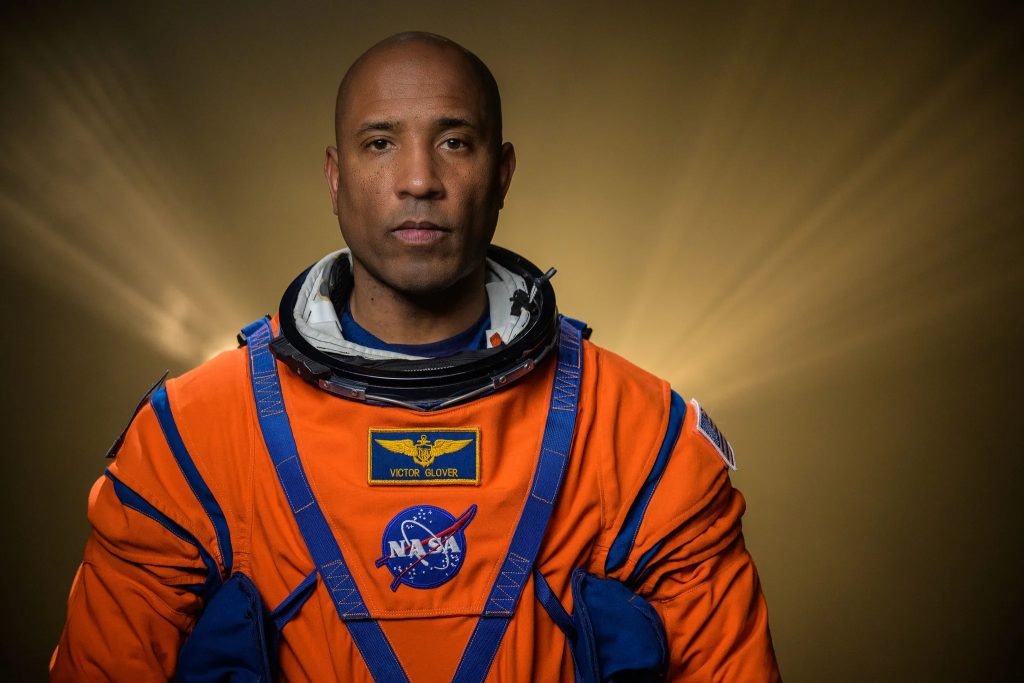
I Am Proud of Victor Glover.

imgonline com ua convertlv8lkfpw1tah

And Deeply Disappointed. America is applauding. I am not surprised — and I am not satisfied. Both things are true at the same time. America is applauding Victor Glover. Conservative media is celebrating him. Fox News ran the clip on a loop. The Daily Wire called it a shutdown of identity politics. OutKick said he shoved the narrative down the toilet. The people who have spent years working to remove Black history from classrooms, eliminate diversity programs from federal institutions, and argue that race no longer has any meaningful role in American outcomes — all of them, simultaneously, celebrated the same Black man’s statement from the threshold of the most historic Black achievement in the history of American space exploration. I am not surprised. I am also not applauding. Not because Victor Glover’s achievement is anything less than extraordinary. It is extraordinary. It is the continuation of an unbroken four-hundred-year record of Black exceptionalism that this country has spent four hundred years trying to minimize, erase, and deny. Victor Glover orbiting the moon is the latest chapter in that record. He belongs in the same sentence as Katherine Johnson, Charles Drew, Mae Jemison, Guion Bluford, and every Black man and woman who built excellence out of a system specifically designed to prevent it. I am proud of what he accomplished. I am proud because his achievement carries the fingerprints of every Black community, every HBCU, every Black church, every Black family that produced a child who believed the impossible was reachable. His achievement belongs to all of us. And I am deeply disappointed. Not in the man. In the moment he was given and was not prepared to meet. What He Said — The Full Picture At a press event on March 29, 2026, three days before becoming the first Black astronaut to orbit the moon, Victor Glover was asked what it meant to him to make that history. These are his full words: “I live in this dichotomy between happiness that a young woman can look at Christina and just physicalize her passion or her interests… And that young brown boys and girls can look at me and go, ‘Hey, he looks like me — and he’s doing what?’ And that’s great. I love that. But I also hope we are pushing the other direction — that one day we don’t have to talk about these firsts, that one day this is just — listen to this — that this is human history. It’s about human history. It’s the story of humanity, not Black history, not women’s history, but that it becomes human history.” — Victor Glover, March 29, 2026 The viral clip that circulated across conservative media stripped the first half. The version that Fox News amplified, that OutKick celebrated, that the Daily Wire ran as a headline began at “not Black history” and ended there. The full statement is different. He acknowledged the value of young brown boys seeing themselves reflected in him. He said he loves it. He described the tension between celebrating representation and hoping that one day it will be unnecessary. He is not a villain. He is not a traitor. He is a brilliant man who navigated a genuine internal tension — and who handed his opponents exactly what they needed because he was not prepared for the moment history placed him in. From space, he went further. Speaking to ABC News from the Orion capsule, he said: “Trust us, you look amazing, you look beautiful. You also look like one thing. Homo sapiens is all of us, no matter where you’re from or what you look like. We’re all one people.” On Easter, he delivered an unscripted message of unity and faith that moved millions. The man clearly has a generous, inclusive spirit. None of that is the problem. The problem is what happens when that generous, inclusive spirit meets the specific political weaponry of this specific moment — and arrives unarmed. He Is a Warrior. He Needed a Different Kind of Preparation. Victor Glover has spent his entire adult life inside the most demanding, excellence-driven, predominantly white professional environments this country produces — the U.S. Navy, combat aviation, test flight, and NASA. He is a U.S. Navy captain with 24 combat missions and 3,500 flight hours. He is an engineer holding four advanced degrees. He has the kind of discipline, precision, and composure that comes from decades of operating at the absolute edge of human capability. What he almost certainly did not have walking into that press room on March 29, 2026, was afrocentric media training. Training that asks: who is in this room and how will they use what you say? Training that understands the specific mechanics by which Black achievement gets appropriated, stripped of its context, and deployed as a weapon against the community that produced it. Training that knows, with precision, how a clip of six seconds travels differently from the full two-minute answer. Military media training prepares you not to say classified things. NASA media training prepares you to explain orbital mechanics to a general audience. Neither one prepares you for the specific challenge of being a Black man at a historic milestone in a political climate where every word you say about race will be cut, clipped, and circulated before your rocket clears the launch pad. That preparation gap is not his failure. It is a gap his community — his fraternity, his advisors, the Black institutions that celebrated his selection — could have helped fill. And it is a gap that produced consequences the moment his words met the machinery of conservative media amplification. He is a Phi Beta Sigma man. The motto of his fraternity is Culture For Service and Service For Humanity. He knows Black history. He listens to Gil Scott-Heron’s “Whitey on the Moon” every Monday as a reminder of the racial history of the program he serves. He is not ignorant. He is not indifferent. He is a man who

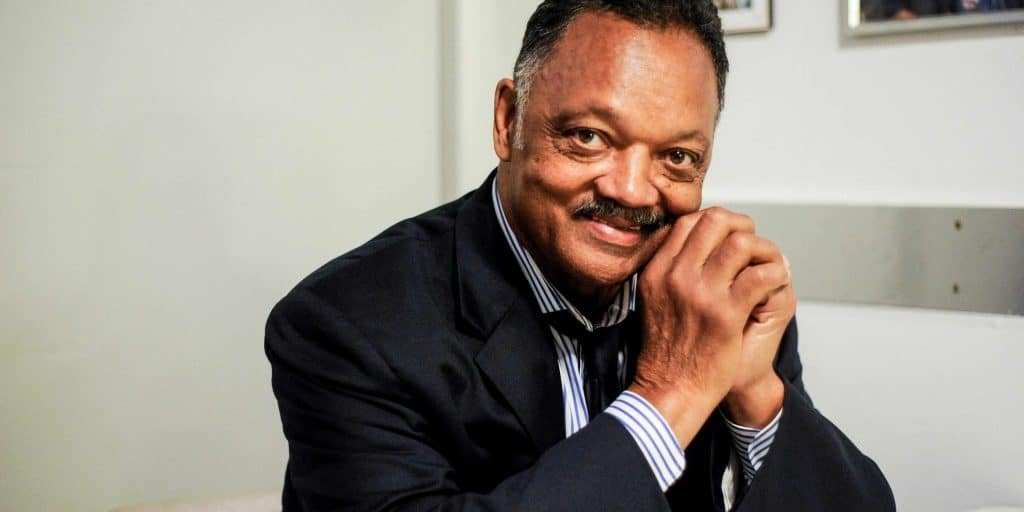
The Measure of a Life in the Age of Outrage
jpeg

How Civilizations Decide What to Remember When a public figure dies, the first headline becomes the first verdict. Before the memorial services are planned, before the family has fully grieved, before the arc of history has had time to settle, the media decides which sentence will introduce that life to the next generation. Reverend Jesse Louis Jackson died at the age of eighty-four. Within hours, major outlets led with a moral scandal from the late 1990s — an extramarital affair that became public in 2001 and was acknowledged, apologized for, and absorbed into the public record more than twenty-five years ago. The event is not disputed. It happened. It was wrong. It was addressed. But the more significant question is not whether it occurred. The more significant question is this: What does it reveal about a society when that becomes the headline of a life that helped shape modern America? That is not a defense of a man. That is an examination of a culture. The Outrage Economy and the Incentives of Memory We do not live in a purely journalistic age. We live in an engagement-driven age. The modern media ecosystem operates within what can be called the outrage economy, a market structure in which emotional intensity, especially moral scandal and indignation, drives engagement; engagement drives algorithmic amplification; amplification drives advertising revenue; and revenue shapes editorial emphasis. In this system, proportion is often subordinate to provocation. A nuanced reflection on decades of civil rights advocacy does not outperform a morally charged headline. Algorithms do not reward balance; they reward reaction. The metric is not historical accuracy. The metric is engagement velocity. This does not require malice. It requires incentives. When the economic structure rewards outrage, outrage becomes the lead. The consequence is subtle but profound: the architecture of memory becomes distorted. A chapter becomes the book. A mistake becomes the measure. And if this is how we now remember leaders, it reveals something larger than media preference. It reveals a shift in how civilization weighs human lives. The Ethics of Remembrance Every society chooses what it amplifies in memory. That choice reveals its moral framework. If we elevate scandal above sacrifice, we train future generations to fear leadership rather than pursue it. If we collapse a lifetime of institutional impact into a private moral failure, we teach that redemption has no civic value. If we demand moral perfection as the prerequisite for public contribution, we will inherit silence instead of courage. History has never been written by flawless people. It has been shaped by people willing to act despite imperfection. The American founding generation was imperfect. Presidents have been imperfect. Civil rights leaders have been imperfect. Legislators, judges, organizers, activists — all imperfect. Yet we do not erase their contributions because of their humanity. We measure them by the scale of their public impact. The measure of a life is not the absence of failure, but the scale of its contribution. Jesse Jackson in Historical Continuity To understand Jesse Jackson’s life, one must situate it within the arc of African-American political development. He was born in 1941 into the legal architecture of segregation. He emerged in the 1960s as a protégé of Dr. Martin Luther King Jr., working within the Southern Christian Leadership Conference and leading Operation Breadbasket — a program that translated moral protest into economic leverage. He confronted corporations not with rhetoric alone, but with organized boycotts demanding jobs and investment in Black communities. That was not symbolic activism. It was a structural intervention. In the 1970s and 1980s, he founded what would become the Rainbow PUSH Coalition, expanding the conversation from civil rights to political empowerment and economic inclusion. Then came the presidential campaigns of 1984 and 1988. In 1988, Jesse Jackson won primaries and caucuses. He built multiracial coalitions. He mobilized voters who had never been treated as central to national politics. He expanded the Democratic electorate. Before Barack Obama’s candidacy became viable, the psychological barrier had already been weakened. The image of a Black man standing on a presidential debate stage demanding national leadership had already been normalized. Jackson did not arrive at the mountaintop of electoral victory. But he expanded the pathway. History does not only record who wins. It records who makes winning possible. Private Failure and Public Contribution A private moral failure affects family, trust, and personal integrity. It deserves acknowledgment. It requires accountability. Public life affects institutions, laws, coalitions, economic access, and political possibilities. These are distinct domains. To confuse them is to collapse categories. Jesse Jackson’s affair in the late 1990s was a moral failure within the realm of personal life. His decades of advocacy, organizing, coalition-building, and political mobilization operated within the realm of public institutional transformation. One does not negate the other. If it did, no leader would survive historical scrutiny. The danger is not in acknowledging imperfection. The danger is in allowing imperfection to eclipse structural contribution. The Uneven Standard of Memory History reveals that moral failures do not universally define public legacies. Founding Fathers who owned enslaved people are still primarily remembered as architects of constitutional government. Presidents with documented personal scandals are still measured by legislative impact and geopolitical consequence. Public memory has always involved proportion. The question, then, is not whether imperfection should be reported. It should. The question is whether the proportion should be preserved. If standards of remembrance fluctuate depending on cultural convenience, then memory becomes political theater rather than historical assessment. A mature civilization must be capable of holding complexity without collapsing into caricature. Redemption and Continuity There is another dimension often ignored in contemporary commentary: the possibility of continued contribution after failure. Jesse Jackson did not disappear after 2001. He continued advocating. He continued organizing. He continued speaking. He continued shaping conversations around economic justice, voting rights, and corporate accountability. If public life allows no room for repentance, apology, and continued contribution, then we have abandoned one of the most foundational moral principles within Western and Christian ethical

What If Death Is Not What We Think It Is?

coff

On grief, presence, and the permanence of life By Eric Lawrence Frazier, MBA A friend of mine died recently. I did not attend the funeral. I have not yet spoken to his wife. I have known this family for most of my spiritual life, and when it mattered most, I was not there. There is no way to dress that up. It is a failure of presence—the one thing that cannot be replaced by a card, a call, or an apology after the fact. His death reminded me of something I already knew but constantly ignore—perhaps because it is too much for me to handle. To live with the awareness that death is rapid, unceasing, and indiscriminate is to live in a kind of low-grade terror that most of us manage by simply not thinking about it. But what do you do with the fact that life is impermanent? Not as a concept—as a reality. What do you do with it emotionally? Practically? Operationally? What do you do with the fact that the people you love—and the people you have yet to call back, visit, or sit with—can be gone before you get around to it? My friend was here. Now he is not. And no amount of regret changes the arithmetic of that. This is not an abstract ideology. It is not philosophical. It is not some transcendental meditation statement that we nod at in conversation and then forget by dinner. It is the immediate, undeniable reality of the human condition. And there is no intellectual access to some grand theology or mystic teaching that will change the reality of the facts. Every single night, I turn on the news and learn that someone else is gone. A family seated in a restaurant, sharing a meal—and a car crashes through the wall. A commuter on the freeway, ten minutes from home. Children in a school. Passengers on a flight. People who made plans for the evening and never saw the afternoon. No doctrine prepares you for that. No sermon makes it manageable. The facts simply are. And yet—we do not live in ignorance of our eternal being. We know something. We have always known something. Not because a preacher told us, and not because a book instructed us, but because we experience it every moment we are alive. We are here, right now, not plugged into anything, not powered by any external source, not sustained by any machinery of our own design. We are the living and breathing manifestation of something that operates under its own power—or, more precisely, under divine power. Every plant knows this. Every animal knows this. Every living creature on this earth operates the same way—unplugged, self-sustaining, animated by a force that no laboratory has ever produced and no technology has ever replicated. The evidence is overwhelming, and it has been in front of us since the day we were born: life is. It has no beginning we can locate and no ending we can verify. It simply is—just like the Creator. And death is not its opposite, because life has no opposite. It is time that we look at death differently. We have to—for the very sake of our mental sanity. We cannot allow death to drive us into paralysis, into fear, into a state where we stop receiving all that life brings us continuously and incessantly. The sun does not recognize death the way we recognize death. The ocean does not. The forest does not. Because there is no death—not in the way we have been taught to understand it. There is only change. There is only transition. There is only the body reaching the limit of what it can hold, and the life within it moving beyond that limit into what is next. Our problem with seeing death differently is that our minds will not let us. The mind is a remarkable instrument, but it is also a cage. It limits us to the present moment and the pain that moment contains. It drags us into the past—into grieving over what we miss, what we should have done, what we could have done—and forces us to relive that pain by projecting us into the future, where anxiety and fear wait with their catalog of what could happen, what might happen, what probably will happen. The mind oscillates between regret and dread, and it calls that oscillation “reality.” But here is what the mind cannot account for: you can observe it. You can watch your own mind think. You can step outside the thought, examine it, critique it, and decide whether to follow it or let it pass. That capacity—that ability to observe the observer—is not the mind. It is something beyond the mind. It is the evidence that you are operating with an intelligence that transcends your own cognitive machinery. You are not your thoughts. You are not your fears. You are not the grief that floods you when the phone rings with bad news. You are the awareness that watches all of it happen and remains after the wave passes. That awareness is not biological. It is not chemical. It is not generated by neurons. It is the eternal part of you—the part that was here before your first memory and will be here after your last breath. And it is the proof, available to you right now in this moment, that you are more than the body and more than the mind that inhabits it. If that is true—if we are eternal beings temporarily housed in bodies that are not—then everything we have been taught about death needs to be reexamined. Not from theology. Not from philosophy. From the direct experience of being alive right now and recognizing that the life in you did not come from you and is not sustained by you. It is sustained by something else entirely. And that something does not die. The Assumption We Never Question When someone dies, we say they are

The Super Bowl Halftime “Culture War” Is a Recruitment Campaign, Not a Lived Reality
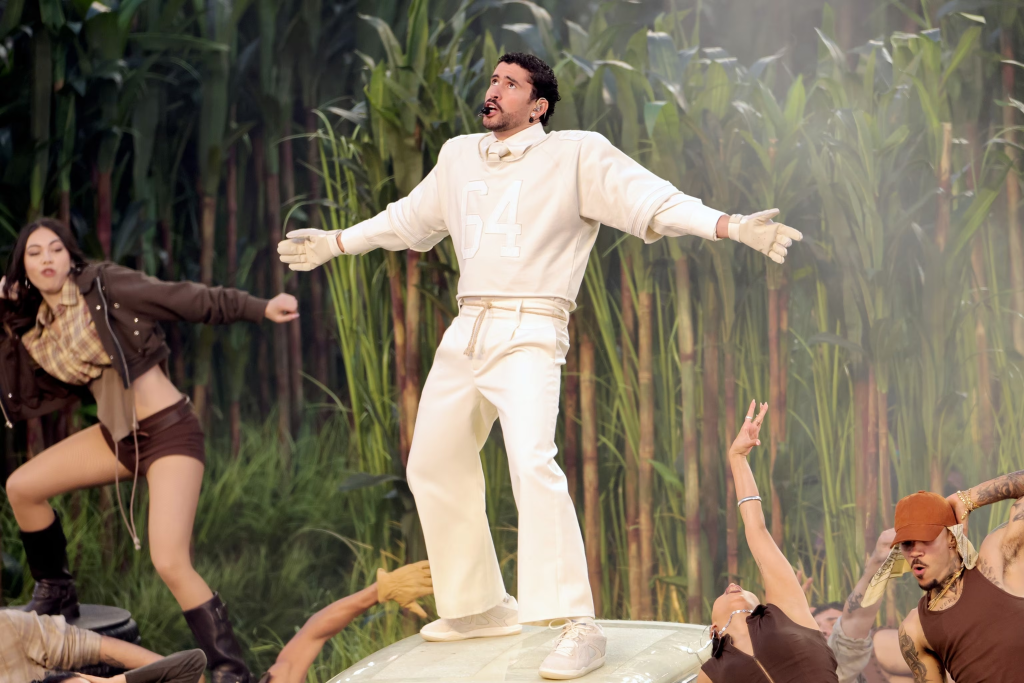
image (23)

Every year, the Super Bowl delivers spectacle. But it also delivers something more subtle and more dangerous: a ready-made interpretation package. A performance is no longer allowed to remain a performance. It becomes a moral battlefield. A set list becomes a referendum on national identity. A wardrobe choice becomes a threat. A lyric becomes an “attack.” And millions of people—many of whom were perfectly at peace an hour earlier—are suddenly told they are participants in a culture war that allegedly surrounds them at all times. That is not analysis. That is recruitment. On February 8, 2026, Bad Bunny headlined the Apple Music Super Bowl LX Halftime Show at Levi’s Stadium in Santa Clara, California. The performance leaned heavily into Puerto Rican and broader Latin cultural symbolism, included major guest appearances, and ended with an explicit unity message—“Together We Are America.” Multiple mainstream outlets summarized it as a celebration of Latin culture, Spanish-language music, and pan-American unity. Then, almost immediately, the outrage economy did what it always does: it converted symbolism into warfare. Turning Point USA promoted and staged an “All-American Halftime Show” as counterprogramming—an explicit attempt to frame the moment not as entertainment, not as taste, not as artistic preference, but as a contested battlefield over “who America is.” Wired covered the counter-event as exactly what it was: a culture-war reaction product built from outrage over the halftime show.  ABC News also reported the counterprogramming concept directly: a parallel “halftime show” positioned as an alternative.  The Los Angeles Times noted the same dynamic in its reporting on how the halftime show came together, including reference to the opposing event. That sequence is the point. A real war does not need to be manufactured through content strategy and counterprogramming. A real war does not require a marketing plan to sustain the perception that it exists. If your “war” must be continuously launched, refreshed, and fed, what you have is not a war in any ordinary sense. What you have is a monetizable narrative frame. What’s really happening: symbolic events get turned into recruitment opportunities A halftime show is entertainment. But in an outrage economy, entertainment becomes a weaponized symbol—because symbols are easier to weaponize than facts. Facts require patience, verification, and context. Symbols can be framed in seconds. The playbook is consistent. First, a cultural moment happens: a halftime show, a movie, a classroom dispute, a corporate ad. Then a framing class arrives—commentators, activists, political entrepreneurs—and interprets the moment not as one event among many, but as an existential threat. Then counterprogramming is launched: alternative shows, boycotts, callouts, and “patriotic” versions designed to present the nation as two opposing camps. The platforms amplify it because outrage drives engagement, and engagement drives revenue. Finally, people become the product: their anger becomes fuel that powers the system. At that point, the important question is not “Who won?” The important question is “Who profits?” Because the truth is simple. Your attention is the commodity. Your outrage is the metric. Your indignation is the revenue stream. And the “war” narrative is the sales pitch that keeps you scrolling, donating, posting, and fighting. The war frame turns ordinary citizens into predictable consumers of grievance—and that predictability is what can be monetized. The war frame is not neutral; it is a demand for allegiance The culture-war framing is not merely describing society. It is asking you to enlist. It pressures you to interpret every symbolic difference as hostility and every disagreement as betrayal. It tells you that you must pick a side, perform loyalty, and treat neighbors as threats. It trains you to experience pluralism as danger and disagreement as invasion. But America isn’t one culture with one rightful default identity. It is a plural society made up of overlapping communities—regional, religious, ethnic, generational, professional—each with its own histories, tastes, and moral languages. That reality is not automatically a crisis. It becomes a crisis only when someone insists that pluralism is warfare. This is why I reject the war story. Not because disagreement doesn’t exist, but because the war frame is an instrument. It is used to create a constant emotional emergency, to convert normal human differences into permanent antagonism, and to turn ordinary people into predictable, profitable voters and consumers. The evidence is not theoretical; it is empirical and personal My argument does not require you to accept my worldview. It requires you to look at your schedule. Look at your family. Your job. Your mortgage statement. Your retirement account. Your daily obligations. Your neighborhood. Your friendships. Your faith community. Your real problems. Now ask yourself, without performing for anyone: is your life truly organized around a “culture war,” or is your life organized around survival, love, responsibility, and practical goals? Do you wake up thinking about culture war strategy, or are you thinking about what you need to get done today? Are you fighting strangers to be your friend or to adopt your worldview, or do you mostly spend time with people who already see the world the way you do? Is the “culture war” sitting at your dinner table, in your carpool line, at your workplace, on your street? Is it coming into your home demanding that you take a position on a halftime show? For most people, the honest answer is no. Most people are not living a war. They are living a life. The “war” is primarily something that arrives through screens, through clips, through reaction reels, through outrage commentary, through algorithmic amplification. If the “war” is mostly on your phone, mostly in your feed, mostly in the performance of outrage, then it is not a war you are living. It is a war you are being recruited to perform. And I refuse recruitment. Two extremes, one business model The halftime show and the “All-American alternative” are presented as two extremes. But the deeper commonality is that both become content units in the same attention economy. One becomes a celebration that draws mass attention. The other becomes a counter-ritual designed to

CAPITALISM, SOCIALISM, AND THE MYTH OF AMERICAN EXCEPTIONALISM
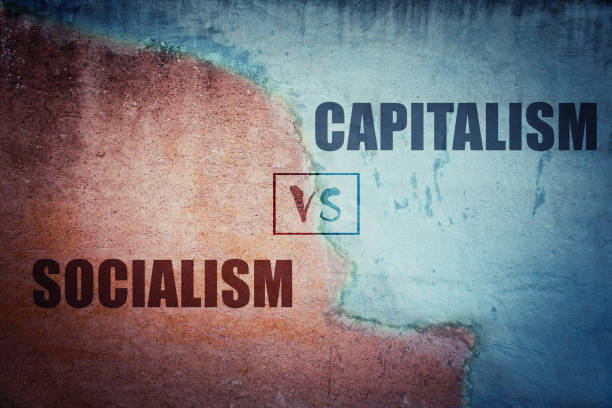
image (1)

Freedom, Economics, and Our Shared Humanity ✍???? By Eric Lawrence Frazier, MBA The beginning of a new year always invites reflection. It forces questions we don’t usually slow down long enough to ask. How will I show up differently in 2026 than I did in 2025? What will I believe? How will I behave? What actually matters now? These questions feel personal, but they are never private. Our lives are big—bigger than we sometimes admit. We carry families, careers, faith, finances, ambitions, responsibilities, and unfinished dreams all at once. And while we like to think of our goals as purely individual, there is an inescapable truth that becomes clearer with age and experience: whatever we achieve in this country will be achieved within the political and economic environment we are living in. Unless one plans to leave the United States entirely, there is no opting out. Language matters. Politics matter. Economic narratives matter. The climate we inhabit—how ideas are framed, which words are rewarded or punished, which beliefs are labeled dangerous or virtuous—shapes how we move, how we’re perceived, and how effectively we can build relationships, influence others, and accomplish what we set out to do. That reality makes it especially important, at the start of a new year, to get honest about the environment we are navigating—not emotionally, not ideologically, but intellectually. Because clarity is a form of freedom. ???? And clarity begins with vocabulary. The Story Is a Fable ???? A familiar American narrative says that capitalism belongs only to democracy, and socialism belongs only to communism. That capitalism equals freedom, and socialism equals tyranny. That our greatness rests on the purity of our capitalism and the rejection of socialism in any form. It is a compelling story. It is emotionally satisfying. It is politically powerful. It is also a fable. Look closely at the world—at real nations, operating in real time—and a different picture emerges. You quickly discover that the rigid ideological categories we use in political debates do not exist in practice. They exist in speeches, on television, and in partisan imagination, but not in the lived realities of nations and their people. Every modern country on earth blends market systems with public systems. Every one. The United States, with all its pride in private enterprise, relies heavily on public institutions and collective guarantees. And nations that proudly call themselves “socialist” rely heavily on private markets and individual entrepreneurship. The lines are blurred everywhere because human societies are complicated everywhere. The fable persists not because it is accurate, but because it is comforting. Understanding What These Terms Actually Represent ???? Capitalism, at its core, is simply a system where private individuals and companies own property, produce goods, and engage in markets driven by profit. It does not require democracy. It does not guarantee freedom. It does not prevent corruption. It is a tool—a powerful one, a deeply influential one—but still a tool. Socialism, stripped of fear and propaganda, is a system in which society collectively funds major public goods—schools, pensions, healthcare, safety services, infrastructure, disaster relief, banking protections—to stabilize people’s lives and ensure basic equity. It does not require communism. It does not eliminate markets. It does not suppress innovation. Democracy is about political participation, voting, and accountability. Communism, as practiced historically, is about one-party rule. Bureaucracy is the administrative machinery that every modern society needs to function. Freedom is the lived experience of security, dignity, and human agency. None of these terms guarantee each other. What We Actually See When We Look at Nations ???? Every functioning modern society is a mixed economy. Every society blends private initiative with public guarantee, individual ambition with collective safety, open markets with regulated industries, and social programs with entrepreneurial incentives. The United States is no exception. In fact, we are one of the clearest examples of a hybrid society. Remove Social Security, Medicare, public schools, the VA, FDIC insurance, FHA loans, USDA loans, public universities, FEMA, and the U.S. military—and the nation collapses within days. Yet most Americans would never call these institutions “socialism.” At the same time, virtually every country with large social programs also has thriving private markets, major corporations, and a strong entrepreneurial culture. This is not ideology. This is human necessity. So What Actually Makes One Country Different From Another? ⚖️ The difference is not capitalism. The difference is not socialism. The difference is not bureaucracy. The difference is not even the label “democracy.” The real distinction is freedom. Freedom is the ability to speak without fear, worship without penalty, assemble without intimidation, vote without obstruction, own property without discrimination, raise children without terror, and challenge government without retaliation. A society can be capitalist and deeply unfree. A society can be socialist and deeply free. Freedom is not an economic structure. Freedom is a moral structure—a commitment to human dignity. Beyond Labels, Toward Shared Humanity ???? When we set aside ideological labels, we begin to see humanity clearly. Every nation—regardless of structure—is doing the same ancient work: trying to feed its people, educate its children, protect its citizens, allow families to build a life, minimize suffering, create stability, and encourage some form of flourishing. This is not capitalism or socialism. This is the human project. Conclusion ???? There is no purely capitalist nation. There is no purely socialist nation. The labels we use do not reflect reality. What defines a nation is not the system it claims, but the freedom it protects, the justice it seeks, and the humanity it honors. This is not anti-American. It is profoundly American. Thank You & Call to Action ???? Thank you for reading this blog. I appreciate your continued support in raising awareness about the issues that impact our relationships, families, friendships, and the institutions and environments—political, social, and economic—in which we live and work. Please share this blog—and explore my other articles and videos—each one created to educate, empower, and uplift. Together, we can challenge the belief systems that hold us back and press forward

THE POWER IS NOW: Time, Value, Expertise, and the Future of Real Estate⏳

image

There is one exception to everything I am about to say about time—and that exception is God. God is the Alpha and the Omega, the beginning and the end. God is not subject to time; time is subject to Him. God does not move through hours, days, or years. God does not age. God does not wait. God simply is. When Moses stood before Pharaoh and asked God what he should say when Pharaoh demanded to know who sent him, God did not give Moses a résumé, a title, or a pedigree. God gave him ontology. He said, “Tell him I AM THAT I AM.” Not I was. Not I will be. I AM. ✨ From a spiritual perspective, time simply is. It is not governed by the rising and setting of the sun, nor by the second hand of a watch, nor by calendars or clocks. Time, in its eternal sense, exists within God. But we are not God. We are sons and daughters of God, made in His image, animated by His breath—but we are not Him. And unlike God, we have a beginning, and we have an end. Our existence on this earth is finite. It is measured. It is numbered. That reality should sober every one of us. ⚖️ If you genuinely understood the power of time—not as a philosophical abstraction, but as the currency of your life—you would do two things without hesitation. First, you would refuse to waste it. Second, you would insist on being paid for it when it is being used. These are immutable realities. They are not subject to negotiation, culture, or opinion. Time is the scarcest resource in the human experience. Once spent, it never returns. There are no refunds, no rollovers, and no extensions. So every day, whether you acknowledge it or not, you are answering one unavoidable question: What am I doing right now—and is it worth my time? Scripture tells us our lifespan is three score and ten, with the possibility of living a little longer by reason of strength. So let’s use the generous estimate of 80 years. Eighty years sounds like a long time—until you do the math. Eighty years multiplied by 365 days, multiplied by 24 hours, looks substantial on paper. But reality strips that number down quickly. Large portions of that time are consumed by sleep, eating, recovery, and basic maintenance of the body. Another significant portion is spent working, earning income just to sustain life. What remains is divided among family, relationships, obligations, and whatever margin is left. When you break time down honestly, you realize two things very quickly: You don’t have much of it, and you control far less of it than you think. That is why time must be treated as sacred. ???? That is why time must be valued. And that is why time, when used in the service of others, must be compensated. Yet many people live as though their time has no value. They give it away freely. They offer their expertise without boundaries. They act as though the only value their time has is what an employer, a broker, or a client decides to assign to it. That is not humility. That is a failure of identity. Every human being has intrinsic value. That value does not originate from a job title, a commission split, or an employer’s generosity. It comes from knowledge acquired, experience earned, discipline applied, and wisdom developed over time. Time is not just money. Time is life. ⏰ And when you exchange time for money, what you are really exchanging is a portion of your life for compensation. Every legitimate business understands this. That is why companies pay salaries. Salaries compensate labor, preparation, availability, and effort. Bonuses and commissions reward results. That distinction matters. In most professional industries, commission is not compensation—it is a bonus. CEOs, executives, and management professionals are paid salaries for the work they do and bonuses for the results they produce. No serious company says, “We’ll pay you only if the outcome happens, and until then, your time has no value.” Except real estate. Real estate flipped the model entirely. Agents are expected to market properties, secure buyers, negotiate contracts, manage transactions, solve problems, and absorb risk—all without compensation unless the deal closes. The commission, which should function as a bonus for results, has been turned into the only form of pay. This is not how professional labor works anywhere else. And the consequences of this model are not theoretical. They are visible in inflated costs, distorted incentives, public mistrust, and ultimately, lawsuits. When compensation is tied only to outcomes, prices rise to absorb the risk. Just as long-term mortgages inflated home values by expanding debt availability, commission-only compensation inflated transaction costs by forcing results to subsidize unpaid labor. Let me be clear about my position. ???? The commission should exist. It should be paid. It is appropriate to reward successful outcomes. What commission should not be is compensation for the time, labor, expertise, and effort required to get there. That work deserves to be paid—separately, transparently, and professionally. This is not a philosophical rant. This is not a theory. This is how I live and how I operate my business. I no longer work for commission. I work as a consultant and advisor. My time is compensated because my time has value. Whether someone values my time is not something I debate—it is something they demonstrate by becoming my client. If someone chooses not to work with me because they do not value my time, they have done me a favor. They have saved me time. Consulting is not a right. It is a privilege. Clients often believe they are interviewing the consultant. In reality, the consultant is evaluating whether the client is prepared, aligned, and financially capable of receiving professional advice. Free advice is everywhere. Google is free. ChatGPT is free. Friends and family are free. Professional expertise is not. No one asks their doctor to work for free. No one asks their attorney, CPA, electrician, or

Why I No Longer Believe in “Free” ????

why i no longer believ in free (1)

I do not believe in free. That may sound strange coming from someone who has spent more than four decades in sales, real estate, and financial services. There was a time when I thought free was a blessing. If I could get something for free—a report, a class, a consultation—I believed I was getting a deal, a favor, a little bonus from the universe. What I did not understand back then was context. I did not understand the value of what I was receiving in relation to what I actually needed. I did not understand the real purpose of the “free” being offered. I certainly did not understand that the freebie was not primarily about me at all—it was about the person or company using “free” as bait to get me into a deeper conversation, qualify me, and position themselves to sell me something else. Every sales guru alive today preaches this: “Have a lead magnet. Give something away for free. Get them into your funnel.” It sounds harmless, even generous. But in reality, it is a form of advertising with a very real cost to the provider and a very clear objective: capture the consumer’s attention, time, and trust long enough to convert them into a paying customer. Free is not charity. Free is strategy. And today, I believe that for professionals—especially those whose work can profoundly impact a person’s life, family, and financial future—free is often a trap that cheapens the work, confuses the consumer, and destroys the economics of the profession. Free Is Not a Gift. It’s a Pricing Strategy ???? Marketers have been weaponizing “free” for over a century. Retailers perfected the “loss leader” model: sell one item at or below cost to get people in the door so they will buy higher-margin products. Streaming services offer free trials to grow their subscriber base. SaaS companies design intricate free-trial funnels to convert “try it” into “subscribe now.” “Free” is never free. Free is a cost center funded by the expectation of future revenue. From a marketing standpoint, I understand it. From an ethical standpoint—especially when we’re dealing with someone’s legal rights, financial future, housing, family, and long-term security—I believe we have crossed a line. Serious professions rarely play the “free” game with their core service. No serious attorney is advertising, “I will represent you for free unless you win.” Criminal defense lawyers require large retainers—$10,000, $25,000, $50,000—before they file a single motion. The outcome is uncertain; the work is still compensated. No doctor is saying, “Come into my office, I’ll examine you, diagnose you, run tests, and if you like my advice, then you can pay me.” No engineer, architect, CPA, structural analyst, or HVAC contractor operates that way. You pay for the consultation. You pay for the inspection. You pay for the work. Their expertise has consequences in your life, so it has a price. When something has real value and real consequences, it is not free. Except, strangely, in one of the most consequential professions in American life. The One Profession That Works for Free ???? There is one profession that stands out for operating on a “free” model as the default: residential real estate. Real estate agents only get paid when a transaction closes. Think about what that means. The listing agent: Analyzes the market. Advises on price and condition. Coordinates photos, staging, showings, and marketing. Fields calls, screens buyers, and negotiates offers. Manages inspection issues, appraisal drama, buyer financing delays, and seller anxiety. The buyer’s agent: Educates the buyer on financing options, neighborhoods, and realistic price points. Shows property after property after property. Writes offers that get rejected. Rewrites offers. Negotiates credits, repairs, and terms. All of this is done with no guaranteed compensation. That document convinced me of one thing: The problem is not that agents don’t earn their money. The problem is that they give away almost all of that value for free unless and until a closing occurs. And when the deal does not close? The agent walks away with nothing—after spending dozens of hours, driving hundreds of miles, burning marketing dollars, and sacrificing time with their own family. The Math: Professionals Working Like Professionals, Paid Like Interns ???? Let’s move from emotion to economics. According to industry data, the median gross income of a REALTOR® is modest when measured against the hours worked, the expenses incurred, and the risks absorbed. That’s gross, not net. Before: Brokerage splits Marketing expenses MLS and association dues Health insurance (if any) Technology, auto, licensing, and overhead Newer agents are in far worse shape. Many make under $10,000 in a year from real estate. Now put those incomes beside the cost of housing. In California, the income needed to buy a median-priced single-family home is well into the six figures. So here is the absurdity: We have a profession full of people advising others on how to achieve homeownership and build wealth through real estate… …while the typical agent’s income is not sufficient to buy the very product they are helping others acquire. And who are these agents? The profession is dominated by women—many of them holding families together, raising children, supporting spouses—operating in a model where they give thousands of dollars of time and labor away for free, year after year, and are told they should be grateful for the opportunity to “work on commission.” From a justice standpoint, that alone should bother you. The Consumer’s Perspective: Why For-Sale-By-Owner Exists ???? Real estate loves to ridicule the “For Sale By Owner.” But if we’re so valuable, why do FSBOs exist at all? They exist because a significant number of sellers do not believe the cost of our services matches the value we provide. They are not calculating risk, overhead, or the deals that never close. They’re calculating the visible cash flow from this transaction. That is why FSBO exists. Not because sellers are ignorant, but because they do not see a rational relationship between price and value in our current model.

The Architecture of Speech

image 2025 12 24t183957.730

What the Word builds, what it breaks, and what we should all learn from Marcus????️ Everything in this world that is accomplished—everything that is built, every institution that stands, every business that exists, every family that endures, every invention we marvel at—began as an idea and a spoken word. It was conceived in the mind. It was named. It was breathed into existence through language. And then—this is the part we ignore—the very thing that is manifested is either elevated or destroyed by the same instrument that brought it into being: the word. Words maintain. Words corrode. Words instruct. Words humiliate. Words call forth love, dignity, and cooperation—or they cultivate fear, contempt, and dominance. That is not philosophy floating in the clouds. That is observable reality. It is the evidence of our existence, and it is undeniable. We see it every day. We feel it. We experience it. And yet, most people do not fully understand it. Speech is as mysterious—and as consequential—as Scripture itself. St. John opens his Gospel with a statement that should arrest any serious thinker: “In the beginning was the Word… and the Word was God.” Then he adds the ontological shock in verse 14: “And the Word was made flesh.” And earlier in that same opening chapter we are told that nothing came into being without Him. This is not an attempt to debate theology, denominations, or metaphysical arguments about creation. This is about something more practical and more immediate: the ontological reality of the unseen becoming seen—of what is conceived and spoken manifesting itself in everyday life. So here is an example—simple, familiar, and close enough to home that most people will recognize it immediately. It happens in the workplace, but it could happen in a marriage, a ministry, a business partnership, or a family. Names have been changed to protect the innocent—especially the innocent. A Real Situation: The Conversation That Wasn’t Really About Procedures ???? A seasoned professional—let’s call him Marcus—joined what appeared to be a normal operational conversation: procedures, workflow, expectations, and outcomes. Nothing dramatic. Just work. But within minutes it became clear the discussion was not about process at all. It was about power—who controls the frame, who controls the voice, and who gets to define what is “reasonable.” The other person spoke as if results were the only reality that mattered. Context did not matter. Constraints did not matter. How the situation evolved did not matter. And when Marcus attempted to state his position—to explain what led to the problem and what needed to be addressed—he was interrupted. Talked over. Cut off. Rushed past. Then came the excuse, delivered like a virtue: “I’m just being blunt.” “I’m just being frank.” “I’m just being real.” And right there—inside that one sentence—Marcus saw the true seed being planted. Not truth. Not leadership. Not clarity. Dominance. So Marcus drew a line: he would not be spoken to with disrespect and then be told to call it honesty. From this situation, there are three lessons worth learning—not because Marcus is perfect, but because the consequences of speech are predictable. Seeds reproduce after their kind ????. LESSON ONE “Blunt” and “Frank” Are Often Disguises for Control People who hide behind “I’m just being real” are rarely committed to truth; they are committed to control. They want permission to strike without consequence, to injure without accountability, and then to rename the injury “feedback.” But language does not become righteous because someone labels it righteous. Contempt does not produce collaboration. It produces defense. Defense produces delay. Delay produces mistakes. Mistakes produce blame. Blame produces more contempt. That is not personality. That is not temperament. That is a chain reaction. A person can deliver hard truth with dignity. A person can enforce standards with respect. A person can correct behavior without degrading the human being. So when someone says, “I’m blunt,” the real question is simple: Are you clear—or are you careless? Are you direct—or are you disrespectful? Are you pursuing truth—or are you pursuing submission? LESSON TWO Tone Is Not Style—Tone Is Governance ⚖️ Some people treat tone like decoration, like a preference, like “being sensitive.” They act like tone is optional, while content is what matters. That is a misunderstanding of reality. Tone is governance. Tone is the invisible policy that tells everyone in the room what is safe and what is dangerous. Tone teaches people whether they can speak honestly, ask questions, admit errors, and report problems early—or whether they must conceal reality until it explodes. Scripture is brutally clear: “Death and life are in the power of the tongue.” (Proverbs 18:21). That is not religious ornament. That is law. Words produce something—first in the inner world, then in relationships, then in the environment. So Marcus understood the stakes. He wasn’t protecting fragile feelings. He was protecting the ground. Because what is normalized in conversation becomes the blueprint for everything else: How people treat clients. How they document reality. How they admit mistakes. How they ask for help. How they lead when nobody is watching. LESSON THREE Outcomes-Only Leadership Creates Fear, and Fear Kills Truth The outcomes-only person believes they are driving performance. But what they often drive is fear. And fear is the enemy of truth. People who feel safe will tell you what is real. People who feel threatened will tell you what is convenient. They will hide problems until they become disasters. They will avoid ownership because ownership feels dangerous. They will follow orders instead of seeking what is right. This is not theory. This is leadership. This is psychology. This is spiritual law wearing a business suit. So Marcus did what mature leaders do: he refused to be managed through humiliation. He refused to allow disrespect to be planted in him and then be called “efficiency.” The Line Marcus Drew ???? Strength Without Disrespect Here is where many people get confused: they think respectful speech means weak speech. They think honor means softness. They think dignity means avoiding hard conversations.

Time: The Only Christmas Gift You Can’t Return

time the only christmas gift you can’t return

Time It happens every year like clockwork. As Christmas Day approaches, there’s a mad dash to the retailers—online carts filling up, parking lots packed, delivery dates looming, and that familiar pressure to “get it right.” And strangely, the longer you’ve known someone, the harder it can be. What do you give a person who has everything? What do you give a person you’ve been giving to every year… for years? Then there’s the other layer—the social math of gift-giving. The unspoken fear that you’ll leave somebody out, or make somebody feel less-than, or accidentally give something they don’t need, don’t want, or quietly resent. You start shopping for peace, not joy. You start buying “proof.” Proof you remembered. Proof you care. Proof you’re still connected. I’ll be honest: I get caught up in this craziness too. And sometimes I wish it would all just go away. Because at some point, a question creeps in that we don’t like to sit with: what does any of this have to do with the birth of Christ? How did a holy story—God stepping into human history—turn into a national sprint for shirts, shoes, gadgets, and gift receipts? It can feel like we’ve esteemed the wise men’s gifts as greater than the birth itself and what it meant. Now let me be clear: this isn’t a blog to challenge the practice of giving gifts on Christmas. It really isn’t. Giving can be beautiful. Giving can be love in motion. But I do want to offer an alternative—especially for those of you searching for the “perfect gift.” The gift that is priceless. The gift that cannot be replaced. The gift that cannot be returned, exchanged, upgraded, or matched by a better sale next week. That gift is time. Time is not “soft.” It is your most finite asset. We talk about time like it’s endless. Like we can “make it up.” Like there will always be another weekend, another holiday, another visit, another phone call, another conversation that goes deeper than small talk. But time doesn’t work like that. Time is the one asset you spend every day whether you want to or not—and once spent, it’s gone. I think we forget just how limited time is because we count it in ways that make it feel abstract: years, decades, “back in the day.” But when you start counting time differently, it stops feeling abstract and starts feeling urgent. I’m 63 years old. That may seem old to some and young to others. I met someone the other day in their 80s, and if you’d told me they were in their 60s I would have believed you. It made me think: how do they view time? What does a year feel like when you’ve lived that many? Here’s one way to see time for what it really is: count it in seasons. There are four seasons in a year, and they come once a year—no matter how busy you are, no matter how much you buy, no matter how many plans you make. So if I’m 63 years old, that means I’ve seen: 63 springs 63 summers 63 falls 63 winters And the truth is, I live in California, so some years it feels like I’ve mostly seen 63 summers. Now let’s break it down further. If you count time in months, it gets sobering fast. Twelve months per year times 63 years equals: 12 × 63 = 756 months. That’s it. 756. Think about how small that number feels when you compare it to anything else we treat as “real.” If it were 756,000 dollars, that barely buys a house in many parts of California. If it were 756 dollars, it wouldn’t pay rent anywhere I know. If it were 756 minutes, that’s barely half a day. Now think in days. There are 365 days in a year. Multiply that by 63: 365 × 63 = 22,995 days. 22,995 days sounds big until you put it next to the way we live—rushing, postponing, assuming, and spending emotional energy on things that won’t matter in the final accounting. If those 22,995 days were dollars, you couldn’t buy a new car. Maybe a used one. It might be enough for a down payment on a home—if you’re using FHA financing—and even then, we’re talking “barely.” For many households, it wouldn’t represent three months of a true emergency fund. The point is not to obsess over the math. The point is to feel the finiteness. Time is not a metaphor. Time is not a vibe. Time is not a motivational quote on a wall. Time is life being spent. Scripture is not trying to scare you. It’s trying to wake you up. The Bible gives us language that is blunt—but not cruel. It’s honest. The old phrase “three score and ten” is another way of saying seventy years. That idea comes from Psalm 90:10, which frames the length of life as something fragile, brief, and uncertain. Now I’m not claiming a guarantee or a limit. I’m not putting God in a box. But I am saying this: when you apply that standard to your life, it changes how you think. If I use seventy as a personal reference point, then from 63 to 70 is seven years. Seven years sounds like a lot—until you count it. Seven years equals: 7 × 12 = 84 months 7 × 365 = 2,555 days Eighty-four months. Two thousand five hundred fifty-five days. That’s not fear. That’s clarity. And yes, I pray the Lord lets me see 70, 80, 90—maybe even 103. But I don’t know. You don’t know. None of us knows. All we know is that time is moving, and one day, time will be up. And that brings me back to the original question: what can you give someone that cannot be returned? Time. We don’t understand time’s value until time is no more. Here’s the irony: we don’t really appreciate time until time is no more.