Fair Housing Series PART 3: The Expansion and Enforcement of Fair Housing

image 2025 08 22t175942.248
Civil Rights Movement to 1968
🔍 Introduction: Why Housing History Matters

Housing is more than four walls and a roof—it’s where opportunity begins. 🧱🏠 Whether it’s access to quality schools, jobs, or safe neighborhoods, housing shapes lives and futures. Yet for much of America’s history, fair access to housing was intentionally denied to millions based on race. The consequences still echo today in wealth gaps, neighborhood demographics, and opportunities. 📉🧑🏽‍🤝‍🧑🏻

The Fair Housing Act of 1968 was a historic attempt to correct these wrongs. Passed during a volatile time in American history, the law wasn’t born out of a peaceful policy debate—it was the result of persistent activism, government resistance, and national tragedy.

In this article, we’ll walk through the roots of the Fair Housing Act—from post-WWII housing segregation 🪖 to redlining 🗺️, the Civil Rights Act of 1964 📜, the assassination of Dr. Martin Luther King Jr. 🕊️, and what the 1968 law ultimately achieved.

🏘️ Post-WWII Housing Segregation
Following WWII, America entered a housing boom—but it wasn’t a boom for everyone. 🇺🇸🚪

The GI Bill helped returning veterans buy homes, attend college, and build wealth. But Black veterans were routinely denied these benefits through discriminatory lending practices and segregationist housing policies. 🧑🏿‍✈️❌🏠

Developers like those behind Levittown (one of the first large suburban housing projects) outright refused to sell homes to Black families. Real estate agents followed suit, often turning away qualified buyers due to “racial covenants” in property deeds. ✍️🛑

Even public housing programs reinforced segregation. Local authorities often placed white families in one complex and Black families in another—preserving and deepening racial divides. 🏙️📉

🗺️ Redlining and the Role of the Federal Government
Redlining—yes, the term we still hear today—originated from literal red lines drawn on maps by the government. 🖍️📉

The Home Owners’ Loan Corporation (HOLC) graded neighborhoods from “A” (green) to “D” (red), with red areas marked as “hazardous” for investment. These were often Black or racially mixed communities. Banks then denied loans in these areas, regardless of individual creditworthiness. 🏦🚫

The Federal Housing Administration (FHA) supported this practice by refusing to insure loans in redlined areas. This meant Black families couldn’t buy homes—even if they could afford them. 🏠💸🧑🏾‍💼

As a result, Black families were often forced to rent in declining urban centers while white families moved to wealth-building suburban homes. 🏡📈 Over generations, this created a devastating wealth gap. Today, white families hold nearly 10 times more wealth than Black families on average—a gap rooted in these policies. 📊📉

📜 The Civil Rights Act of 1964: A Push for Change
The Civil Rights Act of 1964 was a landmark victory. ✊🏾🗳️ It outlawed discrimination in public accommodations, education, and employment. But housing was left out—despite its critical importance. 🏠❓

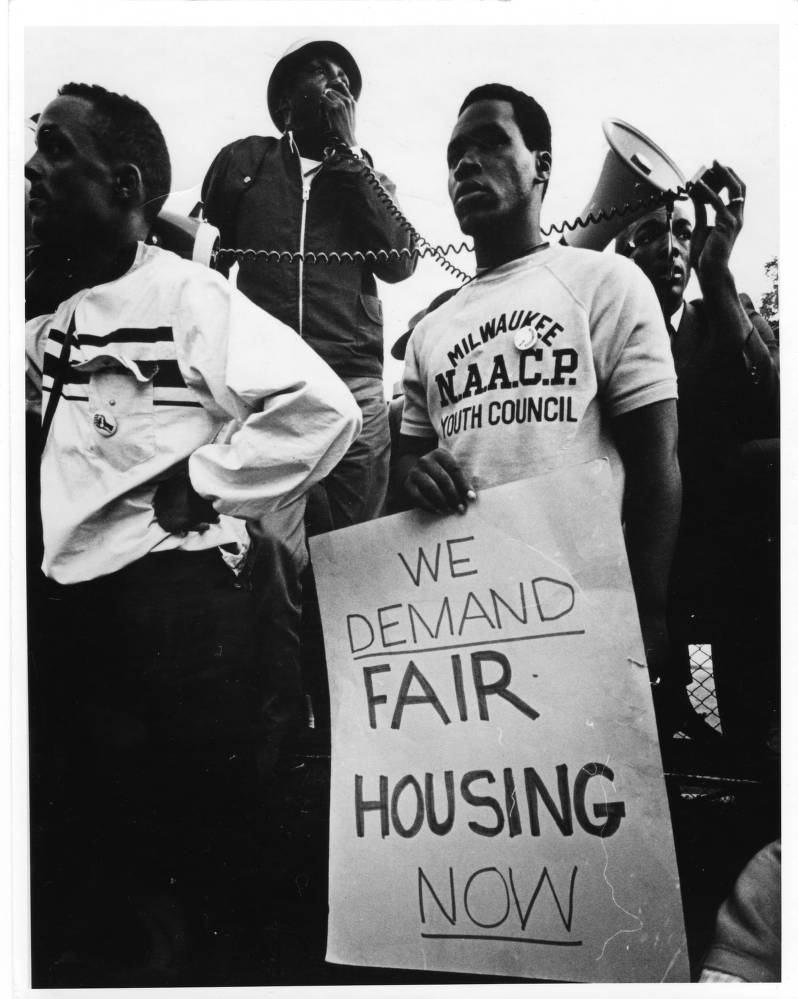
Civil rights leaders understood that fair housing was essential to true equality. Activists and organizations like the NAACP, CORE, and Urban League began pushing for legislation that addressed discrimination in home buying, renting, and lending. 📢🧑🏽‍⚖️

While the political climate was still tense, the Act of 1964 laid the legal groundwork for addressing deeper forms of structural racism—including in housing. The movement gained momentum. 📈🔥

🕊️ The Assassination of MLK & the Passage of the Fair Housing Act
The turning point came with heartbreak. 💔

On April 4, 1968, Dr. Martin Luther King Jr. was assassinated in Memphis, Tennessee. His death sparked riots in over 100 cities. 🕯️🔥💔 Communities were grieving, angry, and demanding justice—not only for his death, but for the causes he stood for.

President Lyndon B. Johnson used the moment to urge Congress to finally pass the stalled fair housing bill. Within seven days, the Fair Housing Act was signed into law on April 11, 1968. 📅🖊️ It was both a tribute to Dr. King and a recognition that injustice in housing was no longer acceptable.

📘 What the 1968 Fair Housing Act Included
The Fair Housing Act (Title VIII of the Civil Rights Act of 1968) was a comprehensive law that tackled housing discrimination head-on. 🧑🏿‍⚖️📜🏘️

Here’s what it included:

  • ✅ Outlawed Discrimination based on race, color, religion, and national origin in the sale, rental, and financing of housing.
  • ✅ Banned Discriminatory Advertising, including any statements that suggest preference or exclusion based on protected characteristics. 📢🚫
  • ✅ Legal Enforcement Tools allowing individuals to file complaints with HUD and empowering the Department of Justice to intervene in patterns of discrimination. 🏛️📄
  • ✅ Expanded Protections through later amendments to include sex (1974), disability, and familial status (1988). 🧑‍🦽👨‍👩‍👧
Despite its landmark status, the Act wasn’t a magic wand. Enforcement challenges, loopholes, and resistance meant that discrimination persisted—and still does today in subtler forms like steering, zoning barriers, and credit inequality. 🏙️⚖️

🧠 Conclusion: Looking Back to Move Forward
The Fair Housing Act wasn’t the beginning—or the end—of the fight for housing equality. It was a crucial midpoint in a longer journey toward justice. 🛤️

From postwar redlining to the activism of the 1960s, to today’s battles over gentrification and affordability, housing remains one of the central battlegrounds for civil rights in America. 🏗️💬

🗣️ Understand how history shaped housing. Forward this article to educate others.

🔗 Stay Connected & Take Action:
📥 Subscribe to this newsletter on LinkedIn, or follow the blog at
 ➡️ www.ericfrazier.com or www.thepowerisnow.com
📺 Watch our interviews and updates on YouTube:
 ➡️ youtube.com/thepowerisnow
📞 Need personalized advice or consultation? Whether you’re buying, selling, or building your business, I’m here to help.
 ➡️ Schedule your free discovery call today: https://calendly.com/ericfrazier/real-estate-mortgage-consultation-clients
Your trusted advisor in business and wealth.
 — Eric Lawrence Frazier, MBA

📚 Sources