
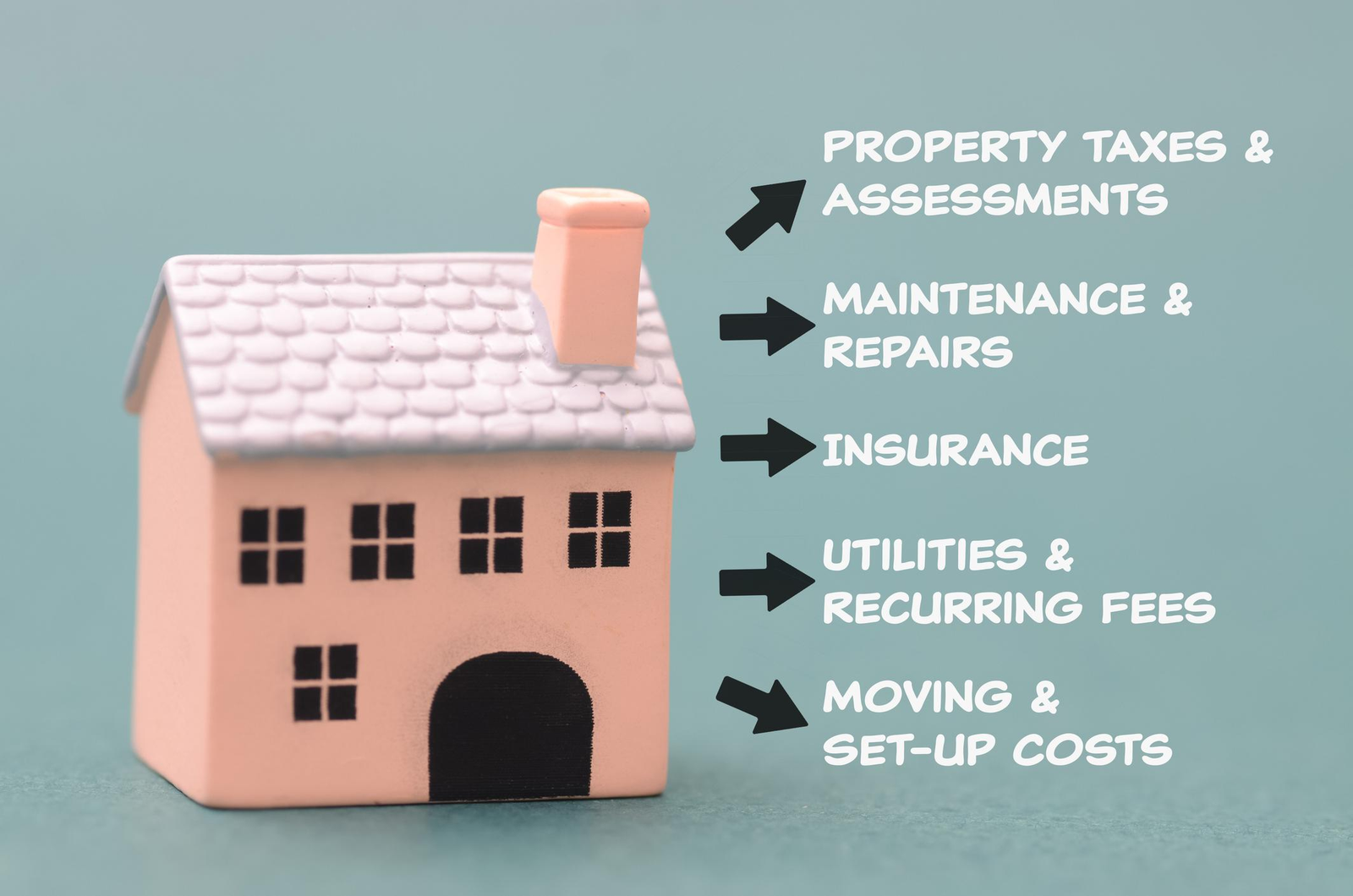
The story of homeownership in America has always been told as a story of arrival. You save, you sacrifice, you get your keys, and from that point forward you are building something, equity, stability, a foundation for your family’s future. The mortgage payment becomes the finish line. Everything after that is the reward.
That framing leaves out a chapter that an increasing number of homeowners are living through right now. The chapter that comes after the closing. The one where the costs don’t stop, they just change form. Where the monthly mortgage payment, fixed and familiar, is joined by a growing roster of expenses that don’t stay fixed at all. Where people who did everything right, who bought responsibly and paid faithfully for years, find themselves financially squeezed not by a loan they couldn’t afford, but by costs they never saw coming.
It is a quiet crisis happening inside what is supposed to be the ultimate financial achievement, and it is affecting tens of millions of American households.
The numbers that define the problem
The Harvard Joint Center for Housing Studies put the shape of this problem into clear relief in a 2025 research brief that deserves far more attention than it received. While mortgages remained the largest single housing expense for most homeowners, non-mortgage costs, home insurance, property taxes, utilities, and routine home maintenance, have increased more rapidly since the pandemic. This has raised costs and burden rates even for homeowners who have locked in historically low interest rates on their mortgages. That last detail is critical. These are not people who stretched to buy more than they could afford. These are people who bought conservatively, secured low rates, and are still struggling, because the costs surrounding the mortgage have outpaced what their incomes can absorb.
The number of homeowners with cost burdens, defined as paying more than 30% of their income on housing costs, rose by 650,000 households in 2023 to a total of 20.3 million, representing 23.7% of all homeowner households. Nearly one in four homeowners in the United States is now spending more than the federally recognized threshold of affordability on the basic costs of keeping their home. And the trend is moving in the wrong direction. Median monthly owner costs for U.S. homeowners with a mortgage increased to $2,035 in 2024, up from $1,960 the year before, a 3.8% increase that outpaced the prior year’s growth rate.
The hidden costs add up to a figure most prospective buyers never see in their pre-purchase calculations. According to Bankrate’s 2025 analysis, the average homeowner spends $8,808 per year on maintenance alone, nearly double the $4,494 spent on utilities and energy, double the $4,316 in annual property taxes, and four times the average $2,267 in home insurance premiums. Add those figures together and the total approaches $21,000 per year in non-mortgage costs, costs that don’t appear in the mortgage payment, don’t show up in affordability calculators, and rarely come up in conversations about whether someone can afford to buy. Nearly half of homeowners in Bankrate’s 2025 survey who expressed regret about buying cited maintenance and hidden costs as being more expensive than expected, making it the single most common source of homebuyer remorse.
Who is bearing the heaviest weight
The burden of rising ownership costs is not distributed evenly, and understanding who is most affected matters for how we think about solutions. Cost burdens are disproportionately faced by Black and Hispanic homeowners and are rising most rapidly for single-person and single-parent households who rely on a single income to cover housing costs. For households where one paycheck has to cover everything, the mortgage, the insurance spike, the property tax increase, the broken furnace, there is no financial buffer to absorb an unexpected cost increase. One bad year of insurance premiums or one major repair can tip a household from burdened to severely burdened, defined as spending more than 50% of income on housing.
Between 2019 and 2023, 1.7 million homeowners aged 65 and over became cost-burdened, accounting for 47% of the total increase in burden nationwide. This brings the total number of burdened senior homeowners to 7.9 million, or 27.6% of all homeowners in that age group. This is a particularly acute dimension of the problem because older homeowners on fixed incomes have almost no mechanism to increase their revenue when costs rise. They cannot take on extra work. They cannot renegotiate a pension. They own their homes outright in many cases, meaning the mortgage finished decades ago, but the costs of insurance, taxes, utilities, and maintenance have grown to absorb what should have been the most financially comfortable chapter of their lives.
The cost burden rate for the 11 million homeowner households earning below $30,000 per year reached 74.2% in 2023, the highest rate recorded in over 20 years, surpassing even the previous peak following the Great Recession. Three quarters of the lowest-income homeowners in America are spending more than 30% of what they earn just to stay in their homes. This is not a marginal problem or a regional curiosity. It is a widespread, worsening condition that the standard housing affordability narrative, focused almost entirely on purchase prices and mortgage rates, consistently fails to capture.
The forces driving costs upward
Several distinct pressures are converging to push non-mortgage ownership costs higher, and they are unlikely to reverse on their own. Insurance is perhaps the most visible. The average annual cost of home insurance rose 12% in 2025 and is projected to rise another 4% in 2026, driven in part by rising rebuilding costs and growing climate-related risks including hurricanes, floods, and wildfires. Homeowners in climate-exposed regions, coastal areas, wildfire zones, flood plains, are seeing premium increases that are not modest adjustments but structural repricing of risk. In some markets, insurers have withdrawn entirely, leaving homeowners with state-run last-resort coverage that is both more expensive and less comprehensive than private alternatives.
Climate costs extend beyond insurance. A National Bureau of Economic Research study found that American families pay a climate bill of $400 to $900 per household annually. Insurance represents the largest share of that burden, with climate-related premium increases ranging from $75 to $360 per household. Flood insurance, often an additional cost on top of a standard homeowners policy, adds an average of $142 per household but can cost an extra $2,500 per year in many areas. These are costs that don’t appear in a mortgage approval, don’t factor into a debt-to-income calculation, and aren’t mentioned at closing. They simply show up, year after year, in a household’s actual budget.
Property taxes are another compounding pressure. The average property tax bill on a single-family home increased 3.7% in 2025, according to real estate analytics firm ATTOM. In many parts of the country, the pandemic-era surge in home values triggered reassessments that pushed property tax bills sharply higher, sometimes on homes owned by people whose incomes did not rise in proportion to their assessed value. The homeowner who bought 15 years ago and has a modest mortgage may find their property tax bill now rivals what they pay the bank each month. And utilities are not far behind, electric and gas bills have increased nearly 30% since 2021 and almost 40% since 2019, outpacing the general inflation rate.
The geography of a growing problem
One of the more counterintuitive findings in the Harvard data is that some of the most dramatic increases in cost burdens are happening not in expensive coastal markets, but in places that have historically been considered affordable. Metros such as Milwaukee, Scranton, and Oklahoma City, each of which had homeowner cost burden rates under 20% in 2019, saw their share of burdened homeowners grow by more than twice the national rate of increase. These are communities where people chose to buy precisely because it seemed financially manageable. The mortgage was modest, the purchase price was reasonable, the monthly payment was well within reach. What those buyers didn’t account for, couldn’t fully account for, was the trajectory of all the costs that would stack on top of the mortgage in the years that followed.
In many cases, non-mortgage costs now account for more than a third of what homeowners pay each month, reducing the portion of the payment that actually goes toward principal and interest even in markets with relatively modest home prices. The affordable mortgage, in other words, is only part of the affordability story. In some of these markets, the total monthly cost of ownership now rivals or exceeds what the same family would pay to rent, without the financial cushion of being able to call a landlord when something breaks.
A fixed payment is not a fixed budget
There’s a fundamental misunderstanding baked into the way most people think and talk about homeownership costs, and it deserves to be named directly. A fixed-rate mortgage gives buyers the comfort of predictability, the same principal and interest payment every month for 30 years. That predictability is real. But it applies only to one line item in a homeowner’s actual monthly outlay.
As one certified financial planner put it: “The operating cost of the home is still exposed to inflation, local tax policy, insurance markets, labor costs, material costs, energy prices, and climate risk. That is why buyers should not confuse a fixed mortgage payment with a fixed housing budget.” That distinction is not just semantically important, it has practical consequences for how people prepare for ownership, how lenders assess affordability, and how policymakers think about what it actually means for a household to be able to sustain homeownership over time.
In 2025 alone, non-mortgage ownership costs rose about 4.7%, outpacing household income growth of 3.8%. That gap, costs rising faster than income, is the engine of the cost burden problem. It is not dramatic. It does not make headlines. But it grinds forward every year, slowly narrowing the financial margin between stability and strain for millions of households that are, by every official measure, successful homeowners.
Owning a home is still worth pursuing. The equity, the stability, the sense of permanence, those things are real. But the full picture of what ownership costs, and what it continues to cost long after the closing date, is a conversation that the housing industry, lenders, policymakers, and media all tend to shortchange. For 20.3 million American homeowners spending more than they can sustainably afford just to stay housed, that silence is not a minor oversight. It is a gap between the dream they were sold and the reality they are living.
Thank you for taking the time to read and reflect. I write to help people think clearly about money, business, real estate, and life, not from theory, but from decades of lived experience.
If you are navigating a financial decision, building a business, considering homeownership, or simply trying to make better use of your time and resources, I invite you to engage further.
Subscribe to The Power Is Now TV to connect with me live every weekday, Monday through Friday, from 10:00 AM to 11:00 AM PST, as we record television shows across the Power Is Now TV Network. As a subscriber, you can participate in live tapings, engage in real-time discussions, and connect directly with industry leaders.
Visit ThePowerIsNow.com to access real estate magazines, books, podcasts, television shows, and exclusive media content focused on homeownership, business, and wealth-building.
For personalized support, consulting, and advisory services in real estate, mortgages, business, and personal finance, visit EricFrazier.com to schedule a consultation and learn more about my work as your trusted advisor in business and wealth.
Eric Lawrence Frazier, MBA
Your trusted advisor in business and wealth
www.ericfrazier.com | www.thepowerisnow.com
NMLS #461807 | CA DRE #01143484
Schedule a consultation: https://calendly.com/ericfrazier/real-estate-mortgage-consultation-clients
References
Bankrate. (2025, June 9). Hidden homeownership costs hit $21,000 a year in 2025. https://www.bankrate.com/home-equity/hidden-costs-of-homeownership-study/
CNBC. (2026, May 22). “Extra” homeownership costs top $23,000 a year and unlike your fixed mortgage payment, they might go up. https://www.cnbc.com/2026/05/22/extra-homeownership-costs-top-23000-a-yearand-they-might-go-up.html
Earth911. (2025, December 22). The cost of climate change for U.S. households keeps rising. https://earth911.com/business-policy/the-cost-of-climate-change-for-u-s-households-keep-rising/
Harvard Joint Center for Housing Studies. (2025, February 24). The rising costs of homeownership are increasing burdens. https://www.jchs.harvard.edu/blog/rising-costs-homeownership-are-increasing-burdens
McCue, D., Airgood-Obrycki, W., & Whitney, P. (2025). Rising costs of homeownership are a growing burden [Research brief]. Harvard Joint Center for Housing Studies. https://www.jchs.harvard.edu/research-areas/research-briefs/rising-costs-homeownership-are-growing-burden
The MortgagePoint. (2025, March 4). Rising homeownership costs driving record financial strain. https://themortgagepoint.com/2025/03/04/rising-homeownership-costs-drive-record-financial-strain/
U.S. Census Bureau. (2025, September 11). The cost of homeownership continues to rise [Press release CB25-147]. https://census.gov/newsroom/press-releases/2025/acs-1-year-estimates.html