
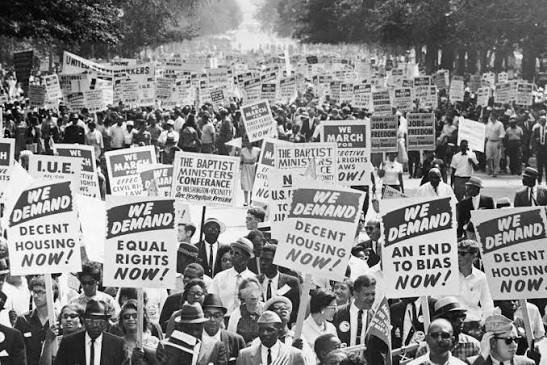
In 1968, Congress passed the Fair Housing Act. It was a landmark moment, a formal, legal declaration that discriminating against someone in the sale, rental, or financing of a home on the basis of race was no longer acceptable in the United States. After decades of codified exclusion, after redlining and restrictive covenants and a housing market built around segregation, the law drew a line and said: no more.
More than fifty years later, the gap between white and Black homeownership rates is wider than it was when that law was signed.
That sentence deserves to be read slowly. Not slightly larger. Not roughly equivalent. Wider. In 1968, the gap between white and Black homeownership was 27 percentage points. By 2026, that gap has grown to 28.4 points. White homeownership sits at around 71.6%, while Black homeownership stands at just 43.2%. Half a century of civil rights legislation, fair lending enforcement, community reinvestment initiatives, and targeted homeownership programs, and the needle has not just failed to close the gap, it has moved in the wrong direction. That is not a minor policy failure. It is one of the most significant and underacknowledged indictments of American housing policy in the modern era.
What the numbers represent beyond percentages
Numbers like these are easy to encounter and difficult to absorb. A 28-point gap in homeownership rates is not simply a statistical imbalance. It represents a compounding shortfall in wealth, stability, and opportunity that reproduces itself across generations with remarkable persistence and force.
Homeownership remains the cornerstone of wealth in America, accounting for roughly 68% of total household net worth for the average family. When that pathway is obstructed, it does not just limit where one can live, it defines how one’s children will live. According to the Federal Reserve’s 2024 Survey of Consumer Finances, the median net worth of white families exceeds $285,000, compared to just $45,000 for Black families. That six-to-one wealth disparity is not explained by differences in effort, intelligence, or aspiration. It is the compounded financial residue of generations systematically denied access to the primary wealth-building vehicle that American society has made available to its citizens.
The overall Black homeownership rate slipped to 43.9% in mid-2025, while the white rate hovered around 74%. Redfin chief economist Daryl Fairweather noted that Black millennials and Gen Zers are bearing the brunt of the racial homeownership gap because since they have reached homebuying age, the country has faced significant financial challenges and a major housing supply shortage. The young people who should be driving new Black homeownership growth are entering the market at a moment of maximum difficulty, high prices, elevated mortgage rates, scarce inventory, with less generational wealth to draw on and more systemic friction to navigate than their white counterparts of the same age.
How the gap was built
To understand why the gap persists, you have to understand how it was constructed, not as an accident or a byproduct of neutral market forces, but as the deliberate result of government policy and private practice working in coordination over several decades.
Redlining is the most well-known mechanism. Starting in the 1930s, the Home Owners’ Loan Corporation systematically graded neighborhoods across the country, labeling communities with significant Black populations as “hazardous” and marking them in red on maps that banks and mortgage lenders used to determine where they would and would not extend credit. The effect was to starve entire neighborhoods of mortgage capital, making it nearly impossible for Black families to buy in those areas and equally difficult to sell, since no buyer could obtain financing. Property values in those communities stagnated, investment dried up, and infrastructure deteriorated, not because of anything the residents did, but because federal policy had made their neighborhoods financially untouchable.
The GI Bill, often celebrated as one of the most transformative pieces of social legislation in American history, extended these inequities rather than correcting them. Though the bill helped white Americans prosper and accumulate wealth in the postwar years, it did not deliver on that promise for Black veterans who had served in segregated ranks. The GI Bill relied on the same redlined maps to determine where mortgages could be insured and offered. In Mississippi, a survey of 13 cities found that only 2 of the 3,229 VA loans issued in 1947 went to Black homebuyers. The largest federally subsidized wealth transfer in American history, the creation of the postwar middle class through suburban homeownership, was administered almost exclusively to white families. The long-term consequences of that exclusion are still being lived.
What this created was a structural divergence that has proven extraordinarily difficult to reverse. White families who bought homes in the 1940s and 1950s, often with federal assistance, in newly constructed suburbs with good schools and appreciating property values, passed equity, security, and down payment capacity to their children and grandchildren. Black families who were denied that same access passed forward the absence of it. The gap in homeownership today is not merely a reflection of current market conditions. It is the balance sheet of a debt that has never been paid.
The barriers operating right now
If the historical exclusions had simply stopped without any ongoing structural disadvantages, the gap might have closed on its own over time. But the barriers to Black homeownership did not end with the Fair Housing Act. They evolved, adapted, and in some cases intensified.
Mortgage denial rates remain starkly unequal. According to the National Association of Realtors’ 2025 Snapshot of Race and Home Buying, Black mortgage applicants face a denial rate of 21% and Hispanic applicants face a denial rate of 17%, compared to just 11% for white applicants and 9% for Asian applicants. These are not differences explained by creditworthiness alone. Research consistently finds that racial disparities in mortgage denial persist even after controlling for income, credit score, and loan-to-value ratio. The system is producing unequal outcomes for equal applicants, and the downstream consequences for homeownership accumulate year after year.
Appraisal bias is another mechanism that continues to quietly drain wealth from Black homeowners. Analysis of 7.3 million home sales found that homes in predominantly Black areas are valued significantly lower than comparable homes in predominantly white areas. That undervaluation is not a neutral market outcome. It is the product of an appraisal system that relies heavily on comparables, recent sales of similar homes in the same area, which means that neighborhoods where property values were suppressed by decades of disinvestment continue to receive lower appraisals today, regardless of what the individual property is actually worth. As one researcher noted, when a property comes back with a very low appraisal, it suppresses value not just for the individual family but for the entire neighborhood, allowing the effects of past discrimination to persist into the future.
Student loan debt, concentrated disproportionately among Black borrowers, adds another layer to an already stacked set of obstacles. Black college graduates carry significantly more student loan debt on average than their white peers, debt that impacts debt-to-income ratios, limits saving capacity, and delays entry into the housing market. With less parental equity to draw on, the path to a first down payment is longer and harder.
What recent legislative action is and is not addressing
In March 2026, the U.S. Senate passed the 21st Century ROAD to Housing Act, a bipartisan bill that would limit large institutional investors from purchasing single-family homes, increase housing supply, reduce construction costs, and modernize federal housing programs. If enacted, it would be the first major federal housing law in three decades. The provision limiting institutional investors is directly relevant to the racial homeownership gap in markets where first-time Black buyers are most concentrated.
The bill also incorporates appraisal modernization measures requiring review procedures for contested valuations and encouraging greater transparency in appraisal data. These steps matter, but structural reforms of this kind move slowly and face implementation challenges that often dilute their impact, particularly in communities with the least access to legal and financial advocacy resources.
What the legislation does not fully address is the accumulated wealth deficit at the root of the homeownership gap. While recent years have seen progress in narrowing homeownership gaps through targeted interventions, that progress is now at risk without sustained and equitable action.
Why the gap matters to everyone
There is sometimes a tendency to treat the racial homeownership gap as a narrowly defined issue. That framing is incorrect. A housing market in which a significant portion of the population is structurally excluded from its primary wealth-building mechanism is less dynamic and less stable for everyone.
By the middle of 2025, white Americans held nearly 84% of the nation’s wealth, while Black Americans held just 3.4%, despite representing nearly 14% of the population. That concentration is not a sign of a healthy economy. It reflects an uneven system where compounding advantages of property ownership have flowed overwhelmingly in one direction for generations.
Closing the racial homeownership gap is not a symbolic goal. It is a structural correction that the country has owed for more than half a century.
Thank you for taking the time to read and reflect. I write to help people think clearly about money, business, real estate, and life, not from theory, but from decades of lived experience.
If you are navigating a financial decision, building a business, considering homeownership, or simply trying to make better use of your time and resources, I invite you to engage further.
Subscribe to The Power Is Now TV to connect with me live every weekday, Monday through Friday, from 10:00 AM to 11:00 AM PST, as we record television shows across the Power Is Now TV Network. As a subscriber, you can participate in live tapings, engage in real-time discussions, and connect directly with industry leaders.
Visit ThePowerIsNow.com to access real estate magazines, books, podcasts, television shows, and exclusive media content focused on homeownership, business, and wealth-building.
For personalized support, consulting, and advisory services in real estate, mortgages, business, and personal finance, visit EricFrazier.com to schedule a consultation and learn more about my work as your trusted advisor in business and wealth.
Eric Lawrence Frazier, MBA
Your trusted advisor in business and wealth
www.ericfrazier.com | www.thepowerisnow.com
NMLS #461807 | CA DRE #01143484
Schedule a consultation: https://calendly.com/ericfrazier/real-estate-mortgage-consultation-clients
References
African Elements. (2026, March 17). Can a new bill bridge the Black homeownership gap history? https://www.africanelements.org/news/can-a-new-bill-bridge-the-black-homeownership-gap-history/
Bipartisan Policy Center. (2026). What’s in the 21st Century ROAD to Housing Act? https://bipartisanpolicy.org/explainer/whats-in-the-21st-century-road-to-housing-act/
Dallas Weekly. (2025, November 18). Black homeownership gap persists, reflecting systemic inequality in America. https://dallasweekly.com/2025/11/black-homeownership-gap-persists-reflecting-systemic-inequality-in-america/
George Washington University Research Magazine. Closing America’s homeownership gap. https://researchmagazine.gwu.edu/closing-americas-homeownership-gap/
History.com. How the GI Bill’s promise was denied to Black WWII veterans. https://www.history.com/articles/gi-bill-black-wwii-veterans-benefits/
Mortgage Professional America. (2026, February 3). Young Black buyers fall further behind in homeownership race. https://www.mpamag.com/us/mortgage-industry/industry-trends/young-black-buyers-fall-further-behind-in-homeownership-race/564102/
National Fair Housing Alliance. The state of equitable homeownership 2025 report. https://nationalfairhousing.org/wp-content/uploads/2023/04/The-State-of-Equitable-Homeownership-2025-FINAL.pdf