Women’s History Month 2026 Part 1: Maggie Lena Walker

image (6)
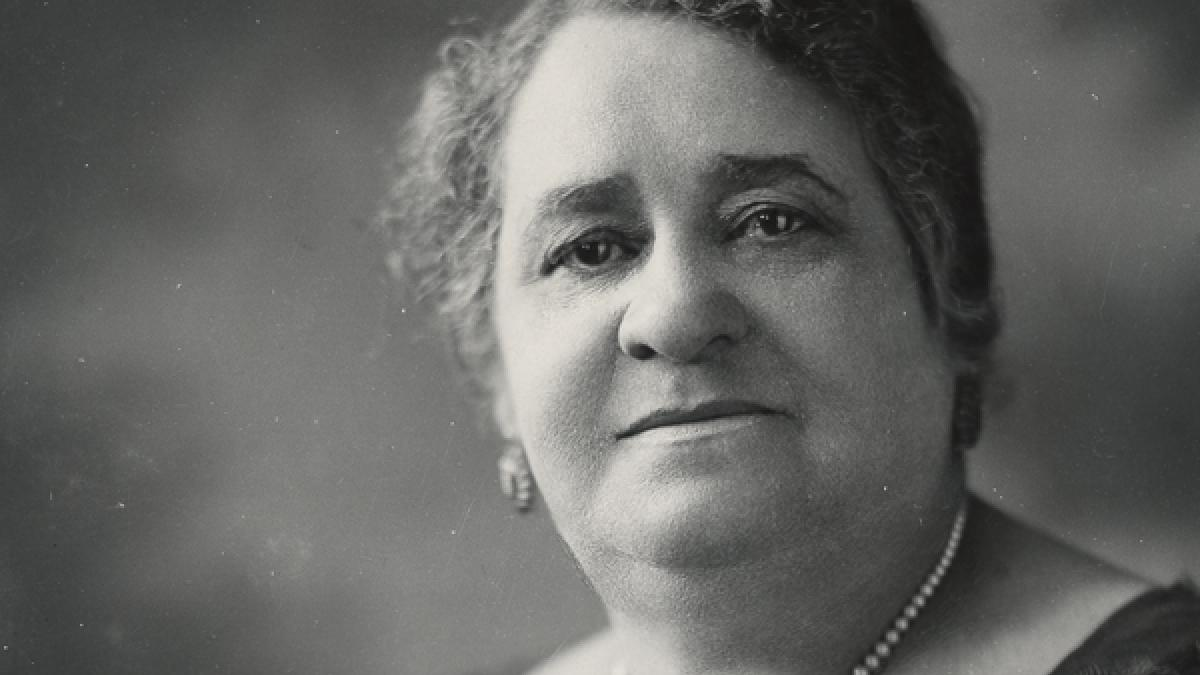
MAGGIE LENA WALKER
Banker. Entrepreneur. 
Richmond, Virginia  |  1864 – 1934  |  Banking, Finance & Black Economic Self-Determination
By Eric Lawrence Frazier, MBA  |  The Power Is Now Media

WHO SHE WAS, IN FULL

There is a house on Leigh Street in Richmond, Virginia, that the National Park Service now maintains as a historic site. It is a modest Victorian row house — solid, dignified, unremarkable from the outside to anyone who does not know what it represents. Maggie Lena Walker lived there. She built her life there. And from that city, in that era, under those conditions, she did something that no woman in American history had done before her.
In 1903, Maggie Lena Walker chartered the St. Luke Penny Savings Bank and became its first president. She was not the first Black woman to work in banking. She was not the first Black woman to advocate for financial literacy. She was the first woman of any race — Black or white, North or South, educated at the finest institutions or self-taught — to charter a bank and sit in its president’s chair in the United States of America.

That fact requires no embellishment. It requires context.

When I first learned what Maggie Walker accomplished — at 63 years old — I was not inspired. I was embarrassed. Not at her. At myself. At all of us. Here is a woman who did something no woman in this country had ever done, and I arrived at her story more than six decades into my own life. She deserved to be in my hands at six, not sixty-three. That is not her failure. That is ours — and it is precisely why this series exists.

II.  THE WORLD SHE ENTERED

Richmond, Virginia in the post-Reconstruction era was a city conducting two parallel experiments simultaneously. One was the legal architecture of white supremacy — the reimposition of racial control through Black Codes, convict leasing, disenfranchisement, and the systematic destruction of whatever economic ground Black Richmonders had gained during the brief democratic opening of Reconstruction. The other was the determined, disciplined, and largely unacknowledged project of Black economic self-organization — mutual aid societies, fraternal orders, benevolent associations, and community institutions built by Black people who understood, with perfect clarity, that the state would not protect them and that survival required collective infrastructure.
Maggie Lena Walker was born into this second experiment. Her mother, Elizabeth Draper, had been enslaved. Her stepfather, William Mitchell, worked as a butler at a Richmond hotel. The family was not wealthy. They were not connected to the thin layer of Black Richmond society that had accumulated property before the war. They were working people navigating a city that had been the capital of the Confederacy less than two decades before Maggie Walker was learning to read.
She joined the Independent Order of St. Luke at age fourteen. This organization is not a footnote — it is the institutional foundation of everything Walker would later build. The Independent Order of St. Luke was a Black mutual aid society, founded in 1867 by Mary Prout, a formerly enslaved woman who had purchased her own freedom. Mutual aid societies were the financial infrastructure of Black America in the absence of banks that would serve Black depositors, insurance companies that would cover Black policyholders, or government programs that acknowledged Black economic existence. Members paid dues. The organization paid death benefits, sick benefits, and provided community support. It was, in structural terms, a proto-insurance company, a credit union, and a social safety net — built by Black people, for Black people, governed by Black people, at a time when every one of those functions was either denied by law or made inaccessible by practice.
Walker rose through the Order’s ranks with a combination of administrative precision and strategic vision the organization had not previously seen. By 1899, she was elected Right Worthy Grand Secretary — the executive director, in modern terms — of an organization that was, at that moment, nearly insolvent. She was thirty-five years old. The Order had 1,080 members and debts it could not service.

What she did next is the actual subject of this biography.

III.  WHAT SHE BUILT, DECIDED, OR CHANGED

Walker did not merely stabilize the Order of St. Luke. She transformed it into an economic ecosystem.
Within four years of taking the executive position, she had grown membership from 1,080 to over 100,000 across 28 states. She launched the St. Luke Herald, a newspaper that served as the Order’s communications organ and, more importantly, as an instrument of economic education and community organizing. She established the St. Luke Emporium — a department store owned and operated by the Order, designed to employ Black women and to circulate Black dollars within Black Richmond rather than watching them flow out to white-owned establishments.
And in 1903, she chartered the St. Luke Penny Savings Bank.
The bank was not a vanity project. It was a structural intervention. Walker understood something about capital that most people in her community had no framework to articulate: that wealth is not merely accumulated — it is organized. Individual savings, scattered across mattresses and shoeboxes and the few Black-friendly institutions that existed, did not compound. They did not build credit. They did not fund mortgages or business loans or the next generation’s education. A bank organized that dispersed capital into deployable wealth. A bank gave the community a mechanism to lend to itself.
She opened the bank with the explicit goal of lending to Black Richmonders for home purchases — at a moment when mortgage credit for Black borrowers was either unavailable or predatory. She understood, before the academic literature on the racial wealth gap existed, that homeownership was the primary mechanism by which American families built intergenerational wealth, and that Black families were being systematically excluded from that mechanism.

The bank survived the economic panics of the early twentieth century. It survived World War One. It survived the Depression — barely, but it survived — by merging in 1930 with two other Black-owned Richmond banks to form the Consolidated Bank and Trust Company, an institution that would continue operating until 2005.

Here is what I want every person reading this to understand, from someone who has spent decades in mortgage banking watching who gets capital and who does not: Maggie Walker went to bank after bank, faced rejection after rejection, and instead of accepting the verdict of a system designed to exclude her, she built her own system. She did not protest the gap. She did not write op-eds about the gap. She rendered the gap irrelevant — at least for her community, at least in her time. That is not inspiration. That is a strategy. And it is a lesson that has not expired.

IV.  WHAT IT COST HER

Walker herself lost the use of her legs in 1907 following a domestic accident — she fell down the stairs of her Leigh Street home. She spent the remaining twenty-seven years of her life in a wheelchair. She continued running the bank, leading the Order, publishing the newspaper, and appearing at community events. The wheelchair did not diminish her operational authority by a single degree.

She was also, for a period, investigated and publicly scrutinized following the 1915 shooting death of her son Melvin, who was accidentally killed by her other son Russell, who had mistaken him for an intruder. Russell Walker was tried for murder. The trial, and the community attention it generated, placed Maggie Walker at the center of a public tragedy that had nothing to do with her professional life and everything to do with the human cost of living publicly in a society that was not always charitable to Black families in pain. Russell was acquitted. The family recovered, publicly. What it cost them privately, the record does not fully say.

The history honors the achievement. It is quieter about the cost. The panel must acknowledge that silence honestly rather than pretending the record is complete. Black women of her era were not encouraged to document their interior lives for public consumption. What we know is structural. What she carried personally — the weight of institutional responsibility, physical limitation, public grief, and the daily navigation of a society organized against her — remains only partially visible to us across the distance of a century.
Losing the use of your legs at forty-three and continuing to run a bank, a newspaper, a department store, and a national organization is not something I can explain away with the word ‘resilience.’ That word has become so overused it no longer carries weight. What I will say is this: she understood something that most people never learn — that physical limitations are not mental limitations unless you allow them to be. She didn’t allow it. Her disability modified how she moved through the world. It did not modify what she demanded of herself or what she delivered to her community. There is no medal large enough for that.

V.  WHAT SHE LEFT BEHIND

The St. Luke Penny Savings Bank, through its successor institution Consolidated Bank and Trust, operated for over a century after Walker founded it. When it finally closed in 2005, it was one of the oldest continuously operating Black-owned banks in the United States.
The Independent Order of St. Luke still exists.
The house on Leigh Street is a National Historic Site, administered by the National Park Service. It is one of the few sites in the National Park system dedicated to a Black woman.
What she also left behind is harder to measure but no less real: a documented proof of concept. She demonstrated, in the most practical terms available, that Black economic self-determination was not a theory or an aspiration — it was an operational possibility. She proved it with a chartered institution, a balance sheet, and a century of deposits.
I think about the fact that I run my own magazine, my own podcast, my own television platform — and I think about Maggie Walker launching the St. Luke Herald in 1902. She understood something that I have come to understand only through hard experience: you cannot wait for the people in power to tell your story. You cannot rely on institutions that were not built for you to recognize what you have built. You build your own platform. You tell your own story. You control your own narrative. She knew that in 1902. We are still learning it today.

VI.  WHY SHE MATTERS NOW

The racial wealth gap in the United States in 2024 is not significantly different in its structural character from what it was in 1970. The median white family holds approximately eight times the wealth of the median Black family. The mechanisms maintaining that gap — disparate access to mortgage credit, discriminatory appraisal practices, the under-capitalization of Black-owned businesses, and the geographic concentration of Black wealth in assets that appreciate more slowly — are not new phenomena. They are old phenomena that have been periodically documented, occasionally challenged, and consistently insufficiently addressed.
Maggie Lena Walker diagnosed this problem in 1903. She did not write an op-ed about it. She did not convene a task force. She chartered a bank.
Statistics, it must be said, are descriptions of groups. They are never prescriptions for individuals. Every bad statistic applied to a group has within it an individual for whom that statistic simply does not apply — someone who found a way around, through, or over what the numbers said was probable. Maggie Walker was that individual. The system said no. The numbers said improbable. She proceeded anyway, and she built something that outlasted most of the institutions that tried to stop her.

The lesson she leaves is not inspirational in the motivational-poster sense of that word. It is operational. Community wealth is not built by individual achievement alone — it is built by collective financial infrastructure, organized and governed by the community itself, with specific intentionality about where capital flows and who it serves. Walker understood this at the structural level a century before most policy discussions caught up to the analysis.

She built the infrastructure first. She explained why later. That sequencing is worth studying by anyone serious about the economic development of Black communities today.

If you are reading this and you are just now learning who Maggie Lena Walker was — whether you are twenty-five or sixty-three, whether you have a PhD or a high school diploma — I want you to sit with a specific feeling. Not inspiration. Accountability. Accountability to her story, to her sacrifice, and to the obligation that comes with knowing. Because now you know. And knowing without acting, without telling someone else, without making sure the next generation carries this name, would be its own kind of erasure. Her story has not been buried so deep that we cannot find it. That is a gift. What we do with it is on us. Perhaps in the telling of her story, we will inspire a thousand more Maggie Walkers in the years to come. Perhaps one of them is reading this right now.

Thank you for taking the time to read and reflect. I write to help people think clearly about money, business, real estate, and life — not from theory, but from decades of lived experience.

If you are navigating a financial decision, building a business, considering homeownership, or simply trying to make better use of your time and resources, I invite you to engage further.

Subscribe to The Power Is Now TV to connect with me live every weekday, Monday through Friday, from 10:00 AM to 11:00 AM PST, as we record television shows across the Power Is Now TV Network. As a subscriber, you can participate in live tapings, engage in real-time discussions, and connect directly with industry leaders.

Visit ThePowerIsNow.com to access real estate magazines, books, podcasts, television shows, and exclusive media content focused on homeownership, business, and wealth-building.

For personalized support, consulting, and advisory services in real estate, mortgages, business, and personal finance, visit EricFrazier.com to schedule a consultation and learn more about my work as your trusted advisor in business and wealth.

Eric Lawrence Frazier, MBA
Your trusted advisor in business and wealth
www.ericfrazier.com | www.thepowerisnow.com
NMLS #451807 | CA DRE #01143484
Schedule a consultation: https://calendly.com/ericfrazier/real-estate-mortgage-consultation-clients