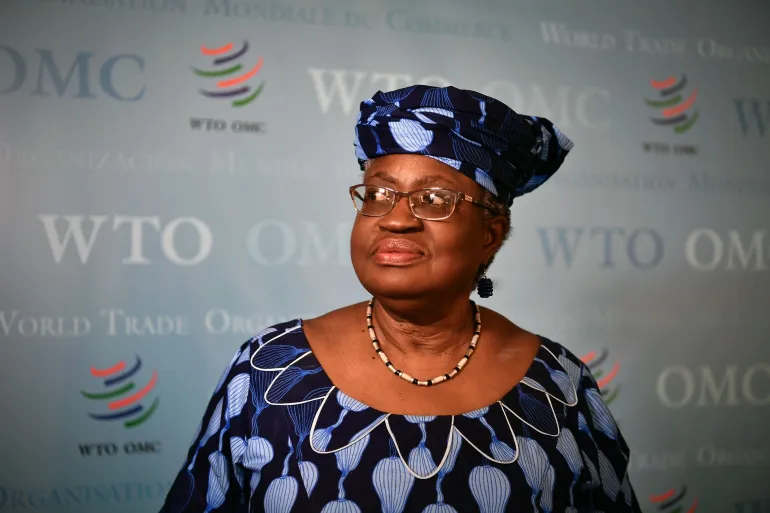
Economic leadership requires more than technical knowledge. It demands the ability to navigate political pressures, negotiate international agreements, and design policies that balance growth with fairness. Few modern economists have demonstrated this combination of skills as effectively as Ngozi Okonjo-Iweala.
Over the course of a career spanning more than four decades, Okonjo-Iweala has emerged as one of the most influential economic policymakers in the world. She has served as Nigeria’s Finance Minister, a senior official at the World Bank, and the Director-General of the World Trade Organization. Her work has focused on strengthening financial transparency, reducing national debt, and creating global trade systems that provide fair opportunities for developing economies.
Her leadership reached a historic milestone in 2021 when she became the first woman and the first African to lead the World Trade Organization. The appointment represented not only a personal achievement but also a moment of symbolic progress for Africa’s role in shaping global economic policy.
From negotiating billions of dollars in debt relief for Nigeria to guiding international trade discussions during a period of global economic uncertainty, Okonjo-Iweala’s career reflects a deep commitment to economic reform and global cooperation. Her influence continues to shape debates about development, trade, and economic opportunity around the world.
Early Life & Education
Ngozi Okonjo‑Iweala was born on June 13, 1954, in Ogwashi‑Uku in Nigeria’s Delta State. Raised in a community that valued education and public service, she showed academic promise from an early age. Nigeria itself was undergoing significant change during her youth, having gained independence from British colonial rule in 1960. This environment informed her understanding of national development and governance.
She began her education in Nigeria, attending International School Ibadan and St. Anne’s School in Molete before moving to the United States for higher education. She earned a bachelor’s degree magna cum laude in Economics from Harvard University in 1976, and later completed a Ph.D. in Regional Economics and Development at the Massachusetts Institute of Technology (MIT) in 1981.
Her academic achievements equipped her with powerful analytical tools and a deep understanding of economic systems — a foundation she would draw on throughout her career, particularly in roles that required not just technical skill but also diplomatic acumen and political courage.
A Distinguished Career at the World Bank
After completing her doctoral studies, Okonjo‑Iweala began a long and impactful career at the World Bank, one of the world’s most influential financial institutions devoted to international development. Over 25 years, she worked in multiple capacities, culminating in her appointment as Managing Director of Operations — the second‑highest position in the bank.
In this role, she was responsible for overseeing an $81 billion operational portfolio spanning Africa, South Asia, Europe, and Central Asia. Her work focused on poverty reduction, infrastructure development, and financial stability for vulnerable economies.
Okonjo‑Iweala also played a key role during global crises that shook economic structures. During the global financial crisis of 2007–2009 and the associated surge in food prices, she helped coordinate international response strategies and financial support packages for low‑income countries struggling to maintain stability. This work deepened her understanding of how global systems interact and how international cooperation can mitigate shocks that disproportionately impact developing economies.
Her tenure at the World Bank not only solidified her reputation as a skilled development economist but also laid the groundwork for her later roles in national government and global governance.
Reforming Nigeria’s Economy: Finance Minister
Although Okonjo‑Iweala achieved considerable success at the World Bank, she returned to Nigeria to take on one of her nation’s most demanding public offices: Minister of Finance. She served in this position twice — first from 2003 to 2006, and again from 2011 to 2015, becoming the first woman to do so.
During her first tenure, Nigeria faced significant economic challenges: chronic external debt, weak fiscal management, and corruption‑related leakages in government finances. Okonjo‑Iweala spearheaded negotiations with the Paris Club of international creditors that led to the cancellation of approximately $18 billion of Nigeria’s external debt, along with the restructuring of an additional $12 billion — eliminating roughly $30 billion in debt obligations. This historic achievement freed up government funds for development programs in infrastructure, education, and healthcare.
She also introduced key reforms targeting transparency and fiscal accountability, including new financial reporting systems and measures to reduce corruption in public spending. These reforms helped strengthen public trust in government financial management and contributed to improved macroeconomic stability.
During her second term, Okonjo‑Iweala continued to build on these reforms, introducing modern financial systems such as digital payroll mechanisms and more centralized treasury operations to improve efficiency and reduce opportunities for corruption.
Her work as Finance Minister was widely recognized both at home and abroad, reinforcing the view that strong governance and disciplined fiscal policy are foundational to national development.
Leadership on the Global Stage
Okonjo‑Iweala’s influence extends far beyond Nigeria. Her expertise has been recognized globally, and she has served on numerous international boards and advisory bodies.
She was Chair of the Board of Gavi, the Vaccine Alliance, helping expand vaccine access to millions of children in low‑income countries. She has also been African Union Special Envoy to mobilize international financial support in response to the COVID‑19 pandemic and served as a WHO Special Envoy for the Access to COVID‑19 Tools Accelerator.
Her global engagement highlights a central tenet of her approach: economic development is deeply interconnected with public health, global cooperation, and institutional transparency. These roles also positioned her as a respected negotiator on global challenges beyond purely economic matters.
Director‑General of the World Trade Organization
In March 2021, Okonjo‑Iweala became the seventh Director‑General of the World Trade Organization (WTO), making history as both the first woman and the first African to lead the organization.
The WTO is the principal institution responsible for regulating international trade among member nations. Its mandate includes establishing rules that govern global commerce, resolving disputes, and promoting policies aimed at reducing barriers to trade and improving economic cooperation.
Okonjo‑Iweala assumed leadership during a period of intense global turbulence. The COVID‑19 pandemic had disrupted supply chains, deepened economic inequalities, and reignited debates about the role of international institutions in crisis response. Trade tensions among major economies and calls for reform of the WTO’s dispute settlement mechanism added complexity to her agenda.
As Director‑General, she has championed reforms to strengthen the WTO’s relevance in a rapidly changing world. Her priorities include increasing multilateral cooperation, improving market access for developing countries, and addressing systemic challenges such as climate‑sensitive trade policies, vaccine equity, and digital trade frameworks. Her leadership reflects a belief that inclusive and fair trade systems can be powerful engines for sustainable economic growth and poverty reduction.
In late 2024, she was nominated for a second term as Director‑General to continue her work on “unfinished business” at the WTO, with support from Africa and a coalition of member states.
Advocating for Fair and Inclusive Trade
At the core of Okonjo‑Iweala’s global leadership is the belief that international trade must serve the interests of both developed and developing nations. Many developing countries face structural barriers that limit their ability to compete effectively within global markets. These include limited infrastructure, restricted access to capital, and trade agreements that disproportionately favor wealthier economies.
Okonjo‑Iweala has consistently advocated for reforms that address these imbalances by promoting transparency, reducing trade distortions, and enhancing capacity‑building mechanisms for emerging economies. Her work at the WTO emphasizes the need for multilateral cooperation that benefits all member states, especially those with fewer resources.
Under her leadership, the WTO has also focused on issues like climate change — including efforts to integrate environmental considerations into trade policy — and improving supply chain resilience in a world still adjusting to the economic disruptions of the past decade.
These efforts underscore a broader vision: trade should be a tool for economic opportunity, stability, and global development. By emphasizing inclusivity and cooperation, Okonjo‑Iweala continues to shape the future of global economic governance.
Recognition and Influence
Throughout her career, Okonjo‑Iweala has received widespread recognition for her contributions to economic leadership and global governance.
She has repeatedly been named among the Top 100 Most Powerful Women in the World by Forbes, and has appeared on TIME Magazine’s list of the Most Influential People in the World.
Her work has also been honored by financial publications, international institutions, and academic organizations, reflecting not only her policy achievements but also her influence on global economic conversations. Her leadership at the WTO is viewed as a milestone in expanding African representation in international economic institutions and opening doors for more diverse voices in global governance.
Ngozi Okonjo‑Iweala’s career represents a remarkable journey through the fields of national economic reform and global economic governance. From her early academic achievements and years at the World Bank to her transformative work as Nigeria’s Finance Minister and her historic leadership of the World Trade Organization, she has consistently demonstrated a commitment to economic transparency, fairness, and international cooperation.
Her leadership at the WTO — as the first woman and first African to hold that position — marks a new chapter in global trade policy, emphasizing the importance of inclusive economic systems that support sustainable growth for all nations.
As the world continues to confront economic inequality, climate challenges, and shifting geopolitical dynamics, Okonjo‑Iweala’s work stands as a powerful example of how informed leadership can help build systems that benefit both present and future generations.
Thank you for taking the time to read and reflect. I write to help people think clearly about money, business, real estate, and life — not from theory, but from decades of lived experience.
If you are navigating a financial decision, building a business, considering homeownership, or simply trying to make better use of your time and resources, I invite you to engage further.
Subscribe to The Power Is Now TV to connect with me live every weekday, Monday through Friday, from 10:00 AM to 11:00 AM PST, as we record television shows across the Power Is Now TV Network. As a subscriber, you can participate in live tapings, engage in real-time discussions, and connect directly with industry leaders.
Visit ThePowerIsNow.com to access real estate magazines, books, podcasts, television shows, and exclusive media content focused on homeownership, business, and wealth-building.
For personalized support, consulting, and advisory services in real estate, mortgages, business, and personal finance, visit EricFrazier.com to schedule a consultation and learn more about my work as your trusted advisor in business and wealth.
Eric Lawrence Frazier, MBA
Your trusted advisor in business and wealth
www.ericfrazier.com | www.thepowerisnow.com
NMLS #451807 | CA DRE #01143484
Schedule a consultation: https://calendly.com/ericfrazier/real-estate-mortgage-consultation-clients