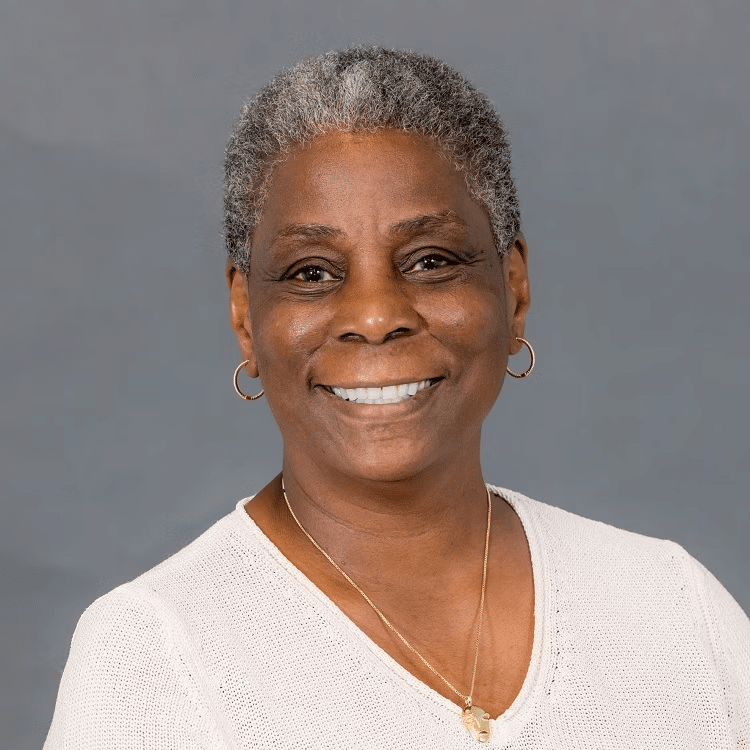
Ursula M. Burns was born on September 20, 1958, in New York City, and she grew up in the Baruch Houses — a public housing project on the Lower East Side of Manhattan where Jewish immigrants, Puerto Ricans, and African Americans occupied the same buildings, bound together by the single common factor that Burns herself has identified plainly: poverty. She was the second of three children raised by her mother, Olga, alone. Her father was absent. Her mother was not.
Olga Burns ran a home day-care center, took in ironing, cleaned other people’s homes, and did whatever combination of work was available to keep her children fed, clothed, and — most importantly — enrolled in schools worth attending. She scraped together enough to send Ursula to Cathedral High School, a Roman Catholic preparatory school in Manhattan, because she understood that the school Ursula would have attended by default would not produce the outcome she intended for her daughter. That decision — made by a single mother on a domestic worker’s income in a housing project — is one of the structurally significant facts of this biography, as it opened the door to everything that followed.
Ursula Burns was not a woman who grew up expecting to run a Fortune 500 company. She grew up expecting to outwork the circumstances in front of her, one step at a time, because her mother had modeled exactly that her entire life. Olga Burns once told her daughter something that would become the organizing principle of her public life: when people saw Ursula succeed, they were not seeing Ursula—they were seeing the possibility that it could be them, or their children. That is a different kind of ambition than personal achievement. That is stewardship. It is the understanding that a first is not a trophy. It is a door held open.
She excelled at mathematics, attended Brooklyn Polytechnic Institute — staying close enough to home to keep watch over her family — and earned a bachelor’s degree in mechanical engineering in 1980. That summer, she became a mechanical engineering intern at Xerox through a graduate engineering initiative designed to support underrepresented minorities. Xerox offered to finance her master’s degree at Columbia University if she would commit to joining the company full-time upon completion. She agreed. She completed the degree in 1981. She would not leave Xerox for another thirty-six years.
Corporate America in 1981 Was Not Waiting for Her
To understand what Ursula Burns walked into when she joined Xerox full-time in 1981, it is necessary to understand what American corporate leadership looked like at that moment. White men overwhelmingly led Fortune 500 companies. Women had begun making inroads into middle management across several industries, but the executive suite — the boardroom, the C-suite, the ranks from which CEOs were selected — remained, in practice, a nearly exclusive preserve. Black women were so rare in senior corporate leadership that there was no statistical category adequate to describe their absence. They were not underrepresented. They were effectively invisible at those levels.
Engineering itself was, and remains, one of the most male-dominated professional fields in the American economy. A Black woman arriving at a major technology corporation in 1981 with a mechanical engineering degree and a master’s from Columbia was an anomaly by any statistical measure. The corporate culture of that era lacked a well-developed framework for how to treat her. It contained a set of unspoken assumptions about who was executive material, what executive material looked like, how it spoke, and what its trajectory through the organization was expected to be. Ursula Burns did not fit those assumptions on a single dimension.
What she had instead was a quality that would define her entire career and that her peers and superiors would describe in remarkably consistent terms across four decades: she said the thing. She told the truth in rooms where the truth was uncomfortable. She publicly disagreed with senior executives when she believed they were wrong. She was, by her own account and by the accounts of everyone who worked with her, direct to the point of rudeness, particularly early in her career. Anne Mulcahy, who would become her mentor and predecessor as CEO, described it precisely: Burns dared to tell you the truth in ugly times. In a corporate culture that rewarded polish and penalized candor, that quality would either end her career early or propel her to the top. It carried her to the top.
The mechanism by which it did so is instructive. In 1989, approximately eight years into her tenure at Xerox, Burns publicly disagreed with Wayland Hicks, a senior executive, during a meeting. She expected to be reprimanded. Instead, Hicks called her in privately, told her he found her perspective refreshing, and offered her a position as his executive assistant. She was thirty-one years old, and the offer struck her as a step backward. She took it anyway, understanding — correctly — that proximity to power was its own form of education. Less than a year later, she became executive assistant to the chairman and CEO, Paul Allaire. From that position, every subsequent move accelerated.
Thirty-Six Years. One Company. One Historic Appointment.
The arc of Ursula Burns’s career at Xerox is, in structural terms, a study in what sustained commitment to a single institution produces when the institution is willing to use what it has. She was not a lateral hire brought in from outside to transform the culture. She had grown inside the organization over nearly four decades, promoted through product development, manufacturing, global operations, and executive strategy, and handed the company at a moment when it genuinely needed someone who understood it from the foundation up.
From her years as executive assistant to Allaire in the early 1990s, she moved into leading individual business units — turning around the Xerox Facsimile and Office Color business, heading the European Mid-Range Copier Group in London, overseeing global manufacturing as vice president in 1999. In 2000, she was named senior vice president of corporate strategic services, a role that positioned her alongside Anne Mulcahy, who would become Xerox’s first female CEO in 2001. What followed between Burns and Mulcahy was, by both women’s accounts, a genuine partnership—not a mentorship in the traditional asymmetric sense, but two people who pushed each other, trusted each other’s judgment, and together steered a major corporation through a period of near collapse.
Xerox in 2002 was carrying roughly $19 billion in revenue, mountains of debt, and a plummeting stock price. Burns was tasked with restructuring the cost base without destroying the company’s future capacity. She negotiated with unionized workers, restructured manufacturing operations, and oversaw the reduction of approximately 19,000 positions, saving the company approximately $2 billion. That is not a comfortable set of decisions. It is the kind of work that requires a person to hold the long-term health of an institution against the immediate human cost of the decisions required to preserve it. She held it.
In 2007, she was named president of Xerox. In July 2009, she succeeded Mulcahy as CEO, becoming the first Black woman to lead a Fortune 500 company in the history of American business. She was also the first woman to succeed another woman as CEO of a major corporation. The $6.4 billion acquisition of Affiliated Computer Services, announced within weeks of her appointment, was the largest in Xerox’s history and signaled a strategic pivot from products to services that would define — and ultimately test — her tenure. In 2010, she also became chairman of the board, leading a company with 140,000 employees operating in more than 160 countries.
There is a temptation, when describing the career of someone who became the first Black woman to hold a historic position, to present the arc as inevitable — as if the trajectory were obvious from the beginning and the destination simply required patience. That framing is false, and it is worth naming as false. Burns’ path was shaped at multiple junctures by decisions that could have gone differently. She almost left Xerox during the restructuring period because the company’s situation seemed unsalvageable. A board member called her and told her that if she left, others would take it as a signthat the company was finished. She stayed. That decision — unglamorous, made under pressure, with no guarantee of what it would produce — is as important to understanding her as the 2009 announcement.
In thirty-five years of working in mortgage banking and real estate, I have sat across the table from a great many people who were deciding whether to stay or leave — a job, a company, a commitment that had become difficult. The ones who stayed and built something almost always describe a moment that looked, at the time, like the wrong choice. Burns stayed at a company that was struggling and eventually led it. That is not a lesson about loyalty for its own sake. It is a lesson about reading a situation clearly and deciding what your presence is worth to it.
The Weight of Being First, Carried Alone
When Ursula Burns stepped down as CEO of Xerox at the end of 2016, tno Black woman was runninga Fortune 500 company. It would take five years — until Roz Brewer was appointed CEO of Walgreens in 2021 — before another Black woman held that position. Burns was the first, and for five years after her departure, she was effectively still the only one in the historical record of a living corporate era.
That fact requires honest examination. The standard narrative of a barrier broken suggests that once the barrier falls, the passage becomes easier for those who follow. What the data on Black women in Fortune 500 executive leadership actually shows is that the barrier was not broken in 2009. It was crossed once. The structural conditions that made Burns’ appointment historic — the near-total absence of Black women from the pipelines that produce Fortune 500 CEOs, from boards, from the senior leadership ranks where succession decisions are made — those conditions did not meaningfully change because she occupied the position. She carried the weight of the first without the infrastructure that a genuine change in the pipeline would have produced.
She has spoken about this with characteristic directness. After leaving Xerox, she became a prominent voice on corporate board diversity, and her frustration with the pace of change has been documented plainly. When white executives called her after George Floyd’s death, looking for lists of qualified Black board candidates, she told them to use Google. The ask itself — that the only Black woman who had ever run a Fortune 500 company should serve as a personal referral service for board diversity — captures something important about the persistent misunderstanding of what representation actually requires. It requires changing who is in the pipeline, not calling the one person who made it through to ask for names.
The cost Burns carried was personal as well as structural. Her husband, Lloyd Bean — a fellow Xerox employee who was twenty years her senior and had retired to manage their household and support her career ascent — died unexpectedly in January 2019. She has described his role honestly: he was not simply supportive in the abstract sense. He was the operational infrastructure that made it possible for her to do what she did professionally while raising two children. His death left a hole she has not minimized. Her 2021 memoir, Where You Are Is Not Who You Are, written in part during the grief of that loss, is an accounting of everything the climb required and everything it cost.
What the Door She Opened Actually Looks Like
The legacy of Ursula Burns operates on two levels that are not always distinguished clearly, and the distinction matters.
The first level is the record. She is the first Black woman to lead a Fortune 500 company. That is documented, permanent, and structurally significant regardless of everything else. It establishes that the thing was possible, that a Black woman raised in a public housing project on the Lower East Side by a single mother who cleaned houses could reach the highest executive position in American corporate life. The record does not expire. It cannot be revised. Every Black girl who comes after her carries a different set of assumptions about what the ceiling is, because Burns demonstrated that the ceiling was not where it appeared to be.
The second level is the institutional. Burns served on the boards of American Express, ExxonMobil, Uber, and Boston Scientific. She chaired the President’s Export Council under Barack Obama and led his STEM Education Coalition from 2009 to 2016. She has used the platform her position created to press for measurable change in corporate board composition, not through symbolic gestures but through the consistent, documented argument that diversifying leadership is an economic and governance imperative, not a philanthropic one. That argument, made from the credibility of her record, carries weight that the same argument made from the outside does not.
The Xerox tenure itself produced a mixed institutional record that honesty requires naming. The pivot from products to services was strategically sound, and the ACS acquisition positioned Xerox correctly for the direction the market was moving. But the service business did not perform as projected, the stock struggled through her tenure, and the eventual split of Xerox into two companies in 2016 — Xerox Corporation and Conduent — was a restructuring outcome, not a growth one. Burns has not shied away from this complexity. She has said publicly that the people of Xerox deserve credit for what was accomplished, and that the honest accounting of her tenure includes both what worked and what did not. That intellectual honesty is itself part of her legacy.
What she built that is undeniable is the proof. Thirty-six years. One company. The highest office. From a housing project on Delancey Street, through Brooklyn Polytechnic, through Columbia, through three decades of work that most of the people she worked alongside will never fully understand. She was not given anything. She earned everything. And she did it on a terrain that was not designed to produce her outcome.
The First Is Not the Last. Unless We Make It So.
I want to be precise about what I mean when I say that Ursula Burns matters now. I do not mean that her story is inspiring, though it is. I do not mean that her achievement should make us proud, though it should. I mean that her story contains a set of facts that are uncomfortable and that most of the coverage of her career has preferred to soften.
The first fact is that she was, for seven years, the only Black woman to have ever led a Fortune 500 company. And when she left, there were none. The coverage of her appointment in 2009 treated it as a breakthrough — a barrier broken, a chapter turned. The coverage was not wrong about the significance. It was wrong about the implication. A single person crossing a threshold does not break the barrier. It documents that the barrier can be crossed. Breaking the barrier requires changing what happens in the pipeline on the other side. That work has moved slowly, inconsistently, and in fits and starts that are not commensurate with the urgency the situation demands.
The second fact is about her mother. Olga Burns cleaned houses and ran a day-care center ,,and sent her daughter to Catholic preparatory school on a domestic worker’s income in a public housing project. She made a decision about investment in her child’s future that required a sacrifice she could not fully afford. That is a familiar story to anyone who has worked in communities where generational wealth does not exist — where the generation behind it purchases every advancement at a cost that is rarely accounted for in the biography of the person who eventually succeeds. I have watched that pattern in thirty-five years of lending. The family that stretches to make the down payment so their child can grow up in a different school district. The mother who takes a second job so her son can finish his degree. The sacrifice is not abstract. It is specific,, and it is documented, if you know where to look.
Burns knows where to look. Her memoir is titled Where You Are Is Not Who You Are because that is the conviction her mother installed in her: the circumstances of your origin do not determine the destination of your life. The housing project is not the verdict. The absent father is not the sentence. Poverty is not a permanent condition. Those are starting points, not endings. What you do with them — the direction you move from where you are — that is who you are.
That conviction does not mean the system is fair. Burns has been explicit that it is not. She has spent years after Xerox pressing on corporate boards, pressing on pipelines, pressing on the conditions that make the next Ursula Burns possible or impossible. She knows that her path required a particular convergence of talent, preparation, willingness to say the difficult thing in rooms that preferred silence, and institutional luck — the fact that Xerox was the kind of company that could recognize what it had in her. Not every institution makes that recognition. Most do not.
The question her life puts to this series, and to anyone reading it, is not: can a Black woman rise to the top of American corporate life? She answered that. The question is: what conditions make that possible, and who is responsible for building them? The answer is not reassuring. The conditions are built by institutions that choose to change their pipelines, by mentors who champion people they believe in the way Anne Mulcahy championed Ursula Burns, by parents who invest in their children’s education at personal cost the way Olga Burns invested in hers, and by individuals who say yes to every opportunity in the first fifteen years of their career because they understand that the path is built by walking it, not by waiting for it to appear.
Every one of those conditions is a choice. The question is who is making them, and whether they are making them deliberately enough, and fast enough, to produce something different from what the last fifty years have produced.
Thank you for taking the time to read and reflect. I write to help people think clearly about money, business, real estate, and life — not from theory, but from decades of lived experience.
If you are navigating a financial decision, building a business, considering homeownership, or simply trying to make better use of your time and resources, I invite you to engage further.
Subscribe to The Power Is Now TV to connect with me live every weekday, Monday through Friday, from 10:00 AM to 11:00 AM PST, as we record television shows across the Power Is Now TV Network. As a subscriber, you can participate in live tapings, engage in real-time discussions, and connect directly with industry leaders.
Visit ThePowerIsNow.com to access real estate magazines, books, podcasts, television shows, and exclusive media content focused on homeownership, business, and wealth-building.
For personalized support, consulting, and advisory services in real estate, mortgages, business, and personal finance, visit EricFrazier.com to schedule a consultation and learn more about my work as your trusted advisor in business and wealth.
Eric Lawrence Frazier, MBA
Your trusted advisor in business and wealth
www.ericfrazier.com | www.thepowerisnow.com
NMLS #451807 | CA DRE #01143484
Schedule a consultation: https://calendly.com/ericfrazier/real-estate-mortgage-consultation-clients