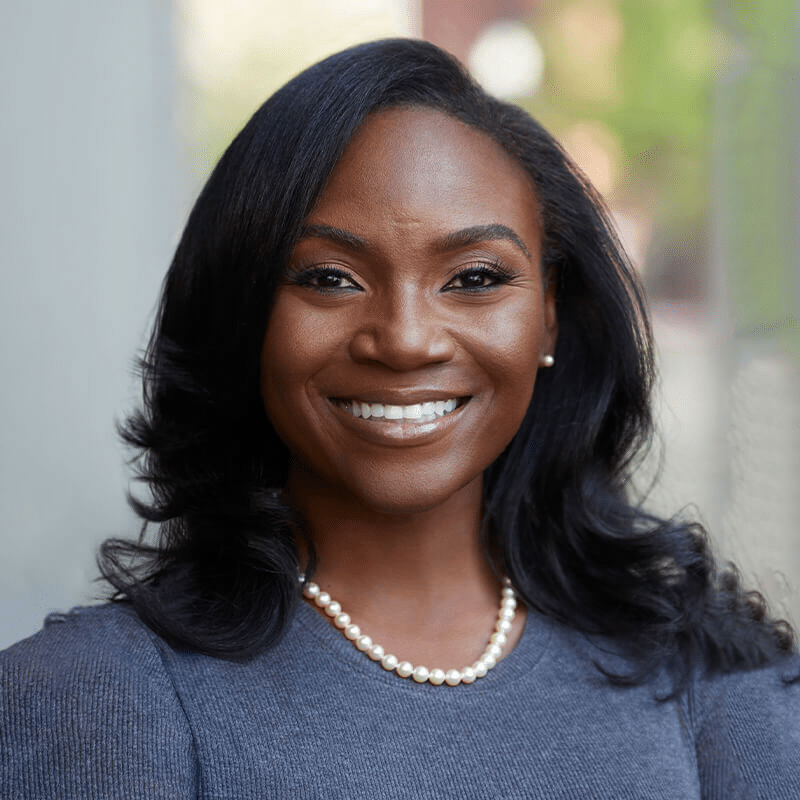
Women’s History Month Part 9: Dr. Kizzmekia Corbett: She Was Ready Before the World Knew It Needed Her.

image (25)

She was sitting on her mother’s couch in Hillsborough, North Carolina, on the last night of the decade, when the email arrived. The subject line read: “Get ready for 2020.” Attached was a news article describing twenty-seven people in Wuhan, China, who had been stricken by a mysterious respiratory illness. Her boss at the National Institutes of Health in Bethesda had sent it. She was thirty-three years old. She had spent the previous six years of her professional life studying coronaviruses. And on New Year’s Eve 2019, while the rest of the world was watching fireworks and making resolutions, the field she had chosen to work in quietly announced that it was about to matter more than anyone outside a handful of virology labs yet understood.

What followed in the next sixty-six days — from the publication of the novel coronavirus’s genetic sequence on January 10, 2020, to the launch of Phase 1 clinical trials for the vaccine candidate mRNA-1273 on March 16, 2020 — was the fastest vaccine development process in recorded scientific history. The woman who led that team, who designed the spike protein the vaccine would train the immune system to recognize, who partnered with Moderna to move from genome to clinical trial in under ten weeks, was a girl from Hurdle Mills, North Carolina, who had won her third-grade science fair with her cousin and told anyone who would listen that she was going to be the first Black woman to win the Nobel Prize in Medicine.

The story of how she got from that couch in Hillsborough to that lab in Bethesda is not a story about exceptional circumstances. It is a story about a very specific kind of preparation meeting a very specific kind of moment, and about what it looks like when the institutions that are supposed to find talent actually find it, and when the individual who receives that opportunity does not waste a single day of it.

Hurdle Mills to Bethesda: The Education That Built the Scientist

Kizzmekia Shanta Corbett was born on January 26, 1986, in Hurdle Mills, a rural North Carolina town about twenty-five miles northwest of Burlington. She grew up in Hillsborough with her mother, Rhonda Brooks, a stepfather, and a large family that included step-siblings and foster siblings. Her fourth-grade teacher recognized her ability early enough to tell her mother to put her in advanced classes. Her mother has recalled that Kizzy was always like a detective — that when she set her mind on something, it was set. As a child, she described her goal as becoming the first Black woman to win the Nobel Prize in Medicine. That is not the ambition of a child who has been told to aim small.

In high school, she was selected for ProjectSEED, a summer program run by the American Chemical Society to give underrepresented minority students access to real science careers. The summer before her junior year, she worked in an organic chemistry lab at UNC-Chapel Hill, using equipment she had never seen, working alongside researchers whose names she had only read. She has described that summer as the moment she knew: “I was able to use cutting-edge equipment, I was able to work with world-renowned experts, and I developed a passion for the scientific process. I just knew that I had to pursue science as a career.”

She graduated from Orange High School in 2004 and enrolled at the University of Maryland, Baltimore County, on a full scholarship through the Meyerhoff Scholars Program — a program designed specifically to increase the number of underrepresented minority students who complete doctoral degrees in science and engineering. She double-majored in biological sciences and sociology. The sociology major was not incidental. She has said that all the components of her identity — her faith, her Southerness, her community ties, her understanding of the people science is supposed to serve — make her a better scientist. The double major was a statement of how she understood her own work before she had done most of it.

During her undergraduate summers, she interned at the NIH Vaccine Research Center, where she worked in the lab of Dr. Barney Graham. When Graham asked her, in one of those early conversations, what she ultimately wanted to do with her life, she told him she wanted his job. Graham later recalled: “From the very beginning, she was really pretty bold in her aspirations. And I, if I recall correctly, I was just glad to hear help was coming.” She graduated in 2008. She then spent three years at NIH as a biological sciences trainer alongside Graham, studying the pathogenesis of respiratory syncytial virus, before enrolling at the University of North Carolina at Chapel Hill to pursue her doctorate.

Her Ph.D., awarded in 2014, was built on five years of fieldwork in Sri Lanka studying human antibody responses to dengue fever in children. She was not studying coronaviruses yet. She was building the foundational understanding of how the immune system produces antibodies in response to viral infection — knowledge that would, a decade later, be the scientific infrastructure on which everything else was built. She joined the NIH Vaccine Research Center as a research fellow in October 2014, and she spent the next six years doing the work that made sixty-six days possible.

The Six Years the World Did Not Know Were Happening

The question most people asked when the Moderna vaccine was authorized in December 2020 was: how did they do it so fast? The answer is that they did not do it fast. They did it over six years. The sixty-six days from genome release to clinical trial were the final sprint of a race that had been run since 2014, when Corbett joined Graham’s Viral Pathogenesis Laboratory and began systematically building the knowledge base and the technical infrastructure that would eventually allow her team to design a vaccine candidate in under forty-eight hours.

The scientific work during those six years focused on coronavirus biology at a level of depth and precision that very few labs in the world had achieved. Corbett’s team identified the spike protein — the crown-like structure on the coronavirus surface that the virus uses to attach to and enter human cells — as the primary vaccine target. Working with Dr. Graham and collaborators at the University of Texas at Austin, they developed stabilizing mutations to the spike protein that made it more useful for triggering an immune response. They helped solve the three-dimensional structure of the coronavirus spike protein using cryogenic electron microscopy. And they developed the mRNA delivery platform in collaboration with Moderna: a method for encoding instructions in messenger RNA that cells could read to produce the spike protein themselves, training the immune system to recognize and attack it before the actual virus arrived.

The reason this mattered on New Year’s Eve 2019 is that when the genome of SARS-CoV-2 was released, Corbett’s team did not need to start from the beginning. They had the structure. They had the platform. They had the partnerships. They had the methodology. Less than forty-eight hours after the genome release, her team had designed the spike protein their vaccine would use. Sixty-six days later, human trials began. NIH Director Francis Collins put it directly: “Kizzmekia and Barney, having seen what happened with SARS, and what happened with MERS, were pretty convinced that we had not seen the last coronavirus. They wanted to be prepared for that, and that was quite prescient on their part.”

Corbett describes her approach as “plug-and-play”: the systematic development of knowledge and platform technology so that when a new pathogen emerges, the scientific machinery is already in place to respond. That framing sounds simple. It represents a decade of work and the kind of disciplined, long-term scientific commitment that does not generate headlines, does not produce immediate results, and requires a scientist willing to spend years building something whose value will not be visible until the moment it is urgently needed.

On March 3, 2020, she sat next to Dr. Graham at a table with President Trump, Dr. Anthony Fauci, and the leadership of the NIH, and explained what her team had been doing and what they were about to do. She was thirty-four years old. There were 122 confirmed coronavirus cases in the United States. Two weeks later, clinical trials began. She said later that she wanted her visibility in that room to be intentional: “I wanted people to understand that I stood by the work.” And beneath that, she wanted people who looked like her to see someone who looked like them standing in that room.

The Vaccine Was Not the Only Thing She Had to Build

When the Moderna vaccine received emergency use authorization from the FDA on December 18, 2020, it entered a Black community that had every historical reason to be skeptical of it. The Tuskegee Syphilis Study, in which Black men with syphilis were deliberately left untreated by the U.S. Public Health Service for decades without their knowledge, ended in 1972. The cells of Henrietta Lacks had been taken without her consent in 1951 and used to generate billions of dollars in medical research value, while her family received nothing. These were not distant memories. They were living institutional trauma, passed down through families and communities that had learned, through documented experience, that American medicine did not always treat Black bodies as deserving of the same care, the same transparency, or the same ethical standards it applied elsewhere.

Corbett understood this not as a communications problem to be managed but as a legitimate response to a legitimate history. She described vaccine hesitancy not as ignorance but as “vaccine inquisitiveness” — a reframing that acknowledged the question rather than dismissing it. She spoke at churches and community organizations, explaining the science in plain language, acknowledging the history, and making the argument not for blind trust but for informed confidence. She had also specifically worked during the Moderna clinical trials to ensure that people of color were enrolled in numbers that reflected their proportion of the general population — a structural intervention at a moment when the communities most harmed by the pandemic were at risk of being underrepresented in the research that would protect them.

I want to say something here about what that combination represents. I have spent thirty-five years in financial services working at the intersection of community and institution. I understand what it costs to hold both simultaneously — to be inside the system, doing the technical work the system requires at the highest level, while also maintaining an honest account of what the system has done to the community you come from. Most people who get that far inside an institution eventually stop holding both. They choose the institution because the institution rewards the choice. Corbett has not made that choice. She has treated them as inseparable. The scientist and the community are the same project. That is not common. It is remarkable.

Harvard, and the Pandemic That Has Not Happened Yet

In June 2021, Corbett left NIH and joined Harvard T.H. Chan School of Public Health as an assistant professor of immunology and infectious diseases. She also holds an appointment at the Harvard Radcliffe Institute as the Shutzer Assistant Professor. She heads the Coronaviruses & Other Relevant Emerging Infectious Diseases (CoreID) Lab, whose mission is to study the interface between the human immune system and respiratory viruses with the goal of developing novel and potentially universal vaccines.

The phrase “universal vaccine” requires explanation because it is the argument her career is now organized around. The COVID-19 vaccine worked because her team had spent years building knowledge about coronaviruses specifically. A universal coronavirus vaccine would work against all forms and variants of the virus — and a universal influenza vaccine would do the same for flu. She holds patents in both areas. The vision she is working toward is a world in which the scientific infrastructure exists, in advance of the outbreak, to respond rapidly to any respiratory viral threat. She has described it as doing for other viral families what was done for coronaviruses: build the knowledge base now so that the world is not starting from zero when the next pandemic arrives.

The next pandemic will arrive. That is not a prediction with uncertainty attached. It is the documented baseline expectation of the scientific community. What is uncertain is the pathogen, the timeline, and the scale. What Corbett is building at Harvard is the preparation that reduces all three of those uncertainties. She is thirty-eight years old. She has more than fifteen years of experience across dengue virus, respiratory syncytial virus, influenza, and coronaviruses. She leads her own lab. She holds a patent portfolio aimed at the diseases that will define the next public health crisis. She is, by any honest accounting, one of the most strategically positioned scientists in the world to address it.

What She Said About Herself Is the Most Important Thing in This Essay

There is a version of this essay that presents Dr. Kizzmekia Corbett as a triumph of American scientific meritocracy — a talented girl from a rural North Carolina town who got the right opportunities, made the right choices, and saved millions of lives. That version is not wrong. It is insufficient.

The more honest version is this: she grew up in a country that has, throughout its history, systematically excluded people who look like her from the scientific institutions that produce this kind of work. The exclusion is documented. The Tuskegee study. The exploitation of Henrietta Lacks. The centuries of extracting the labor and the biology of Black people without extending to them the benefits of the science built on what was taken. She grew up in that country, was identified early by a fourth-grade teacher and a high school summer program, was supported by the Meyerhoff Scholars Program at UMBC, was mentored by Barney Graham at the NIH, and built something that protected the world.

She has said: “I try to tell my story because it’s not just that I don’t even look like a scientist, but my background would suggest I could not be a scientist, ever. So I hope that people start to see that there’s talent in different places.” Her UMBC president, Freeman Hrabowski, has said, “She cannot be a hidden figure. She needs to be in textbooks. Little girls need to see her — of all races.” Both of those statements are about the same thing: the cost of exclusion. Not the exclusion of Corbett specifically — she made it through the system. The exclusion of the thousands of Kizzys who did not have a Myrtis Bradsher in fourth grade, or a ProjectSEED in high school, or a Meyerhoff scholarship at UMBC, or a Barney Graham who recognized what he had in front of him and said he was glad help was coming.

Those are the people this essay is ultimately about. Not just Corbett, but the ones who came before and behind her, who had the same talent and did not get the same infrastructure. Every one of them is a vaccine that was never developed, a treatment that never arrived, a pandemic that lasted longer than it needed to because the person who could have shortened it was somewhere else doing something beneath what they were capable of.

She has also said this, and it is the sentence this essay should end on: “The work that you do is always bigger than you.” She was talking to college students. She was talking about science. She was talking about the same thing every woman in this series understood, in their different fields and their different eras, in their different kinds of rooms and their different kinds of fights: that the point is not what you get credit for. The point is what gets done, and whether the world is different because you showed up and did the work.

Thank you for taking the time to read and reflect. I write to help people think clearly about money, business, real estate, and life — not from theory, but from decades of lived experience.

If you are navigating a financial decision, building a business, considering homeownership, or simply trying to make better use of your time and resources, I invite you to engage further.

Subscribe to The Power Is Now TV to connect with me live every weekday, Monday through Friday, from 10:00 AM to 11:00 AM PST, as we record television shows across the Power Is Now TV Network. As a subscriber, you can participate in live tapings, engage in real-time discussions, and connect directly with industry leaders.

Visit ThePowerIsNow.com to access real estate magazines, books, podcasts, television shows, and exclusive media content focused on homeownership, business, and wealth-building.

For personalized support, consulting, and advisory services in real estate, mortgages, business, and personal finance, visit EricFrazier.com to schedule a consultation and learn more about my work as your trusted advisor in business and wealth.

Eric Lawrence Frazier, MBA
Your trusted advisor in business and wealth
www.ericfrazier.com | www.thepowerisnow.com
NMLS #451807 | CA DRE #01143484
Schedule a consultation: https://calendly.com/ericfrazier/real-estate-mortgage-consultation-clients

Research & Sources