
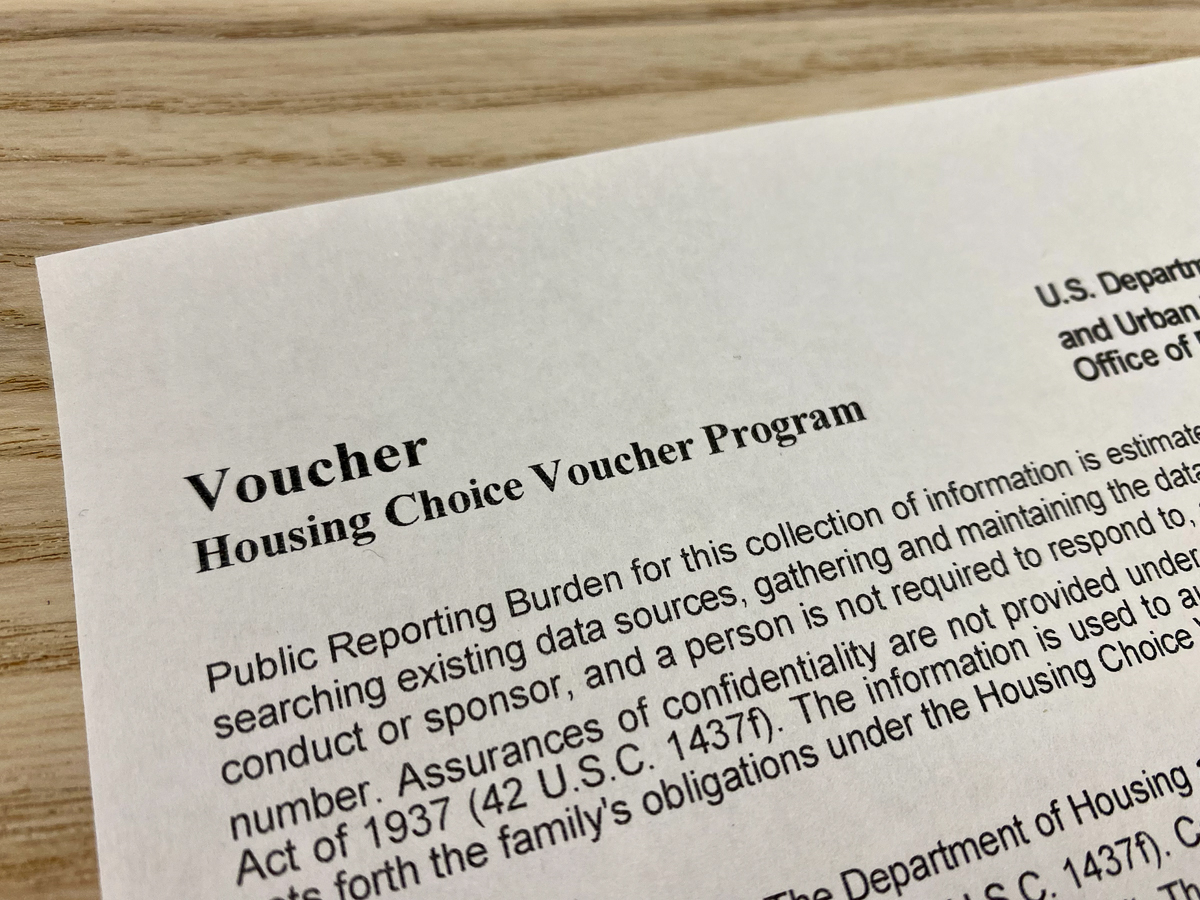
There are roughly 2.3 million households in the United States receiving Housing Choice Vouchers, the federal rental assistance program most people know as Section 8. For the vast majority of those families, the voucher works the same way it always has: a local public housing authority determines how much rental assistance the family qualifies for, the subsidy goes to a landlord each month, and the family pays the difference. Month after month, year after year, the voucher pays rent. It builds nothing. It accumulates nothing. When the lease ends, the family moves, and the cycle starts again.
What most of those 2.3 million households do not know, and what most housing professionals, policymakers, and advocates rarely discuss with adequate urgency, is that the voucher can do something fundamentally different. It can pay a mortgage instead of rent. It can help a family buy a home, build equity, and begin the process of wealth accumulation that homeownership makes possible. A program exists specifically to enable this transition, it has been authorized by federal law since 2000, and as of early 2024 it had facilitated just over 10,000 closings nationwide in more than two decades of existence. That number, 10,000 purchases from a pool of 2.3 million eligible voucher holders, captures in a single statistic the size of the gap between what this program is and what it could be.
What the program actually is
The Housing Choice Voucher Homeownership Program, administered by the U.S. Department of Housing and Urban Development, allows eligible HCV recipients to redirect their rental subsidy toward the costs of homeownership rather than rent. The program allows families assisted under the HCV program to use their voucher to buy a home and receive monthly assistance in meeting homeownership expenses. It is limited to first time homeowners who have received housing counseling and meet minimum income requirements.
The mechanics are straightforward. Participants typically pay 30% of their income toward mortgage costs, while the voucher covers the remainder, the same structure used for rental assistance but applied to homeownership expenses instead. Time limits apply: assistance lasts up to 15 years for most participants, with no time limit for elderly or disabled families. The subsidy covers a broad range of homeownership costs, including mortgage principal and interest, property taxes, insurance, and in some cases utilities, essentially the same basket of costs the voucher would have covered in a rental situation, redirected toward building ownership rather than paying a landlord.
The financial logic of this redirection is powerful and direct. Instead of rent payments that disappear permanently, monthly housing payments build equity, creating an asset that grows over time. As one Sacramento participant said: “For the first time, I feel like I’m investing in my future, not just surviving month to month.” That shift, from subsidizing a landlord’s asset to building the voucher holder’s own, is the core of what makes this program so significant and its underuse so consequential.
Why almost nobody uses it
The HCV Homeownership Program’s 10,000 closing track record over 25 years is not evidence that the program does not work. It is evidence that the program is barely being used. Several structural barriers explain why the gap between the program’s potential and its actual reach has remained so wide for so long.
The first and most fundamental barrier is that participation is optional for local public housing agencies. All public housing authorities that administer the HCV program have the option to establish an HCV homeownership program in their community. The operative word is option. PHAs are not required to offer the homeownership program, and a significant number simply do not, whether due to administrative capacity constraints, lack of familiarity with the program requirements, staff bandwidth, or institutional inertia. The limited participation of PHAs presents a significant hurdle, not every housing authority offers the program, creating geographical barriers for many families. A voucher holder whose local PHA has not established a homeownership program has no path to use this option regardless of how well qualified they might otherwise be.
The second barrier is awareness, or the near complete absence of it. The Section 8 homeownership program remains one of housing policy’s best kept secrets. This is not hyperbole. Most voucher holders have never been told the option exists. Many housing counselors and social workers who work with voucher holding families are unfamiliar with the program’s mechanics. Lenders who have never processed a homeownership voucher transaction may not know how to underwrite one. The information ecosystem around this program is so thin that even motivated, financially prepared voucher holders frequently hit dead ends simply trying to find someone who can explain how to proceed.
The eligibility requirements add another layer of complexity. Beyond holding an active voucher, applicants must meet income thresholds, demonstrate steady employment history, typically 30 hours per week for at least one year, qualify as a first time homebuyer, and complete a HUD approved housing counseling program. The existing HUD PHA homeownership program has had very limited success, with most successful homebuyers having higher incomes. This reflects a real tension at the program’s core: the families most in need of a pathway out of long term rental dependency are often the ones who face the most difficulty meeting the income and employment requirements designed to ensure sustainable homeownership. The program is most accessible to voucher holders who have already made significant financial progress, not those at the earliest stages of that journey.
What the program looks like in practice
At the PHAs that have chosen to make the homeownership program available and have invested in making it work, the results are genuinely transformative. The Grand Rapids Housing Commission in Michigan, for example, has structured its program to provide not just administrative processing but active support, working with local lenders and realtors to guide participants through the full purchase process, from orientation meetings to closing. Once a family closes on a home, the housing commission sends a predetermined housing assistance payment directly to the family each month. The family contributes their share of the mortgage payment and makes the total monthly payment to their lender. The subsidy flows to the homeowner rather than a landlord, and the homeowner uses it to meet their mortgage obligation, building equity with every payment.
Organizations like NACA, the Neighborhood Assistance Corporation of America, have developed enhanced models that take the basic HCV homeownership framework and layer additional resources on top of it. NACA’s HOT PHA program allows participants to combine their HCV with the NACA Mortgage and local government assistance to purchase a home, with the goal of owning the home free and clear without a mortgage in 20 years or less. If the participant’s income decreases, the housing choice voucher payment from the PHA increases, virtually eliminating risk. That risk mitigation is critical. It addresses the core concern that keeps many low income buyers out of homeownership, the fear that a financial setback will result in the loss of the home they worked to acquire.
The Housing Choice Voucher Program serves more than 2.3 million low income households in the United States, and research has shown its effectiveness in providing housing stability. The homeownership component could extend that stability into equity building and generational wealth, but only if it is actually made available, actively promoted, and supported with the resources that participants need to navigate the purchase process successfully.
The wealth building case
The argument for expanding HCV homeownership is not just about individual families. It is about the structural relationship between public housing assistance and wealth accumulation, a relationship that the current system has been almost entirely designed to prevent.
Every month that a Housing Choice Voucher pays a landlord’s mortgage instead of a family’s own, the federal government is subsidizing a transfer of wealth away from low income households rather than toward them. The landlord builds equity. The tenant builds nothing. When the assistance eventually ends, through income improvement, changed circumstances, or program changes, the tenant leaves with no asset, no equity, and no financial position different from when they started. The housing assistance has provided stability, which is valuable. But it has not provided mobility, and in a system where homeownership is the primary vehicle for wealth accumulation, keeping millions of low income families permanently in rental assistance rather than supporting their transition to ownership is a policy choice with very long term consequences.
Research from the Joint Center for Housing Studies of Harvard University has found that targeted interventions of 25,000 dollars in down payment assistance could potentially increase Black and Hispanic homeownership by more than 1.1 million households. The HCV homeownership program represents an even more powerful lever, because it does not require a lump sum grant. It redirects an existing subsidy, one the government is already paying, from rent to mortgage. The incremental cost of converting a rental voucher to a homeownership voucher, for a family that meets the eligibility requirements, is relatively modest compared to the long term wealth impact for that family.
What needs to change
HUD has taken incremental steps to encourage more PHAs to establish homeownership programs, including a one time fee of 2,500 dollars for every newly created HCV homeownership program and 1,500 dollars for every closing. These incentives are a recognition that the program is underused, but they are modest relative to the administrative burden that small and mid sized PHAs face in setting up a program they have never run before. The more significant barrier is not money, it is knowledge, capacity, and institutional will.
Some local areas do not have a homeownership program. Finding and contacting your local public housing agency to see if it offers the homeownership option is the essential first step. That sentence, straightforward as it sounds, captures the fundamental problem. The first step for a voucher holder who wants to explore this option is to contact their PHA, and at many PHAs, the answer will be that the program does not exist there. For a family in that situation, the option they did not know about turns out not to be available to them anyway. The program that could change their financial trajectory is simply absent from their community.
Fixing that requires more than incentive payments to PHAs. It requires a meaningful federal commitment to expanding program availability, treating the homeownership option not as an administrative bonus but as a core function of the HCV program, one that every eligible family should be told about and every housing authority should be supported in offering. The 2.3 million families holding housing vouchers represent one of the most significant untapped pipelines for low income homeownership in the United States. The pipeline exists. The authorization exists. The funding structure exists. What is missing, still, after 25 years, is the serious, sustained effort to make it work at scale.
Thank you for taking the time to read and reflect. I write to help people think clearly about money, business, real estate, and life — not from theory, but from decades of lived experience.
If you are navigating a financial decision, building a business, considering homeownership, or simply trying to make better use of your time and resources, I invite you to engage further.
Subscribe to The Power Is Now TV to connect with me live every weekday, Monday through Friday, from 10:00 AM to 11:00 AM PST, as we record television shows across the Power Is Now TV Network. As a subscriber, you can participate in live tapings, engage in real time discussions, and connect directly with industry leaders.
Visit ThePowerIsNow.com to access real estate magazines, books, podcasts, television shows, and exclusive media content focused on homeownership, business, and wealth building.
For personalized support, consulting, and advisory services in real estate, mortgages, business, and personal finance, visit EricFrazier.com to schedule a consultation and learn more about my work as your trusted advisor in business and wealth.
Eric Lawrence Frazier, MBA
Your trusted advisor in business and wealth
www.ericfrazier.com | www.thepowerisnow.com
NMLS #451807 | CA DRE #01143484
Schedule a consultation: https://calendly.com/ericfrazier/real-estate-mortgage-consultation-clients
References
Grand Rapids Housing Commission. (2026). Housing Choice Voucher Homeownership Program. https://www.grhousing.org/hcv-homeownership-program
LifeSTEPS. (2025, May 30). Buying a home with a Section 8 voucher: 7 powerful benefits 2025. https://lifestepsusa.org/buying-a-home-with-a-section-8-voucher/
LifeSTEPS. (2025, May 21). Section 8 homeownership: 10 powerful benefits in 2025. https://lifestepsusa.org/section-8-homeownership/
National Association of Housing and Redevelopment Officials. (2025, July 18). Increase homeownership opportunities. https://www.nahro.org/national-housing-framework/increase-homeownership-opportunities/
Neighborhood Assistance Corporation of America. (2025). Homeownership Through Public Housing Assistance (HOT-PHA). https://www.naca.com/the-naca-hot-pha-program/
RAND Corporation. (2025). Improving utilization in the Housing Choice Voucher Program (Report No. RR-A3913-1). https://www.rand.org/pubs/research_reports/RRA3913-1.html
U.S. Department of Housing and Urban Development. (2025). HCV Homeownership Program. https://www.hud.gov/helping-americans/public-indian-housing-hcv-homeownership