
THE END OF AN ERA: Part One — Callais and the Quiet Burial of the Voting Rights Act
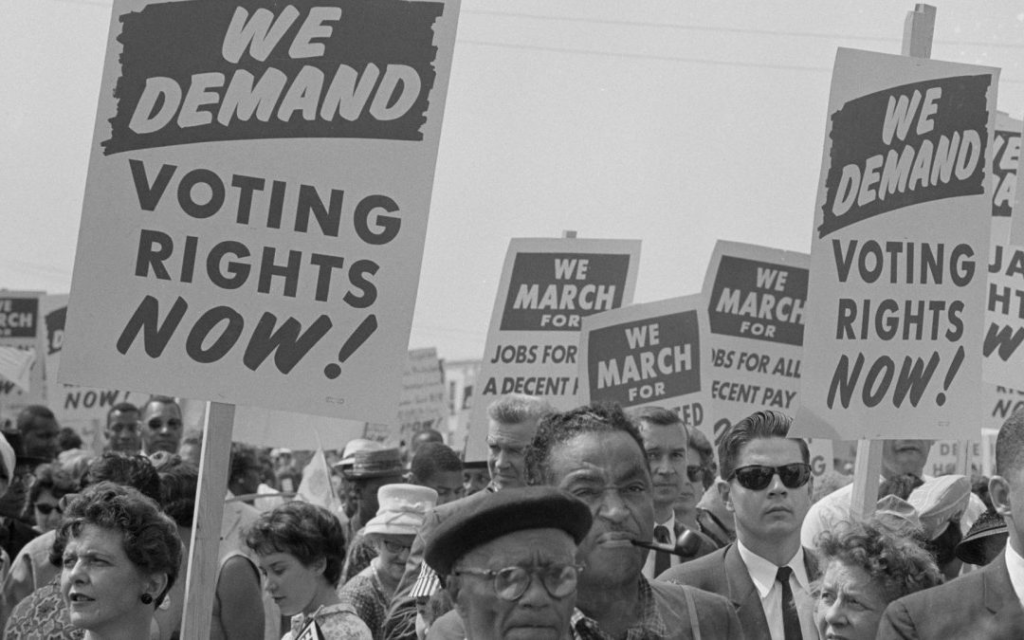
I am sitting in my office. I see the MSN newsfeed pop-up. The announcement is the Supreme Court ruling on the Voting Rights Act. I just started shaking my head. Where in the heck is this country going? Oh my God. That moment was Wednesday, April 29, 2026. The Supreme Court of the United States, by a vote of six to three, in Louisiana v. Callais, gutted what was left of Section 2 of the Voting Rights Act of 1965.1 Justice Samuel Alito wrote the majority opinion. Justices Sonia Sotomayor, Elena Kagan, and Ketanji Brown Jackson dissented. The dissent was sharp. The majority was quiet, technical, and devastating Election-law scholar Richard Hasen called it “one of the worst Supreme Court rulings of the last century.” He wrote a follow-up calling Alito a “coward” for the way the opinion avoided naming what it did. What makes Callais different from other six-to-three decisions is not the vote count. It is the silence. The majority did not announce the burial of the Voting Rights Act. It buried it quietly, the way a body is buried at night, so the neighbors will not see. What Callais Actually Did Section 2 of the 1965 Voting Rights Act prohibits voting practices or procedures that discriminate on the basis of race, color, or membership in a language minority group. After the Supreme Court gutted Section 5’s preclearance regime in Shelby County v. Holder in 2013, Section 2 became the last federal statutory tool with real enforcement teeth against racial vote dilution. The framework for proving a Section 2 violation came from Thornburg v. Gingles in 1986, which built on the rejection of intent-only standards in Mobile v. Bolden. The Gingles framework asked three threshold questions: is the minority group sufficiently large and geographically compact to constitute a majority in a single-member district; is it politically cohesive; and does the white majority vote sufficiently as a bloc to usually defeat the minority’s preferred candidate. Callais did not formally overrule Gingles. It did something more useful for those who wanted Gingles dead. It raised the burden of proof at every threshold step until the framework no longer functions as a remedy. Plaintiffs must now demonstrate not merely that the three Gingles preconditions are met, but that the challenged district was drawn with a level of racial intent that approaches the standard required to invalidate a law under the Equal Protection Clause. The Court did not say Section 2 is dead. It said Section 2 lives, but only when the plaintiff can prove what is almost impossible to prove. This is the technique. The Roberts Court has refined it for thirteen years. Shelby County did not strike Section 2; it struck the preclearance formula in Section 4(b), which made Section 5 enforceable. Rucho v. Common Cause in 2019 did not strike partisan gerrymandering claims; it ruled them nonjusticiable in federal court. Students for Fair Admissions did not strike the Fourteenth Amendment’s equal protection guarantee; it reinterpreted what the guarantee permits in the admissions context. Each ruling preserves the formal text and removes the operational tool. Callais is the same technique applied to what was left of the Voting Rights Act. The Quiet Burial The public has not been told what happened. Most morning news on April 29 led with other stories. Most evening cable coverage gave the decision two segments, then moved on. The headlines used the language of legal commentary: “limits Section 2,” “narrows voting rights claims,” “raises burden on plaintiffs.” None of them said what Hasen said: this is one of the worst rulings of the last century.2 Burying a thing quietly is not new. The Civil Rights Cases of 1883 quietly buried the Civil Rights Act of 1875 by ruling that the Fourteenth Amendment did not reach private discrimination. Plessy v. Ferguson in 1896 quietly buried the equal-protection promise of the Reconstruction Amendments by ratifying “separate but equal.” The Compromise of 1877 quietly buried Reconstruction itself by withdrawing federal troops from the South in exchange for the presidency. Each of those quiet burials was followed by decades of harm that did not have to happen. What Callais shares with those earlier quiet burials is the technique of formal preservation paired with operational destruction. The Civil Rights Act of 1875 remained on the books after 1883; it was simply unenforceable. Section 2 of the Voting Rights Act remains on the books after April 29, 2026; it is simply unenforceable in the way it was meant to be enforced. The text is undisturbed. The function is gone. The Price Never Paid Before going further into where Callais leads, the price never paid must be named. In 1860, the assessed market value of enslaved people in the United States was approximately $3.5 billion. That figure was roughly eighty percent of the gross domestic product of the country at the time. In present-day dollars, scaled to GDP share rather than to the consumer price index, the value approached twenty-two trillion dollars. That wealth was not paid to the people whose bodies and labor produced it. It was paid to the people who claimed to own them, when it was paid at all, as in the District of Columbia Compensated Emancipation Act of April 16, 1862, which paid up to three hundred dollars per enslaved person to loyal slaveholders and nothing to the people freed. Between 1934 and 1968, the Federal Housing Administration insured approximately $120 billion in home mortgages. Less than two percent of that volume went to non-white borrowers. In CPI-adjusted dollars, the white-only share of FHA-insured mortgage credit during those thirty-four years approaches $2.6 trillion. The gap was not the consequence of private prejudice. It was the consequence of explicit federal underwriting policy that defined Black neighborhoods as risk and refused to insure mortgages in them. Richard Rothstein documents this in The Color of Law. 15 Ira Katznelson documents the same pattern across the New Deal and the GI Bill in When Affirmative Action Was White. The Federal
The Voting Rights Act Part 2: Have We Forgotten Why the Voting Rights Act Exists?
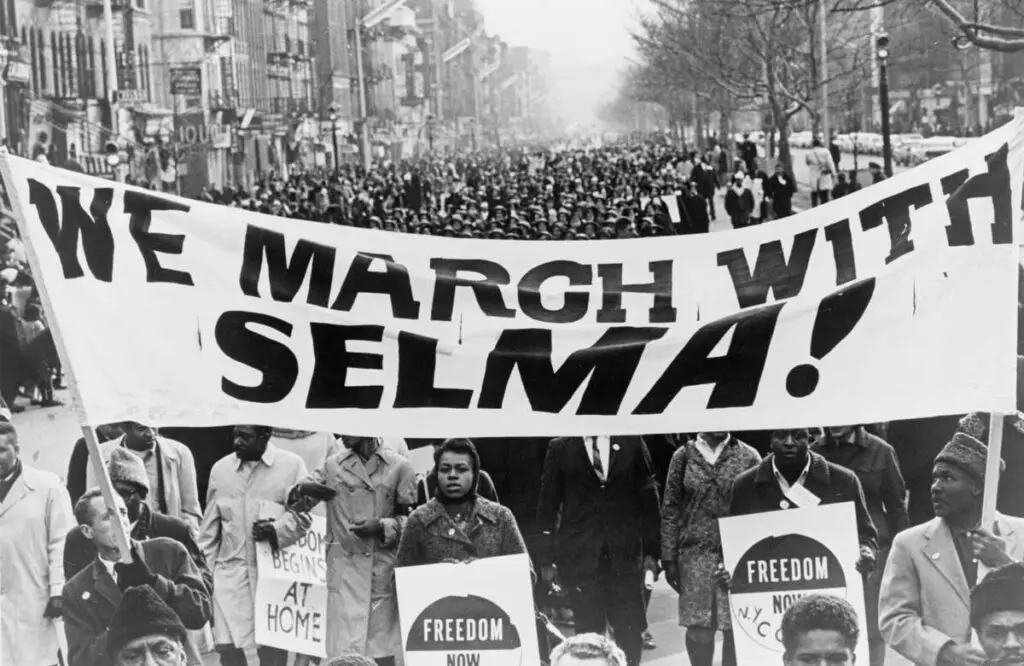
A Second Reflection on Memory, History, and the American Conscience By Eric Lawrence Frazier, MBA After publishing my first essay on the recent Supreme Court rulings involving the Voting Rights Act of 1965, I continued thinking about what had happened and about my own reaction to it. I kept asking myself where this country is going. Does America remember why we had the Voting Rights Act in the first place? Do our elected officials remember? Do the courts remember? More importantly, do ordinary Americans remember what African Americans actually experienced in this country before these protections were passed into law? My original assumption was that people already understood this history. I assumed most Americans knew why the Voting Rights Act became necessary. I assumed people understood what conditions existed before 1965 and why the federal government finally concluded it had to intervene directly in state election systems. But the more I talked about it with family and friends, the more it became evident to me that many people simply do not know the history well enough to understand what is happening now. That realization changed the direction of this essay completely. So I decided to focus on explaining this history, especially for younger generations who may have heard the phrase “Voting Rights Act” but certainly do not know much about Section 5 or Section 2. In my first article I wrote with the assumption that everybody already understood that history, and that simply is not the case. Because if people do not understand the conditions that produced the law, then they cannot possibly understand why so many people are alarmed as portions of that law continue to be weakened today. Perhaps we have forgotten. Or perhaps many Americans never truly knew. Most Americans have heard reporters discuss the Voting Rights Act. They have heard political commentators argue about Sections 2 and 5. They have heard Supreme Court decisions discussed on television. But if you stopped many Americans on the street and asked them to explain what the law actually was, why it became necessary, or what was happening in America before it was passed, I seriously doubt many people could explain it clearly. We cannot intelligently discuss the dismantling of voting-rights protections if we first do not understand what America was like before those protections existed. I have five grandchildren now. One is in the second grade, one is in the fourth grade, and one is in the sixth grade. I have two more grandchildren who have not started school yet. They are only one and two years old. The other three are not too young to understand fairness, injustice, exclusion, and basic human dignity. As I started writing this essay, I realized that I do not want them to miss the opportunity to understand what is happening in this country while it is happening. I have a tremendous opportunity right now as a grandfather to explain these things to them while they are still young enough to build historical understanding into the foundation of how they see the world. Children already understand one of the most important principles at the center of this entire conversation: fairness. Children know when they are being treated unfairly. They know when rules are uneven. They know when somebody is being excluded or mistreated. Anybody who has ever raised children already knows this because children constantly announce it to their parents: “That’s not fair.” So if you explain to a child that there was a time in America when Black people could not freely vote, could not eat in certain restaurants, could not stay in certain hotels, could not attend certain schools, and could not even drink from the same water fountains as white Americans, most children immediately recognize that something is wrong with that picture, whereas adults sometimes do not because adults become conditioned by repetition. We hear historical facts repeated so casually that eventually we stop feeling the weight of what those facts actually mean. To understand the Voting Rights Act, we first have to go back to the end of slavery itself. Slavery officially ended in the United States in 1865 after the Civil War. Then, in 1870, America passed the Fifteenth Amendment to the United States Constitution. The Fifteenth Amendment said states could not deny citizens the right to vote because of race or because they had previously been enslaved. In plain English, Black men were now officially supposed to have the constitutional right to vote. But having rights written on paper and being allowed to use those rights in real life are two completely different things. Although African Americans technically had voting rights after 1870, many states — especially throughout the South — had absolutely no intention of allowing Black citizens to participate equally in American democracy. Slavery had ended, but the desire to maintain racial control had not ended. The belief in white superiority had not ended. The fear of Black political participation had not ended.So instead of openly saying “Black people cannot vote,” states created systems designed to make voting difficult, humiliating, dangerous, or almost impossible. And all of this was happening during a period when segregation controlled almost every aspect of Black life. African Americans often could not eat in certain restaurants. They could not stay in certain hotels. They could not attend certain schools. They could not use certain public bathrooms. They drank from separate water fountains marked “Colored.” They sat in separate sections of buses and trains. In many cities Black families could not buy homes in white neighborhoods because banks, governments, and real estate companies blocked them systematically through redlining, racial covenants, lending discrimination, and intimidation.¹ Children today need to understand this clearly because segregation is often taught in sanitized language that makes it sound like a minor inconvenience rather than what it actually was: a complete social system designed to constantly remind African Americans that they were considered inferior and unwelcome in large parts of American society. Voting restrictions became part