
Fair Housing Series Part 10: The Fair Housing Act at 58
fhcda (1)

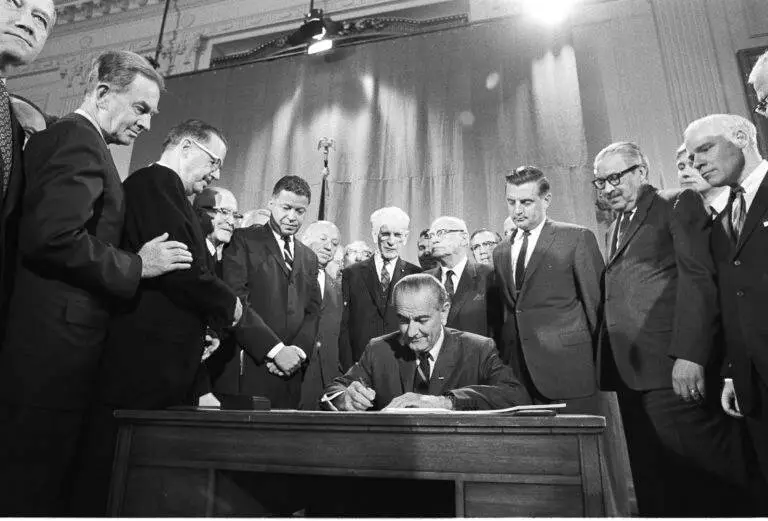
What We Have, What We’ve Lost, and What We Must Build. By Eric Lawrence Frazier, MBA The Fair Housing Act of 1968 was passed to stop the riots. That is the honest accounting of its origins. The bill had been stalled in Congress for two years. It moved in the week after the assassination of Dr. Martin Luther King Jr., as American cities burned for the second consecutive year. President Johnson signed it seven days after Dr. King was killed, on April 11, 1968. The people who voted for it and the president who signed it were responding to social pressure, not moral conviction. It was a concession. It was designed to appease. And yet. It had an impact. The explicit forms of discrimination that were commonplace in 1968 — the posted signs, the written restrictive covenants, the openly stated refusals — have been substantially eliminated from legal practice. The law stopped the major crimes. It gave us just enough to continue our pursuit. It was not what it should have been. But it was not nothing. The Real Story Is Not the Gap The racial homeownership gap is wider today than it was in 1968. Black homeownership stands at 44.7 percent. White homeownership stands at 73.8 percent. The gap has widened by approximately five percentage points in fifty-eight years. That is the failure. That is the evidence of what the law left undone. But that is not the whole story. And it is not the most important story. The real story is that we are here. Full participants. We cannot be denied our seat at the table of American prosperity. We cannot be excluded from the pursuit of the American dream of homeownership and freedom. We will have our share of what this country promises for everyone. That claim — that insistence — is the story. Not the gap. This is not a perfect union. Someone might argue it is not even a union. But we are the melting pot. We are part of this country’s history, its culture, its economy, and its future. And it has been the rule of law — imperfect, contested, never fully delivered, but present — that has kept us engaged in the process rather than outside of it. Not the goodwill of the men who govern. Not their moral evolution. The rule of law. That is what we have and what we defend. This Too Shall Pass The current administration has mounted the most comprehensive rollback of fair housing enforcement since the Act’s passage. Zero charges filed. One hundred and fifteen cases closed. HUD’s enforcement staff cut by half. The disparate impact doctrine targeted for elimination. The Equal Access Rule halted. Guidance to state agencies threatening to cut off funding unless they stop enforcing their own laws. This too shall pass. Administrations come and go. Laws come and go. Every protection we have ever been given has been contested, reduced, or reversed at some point in the cycle. And every time, we are still here when the cycle turns. We were here before this administration. We will be here after it. The law outlasts the lawmaker. The Constitution outlasts the president. And the people whose determination produced the law outlast all of it. What the Ancestors Built Without Any Law The Fair Housing Act could be abolished tomorrow. If it were, it would not stop us. It would not stop us because it did not create us. We were building before it existed. Our ancestors built cities. They built businesses. They bought land. They built farms. They invented. They created institutions of learning and commerce and culture. They did all of this without the protection of a fair housing law, without the protection of any law, without the protection of a government that recognized their humanity. They built under conditions of legal slavery, legal segregation, legal exclusion, and systematic violence. They built anyway. That is the legacy I carry. Not the law. The determination that produced the law, that existed before the law, and that will continue after the law regardless of what any administration does to it. The spirit of our ancestors is not contained in a statute. It is in us. It has always been in us. Grateful for the Law. More Grateful for the Legacy. I am grateful for the Fair Housing Act. I am grateful for every case it won, every family it protected, every discriminator it held accountable, every settlement it produced. I am grateful for the legal infrastructure that, at its best, gave individual buyers a remedy and put institutions on notice that their practices had consequences. That mattered. That still matters. We should fight to preserve and strengthen it. But I am more grateful for the legacy. The legacy of a people who refused to accept that circumstances determined outcomes. Who refused to let the verdict of the system become the verdict on their lives. Who found a way around every wall, through every barrier, in spite of every policy designed to hold them back. That is what this six-year series has been about. Not just the law. The people. The families who sat across the table from me — and later on the other side of a Zoom screen — who came with a goal and a determination and asked me to help them get there. The buyers who pooled resources with their families to get into markets that priced them out individually. The families who held through down markets and came out with equity. The first-generation buyers who built the foundation no one had built before them, so that the next generation would have a starting point. I am determined to live my best life in these United States of America. That determination does not come from the Fair Housing Act. It comes from thirty-five years of watching what people can build when they decide to build it. It comes from the ancestors. It comes from knowing that the power was never in

Fair Housing Series Part 9: The First-Generation Homebuyer – Footnotes

image (56)

What Nobody Told You. Build It on a Rock. By Eric Lawrence Frazier, MBA What I wish someone had told them is the same thing I wish someone had told me. That money is a tool — a precious resource, as necessary for survival as any physical necessity — and that you cannot have enough of it, which means you need to learn how to manage it. How to save it. How to spend it, and what to spend it on. How to attach your income, which creates the money, to assets you can acquire and hold, which build the wealth that creates even more money. Financial literacy. That is what was not told to them. And it was not told to them because their parents were financially illiterate. And their parents were financially illiterate because their grandparents were financially illiterate. The ignorance is not a character failure. It is an inheritance. And it compounds with every generation that passes without someone breaking the cycle. The evidence of financial illiteracy in America is measured in trillions. Total household debt has reached nearly eighteen trillion dollars. Student loan debt alone stands at 1.61 trillion. Credit card balances are at their highest recorded level. Bankruptcies increased sixteen percent in 2024. Repossessions, defaults, mortgage delinquencies among first-time buyers rising year over year. The foundation was sand. The wind is blowing. Nine Out of Ten Are Not Ready Nine times out of ten, someone who walks into my office today is not ready to buy a home. And I send them away. Not because I do not want to do business with them. Not because I do not care about their goal. But because I refuse to put a family in a home they are going to lose. The days when I would close a deal just to close a deal are over. A commission that comes from putting an unprepared buyer into a mortgage they cannot sustain is not a transaction I want on my record. The person sitting across from me — or on the other side of the Zoom screen, because that is the table today — deserves a home they will hold for the rest of their working life, pay off, and pass to their children. Not a transaction that becomes the greatest financial mistake they ever made. What prepared looks like is specific. Credit score above the qualifying threshold. Consumer debt eliminated or substantially reduced. Twelve months of household income in savings before beginning the homebuying process. Down payment sourced and seasoned. Income fully documented. Debt-to-income ratio leaving room to absorb the unexpected — because the unexpected always arrives. That is the buyer I am working for. That is the transaction that matters. The Intergenerational Problem The problem runs deeper than individual unpreparedness. The financial literacy gap is intergenerational. Adults who grew up in households without financial conversations are three times more likely to carry high-interest consumer debt. The first-generation homebuyer in Black and Hispanic communities faces not only the standard barriers to homeownership — the credit, the savings, the debt-to-income ratios — but also the absence of the informal advisory network that transfers financial knowledge within families that have owned property across generations. The white family that has owned real estate for three generations passes something down that has nothing to do with down payment assistance. They pass down the knowledge of how to evaluate a neighborhood, how to negotiate an offer, how to build a relationship with a lender, how to hold an asset through a down market, what a title company does and why it matters, what homeowner’s insurance covers and what it does not. They pass down the vocabulary of wealth building. The first-generation buyer arrives without that vocabulary. That is why my entire practice has focused around financial literacy and education. Before the application. Before the pre-approval. Before the home search begins. Understand the money. Build the foundation. The house can come after the foundation is in place. Not before. The Rock and the Sand The biblical principle is precise: the wise man who builds his house upon a rock will be able to withstand whatever comes. The foolish man who builds his house upon sand — at the first sign of wind, at the first sign of financial pressure, at the first unexpected expense — that house will fall. This is the American economy. This is the American people. Houses and lives built on sand — on consumer debt and student loans and mortgages approved at the maximum qualifying ratio with nothing in reserve. The first medical bill. The first job loss. The first car repair that the emergency fund does not exist to cover. The wind blows and the house falls. The rock is financial literacy. Savings. A reasonable relationship with spending. Living within your income and your means. Not as a punishment, but as the prerequisite to everything else you want to build. The family that has no debt and twelve months of savings does not lose their home when the unexpected arrives. The family that bought at the maximum qualifying ratio with nothing in reserve is one medical emergency away from foreclosure. Build it on a rock. That is the only message that matters. Everything else — the credit score, the down payment, the mortgage product, the neighborhood — is downstream of that foundation. Get the foundation right first. The house will stand. Poetry says the rest. Build It on a Rock Nobody told them what I wish that someone had told me. That money is a tool as necessary as can be. You cannot have enough of it and you must learn its name. How to save it, spend it, manage it — that is the whole game.   Their parents never told them because their parents never knew. And grandparents before them were financially illiterate too. The ignorance was not their fault but it compounds each year. And the evidence shows up in the debt and in

Fair Housing Series Part 8: The Fair Housing Act and the LGBTQ+ Community.

lgtbt (1)

This Is America. The Melting Pot Belongs to Everyone. By Eric Lawrence Frazier, MBA America has come a long way. Anyone who was alive in 1990 and is alive today has witnessed a transformation in the public acceptance of LGBTQ+ Americans that would have been difficult to predict. The marriage equality decision in 2015 was a legal landmark that represented something deeper than a court ruling — it represented a shift in what a growing majority of Americans, and especially the younger generation, believe about who deserves equal treatment under the law. That progress is real and it deserves to be acknowledged. And the progress is incomplete, legally contested, and under direct attack in 2026 in ways that every LGBTQ+ person navigating the housing market needs to understand clearly. What the Law Actually Covers — and What It Does Not The Fair Housing Act of 1968 prohibits discrimination based on race, color, national origin, religion, sex, disability, and familial status. Sexual orientation and gender identity are not explicitly listed as protected classes in the federal Fair Housing Act. They never have been. The Obama administration extended fair housing protections to LGBTQ+ individuals through HUD’s Equal Access Rule, which required HUD-funded programs to provide equal access regardless of sexual orientation or gender identity. The Trump administration halted enforcement of that rule on February 10, 2025, within weeks of taking office. As of 2026, twenty-seven states have no explicit state-level fair housing protections for LGBTQ+ people. In those states, a landlord can legally refuse to rent to a gay couple. A seller can legally refuse to sell to a transgender buyer. There is no federal enforcement mechanism that will address that refusal. This is not hypothetical. This is the current legal landscape. In 2020, the Supreme Court held in Bostock v. Clayton County that Title VII of the Civil Rights Act prohibits employment discrimination based on sexual orientation and gender identity, reasoning that such discrimination is a form of sex discrimination. Fair housing advocates have argued that the same logic extends to the Fair Housing Act’s sex discrimination prohibition. The current administration is fighting that extension. The battle is live and the outcome is not settled. This Is a Culture War. Call It What It Is. If you do not see what is happening as a culture war, look at the evidence more carefully. The difference between what the Obama administration did and what the Trump administration has done on LGBTQ+ fair housing protections is not a technical policy disagreement. It is a statement about who belongs in America and who does not. It is a statement about whose relationships are legitimate, whose identity is real, and whose right to housing is enforceable. The current administration has issued executive orders directing federal agencies to recognize only two sexes for purposes of federal law and policy. It has withdrawn guidance that extended fair housing protections to transgender individuals. It has halted enforcement of equal access rules. These are not budget decisions. They are cultural declarations. They are the use of federal power to impose one community’s vision of acceptable human existence on everyone else. American culture is not white culture. It is not Christian culture. It is not any single group’s vision of how people should live and who they should love. The founding promise of this country — imperfectly honored, never fully delivered, but genuinely stated — was that this would be a place where you are not judged by the circumstances of your birth, your religion, your origin, or your identity. The melting pot was the idea. The diversity was the feature, not the bug. What the current administration is doing is not conservatism. It is the use of government power to erase the diversity that makes America what it is and to replace it with a monoculture that serves the people who have always had the most power. The experiment in freedom that this country represents is genuinely fragile when one group decides it has the right to write all the rules for everyone else. What an LGBTQ+ Buyer or Renter Must Do in 2026 The legal battles will keep raging. The pendulum will swing again. But the family that needs housing today cannot wait for the pendulum. Know which state you are in and what protections exist there. Twenty-seven states offer nothing. The remaining states have varying levels of explicit protection. Know where you stand before you begin the search. Connect with the organizations that are actively litigating these issues — the National Fair Housing Alliance, Lambda Legal, the ACLU’s LGBTQ+ Rights Project. These organizations have legal resources, complaint mechanisms, and the institutional knowledge to help you navigate discrimination when you encounter it. Work with professionals who affirm you. The real estate agent, the mortgage professional, the property manager who sees you fully and is committed to helping you achieve your goal. Your community has those professionals. Find them. Build your transaction team from within the community that will fight for you. And do not wait for the government to make it easier. That has been the lesson of every community that has been targeted by this administration’s cultural agenda. The government, under this administration, is not coming to help. The solution, as it has always been for every community that has had to build in spite of opposition, lives within. Build. Organize. Document discrimination when it occurs. Create the record. And do not let anyone tell you that the melting pot does not include you. You have an equal claim to this country. Act like it. Poetry says the rest. This Is America America has come a long way from where it used to be. The younger generation sees their neighbor differently. The marriage rights were won and that foundation still holds ground. The progress made is visible to everyone around.   But the Fair Housing Act was silent on the question of who you love. The protections came by interpretation from above. One administration gave them

Fair Housing Series Part 7: Gentrification: Displacement or Opportunity?

image (73)

The Hood Ain’t the Hood No More — And What You Do About It. By Eric Lawrence Frazier, MBA Anybody in their fifties or sixties has watched it happen in real time. The neighborhood that was the hood — the block where nobody with options wanted to be, the zip code that the banks redlined and the insurers avoided and the city neglected — is not the hood anymore. Compton is now called iwood. The South Side has coffee shops. The historically Black neighborhoods that sat adjacent to downtown in every major American city are now the most desirable real estate in those cities. And the people who were already there are being pushed out. The pattern is not accidental and it is not new. Downtown, and the neighborhoods closest to it, were always where people of color lived. Not by choice in any meaningful sense, but because those were the neighborhoods closest to the service work, the restaurant jobs, the blue-collar employment that sustained Black and brown working families. The higher-income residents drove to the suburbs. They wanted distance from the city center. That was the model for most of the twentieth century. Now the model has inverted. The knowledge economy, the tech economy, the creative economy all want to be in the urban core. Young professionals want to walk to work, to restaurants, to culture. Capital followed that preference. Investment flooded into neighborhoods that had been systematically disinvested for decades. The prices rose. The longtime residents, the people who had been there through the disinvestment and the neglect and the crime and the poverty, found themselves priced out of the neighborhoods they built. What Displacement Actually Looks Like Displacement is not a dramatic event. It does not announce itself. It is the landlord who raises the rent by $400 at the end of a lease. It is the property tax assessment that doubles after a neighbor’s home sells. It is the moment when the family that has lived in the same apartment for fifteen years does the math and realizes that no comparable unit within thirty minutes of downtown costs what they can afford. And then they move. Further out. To the communities on the exurban fringe where the housing is cheaper and the commute is longer and the job market is thinner. The service workers who made the restaurants and hotels and retail of the urban core possible now spend two hours a day on freeways to reach the jobs that displaced them from the neighborhoods where those jobs are located. The transportation cost consumes the savings from the cheaper rent. The time cost consumes the energy that might have gone into building something. The outlying areas they move to are in development. The job market there is factory work, agricultural work, the early-stage service economy of a suburb that has not yet built the amenities of the city. The economic mobility that proximity to the urban core provided is gone. What the Economy Owes You No one can argue that investment does not raise the tide. Gentrification is real investment. It produces better schools, better infrastructure, better retail, better public safety. The question is who benefits from those improvements. The evidence is consistent: the longtime lower-income residents of gentrifying neighborhoods are displaced before those improvements materialize in their household finances. The neighborhood improves. They leave before the improvement reaches them. The economy does not know your name. It does not know your history in a neighborhood or your family’s tenure there or what your community built in a place that nobody else wanted. The market moves where investment flows and prices follow. You cannot be angry at a market for doing what markets do. Anger at economic reality is not a strategy. The solution for the working family facing displacement is not to wait for the market to become fair. The solution is to get in before the market moves further. Two families buying a duplex together. Three families buying a small multi-unit. Pooling the down payment, sharing the note, each family holding equity in the asset that the market is about to reprice upward. The families who executed that strategy five years ago in Compton are not being displaced. They are benefiting from the same investment wave that is displacing everyone else. Preference Out, Not Priced Out There is a harder truth that sits underneath the displacement conversation, and it deserves to be said plainly: many of the people who say they cannot afford to buy are not priced out of homeownership. They are preference out of it. The home exists. The price exists. A mortgage payment comparable to or lower than a rent payment exists in many markets outside the immediate urban core. What does not exist, for a significant portion of the people who claim to be priced out, is a home that meets their preferences — the square footage they want, the neighborhood they prefer, the school district they have identified, the commute they are willing to accept, the finishes and the room count and the lot size that match the picture they have built in their head of what homeownership should look like. The data supports this. Thirty-eight percent of first-time buyers who did not purchase cite preference for a different area as the primary reason. Not price. Area. And the area they prefer costs more than they will pay. That is not a market failure. That is a preference that the market is accurately pricing. The sacrifice required to own is real. You may have to buy further out than you want. You may have to buy smaller than you imagined. You may have to partner with another family or live with extended family to make the numbers work. You may have to drive further than you prefer. These are not pleasant options. But they are options. The family that is genuinely priced out has no options. The family that is preference out has options they are not willing

Fair Housing Series Part 6: The Racial Wealth Gap and the House That Built It.

image (53)

And the House That Should Have Been Yours. By Eric Lawrence Frazier, MBA The single most important fact in the discussion of the racial wealth gap is this: the typical homeowner has a net worth approximately forty times greater than the typical renter. The Black-white wealth gap in America runs at roughly the same ratio. These two facts are not coincidental. They are the same fact. The wealth gap is the homeownership gap expressed in dollars. And the homeownership gap is the direct consequence of a set of federal policies that systematically excluded Black Americans from the wealth-building mechanism that created the American middle class. A white family that purchased a median-priced home in 1970, held it, and passed it to their children did not simply accumulate real estate. They accumulated equity that grew through multiple market cycles, tax advantages that compounded annually, a collateral base that enabled business formation and educational investment, and a transferable asset that gave the next generation a starting point rather than a starting line. The Black family that was denied that same purchase — by an FHA underwriting standard that explicitly refused to insure mortgages in Black neighborhoods, by a GI Bill that in practice excluded Black veterans from its housing provisions, by a banking system that redlined entire communities out of conventional credit — did not simply miss a real estate transaction. They missed fifty years of compounding. There is no catching up through discipline, thrift, or gradual progress. The math does not allow it. When one family has been compounding for fifty years, and another family is starting from zero, the gap widens every year, regardless of individual behavior. The only solution proportionate to the problem is to replicate the mechanism that created it: a National Housing Act for Black Americans, with subsidized low-interest, thirty-year fixed-rate loans requiring no down payment. Structured like the USDA Rural Development program without geographic restrictions. Structured as the VA loan program applied universally. The federal government built white middle-class wealth through exactly this mechanism. The precedent exists. The infrastructure exists. What is missing is the political will to apply it equally. What the Table Looks Like Now In forty years of originating mortgages, the transaction has changed in ways that tell you everything about what the housing market has become. It used to be one family sitting across the table. Today, it is rarely even a Zoom call with one family. Today, you are looking at two families on the screen. Sometimes three. Husband and wife both working, sometimes two jobs each, barely making ends meet, no time to sit in an office, grateful for the technology that makes a meeting possible at all. And increasingly, one family is not enough to qualify. Not because of credit. Not because of income. Because the price of entry into the market has outpaced what a single household income — or even two incomes — can sustain. So families pool resources. Two families buy a duplex together. Each has its own space, each contributes to one mortgage, and between them they have a foundation neither could build alone. Three families buy a four-unit building. Everyone has their own apartment. The note is shared, and the equity accumulates for all of them. The house I sold when my family downsized went to a family with three generations living under one roof. A grandmother, her adult children, their children. A big house, but it made complete sense. They looked at the numbers and understood that together they could hold something that none of them could hold alone. And what they were holding was not just shelter. It was a financial strategy. The Brookings Institution has documented that homes in Black-majority neighborhoods are undervalued by an average of $48,000 per home, representing approximately $156 billion in lost equity nationally. Even within the existing market, Black homeowners face a systematic discount on their primary wealth-building asset. The response to that reality is not to stop buying. The response is to buy strategically, to hold collectively, and to build the kind of intergenerational wealth structure that the market has consistently undervalued and the federal government has consistently excluded. We Should Never Have Left The multi-generational household is not a new idea. It is an old one that we abandoned at exactly the wrong time. In the 1930s and 1940s, families did not leave home. The parents stayed. The children stayed. The grandchildren stayed and took care of the grandparents. Everyone shared the expense of one property until they had accumulated enough to buy or build their own. The house stayed in the family. The equity stayed in the family. The knowledge stayed in the family. We left that model because we were told that prosperity meant individual household formation — that success looked like your own mortgage, your own address, your own yard. For the generation that came of age in the postwar economy, that was possible because the federal government had structured the mortgage market to make single-family homeownership accessible at scale. For Black families who were excluded from that structure, the aspiration remained, but the mechanism was absent. And now, for a new generation facing a housing market with a 4-million-unit supply deficit and price-to-income ratios that have broken the traditional model for everyone, the multi-generational strategy is not a fallback. It is the most sophisticated wealth-building approach available. Buy the duplex. Buy the four-unit. Keep the family in proximity. Pool the down payment, share the mortgage, divide the equity proportionally, and hold the asset through market cycles. The families who are doing this today are not compromising. They are executing the same strategy that built wealth in the 1930s and 1940s, updated for a market that has made the individual household approach unworkable for most working families. The house that built their wealth is the same house we need today. We just have to stop waiting for an invitation to buy it. Poetry says the rest. The House That Should Have

Fair Housing Series Part 5: Digital Redlining
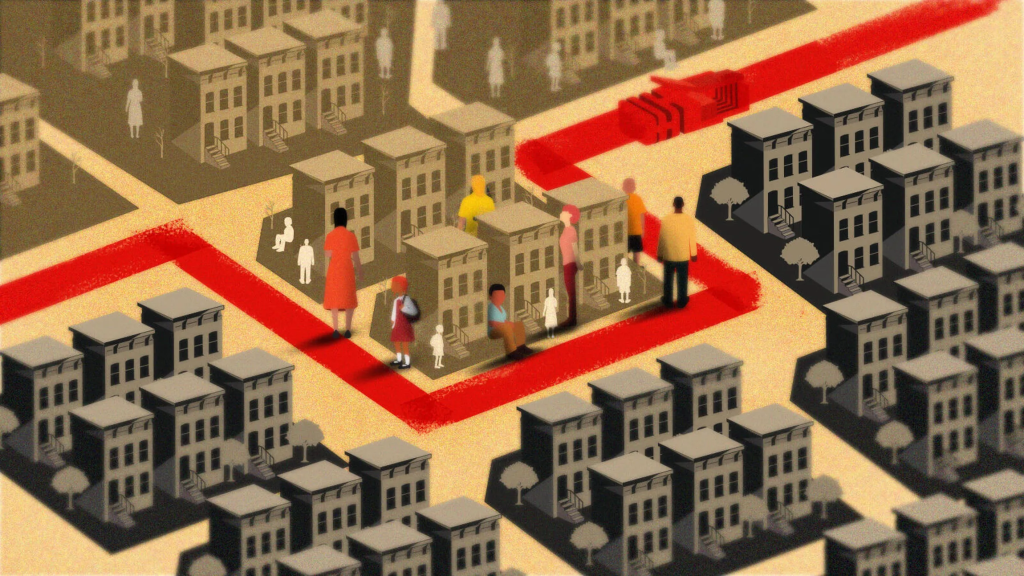
image (51)

Algorithmic Bias and the New Face of Housing Discrimination. By Eric Lawrence Frazier, MBA Every person who writes code brings their whole life to every line. Their education, their experience, their assumptions, their blind spots, and their cultural reality are present in every decision about what to measure, what to optimize, and what to treat as a proxy for creditworthiness, reliability, or risk. To claim that the systems they build are colorblind is not ignorance. It is politics. It is the deliberate shedding of accountability for outcomes that were foreseeable from the moment the training data was assembled. The automated underwriting systems that govern mortgage approval decisions — Fannie Mae’s Desktop Underwriter, Freddie Mac’s Loan Product Advisor — are trained on historical loan performance data. That history is the history of American mortgage lending. The same history that produced redlining, blockbusting, racially restrictive covenants, the GI Bill exclusion, and the systematic steering of Black borrowers into subprime products when they qualified for prime. The system learns from that record. It learns which borrower profiles historically produced defaults. And those profiles were shaped, in large part, not by the financial characteristics of the borrowers but by their exclusion from the products and opportunities that build the credit records the system is designed to reward. The data always reveals what the language conceals. The homeownership gap is 29 percentage points wide. The wealth gap has widened. The Fair Housing Act is on the books. The automated underwriting systems are certified neutral. And the outcomes are as unequal as they were before any of these systems existed. That is not coincidence. That is the system working exactly as designed — with the discrimination embedded in the inputs rather than announced in the outputs. What the Facebook Case Documented In 2016, the National Fair Housing Alliance and investigative journalists at ProPublica began documenting something that the technology industry insisted was impossible: that Facebook’s advertising algorithm was steering housing advertisements away from Black and Hispanic users without any explicit instruction to do so. The mechanism was the algorithm’s machine learning system, which optimized ad delivery based on predicted engagement. It used behavioral data — what users clicked on, how long they spent reading certain content, what they engaged with — to predict which users within a targeted audience were most likely to respond to an ad. That behavioral data was not racially neutral. It was shaped by decades of segregated experience. Black users in communities that had been systematically excluded from homeownership information, from banking relationships, from real estate marketing, exhibited different behavioral patterns around housing content than white users in communities where that information had always flowed freely. The algorithm read those patterns as signals of likely engagement and steered accordingly. Housing ads went to white users. Black and Hispanic users, who may have been equally or more interested in buying a home, did not receive them. No one at Facebook wrote a line of code that said to discriminate by race. The discrimination was not in the instruction. It was in the training data, which carried the history of American segregation inside it, and in the optimization function, which treated the patterns produced by that history as signals to be amplified rather than artifacts to be corrected. HUD filed a charge. The settlement came in 2022. Meta agreed to overhaul its ad delivery system for housing, employment, and credit categories and to submit to regular audits. The settlement did not eliminate the problem. It documented it, created a compliance framework, and left the underlying architecture in place. The researchers who have continued testing these systems have found that algorithmic discrimination in digital housing advertising persists across multiple platforms. The FinTech Evidence The Facebook case was about who receives information about housing. A parallel body of research documents what happens when Black and Hispanic borrowers actually apply for credit. A 2022 study published in the Journal of Financial Economics analyzed 9 million mortgage records and found that FinTech lenders — the algorithmic, online-first platforms positioned as the bias-free alternative to traditional banking — charged Black and Hispanic borrowers approximately 8 basis points more than similarly qualified white borrowers. That differential generated an estimated $765 million in excess interest payments annually. The systems were neutral. The outcomes were not. The National Fair Housing Alliance and its member organizations have been testing these systems systematically — creating matched pairs of testers, documenting differential treatment, filing complaints, and pursuing settlements. The cases they win matter. The deterrent effect of the cases they document matters. But the scale of algorithmic decision-making in 2026 — the millions of lending decisions, advertising impressions, and search results processed every day by systems that carry the history of American discrimination inside them — exceeds what any enforcement organization can match case by case. Your Practical Answer in 2026 The first-generation Black homebuyer navigating this landscape needs to understand the environment clearly. The bias is real. It is embedded in systems that will not announce themselves as biased. It will show up as a denial that comes with no explanation, an interest rate that is slightly higher than a white colleague with an identical profile received, a search result that consistently steers you toward certain neighborhoods and away from others, and an ad for a down payment assistance program that never reaches you because the algorithm decided you were not the target audience. Work with people you know, trust, and like — people who look like you and understand your experience. The loan officer who has navigated these systems themselves, who has helped clients through the resistance, who knows where the walls are and how to get around them. The real estate professional who has worked in the communities you are trying to buy into and understands the informal dynamics of how listings move and how offers are received. Your community is your infrastructure. Build within it first. There are three kinds of people who face resistance. The first sees the wall

Fair Housing Series Part 4: HUD’s Enforcement Budget Has Been Cut.

image (50)

Here Is What That Means for You. By Eric Lawrence Frazier, MBA The question of what HUD’s enforcement budget cuts mean for you is not abstract. It has a specific answer. And that answer begins with what you must do the moment you believe you have been discriminated against in a housing transaction. Document everything immediately. Write down every detail while it is fresh: the date, the time, the location, the name of every person involved, exactly what was said, and exactly what happened. Be as precise as possible. The specificity of your record is the foundation of any complaint that follows. A general sense of having been treated unfairly is not enough. Dates, times, names, and direct quotes are what move a complaint forward. Then file. File at every level simultaneously. File a complaint with HUD’s Office of Fair Housing and Equal Opportunity.[1] File with your state’s civil rights department. File with the local HUD-approved housing counseling agency in your market. If a real estate agent or broker was involved, file a complaint with the local real estate association. The National Association of Realtors has a Code of Ethics with specific prohibitions on discriminatory conduct,[2] and a code of ethics violation is a separate accountability mechanism that operates independently of HUD enforcement. You do this not because you expect a swift resolution from a federal government that has filed zero discrimination charges since January 20, 2025.[3] You do this because the record you create is yours. It documents what happened. It puts the institution on notice that what occurred has been reported. And in the event that private litigation or state enforcement action becomes possible, your documented complaint is the foundation. Zero Charges. One Fifteen Closed. What That Number Means. In the eight months between January 20 and August 31, 2025, HUD’s enforcement division filed zero charges of housing discrimination. One hundred and fifteen pending cases were closed without resolution. Half the agency’s workforce was targeted for elimination. Seventy-eight Fair Housing Initiatives Program grants were canceled. What does that number mean? It means the federal government, which created the Fair Housing Act as a concession to appease the uprisings of 1968 — not as a genuine commitment to housing equity — has now completed what was always its latent preference: the elimination of meaningful enforcement. The law was always a tiger with no teeth. It could roar. It could create the appearance of protection. But the will to enforce it, to actually hold discriminators accountable, was always fragile. And now that fragility has been exposed completely. The racial homeownership gap today is essentially unchanged from where it stood when the Act was signed. Fifty-eight years of a law with limited enforcement. What those 115 closed cases represent is not a bureaucratic backlog. They represent 115 families, 115 individuals, 115 people who came forward and reported what happened to them, who created records and filed complaints and waited. And then watched their cases closed without a single finding of accountability. I have watched this system operate for decades. I have seen clients come to me convinced they were discriminated against. Not one ever filed a formal complaint. And the ones who might have considered it — now they are looking at a system that has made clear it has no interest in their complaint. The deterrent effect of enforcement is not only about the cases it wins. It is about the cases that never happen because the person who might have discriminated understood there were consequences. Remove the consequences and you remove the deterrent. What Happens to the Market When Consequences Disappear When enforcement disappears, buyers of color disappear from the landscape of purchasers — particularly in high-cost markets and in communities that were already homogeneous. The walls will be fully reestablished. If not cultural walls, then economic walls. The scarcity of land, the density of population growth, the absence of political will to build affordable supply at the scale needed — these forces, unchecked by any enforcement mechanism, produce the same result as explicit exclusion. They just do it without anyone saying anything that could be documented. In California and in high-cost metropolitan markets nationally, the median home price already exceeds what median-income households in communities of color can sustain. The housing supply deficit stands at 4.03 million units nationally. In that environment, without a functioning fair housing enforcement system, the market will sort itself. It will sort by price. It will sort by geography. It will sort by the informal networks of information and relationship through which housing inventory moves. And it will sort in exactly the way it sorted before 1968. This is the American experiment in crisis. The founding promise — that this is a country where you are not judged by race, color, national origin, or religion, where the melting pot principle applies to everyone — becomes meaningless when the legal infrastructure that gives it practical force is dismantled. The experiment was always fragile. It has always required active maintenance. Justice does not sustain itself. It has to be built and rebuilt. The Answer That Has Always Lived Within All of this is real. The enforcement is gone. The deterrent is gone. The federal government has demonstrated that it has no interest in the complaints of people who were discriminated against in housing. That is the truth. And it is not the complete truth. Call on Harriet Tubman. Call on Frederick Douglass. Call on every ancestor who purchased land, built homes, established communities, and created generational wealth without a Fair Housing Act, without a HUD complaint process, without a code of ethics from the National Association of Realtors. They had none of it. They had determination, community, and the refusal to accept that their circumstances were the final word on what they could build. The solution has never fully resided in the compliance of those who would discriminate. It has always resided in the community that chose to build regardless. Seek out the African

Fair Housing Series Part 3: Disparate Impact Is Not a Theory. It Is a Law.

image (44)

And It Is Under Active Attack. By Eric Lawrence Frazier, MBA Disparate impact is not a progressive legal theory. It is not an advocacy position. It is a doctrine of federal civil rights law, affirmed by the United States Supreme Court, that says a housing policy does not have to be explicitly discriminatory to be illegal. If the policy produces racially unequal outcomes and cannot be justified by legitimate business necessity, it is actionable under the Fair Housing Act. Intent is irrelevant. Results are the evidence. This is the legal doctrine the current administration has moved to eliminate. And understanding what disparate impact actually is — what it reaches, what it has accomplished, and what disappears without it — is essential to understanding what is being lost. What Disparate Impact Reaches That Intent Standards Cannot The most common forms of housing and lending discrimination in 2026 do not announce themselves. There is no manager who says out loud that the bank does not want Black borrowers. There is no written policy that says the company will not hire people from the neighborhood it serves. What there is, in institution after institution, is a set of neutral-appearing policies that produce profoundly unequal results. Consider the lending institution that does not hire people who look like the communities it serves. There is no outreach to those communities, no presence at community events, no relationships with local organizations, no marketing in the languages spoken by a significant portion of the local population. The institution will say, when questioned, that no Black applicants applied for employment or for loans. That is precisely the problem. The failure to reach out, the failure to build the relationships that generate applications, is itself the discriminatory act. The absence of applications is the outcome of the discriminatory practice — not evidence that discrimination does not exist. This is what disparate impact doctrine was built to reach. You cannot use the absence of applications as a defense when the absence of applications is the product of your own failure to serve the community. The Federal Community Reinvestment Act exists precisely because Congress recognized that federally chartered institutions have an obligation to serve the communities in which they operate. Failing to have FHA programs, failing to market low down payment products, failing to build any presence in communities of color — each of these failures has a measurable impact on the number of borrowers from those communities who are able to access credit. The impact is the evidence. Walk into the homogeneous workplace. Count the faces. You will almost certainly find no written policy stating that certain people are not hired. What you will find is no outreach, no connection, no presence in the community that those people inhabit. They do not apply because nothing in the institution’s conduct signals that they are welcome. The institution will say they hire whoever applies. But the question disparate impact asks is not whether the institution discriminates in its processing of applications. It asks whether the institution’s overall conduct — its policies, its practices, its choices about where it operates and whom it markets to — is producing results that fall unequally across racial lines. What the Doctrine Has Actually Accomplished The largest fair housing settlements in American history were produced by disparate impact claims. In December 2011, Countrywide Financial Corporation agreed to pay $335 million to resolve allegations that it had discriminated against qualified African American and Hispanic borrowers by charging them higher fees and interest rates than similarly qualified white borrowers between 2004 and 2008. In July 2012, Wells Fargo agreed to pay $175 million to resolve allegations that its independent mortgage brokers charged Black and Hispanic borrowers higher fees and rates than similarly qualified white borrowers and placed borrowers in subprime loans when they qualified for prime loans. These cases were not built on evidence that a specific loan officer said something discriminatory in a specific conversation. They were built on data. On the systematic analysis of loan files that showed, across hundreds of thousands of transactions, that Black and Hispanic borrowers with the same credit profiles as white borrowers were paying more, receiving worse products, and being steered into loans designed to fail. The data was the evidence. The pattern was the proof. That is disparate impact. The $510 million recovered in just those two settlements went to people who had been overcharged, steered into worse products than they qualified for, and stripped of wealth through the predatory terms of loans they should never have received. Without disparate impact doctrine, neither of those cases would have been brought. What the Administration Has Done and What It Cannot Do Executive Order 14281, signed April 23, 2025, states that it is the policy of the United States to eliminate disparate impact liability “in all contexts to the maximum degree possible.” The order directed all federal agencies to evaluate every pending proceeding relying on disparate impact theories within 45 days and to take appropriate action — meaning dismiss them. HUD Secretary Scott Turner announced a plan to end the agency’s use of disparate impact theory in fair housing and civil rights enforcement entirely — to send these protections, in his words, to “the ash heap of history.” HUD formally proposed eliminating its disparate impact regulation in January 2026. In September 2025, HUD issued guidance to state fair housing agencies threatening to decertify them and cut off federal funding unless they stopped pursuing disparate impact claims — including claims under state law. The administration is not merely deprioritizing federal enforcement. It is attempting to prevent state agencies from enforcing their own laws. Here is what the administration cannot do. It cannot repeal a Supreme Court decision by executive order. The Supreme Court held in 2015, in Texas Department of Housing and Community Affairs v. Inclusive Communities Project, that disparate impact claims are cognizable under the Fair Housing Act. That is a matter of statutory interpretation by the nation’s highest court. No executive

Fair Housing Series Part 2: Fair Housing Act Was a Compromise
image (43)

Here Is What It Left Out — and Why That Still Matters in 2026. By Eric Lawrence Frazier, MBA The word “fair” in Fair Housing has always meant something specific to me. Fair is not a legal term. It is the Golden Rule compressed into one syllable — treat others the way you want to be treated. For Black Americans, that has been the fundamental request since 1619. Not special treatment. No advantage. Just the same standard applied to everyone. And the reason it took a federal law to deliver even a portion of that is the same reason it has always taken federal law: you cannot simply ask people to do what they are not inclined to do and expect it to happen. America has always been, for Black people, a home away from home. We are five generations in, and in many ways, still fighting for the full acceptance this society owes us. The irony is that we are no less immigrants than everyone who came here by choice, with the exception of the Native Americans who were here first. There is no legitimate question about our humanity. And yet we were treated as less than human. It took federal law to free us. It took federal troops to enforce desegregation. The Fair Housing Act of 1968 was one measure in that long sequence. And like every measure before it, it arrived compromised. Understanding what the Act left out is not an exercise in cynicism. It is a prerequisite for understanding why, fifty-eight years after passage, the racial homeownership gap is wider than it was in 1968, and why the families the law was designed to protect are still navigating a housing market built on the foundation of their exclusion. The Compromise That Became the Law The original Mondale-Brooke bill gave HUD direct authority to issue cease-and-desist orders, conduct hearings, and impose sanctions. That enforcement mechanism was removed in negotiation with Senator Everett Dirksen of Illinois, whose votes were needed to break a Southern filibuster. What replaced it was a conciliation process. If that failed, the complainant pursued private civil action at their own expense. Most discrimination went unchallenged because most victims could not afford to challenge it. The law covered sale and rental housing. It did not cover mortgage lending. A Black family could, in theory, not be refused the right to make an offer — and then be legally denied the mortgage to finance it, because no federal prohibition on mortgage lending discrimination existed until the Equal Credit Opportunity Act of 1974, six years later. The Community Reinvestment Act did not come until 1977. The law that was supposed to open the housing market contained no mechanism to address the financial system that controlled access to it. The Wealth That Was Never Built The National Housing Act of 1934 created the FHA and the modern American mortgage system. FHA underwriting manuals explicitly refused to insure mortgages in racially mixed or Black neighborhoods. The GI Bill of 1944 extended these mechanisms to veterans. Less than two percent of GI Bill home loans went to Black veterans. Thirty-four years of government-subsidized white homeownership and government-enabled Black exclusion — that is the structural foundation of the racial wealth gap today. My parents got a high-interest loan from a finance company because that was the only credit available to them. They were not financially sophisticated. They were just grateful that someone extended them credit at all. We were all excited that the family was going to own property, not fully understanding what the total cost would be over time. My mother eventually sold the property and used the equity to move forward. She got in, held on, and came out with something. But that does not make the terms right. And it does not retroactively justify the system that made those the only terms available. The solution, when I think about it clearly, is not complicated. The federal government should provide for Black Americans today what it provided for white Americans from the early 1940s through the late 1970s. Reenact the National Housing Act for Black people. The mechanism already exists. The precedent already exists. Low-interest loans, accessible financing, and genuine capital support. That is not charity. That is the same program that built the white middle class. The only thing missing is the will to apply it equally. The 1988 Amendments: Twenty Years Too Late The Fair Housing Amendments Act of 1988 finally gave the law the enforcement mechanism it should have had from the beginning. An administrative law judge system, HUD-initiated complaints, no litigation cost requirement for complainants, expanded protected classes, and substantially increased damages. These changes made the law functional. They came twenty years after the original Act — twenty years in which families who experienced discrimination had almost no practical remedy. The racial homeownership gap stands at approximately 30 percentage points as of Q4 2024 — wider than at the Act’s passage. The current administration has spent eight months substantially dismantling what was built in 1988. What the Law Covers and What It Does Not The Fair Housing Act prohibits discrimination in the sale, rental, and financing of housing based on race, color, national origin, religion, sex, disability, and familial status. The law is clear. The challenge has never been the law itself. The challenge is the people behind it — the people enforcing it, and the people violating it. Biases are formed before you open your mouth. Laws are words on paper. It takes people to give them force. When enforcement budgets are cut to near zero, the words on paper do not change. The protection they were designed to provide disappears. The first thing you do is accept the uncomfortable truth. The protection you are looking for is not coming reliably from the outside. This is an inside-out game. Be so overwhelmingly qualified that denial on legitimate grounds is impossible. Credit in order. Debt eliminated. Income documented. Reserves in place. Twelve months of

Fair Housing Series Part 1: The Architecture of Abandonment

image (42)

How the Federal Government Is Dismantling Fair Housing in America By Eric Lawrence Frazier, MBA When I was young and looking for a place to live — as a renter first, then as a buyer — I did not know the Fair Housing Act existed. I did not know what housing discrimination looked like under the law. And that ignorance created a perfect environment for people to behave however they chose without fear of any consequence, because the people they were treating unfairly had no idea they had any rights at all. That was me. Looking back now, I can see what I could not see then — the range of treatment I experienced, from apathy and disengagement to people telling me directly that nothing was available when I knew that was not true. Later, as a buyer’s representative, I saw offers not accepted in ways that were difficult to explain. But here is the hard truth about discrimination in housing: it is almost impossible to prove. The seller speaks through the agent. The agent says the seller chose another offer. You cannot see what was actually considered or why. What I know from everything that followed is this: I refused to let any of it stop me. Every rejection, every closed door, every experience that did not add up — I took that as fuel. I got smarter. I got more prepared. I learned the law, the market, and the process until no one could deny me on legitimate grounds. Our ancestors found a way to own real estate in the middle of slavery and open discrimination. We can find our way in 2026. But first you have to know exactly what you are up against. That is what this series is about. On January 20, 2025, the federal government began dismantling the infrastructure of fair housing enforcement it had spent fifty-seven years building. What followed was not a single dramatic act but a methodical sequence of administrative decisions, each one targeted at a specific mechanism of protection, each one producing a specific gap in the legal framework designed to ensure that Americans can seek housing without being discriminated against based on race, color, national origin, religion, sex, disability, or familial status. This essay documents that sequence — what has happened, what each action means in practice, and what the cumulative effect is for families who believed the law was on their side. The Sequence: January Through September 2025 The rollback began on the first day. On January 20, 2025, the Equal Access Rule was halted by executive action. Executive orders directed federal agencies to eliminate diversity, equity, and inclusion programs and personnel. Within HUD, this translated immediately into the reassignment and removal of staff in the Office of Fair Housing and Equal Opportunity. By early February, approximately 4,000 HUD positions — roughly half the agency’s total workforce — were targeted for elimination. Among those cut were significant portions of the staff responsible for processing complaints, conducting investigations, and managing enforcement actions. In March 2025, HUD canceled 78 Fair Housing Initiatives Program grants — the funding that supports nonprofit organizations conducting testing, legal representation for victims, and fair housing education. A federal court issued a temporary restraining order blocking the cancellations, leaving affected organizations in legal and financial limbo. These are the organizations a discrimination victim actually calls. When they are gone, there is nowhere to call. In February 2025, the Affirmatively Furthering Fair Housing rule was eliminated. Without AFFH, municipalities can now receive federal housing dollars while doing nothing to examine or address residential segregation. On April 23, 2025, Executive Order 14281 directed federal agencies to deprioritize enforcement of disparate impact liability — the doctrine that produced the largest fair housing settlements in American history. By August 31, 2025: zero discrimination charges filed. One hundred and fifteen pending cases closed without resolution. The enforcement infrastructure built over decades had been reduced, within eight months, to a mechanism that processes complaints without acting on them. What the Law Was and What It Has Been Reduced To The word “fair” in Fair Housing has always meant something specific to me. Fair is not a legal term. It is the Golden Rule compressed into one syllable — treat others the way you want to be treated. For Black Americans, that has been the fundamental request since 1619. Not special treatment. No advantage. Just the same standard applied to everyone. And the reason it took a federal law to deliver even a portion of that is the same reason it has always taken federal law: you cannot simply ask people to do what they are not inclined to do and expect it to happen. Nothing of any consequence for our community in this country has ever happened without being compelled by federal legislation. It took federal law to free us. It took federal troops to enforce desegregation. The Fair Housing Act of 1968 was signed by President Johnson one week after the assassination of Dr. Martin Luther King Jr. It passed because the political calculus changed overnight in the presence of national grief. Even then, it arrived compromised. The enforcement mechanism that advocates had fought for was stripped out in the Senate negotiations. What remained was a conciliation process with limited teeth. The 1988 Amendments finally added real enforcement capacity. The current administration has spent eight months substantially dismantling what was built in 1988. The racial homeownership gap stands at approximately 30 percentage points as of the fourth quarter of 2024. That gap is wider today than it was when the Fair Housing Act was signed. The law, even when enforced, was not sufficient to close it. Removing enforcement leaves the structural gap without even the limited legal remedy that previously existed. The Practical Meaning for Families in 2026 I have had clients over the years tell me they believed they were being discriminated against. Not a single one ever filed a complaint. Not one. They could not prove it. And