
Orange County Luxury Housing Market: High-End Rebalancing and Pricing Dispersion Across Micro-Market Tiers

Orange County’s luxury housing segment is currently operating in a very different rhythm compared to the broader Southern California market. While overall housing conditions continue to reflect elevated mortgage rates and slower buyer activity, the high-end segment is behaving with its own internal structure, shaped less by broad affordability constraints and more by wealth concentration, cash activity, and property-specific value differentiation. As of late summer 2026, the luxury tier is no longer moving as a single unified market. Instead, it is splitting into clearly defined micro-segments where pricing behavior, time on market, and negotiation outcomes vary significantly depending on price band and property characteristics. This shift has created a more complex environment where headline prices alone do not accurately describe market strength or weakness. Instead, pricing dispersion between entry luxury homes, mid-tier estates, and ultra-luxury properties is widening, while transaction speed varies sharply across each segment. At the same time, buyer behavior is becoming more selective, with increased emphasis on turnkey condition, location quality, and long-term lifestyle value rather than urgency-driven acquisition. Understanding these structural changes is essential to interpreting how Orange County’s luxury market is evolving beyond simple appreciation or correction narratives. Segmented Luxury Market Structure and Tiered Behavior The Orange County luxury market is no longer functioning as a single price-driven segment. Instead, it is divided into three distinct tiers that behave independently. Homes priced between approximately $2 million and $4 million represent the most active layer of luxury activity, with market times averaging around 120–150 days depending on condition and submarket. This tier continues to attract move-up buyers and equity-rich households, but sensitivity to pricing accuracy has increased significantly. The mid-upper tier, generally between $4 million and $6 million, has become the most inventory-pressured segment. Properties in this range often remain on the market between 200 and 240 days, reflecting a narrower buyer pool and increased selectivity. Sellers in this bracket face the strongest need for precise pricing alignment, as overpricing leads to extended market exposure. At the ultra-luxury level above $6 million, conditions improve slightly due to a smaller but more committed buyer pool. Well-positioned properties in this category often move faster than mid-tier luxury homes, particularly when turnkey condition and location align. This segmentation highlights that Orange County luxury is driven more by micro-market dynamics than broad regional trends. Pricing Dispersion and Value Gap Expansion One of the most important developments in late 2026 is the widening gap between listing expectations and actual closing prices across luxury tiers. This dispersion is not uniform; it is most visible in properties that lack modern upgrades, optimal positioning, or turnkey readiness. Recent market tracking indicates that sale-to-list price spreads have narrowed in some high-end submarkets for well-prepared homes, while expanding significantly for properties requiring updates or carrying outdated design profiles. This divergence creates a pricing structure where two similarly located homes can experience completely different market outcomes depending on presentation quality and buyer perception of value. In practical terms, this means the market is no longer rewarding proximity or square footage alone. Instead, condition, design relevance, and perceived scarcity are increasingly driving final pricing outcomes. Cash buyers continue to play a central role in stabilizing higher-end segments, with nearly half of transactions above $5 million occurring without financing. However, even cash buyers are applying stricter valuation discipline, reducing speculative overbidding behavior that was more common in earlier market cycles. Transaction Behavior and Micro-Liquidity Differences Transaction speed across Orange County’s luxury market now varies significantly by tier, creating what can be described as micro-liquidity differences. Entry luxury homes continue to attract consistent activity, but they require accurate pricing from the outset to avoid extended market time. In contrast, mid-tier luxury properties are experiencing the slowest absorption rates due to overlapping inventory and cautious buyer selection. Ultra-luxury properties behave differently, often influenced by unique buyer motivations such as relocation, portfolio diversification, or lifestyle consolidation. While these transactions are fewer in number, they tend to be less sensitive to interest rate movements and more responsive to property uniqueness. This creates a paradox where higher-priced homes can sometimes move more efficiently than mid-tier luxury properties when correctly positioned. The result is a market where liquidity is not evenly distributed, and success depends heavily on aligning pricing strategy with the specific behavioral patterns of each segment rather than applying broad market assumptions. Macro Influence and Wealth-Driven Demand Stability Despite broader economic pressure from elevated interest rates, Orange County’s luxury segment remains supported by wealth-driven demand. A significant portion of high-end buyers are equity-rich individuals or cash purchasers who are less sensitive to financing conditions. This includes relocation buyers from high-growth tech markets and long-term California homeowners leveraging accumulated equity. However, even within this resilient buyer base, behavioral caution is increasing. Buyers are taking longer to evaluate properties, conducting deeper due diligence, and placing stronger emphasis on long-term value retention. This is contributing to slower transaction cycles even when demand remains structurally intact. At the same time, headline events such as record-setting off-market sales above $100 million continue to highlight the presence of extreme top-end demand, but these transactions are highly isolated and do not reflect broader market conditions. Instead, they reinforce the widening gap between ultra-wealthy buyer behavior and mid-luxury market dynamics. Orange County’s luxury housing market is currently defined by segmentation, dispersion, and behavioral divergence rather than uniform movement. The clear separation between entry luxury, mid-tier estates, and ultra-luxury properties has created distinct market rhythms that respond differently to pricing, condition, and buyer psychology. While wealth-driven demand continues to support the high end of the market, transaction speed and pricing outcomes are increasingly dependent on micro-level positioning rather than overall market direction. This environment rewards precision. Properties that are correctly priced and properly presented continue to transact efficiently, while misaligned listings experience extended market time and wider pricing adjustments. The key takeaway is that Orange County luxury real estate is no longer a single market story, but a layered structure where performance depends on understanding segment-specific behavior. Thank you for taking
Orange County Real Estate Market 2026: High-Value Stability, Tight Inventory, and a Selective Buyer Environment
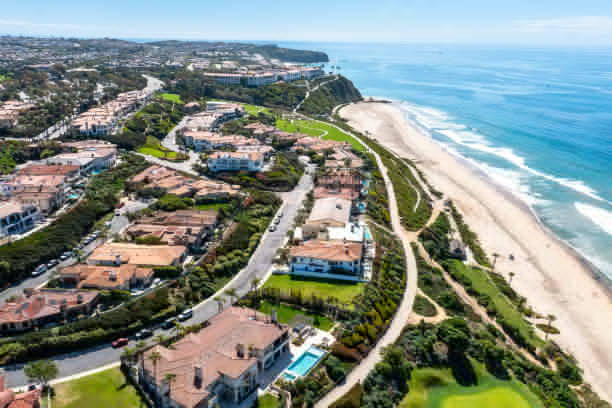
Orange County continues to stand as one of California’s most stable and high-value real estate markets, characterized by strong household incomes, consistent demand, and a long-standing reputation for residential desirability. Unlike more volatile regions, this county often moves at a measured pace, where pricing shifts are gradual and buyer behavior tends to be more financially conservative. In 2026, the housing landscape reflects a market that is neither sharply accelerating nor declining, but instead adjusting within a narrow band of equilibrium shaped by affordability constraints and limited supply. What makes Orange County particularly distinct is the balance between its coastal luxury markets and its highly structured suburban communities. This balance creates a layered housing ecosystem where price sensitivity varies significantly across neighborhoods. As mortgage rates remain elevated compared to historical lows, buyers are increasingly selective, while sellers are holding firm on pricing expectations due to long-term equity positions. This article breaks down the current Orange County real estate environment, focusing on pricing behavior, inventory conditions, buyer demand, and the evolving structure of transactions shaping the 2026 market cycle. Market Pricing Behavior: Stability Within a High-Cost Corridor Orange County’s housing market continues to operate within one of the highest price brackets in California, with median home values consistently exceeding $1.0 million in many submarkets. While price appreciation has slowed compared to previous cycles, the region has not experienced meaningful depreciation. Instead, the market is defined by price flattening and narrow movement ranges, where most annual changes remain within low single-digit percentages. Recent county-level data shows that median sold prices have remained relatively steady, reflecting a market that is absorbing higher borrowing costs without significant downward corrections. The persistence of elevated pricing is largely supported by long-term homeowners with substantial equity positions, reducing the urgency to sell under less favorable conditions. However, pricing behavior is not uniform. Coastal areas such as Newport Beach and Laguna Beach continue to demonstrate strong resistance to price softening, while inland submarkets show more negotiation flexibility. This creates a segmented pricing environment where micro-location matters more than broad countywide trends. Inventory Conditions: Limited Supply Continues to Shape Competition One of the defining characteristics of the Orange County housing market is its structurally constrained inventory. The number of active listings remains below historical norms, with supply levels typically ranging between two to three months of inventory, depending on seasonal cycles. This limited availability continues to support price stability, even in the presence of softer demand conditions. Many homeowners are reluctant to list properties due to the “lock-in effect,” where existing low mortgage rates discourage movement. As a result, turnover remains low, reinforcing scarcity in both entry-level and mid-tier housing segments. Properties that do enter the market tend to attract immediate attention if they are correctly priced. Homes in well-established school districts and commuter-friendly corridors often move faster than the county average, while overpriced listings remain on the market significantly longer. This dynamic highlights a market where pricing precision is becoming more important than ever. Buyer Behavior: Selectivity Over Aggression Buyer behavior in Orange County has shifted noticeably toward selective purchasing rather than competitive bidding wars. While demand remains structurally strong, the urgency seen in prior years has diminished due to affordability pressures and higher borrowing costs. Many buyers are now prioritizing value alignment over speed, spending more time evaluating comparable properties and negotiating price adjustments. This has led to a rise in conditional offers and longer decision timelines, particularly in mid-range housing segments. However, well-positioned properties in desirable neighborhoods continue to attract multiple offers. This indicates that demand has not weakened uniformly, but rather become more concentrated around specific price points and property characteristics. The result is a market where competition exists, but only within tightly defined segments. Market Segmentation: Diverging Performance Across Price Tiers Orange County’s real estate market is increasingly defined by tier-based performance differences. High-end luxury properties maintain relative stability due to wealth concentration and low sensitivity to interest rate fluctuations. Meanwhile, starter and mid-tier homes face more pricing pressure as affordability becomes a limiting factor for many households. Luxury segments continue to see steady transaction volume, supported by equity-rich buyers and cash transactions. Mid-tier properties experience moderate appreciation or flat pricing, depending on location and condition. Entry-level housing, however, is more sensitive to economic shifts, with longer days on market and increased negotiation activity. This segmentation reflects a broader structural shift in California housing markets, where affordability constraints are reshaping demand distribution across price bands rather than causing uniform market movement. Rental Market Influence and Housing Pressure The rental market in Orange County plays a significant role in shaping homeownership demand. Median rents remain among the highest in the state, frequently exceeding $2,800 to $3,500 per month depending on submarket and unit type. This sustained rental pressure continues to push long-term renters toward homeownership when financially feasible. However, elevated home prices and higher mortgage costs have slowed this transition. As a result, rental demand remains strong, particularly among younger households and relocating professionals. The interaction between high rental costs and constrained ownership affordability creates a dual-pressure environment, where both rental and purchase markets remain competitive, albeit for different reasons. Orange County’s real estate market in 2026 reflects a landscape defined by stability, segmentation, and constrained supply. While price growth has slowed, the market has not entered a downturn. Instead, it is operating within a narrow band of equilibrium shaped by affordability limits and strong long-term equity positions. For buyers, success in this market depends on timing, financial readiness, and precise property targeting. For sellers, accurate pricing and market positioning are essential, as overpricing can quickly reduce visibility in a selective buyer environment. Investors and market observers should focus less on broad countywide trends and more on neighborhood-level performance differences. Thank you for taking the time to read and reflect. I write to help people think clearly about money, business, real estate, and life — not from theory, but from decades of lived experience. If you are navigating a financial decision, building a business, considering
The Stability Trap: Why Flat Home Prices in Orange County Signal Constraint, Not Balance
In Orange County, housing market headlines in 2026 suggest a sense of calm. Median home prices have shown minimal movement over the past 12 months, hovering near $1.25 million with year-over-year changes fluctuating between -1% and +2%. On the surface, this appears to indicate a balanced market—one where supply and demand have reached equilibrium after years of volatility. However, a closer examination reveals a different reality. Stability in pricing is not being driven by healthy market conditions, but by a combination of restricted inventory, suppressed transaction volume, and behavioral shifts among homeowners. The market is not actively functioning at full capacity; instead, it is constrained, with both buyers and sellers limited in their ability to participate. This distinction is critical. A balanced market reflects active engagement from both sides, while a constrained market reflects inactivity masked as stability. In Orange County, the evidence increasingly points to the latter, where flat prices are less a sign of equilibrium and more a reflection of underlying structural pressure. Low Inventory, But Not for the Right Reasons Housing inventory in Orange County remains historically low, but the reasons behind this shortage are not tied to strong demand alone. As of early 2026, active listings are down approximately 22% compared to pre-pandemic levels and about 11% lower than the same period in 2024. At the same time, new listings entering the market have declined by nearly 15% year-over-year. Under normal market conditions, low inventory would signal strong competition among buyers, often leading to upward pressure on prices. However, in the current environment, demand itself has weakened. Closed sales volume in Orange County dropped by approximately 18% in 2025 compared to 2023 levels, indicating fewer completed transactions despite limited supply. This combination—low inventory alongside declining sales—points to a market where activity is constrained on both sides. Buyers are limited by affordability challenges, while sellers are choosing not to list. The result is a reduced number of transactions, which in turn stabilizes prices artificially. Without sufficient turnover, price discovery becomes limited, and median values remain relatively unchanged. The Lock-In Effect and Seller Inactivity One of the most significant forces shaping the Orange County housing market is the “lock-in effect.” Between 2020 and 2022, millions of homeowners secured mortgage rates between 2.5% and 3.5%. In contrast, mortgage rates in 2026 remain between 6.5% and 7%, more than double those earlier levels. For a typical Orange County homeowner with a $900,000 mortgage at 3%, the monthly principal and interest payment is approximately $3,800. If that same homeowner were to sell and purchase a similarly priced home at today’s rates, their payment would increase to roughly $6,300—an increase of $2,500 per month, or $30,000 annually. This financial disincentive has led to a sharp decline in seller participation. Nearly 72% of mortgage holders in California currently have rates below 4%, making them highly unlikely to move unless necessary. As a result, many potential sellers are effectively locked into their existing homes, reducing the number of listings available in the market. This behavior has a direct impact on pricing. With fewer homes available for sale, there is less downward pressure on prices, even as buyer demand weakens. Stability, in this context, is not a reflection of strong market fundamentals but of limited mobility. Weak Transaction Volume and Suppressed Demand While inventory constraints limit supply, affordability challenges continue to suppress demand. At a median home price of $1.25 million, a buyer putting down 20% would need to finance approximately $1 million. At a 6.75% mortgage rate, this results in a monthly payment of around $6,500 for principal and interest alone. Adding property taxes—approximately 1.1%, or $13,750 annually—and insurance costs of about $300 per month brings the total monthly housing cost to nearly $7,950. Using a 30% debt-to-income ratio, a buyer would need to earn approximately $318,000 annually to qualify for this purchase. This requirement far exceeds the county’s median household income of roughly $110,000. Even households earning $200,000 annually fall short of standard qualification thresholds, particularly when accounting for other debts. The result is a shrinking pool of eligible buyers. While demand still exists in theory, it is not translating into transactions. This disconnect between interest and ability further reduces market activity, reinforcing the appearance of stability. Stability as a Symptom of Constraint In a fully functioning market, prices adjust in response to changes in supply and demand. If demand weakens significantly, prices typically decline to restore balance. However, in Orange County, this adjustment mechanism is being disrupted by structural constraints. Low inventory prevents prices from falling, while weak demand prevents them from rising. The market becomes effectively frozen, with limited movement in either direction. Median price stability, therefore, reflects a lack of transactional depth rather than a healthy equilibrium. This dynamic can persist for extended periods, but it carries risks. If external factors—such as rising unemployment, economic slowdown, or increased inventory from distressed sales—introduce new supply into the market, prices could adjust more rapidly than expected. Without a strong base of active buyers, the market may have limited capacity to absorb such changes smoothly. Orange County’s housing market in 2026 presents a clear example of how stability can be misleading. Flat home prices suggest balance, but the underlying conditions tell a different story. Inventory remains low not because of strong demand, but because sellers are holding onto low-rate mortgages. At the same time, transaction volume has declined as buyers struggle to meet increasingly high qualification thresholds. This combination has created a constrained market where activity is limited, and price movement is muted. Stability, in this case, is not a sign of health—it is a symptom of restriction. For industry professionals and policymakers, the key takeaway is that true market balance requires active participation from both buyers and sellers. Until affordability improves and mobility increases, Orange County’s housing market will remain stable in appearance, but structurally imbalanced beneath the surface. Eric Lawrence Frazier Advisory Services Research Team Thank you for taking the time to read and reflect. I write to help people
High-Income Markets Under Pressure—Are Orange County Buyers Overleveraged in 2026?

Orange County has long been viewed as one of California’s most stable and desirable housing markets. With its coastal cities, strong school districts, and high household incomes, it has consistently attracted professionals, business owners, and long-term investors. However, beneath the surface of this premium market, financial pressure is beginning to build in ways that are less visible but increasingly significant. Over the past few years, home prices in Orange County have continued to climb, even as interest rates have remained elevated. Median home prices now regularly exceed $1.1 million, while monthly mortgage payments for new buyers often range between $5,500 and $7,500 depending on down payment size and loan structure. At the same time, wage growth has not kept pace with housing costs, creating a widening gap between income and affordability. This imbalance raises an important question: are buyers in Orange County becoming overleveraged in 2026? Understanding how financing conditions, debt ratios, and market behavior are evolving provides critical insight into the sustainability of one of California’s most competitive housing markets. This article examines current affordability pressures, financing trends, and the financial risks shaping buyer behavior across the county. Rising Home Prices and Affordability Strain Orange County remains one of the most expensive housing markets in the United States. As of 2025–2026, the median home price sits between $1.05 million and $1.2 million, depending on the data source and submarket. Coastal cities such as Newport Beach, Laguna Beach, and Huntington Beach regularly exceed $1.5 million for single-family homes, with luxury properties far surpassing that range. Even inland cities like Irvine, Tustin, and Anaheim have seen significant appreciation over the past decade. Irvine, for example, now frequently records median prices above $1.3 million for detached homes. This sustained price growth has outpaced household income increases, which have grown at a much slower rate of approximately 3% to 4% annually. As a result, affordability has become increasingly constrained. A household earning $200,000 annually—which is considered high income in most parts of the country—now often qualifies for only a mid-tier home in Orange County, depending on debt levels and down payment capacity. Financing Pressures and Debt-to-Income Ratios One of the most important indicators of buyer stress in Orange County is the debt-to-income (DTI) ratio. Lenders typically prefer a DTI below 43%, but many buyers in the region are stretching close to or above this threshold due to high monthly housing costs. With interest rates hovering between 6% and 7% for much of 2025, monthly mortgage payments have increased significantly compared to the ultra-low rate environment of 2020–2021. A home purchased at $1.1 million with 20% down can result in monthly payments exceeding $6,000, excluding taxes, insurance, and HOA fees. In higher-end communities, total monthly housing costs can exceed $8,000. This has led to a noticeable shift in buyer behavior. Many households are increasing down payments using savings or equity from previous homes. Others are relying on dual-income structures or financial assistance from family members to qualify for loans. While this allows transactions to continue, it also increases household financial exposure. Market Behavior: Stretching for Entry Despite affordability challenges, demand in Orange County remains strong. Inventory levels remain relatively low, with months of supply often ranging between 2.5 and 3.5 months—well below a balanced market. This limited inventory continues to support high prices, even in the face of affordability concerns. However, the composition of buyers has changed. There is a growing share of “rate-sensitive” buyers who are purchasing at the upper limit of their financial capacity. Many are prioritizing location over financial flexibility, choosing to enter the market now rather than waiting for potential price adjustments. This behavior has created a market where homes are still selling, but buyers are increasingly leveraged. While default rates remain low, the financial cushion for many households has narrowed compared to previous years. The Role of Wealth Concentration Orange County’s housing market is also influenced by significant wealth concentration. High-income industries such as technology, healthcare, finance, and professional services support a strong base of cash-heavy buyers. In many luxury transactions, buyers are either making large down payments or purchasing outright without financing. This segment of the market helps stabilize prices, particularly in coastal and luxury neighborhoods. However, it also creates a two-tier market: one driven by liquidity and wealth, and another heavily dependent on financing conditions. As interest rates remain elevated, the gap between these two segments has widened. Cash buyers continue to transact with little sensitivity to rates, while financed buyers face increasing constraints. Risks of Overleveraging in the Current Cycle The concern around overleveraging does not necessarily point to an immediate market correction, but rather to increased vulnerability. When households allocate a larger portion of income toward housing costs, they become more sensitive to economic shifts such as job loss, interest rate fluctuations, or unexpected expenses. In Orange County, where many buyers are committing a significant share of income to mortgage payments, financial flexibility is more limited than in previous cycles. While foreclosure rates remain historically low, rising household debt levels suggest that some buyers are operating with reduced financial buffers. Additionally, property taxes, insurance premiums, and maintenance costs continue to rise, further increasing total housing expenses. These factors compound the strain on leveraged households. Orange County remains one of California’s most desirable and resilient real estate markets, supported by strong incomes, limited supply, and long-term demand. However, beneath this stability, financial pressure is building among a growing segment of buyers. Elevated home prices, higher interest rates, and stagnant affordability have led many households to stretch their financial capacity in order to enter the market. While this does not signal immediate instability, it does highlight a shift in buyer behavior. The market is increasingly defined by financial commitment at the upper limits of affordability rather than broad-based accessibility. Understanding this dynamic is essential for evaluating both short-term risks and long-term sustainability in Orange County’s housing landscape. Thank you for taking the time to read and reflect. I write to help people think clearly about money,