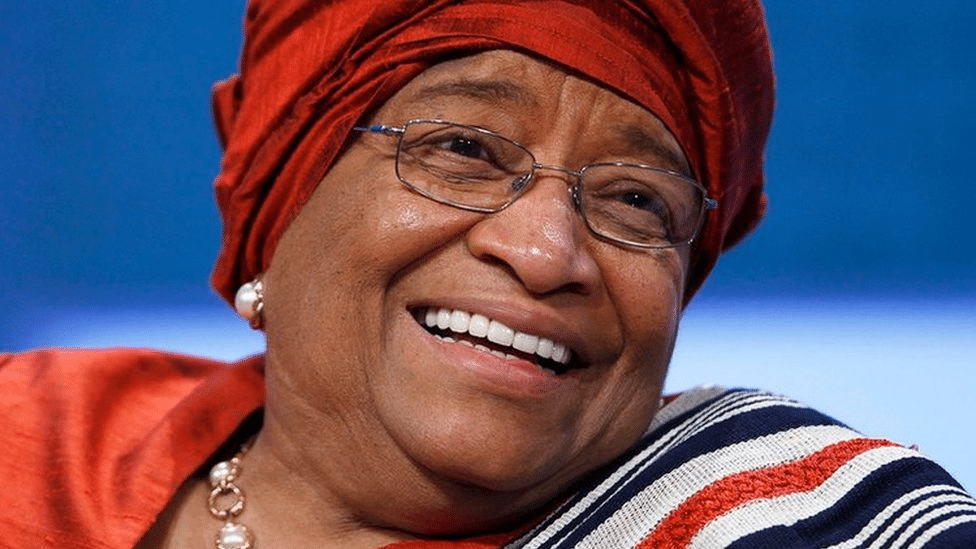
Women’s History Month Part 4: Ellen Johnson Sirleaf: The Leadership That Helped Rebuild Liberia

image (21)

History often places extraordinary responsibilities on leaders at the most difficult moments. For Liberia, that moment arrived in the early 2000s after years of violent civil conflict had devastated the nation’s economy, infrastructure, and political institutions. Rebuilding the country required more than policy reforms—it required steady leadership capable of restoring public confidence and guiding a fragile democracy forward.

That leadership came in the form of Ellen Johnson Sirleaf, an economist, longtime public servant, and advocate for democratic governance. In 2006, she was sworn in as president of Liberia, becoming the first democratically elected female head of state in Africa. Her election represented more than a historic milestone for women in leadership. It also marked a turning point for a country emerging from years of conflict and political instability.

Sirleaf inherited a nation deeply scarred by war. More than 270,000 people had been killed during Liberia’s civil conflicts, and roughly one-third of the population had been displaced. The country’s infrastructure had collapsed, unemployment rates were extremely high, and public institutions were weak or nonexistent. In this environment, rebuilding trust in government and restoring economic stability became urgent priorities.

Through two presidential terms from 2006 to 2018, Sirleaf worked to stabilize Liberia’s economy, rebuild public institutions, expand opportunities for women, and restore the country’s standing within the international community. Her leadership also earned global recognition, including the Nobel Peace Prize in 2011 for her efforts to advance peace and women’s rights.

Her story offers an important example of leadership under pressure, and her presidency reshaped conversations about governance, recovery, and the role of women in political leadership across Africa. This article explores Sirleaf’s early life, the challenges that shaped her political journey, and the lasting impact of her leadership on Liberia and beyond.

Early Life and Education

Ellen Johnson Sirleaf was born on October 29, 1938, in the capital city of Monrovia. Liberia holds a unique place in African history. Founded in the nineteenth century by formerly enslaved people from the United States, the country developed political and social structures influenced by both African traditions and American institutions.

Sirleaf grew up during a period when educational opportunities for women were limited, yet her family encouraged academic achievement. She attended the College of West Africa in Monrovia before traveling to the United States to continue her studies. In the early 1960s she pursued education in economics and public administration, eventually earning a Master of Public Administration degree from Harvard University in 1971.

Her academic background in economics proved critical to her future career. During the 1970s, she entered public service in Liberia and became Minister of Finance under President William Tolbert. In this role, she gained early recognition for her understanding of economic policy and fiscal management.

However, Liberia’s political stability soon deteriorated. In 1980, a military coup led by Samuel Doe overthrew the government, marking the beginning of a turbulent period in the country’s political history. Like many reform-minded officials, Sirleaf found herself in conflict with the new regime.

Her criticism of the military government resulted in arrest and imprisonment. Although she was later released, the political climate forced her to leave the country. This period of exile would shape both her political perspective and her international reputation.

Years of Exile and International Experience

Exile did not end Sirleaf’s public service. Instead, it expanded her influence beyond Liberia. Over the next decade, she held leadership roles in major international financial and development institutions.

Sirleaf worked for organizations including the World Bank and Citibank, where she focused on economic development initiatives in Africa. Later, she served as Assistant Secretary-General of the United Nations and directed the Regional Bureau for Africa at the United Nations Development Programme.

These roles gave her valuable experience in international finance, governance reform, and development policy. They also allowed her to build relationships with global leaders and institutions that would later prove critical when Liberia needed international support for reconstruction.

Despite living abroad, Sirleaf remained deeply connected to the political future of Liberia. She repeatedly spoke out against authoritarian rule and corruption, even when doing so carried significant personal risk. In the mid-1980s, she returned briefly to Liberia to participate in elections but was once again imprisoned for criticizing the government.

Her willingness to challenge powerful leaders earned her the nickname “Iron Lady,” reflecting both her determination and resilience.

Liberia’s Civil War and the Struggle for Democracy

The political instability that forced Sirleaf into exile eventually escalated into one of the most devastating conflicts in West African history. In 1989, Liberia’s civil war began, lasting more than a decade and causing widespread destruction.

During this period, the country’s economy collapsed. Infrastructure such as roads, hospitals, and schools was destroyed. Armed groups recruited child soldiers, and entire communities were displaced. By the time the conflict ended in 2003, Liberia faced a humanitarian crisis that affected nearly every aspect of national life.

After years of violence, peace negotiations, and international pressure, the international community eventually forced the resignation of President Charles Taylor. A transitional government was formed to prepare the country for democratic elections.

Sirleaf returned to Liberia during this transitional period and became chairperson of the Governance Reform Commission. Her role involved helping rebuild government institutions and preparing the country for national elections.

The Historic 2005 Election

Liberia’s 2005 presidential election represented the country’s first real opportunity for democratic renewal after years of war. Sirleaf ran as the candidate of the Unity Party, campaigning on a platform focused on economic reform, anti-corruption policies, and national reconciliation.

Her opponent in the final round of voting was internationally known soccer star, George Weah. Despite his popularity, Sirleaf won the runoff election with approximately 59 percent of the vote.

On January 16, 2006, she was sworn in as president of Liberia, becoming the first democratically elected female head of state in Africa. Her victory attracted global attention and symbolized a new chapter not only for Liberia but also for women in political leadership.

Rebuilding Liberia After Civil War

When Sirleaf assumed office, Liberia faced enormous challenges. Unemployment rates were estimated at around 80 percent, and the country carried billions of dollars in external debt. Public services such as electricity, healthcare, and education were severely limited.

One of Sirleaf’s earliest priorities was restoring Liberia’s economic credibility. Her administration negotiated significant debt relief with international lenders, eventually securing forgiveness for approximately $4.6 billion in external debt. This move allowed the country to redirect resources toward rebuilding infrastructure and public services.

Sirleaf also worked to attract international investment and development assistance. Under her leadership, Liberia received billions of dollars in foreign investment aimed at rebuilding roads, schools, hospitals, and energy systems. The national budget increased dramatically during her presidency, reflecting both improved economic management and increased international confidence.

Economic growth gradually returned. In several years during her administration, Liberia’s GDP growth exceeded 7 percent. While challenges remained, these improvements signaled progress for a nation that had recently emerged from war.

Sirleaf also established Liberia’s Truth and Reconciliation Commission, which sought to address human rights violations committed during the civil war. The commission aimed to promote healing and accountability while encouraging national unity.

Expanding Opportunities for Women

One of the most important aspects of Sirleaf’s presidency was her commitment to expanding opportunities for women. Liberia’s civil war had disproportionately affected women and girls, many of whom faced violence, displacement, and economic hardship.

Sirleaf used her position to promote policies that strengthened women’s participation in government, education, and economic development. Her administration supported legislation aimed at addressing gender-based violence and improving legal protections for women.

She also appointed women to prominent government positions, helping change perceptions about leadership roles in Liberian society.

These efforts had broader significance across Africa. Sirleaf’s presidency demonstrated that women could successfully lead national governments and manage complex economic and political challenges.

Her example encouraged increased political participation among women in several African countries.

Nobel Peace Prize and Global Recognition

In 2011, Sirleaf’s contributions to peace and women’s rights were recognized internationally when she was awarded the Nobel Peace Prize. She shared the award with Liberian activist Leymah Gbowee and Yemeni journalist Tawakkol Karman.

The Norwegian Nobel Committee cited their nonviolent efforts to promote peace and secure women’s participation in peacebuilding processes.

The award highlighted the critical role women played in ending Liberia’s civil war and rebuilding the country afterward. It also underscored the importance of inclusive leadership in achieving long-term peace and stability.

Beyond the Nobel Prize, Sirleaf received numerous international honors recognizing her leadership and commitment to democratic governance.

Legacy and Lasting Influence

Sirleaf completed her second presidential term in 2018, overseeing Liberia’s first peaceful democratic transfer of power in more than seventy years. This milestone marked a significant achievement for a country that had previously experienced repeated cycles of conflict and political instability.

After leaving office, Sirleaf continued her advocacy for women’s leadership and governance reform. She founded the Ellen Johnson Sirleaf Presidential Center for Women and Development, which focuses on supporting emerging women leaders across Africa.

Her presidency remains a powerful example of how determined leadership can guide a country through recovery and reform. While Liberia continues to face economic and social challenges, the progress made during Sirleaf’s administration laid important foundations for the nation’s future.

Ellen Johnson Sirleaf’s leadership came at one of the most critical moments in Liberia’s history. Emerging from years of civil conflict, the country needed more than reconstruction—it needed stability, accountability, and renewed confidence in democratic institutions.

Through economic reform, international diplomacy, and a commitment to inclusive governance, Sirleaf helped guide Liberia through a difficult period of recovery. Her presidency demonstrated that rebuilding a nation requires patience, persistence, and the willingness to confront difficult realities.

Equally important was her role in expanding opportunities for women in leadership. By becoming Africa’s first democratically elected female president, Sirleaf helped reshape expectations about who can lead and who can influence national decision-making.

Her story is not simply about political achievement. It is about resilience, responsibility, and the belief that leadership can serve as a force for national recovery and long-term progress.

As the world continues to reflect on the contributions of influential women during Women’s History Month, Ellen Johnson Sirleaf’s legacy stands as a reminder that courageous leadership can change the direction of a nation.

Thank you for taking the time to read and reflect. I write to help people think clearly about money, business, real estate, and life — not from theory, but from decades of lived experience.

If you are navigating a financial decision, building a business, considering homeownership, or simply trying to make better use of your time and resources, I invite you to engage further.

Subscribe to The Power Is Now TV to connect with me live every weekday, Monday through Friday, from 10:00 AM to 11:00 AM PST, as we record television shows across the Power Is Now TV Network. As a subscriber, you can participate in live tapings, engage in real‑time discussions, and connect directly with industry leaders.

Visit ThePowerIsNow.com to access real estate magazines, books, podcasts, television shows, and exclusive media content focused on homeownership, business, and wealth‑building.

For personalized support, consulting, and advisory services in real estate, mortgages, business, and personal finance, visit EricFrazier.com to schedule a consultation and learn more about my work as your trusted advisor in business and wealth.

Eric Lawrence Frazier, MBA
Your trusted advisor in business and wealth
www.ericfrazier.com | www.thepowerisnow.com
NMLS #451807 | CA DRE #01143484
Schedule a consultation:
https://calendly.com/ericfrazier/real‑estate‑mortgage‑consultation‑clients

Research & Sources