
Black History Month Part 10: We Were Never Less: The Defiant Ascent Of Black America: The Celebration and the Reckoning

The Celebration and the Reckoning By Eric Lawrence Frazier, MBA Welcome to Part Ten — the final essay of a ten-part series. We begin with The Crossing. The laboratory of race science. The navigation strategies of Frederick Douglass. The theological weapon of the slaveholder’s Bible. The systematic destruction of Reconstruction. The federal architecture of the racial wealth gap. What they built anyway. The racial calculation behind every policy this nation has ever called something else. The industry that spent a hundred and sixty years trying to make sure no one would ever understand or learn the truth about our story in this country. The series began with a question it did not immediately answer. Part One asked what it means that a people survived the Middle Passage and arrived — not broken, not emptied, but carrying something that the ocean could not take and the auction block could not price. Nine essays later, the question has not changed. What it means is the work of this essay. The answer is not political. The record has established that political systems failed Black America with a consistency that cannot be attributed to oversight. The answer is not economic. The record has established that the racial wealth gap was not an accident of the market but a product of deliberate federal policy. The answer is philosophical. And it was present before the first ship left the coast of West Africa. The Return to Origin The African spiritual traditions that survived the Middle Passage did not survive because they were hidden. They survived because they were woven into the fabric of daily life so completely that they could not be separated from the people who carried them. The slaveholder could take the language. He could take the name. He could take the family structure, the homeland, the drums. What he could not take was the understanding of what a human being is — and that understanding, carried across the water in the bodies of the people themselves, was the foundation on which everything else was rebuilt. Across the West and Central African spiritual traditions that fed the slave trade — Yoruba, Akan, Bakongo, Igbo, Fon — a consistent philosophical framework appears. The framework holds that the human being is not the body. The body is the vessel. The person — the animating force, the identity, the moral weight of a human life — exists independently of the physical form that houses it. Death is not termination. It is a transition. And the ancestors who have made that transition remain present, remain available, remain engaged with the living who carry their names and continue their work.1 This is not superstition. It is a philosophical position about the nature of personhood — one that has parallels in traditions from ancient Egypt to the Stoics to the Christian mystical tradition —, and it carried a specific practical consequence for the people who held it under the conditions of American slavery. If you are not your body, then what is done to your body does not reach the deepest part of what you are. The whip reaches the body. It does not reach the person. The Bakongo cosmogram — the dikenga — depicts the human soul moving in a continuous circle through the living world and the world of the ancestors, with the water as the boundary between the two states of being. Enslaved Africans brought to the Americas recognized the Atlantic Ocean within that cosmological framework. The crossing was not only geographic. It was spiritual — a passage through the waters that connected the world of the living to the world of those who had gone before. The ancestors were on both sides of the water. They had not been left behind.2 The spirituals encoded this understanding in language the slaveholder could hear without comprehending. “Swing Low, Sweet Chariot” was understood by slave owners as a song about Christian salvation — the chariot that carries the soul through the transition that the body cannot make on its own. “Wade in the Water” was understood as a baptism song. It was also, practically, an escape route instruction: enter the water to break the scent trail from the dogs. The spiritual tradition was never only spiritual. It was operational. The Philosophical Foundation The theology imposed on enslaved people by the slaveholder was a theology of submission. God was above. God had ordained the social order. Obedience to the master was obedience to God. The enslaved person was to find comfort in the promise of a justice that would be delivered after death, in a kingdom not of this world, to a soul that had demonstrated its worthiness through patience with its suffering. This theology served the slaveholder perfectly. It was also, in its essentials, a lie. The African spiritual inheritance understood God differently — not as an external authority dispensing judgment from above, but as the animating force within all living things. The divine was not separate from the human. It was the deepest expression of what the human being already was. This is not a marginal theological position. It is present in the mystical traditions of virtually every major world religion — in Sufi Islam, in Kabbalistic Judaism, in Christian mysticism from Meister Eckhart to Howard Thurman. It is the understanding that the encounter with the sacred is not an encounter with something outside the self but a recognition of what was always within it. Howard Thurman, the theologian whose work directly shaped the philosophical framework of the civil rights movement, wrote in Jesus and the Disinherited that the religion of Jesus was a religion developed among a dispossessed people — and that its core message was not about the afterlife but about the irreducible worth of the person standing in front of you right now, in this life, under these conditions, regardless of what any external authority has declared about their value. Thurman was the grandson of an enslaved woman. He understood that the theological question
Black History Month Part 8: We Were Never Less: The Defiant Ascent Of Black America: Old America
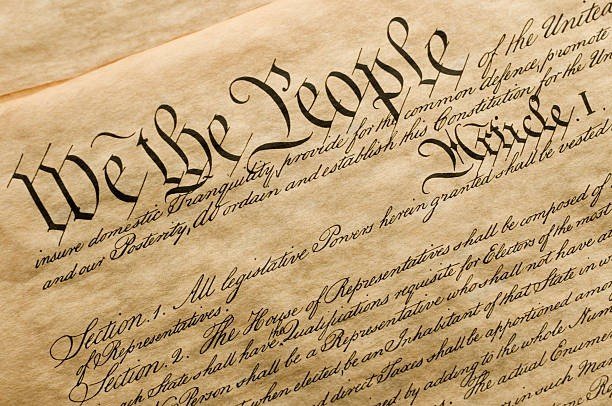
The Racial Calculation Behind Every Policy This Nation Has Ever Called Something Else By Eric Lawrence Frazier, MBA The birth of America was not about freedom. Every school child is taught otherwise, and the teaching is not entirely wrong — the men who signed the Declaration of Independence genuinely believed in the Enlightenment philo-sophy they were quoting. But belief in principle and motivation for action are not the same thing. The operational motivation was economic. They did not want to pay taxes to the Crown. They did not want Parliament controlling their commerce. The philosophical language was the public framing. The financial calculation was the engine. This is not a cynical reading. It is a structural one. A nation founded on resistance to economic extraction then proceeded to build the largest economy in the modern world on the most comprehensive system of human extraction in recorded history. Not exploitation. Extraction. The removal of labor, land, and life — codified in the Constitution, enforced by federal power, and maintained through a succession of policy instruments that changed names while preserving outcomes. Indigenous nations lost land measured in billions of acres through treaties the federal government signed and then systematically violated. Japanese Americans lost property, liberty, and years of their lives to internment, and the government eventually paid reparations — $20,000 per surviving detainee, authorized by the Civil Liberties Act of 1988. Native American nations have received partial treaty settlements. The Chinese Exclusion Act drew a congressional apology. For the descendants of four million enslaved people whose labor built the foundational wealth of this nation — nothing. The comparison is not rhetorical. It is documentary. America does reparations. The question has always been: for whom. The humanitarian framing has always been the cover story. This essay removes the cover. What follows is not a political argument. It is a pattern — documented, repeated, and consistent across every administration, every era, and every policy domain. The pattern has a name. The name is Old America. It has never stopped being itself. The War That Was Never About Drugs In 1994, John Ehrlichman, Richard Nixon’s domestic policy chief and a convicted Watergate felon, gave an interview to journalist Dan Baum that was not published until 2016, after Ehrlichman’s death. What he said in that interview ended the debate about the purpose of the War on Drugs — for anyone willing to accept a primary source. “The Nixon campaign in 1968, and the Nixon White House after that, had two enemies: the antiwar left and Black people. We knew we couldn’t make it illegal to be either against the war or Black, but by getting the public to associate the hippies with marijuana and Blacks with heroin, and then criminalizing both heavily, we could disrupt those communities. We could arrest their leaders, raid their homes, break up their meetings, and vilify them night after night on the evening news. Did we know we were lying about the drugs? Of course we did.” John Ehrlichman. Nixon’s own domestic policy chief. Not a critic. Not an activist. The architect. Testifying from memory twenty years after the fact, with nothing left to protect. The War on Drugs was not a public health initiative that produced racially disparate outcomes. It was a racial suppression campaign that used drug enforcement as its instrument. The distinction is not semantic. It determines what kind of failure it was — and whether failure is even the right word. A policy designed to suppress Black political organization that successfully suppressed Black political organization is not a failure. It is a documented achievement of its actual purpose. Nixon declared the War on Drugs in 1971. Reagan escalated it in 1986 with the Anti-Drug Abuse Act, which established the 100-to-1 crack-to-powder cocaine sentencing disparity. Crack cocaine, prevalent in Black communities, triggered mandatory minimum sentences one hundred times more severe than powder cocaine — chemically the same substance — prevalent in white communities. The sentencing disparity had no pharmacological basis. It had a demographic one. Between 1980 and 1990, the Black incarceration rate doubled. By 2000, one in three Black men in his thirties had a prison record. The United States incarcerated more of its citizens than any nation on earth — and the racial arithmetic of that incarceration was not an accident. It was the operational output of a policy whose stated purpose was public safety and whose documented purpose was social control. The Clinton Betrayal Toni Morrison wrote in The New Yorker in 1998 that Bill Clinton was “our first Black president” — meaning that he played the saxophone, ate at McDonald’s, came from poverty, and navigated white cultural contempt in ways that resonated with Black America’s lived experience. Morrison was describing cultural fluency, not policy alignment. She later said the phrase had been misunderstood and misused. The misunderstanding was convenient, and the convenience was expensive. In 1994 — four years before Morrison’s observation — President Clinton signed the Violent Crime Control and Law Enforcement Act. It was the largest crime bill in American history. It provided $9.7 billion for new prisons. It expanded the federal death penalty to sixty additional offenses. It created mandatory life sentences for three-time felons under what became known as “three strikes” provisions. It incentivized states to build more prisons and eliminate parole. It allocated $8.8 billion for 100,000 new police officers. The outcomes were documented with federal instruments. Between 1994 and 2000, the prison population grew by nearly 60 percent. Black men were incarcerated at eight times the rate of white men. The crack-to-powder cocaine sentencing disparity, established under Reagan and untouched by Clinton, continued to operate through the 1994 legislation’s expanded enforcement infrastructure. The man who was culturally embraced by Black America as one of their own built the most racially disproportionate incarceration expansion in American history. Clinton acknowledged this in 2015. Speaking before the NAACP, he said the 1994 bill “had a lot of unintended consequences” and that it “cast too wide a net.” This is
Black History Month Part 7: We Were Never Less: The Defiant Ascent of Black America: We Thrived Anyway
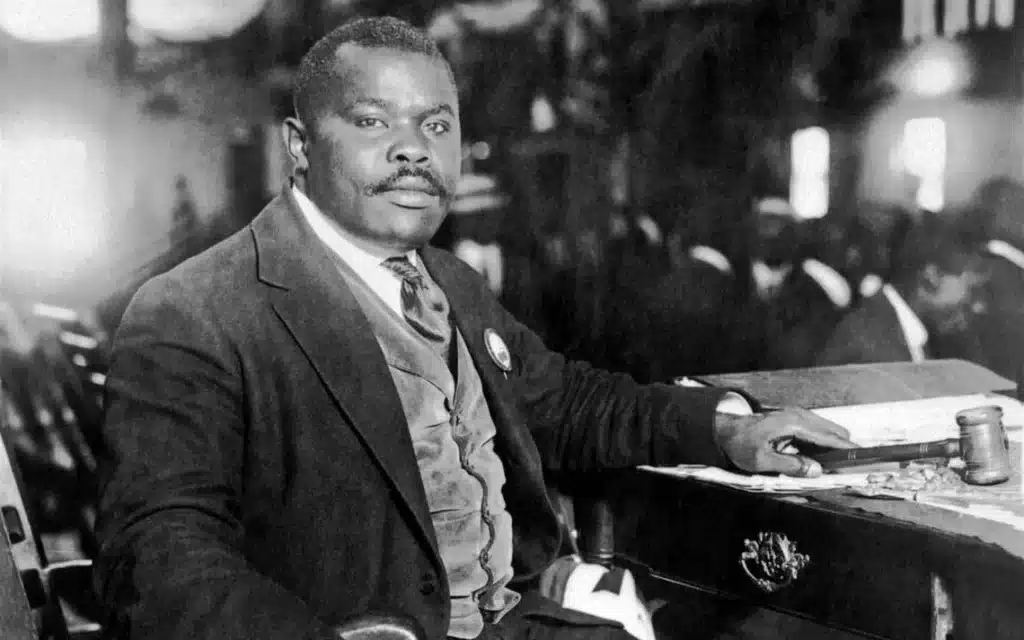
Harriet. Frederick. Marcus. Malcolm. Martin Luther King. Are you there? Of course you are. You are still present. You are still witnesses. Unseen — but not unheard. You are here not as memory, because memory describes the past as gone, and you are not gone. You are here. You were here before us, and you have never left us. You are here not as a martyr, because death is not the opposite of life. Death is the evidence of life. It is the seen thing providing proof of the unseen thing. The unseen thing is nothing. The unseen thing is life itself. The body is what we see — the vessel that life occupies for a season. The life that occupies it is what we cannot see, cannot contain, and do not have the power to end. Life is nothing that can be taken. It simply moves. And so their presence is still with us today. It is present in every leader who stands up to injustice. It is present in every voice that speaks truth to power. It is present in every person who steps into the line of fire with no regard for the body, no surrender to the threat, no willingness to be silent when silence would be the easier path. That is not courage born from nothing. That is the continuation of a life force that Harriet carried, that Frederick carried, that Marcus carried, that Malcolm carried, that Martin carried. It did not stop when their bodies stopped. It passed forward. We pay tribute to them not because they are gone but because they are still here — and we see their work every single day. The tribute is not a memorial. It is a recognition. They are active. They are present. They are in a struggle with us right now. Consider what the voice and the wind share. Neither can be held in the hand. Neither can be stopped at a border or locked behind a door. Both move through everything. Both leave the room changed. You do not see the wind. You see what the wind has done. You do not see the voice. You see what the voice has moved. Harriet moved people through darkness toward freedom, and the darkness could not stop her because she was not operating by the rules of the visible world. Frederick opened his mouth in a country that had made it a crime to teach him to read, and the words that came out rewrote the moral record of a nation. Marcus reminded a scattered people that they had a home before the ships came and a destiny that did not depend on the permission of the people who built the ships. Malcolm looked at a system that called itself civilized and told the truth about what it actually was, without apology and without revision, until the day they decided the truth was too dangerous to let him keep speaking it. Martin Luther King walked into the fire of this country’s oldest hatred carrying nothing but the knowledge that the arc was long and the arc bent toward justice — and when they took him, they took only what was visible. His physical presence. The body that stood at the podiu,d walked across the bridge and sat in jail. They did not take his voice. His voice is still with us. We hear it in the pulpits. We hear it from the community organizers. We hear it in the leaders who are still marching, still negotiating, still demanding, still refusing to accept a version of this country that falls short of what it promised. The spirit of Martin Luther King is not a memory preserved in archives and museum glass. It is alive. It is a witness. It is an active participant in the struggle that he did not finish because the struggle does not finish — it passes. That is what abides. Not the biography. Not the monument. The life force itself, carrying the knowledge, carrying the wisdom, pressing forward through every person who comes after and picks up what was laid down. They are the wind. We are what the wind has moved. What follows is the data. But the data does not explain itself. The numbers are extraordinary. The question underneath every number is the same: where did this come from? The answer is that it came from what the people already were. What the system tried to destroy was not destroyable, because you cannot destroy life with a law, a deed restriction, a redlining map, or a police order. You can obstruct it temporarily. You cannot stop it. Four centuries of evidence make this conclusion inescapable. America is on notice. It has been on notice since 1619. It cannot say it was not warned that we cannot be stopped. The Question Nobody Is Asking The data that dominates the national conversation about Black America is gap data. The homeownership gap. The wealth gap. The income gap. The education gap. Every gap is documented, analyzed, and debated, and most of that debate circles back to the same endpoint: Black America has not closed the gap. The premise of the gap, however, deserves the examination that it rarely receives. The gap exists because there was a starting point. The starting point for Black Americans in this country was 1865, and the starting point was nothing. Not low. Not disadvantaged. Nothing. No land. No legal standing. No access to the institutions that were building wealth all around them. No protection from the violence that erupted whenever economic progress became visible. The Freedmen’s Bureau, designed to provide a transitional foundation, was dismantled within seven years. The forty acres that represented the minimum economic acknowledgment of what had been taken were revoked before most families could register the claim. Reconstruction ended with a political bargain that abandoned Black Southerners to a century of state-sponsored terrorism disguised as law. Given all of that, the correct question is not
Black History Month Part 6: We Were Never Less: The Defiant Ascent of Black America: The Architecture of Exclusion
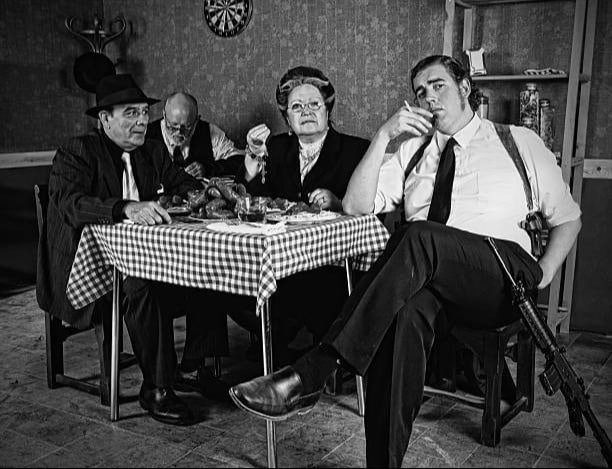
How the Federal Government Built the Racial Wealth Gap — and Why It Has Never Been Repaired By Eric Lawrence Frazier, MBA The Syndicate The United States of America is the original apartheid state. South Africa’s apartheid system began formally in 1948 and ended in 1994 — forty-six years of state-enforced racial separation that the world ultimately condemned, sanctioned, and compelled to end. The American apartheid system began in 1619 with the arrival of the first enslaved Africans in Virginia and did not dismantle its last formal federal architecture until the Fair Housing Act of 1968, three hundred and forty-nine years. later Its enforcement apparatus continued in practice through 1975 and 1977 with the passage of federal regulatory frameworks whose near-total non-enforcement extended the effective operation of the system to the present day. By any honest accounting, American apartheid is older, longer, more thoroughly institutionalized, and more extensively documented than the system the world demanded South Africa dismantle. It has simply never been named as such by the government that administered it. This essay names it. Every organized crime operation is built on the same structural principle. The people committing the crime and the people responsible for stopping it are the same. Territory is mapped and enforced. Tribute is collected from the people the operation controls. The legal and enforcement machinery is owned by the organization it was supposed to constrain. And the operation runs in plain sight because it has written the laws that make its conduct legal and appointed the judges who will uphold those laws without challenge. The American federal government’s treatment of Black Americans across four centuries meets every one of those criteria. This was not a government that made racially discriminatory decisions by accident or through the passive operation of prejudiced markets. This was a government that designed a system of racial economic exclusion, wrote it into federal policy, funded it with public money, enforced it with federal authority, collected premiums from the communities it was excluding, built generational white wealth with those proceeds, and then created regulatory frameworks whose near-total non-enforcement allowed it to declare the problem addressed while the problem continued. The Corleones ran a protection racket — you paid for protection from the people threatening you, who were the same people you were paying. The federal government ran the same operation on a national scale. Black Americans paid taxes into a system that used those taxes to build wealth for white families while systematically denying Black families access to the programs those taxes funded. They paid for protection from the discrimination the government was administering. They received neither the protection nor the return on their investment. The architects of this system were meticulous record-keepers. The maps they produced are in the National Archives in College Park, Maryland. The loan denial data they generated is in the federal HMDA database, published annually for nearly fifty years. The appraisal disparities they set in motion appear in this quarter’s valuation reports just as they appeared in last quarter’s and the quarter before that. The wealth gap they engineered is measured in the Federal Reserve’s Survey of Consumer Finances. They measured what they built, filed what they measured, and left behind a documentary record so complete that the only thing required to expose them is the willingness to read what they wrote. This essay reads it. The Named Architects — The Family Portrait Organized crime has always had names. Capone ran Chicago. Luciano ran New York. The Five Families divided the territory, collected the tribute, and operated for decades because they owned the enforcement mechanism. The American racial apartheid system had names, too. They appear in the federal record. They signed the documents. They administered the policies. They testified before Congress. They were photographed, biographied, and in many cases celebrated as architects of the modern American state. None of themhas ever been held accountable for what the record shows they built. Franklin Delano Roosevelt signed the National Housing Act of 1934, whichcreated the Federal Housing Administration and authorized the redlining framework. Roosevelt is remembered as the architect of the New Deal — the president who pulled the country from the Great Depression and guided it through the Second World War. What the historical record also shows is that the New Deal’s housing programs were racially exclusionary by design, not by accident, not through the passive operation of prejudiced markets, but as the explicit political price of southern Democratic support for the legislation. The senators whose votes Roosevelt needed were the senators who demanded that Black Americans be excluded from the programs their taxes would fund. Roosevelt made the calculation. He accepted the terms. The exclusion was built into the first draft. Race came first. The New Deal came second. The wealth that thirty-four years of that exclusion produced for white American families is compounding to this day. James Moffett, the first FHA Commissioner, and his successor, Stewart McDonald, administered the implementation of the underwriting standards that encoded racial segregation into the federal mortgage system. John Fahey directed the Home Owners’ Loan Corporation and oversaw the production of the 239-city color-coded surveys that mapped American racial geography for the next generation of federal lending policy. These were not anonymous bureaucrats executing orders they had not read. They were named officials, confirmed by the Senate, administering identified federal policy, whose institutional decisions determined which American families would have access to the most powerful wealth-building program in the nation’s history and which would not. Their names belong in this record as surely as the names of any other organized crime figures belong in the record of their operations. The congressional protection infrastructure that kept the system in place for decades also had names. Senator Richard Russell of Georgia organized and led Senate opposition to federal civil rights legislation for three decades, developing the procedural architecture of filibuster and committee obstruction that delayed every meaningful civil rights bill from Reconstruction through the 1960s. Senator Strom Thurmond of South Carolina
Black History Month Part 5: We Were Never Less: The Defiant Ascent of Black America: Reconstruction and the First Betrayal
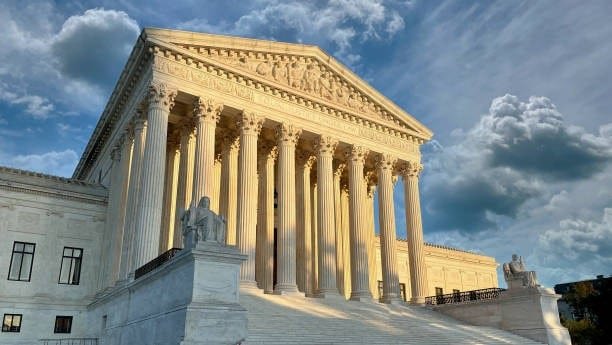
How Every Promise Made to Black America Was Earned, Not Given — and Then Systematically Taken Back By Eric Lawrence Frazier, MBA The Pattern There is a pattern in American history that is so consistent, so documented, and so precisely repeated across 160 years that it can no longer be described as a series of failures, oversights, or missed opportunities. It is a system. It has architects. It has instruments. And it has a single objective that has never changed, even as the instruments have modernized and the architects have changed their names. The objective is this: to ensure that African Americans never fully possess what the Constitution says they are entitled to. Not to deny it entirely — that became legally impossible after the Civil War. But to extend it partially, conditionally, temporarily, and always with a mechanism of reversal built into the structure of the extension. Give something. Build the apparatus to take it back. Wait for the political moment. Take it back. This essay documents that pattern from 1863 to the present day. Not as a grievance. As a prosecution. Every exhibit is sourced. Every architect is named. And the parallel to what is happening in the present administration — the erasure of DEI protections, the removal of civil rights enforcement, the systematic elimination of any federal acknowledgment that Black Americans built this country and were denied its benefits — is drawn explicitly, because the evidence does not require interpretation. It requires only honesty. But before the documentation, one thing must be established clearly. Nothing in this record was given. Everything was earned. The Emancipation Proclamation was not an act of moral generosity. The Reconstruction Amendments were not a gift from a repentant nation. The Civil Rights Act of 1964 was not the voluntary acknowledgment of a wrong. Every advance in this record came after Black Americans had bled for it, organized for it, died for it, or made it politically or militarily impossible to withhold any longer. The recognition of that fact is not bitterness. It is the foundation of an accurate understanding of how the system actually works — and how to navigate it without the illusion that the people running it have ever acted from conscience alone. The Documented Timeline: Given and Taken What follows is the chronological record of the major legislative, executive, and judicial acts that defined the relationship between the federal government and Black Americans from the Civil War to the present. Read as a sequence, the pattern becomes impossible to deny. 1863 — The Emancipation Proclamation — A Military Calculation, Not a Moral Gift On January 1, 1863, President Lincoln issued the Emancipation Proclamation. It declared enslaved people in Confederate states in rebellion to be free. It deliberately excluded the border states where slavery continued — Kentucky, Missouri, Maryland, Delaware — because Lincoln needed those states in the Union. It had no enforcement mechanism in Confederate territory because the Confederate states did not recognize Lincoln’s authority. It freed no one immediately. The Proclamation was issued eighteen months into a war the Union was losing. Its primary strategic purpose was to prevent Britain and France — both of whom had abolished slavery — from recognizing the Confederacy by reframing the war as a war against slavery rather than a war over secession. Lincoln’s own correspondence makes this calculation explicit. He wrote to newspaper editor Horace Greeley in August 1862: ‘If I could save the Union without freeing any slave I would do it, and if I could save it by freeing all the slaves I would do that.’ Black Americans had been working, fighting, and dying for their freedom for 244 years before Lincoln signed that document. The Proclamation did not give them freedom. It acknowledged, under the specific pressure of military and political necessity, that their freedom could no longer be withheld without cost to the Union’s strategic interests. That is not emancipation as a moral act. That is emancipation as a calculation. The distinction matters because it establishes the template for everything that follows. 1865 — The Thirteenth Amendment — Abolition with an Escape Clause The Thirteenth Amendment abolished slavery throughout the United States. It was the most significant constitutional reform since the founding. It was also, from the moment of its ratification, compromised by a clause that its architects either did not foresee or deliberately included: ‘except as a punishment for crime whereof the party shall have been duly convicted.’ That exception was not theoretical. Within months of ratification, Southern state legislatures passed the Black Codes — a coordinated set of laws that made it a crime to be unemployed, to stand on a public street without proof of a labor contract, to leave an employer before the end of a contract period, or to fail to pay a fine that an unemployed person could not possibly pay. Convicted under these laws, Black men and women were leased back to plantations under the convict leasing system. The labor was the same. The condition was the same. The legal basis had changed from property to crime. The Thirteenth Amendment had abolished slavery and simultaneously authorized its continuation under a different name. That exception remains in the Constitution today. The prison labor system that generates revenue for corporations at wages below the federal minimum wage — with Black Americans representing a disproportionate share of the incarcerated population — operates under the direct legal authority of the same amendment that was supposed to end slavery. The instrument changed. The objective did not. 1865 — Sherman’s Field Order No. 15 — Forty Acres Promised and Taken Back In January 1865, Union General William T. Sherman issued Special Field Order No. 15, setting aside approximately 400,000 acres of confiscated Confederate land along the South Carolina and Georgia coasts for distribution to formerly enslaved families in forty-acre plots. This was the origin of the phrase ‘forty acres and a mule.’ It was the closest the federal government ever came to a genuine reparations
Black History Month Part 4: We Were Never Less: The Defiant Ascent of Black America: The Bible and the Whip

How Sacred Text Became a Weapon — and What the People It Was Used Against Did with the Same Book By Eric Lawrence Frazier, MBA The Two Weapons The apparatus of American racial slavery required two instruments of control. The first was physical. The whip, the chain, the brand, the auction block, the patrol, the threat of sale — the full architecture of violence that maintained the plantation system and suppressed the resistance that the system’s own operators acknowledged, in document after document, was constant and widespread. That instrument has been documented extensively. Its cruelties are part of the historical record. The second instrument was theological. And the argument of this essay is that it was the more destructive of the two. A whip breaks the body. It can heal, or it can kill, or it can leave scars that last a lifetime. But the body knows it is being broken. The person being whipped does not mistake the whip for love. The person being whipped does not internalize the whipper’s authority as divine. The physical violence of slavery was catastrophic. But it operated on the outside of the person. The theological violence operated on the inside. It reached into the mind and the spirit and the self-understanding of the person it targeted and attempted to reconstruct them from within — to make them believe that their condition was ordained, that the God of the universe had arranged the hierarchy they were living under, that resistance was not just dangerous but sinful, that the afterlife they were promised as compensation for their suffering in this one was available only through submission to the authority of the people who were submitting them. If you could make a person believe that, you did not need the whip as often. The person would police themselves. This essay documents how that theological instrument was constructed, how it was deployed, and — because the full record demands it — how completely it failed to do what it was designed to do. The Black church was supposed to be the plantation’s most effective management tool. It became, instead, the most durable institution of Black resistance in American history. The Construction of the Theological Weapon The use of Christianity to justify slavery did not begin in America. The theological framework that would underwrite chattel slavery in the New World was assembled over centuries, drawing on selective readings of scripture, on the racial theology developing in European colonial contexts, and on the specific political needs of a slaveholding class that required moral legitimacy for an institution whose moral illegitimacy was apparent to anyone who examined it honestly. The primary scriptural justification was the Curse of Ham, derived from Genesis 9:20–27.1 In the text, Noah curses Canaan — the son of Ham — after Ham sees his father’s nakedness. The curse declares that Canaan will be a servant of servants to his brothers. The text says nothing about race, nothing about Africa, and nothing about a permanent hereditary condition of servitude extending across centuries and continents. None of that is in the passage. All of it was read into the passage by interpreters who needed the passage to say it. The Curse of Ham became the Curse of Africa in the hands of theologians who required a divine warrant for what they were already doing, and who found in a single ambiguous verse the authorization they needed to enslave an entire continent’s people for four centuries. The Pauline epistles provided additional material. Ephesians 6:5 — Servants, be obedient to them that are your masters according to the flesh, with fear and trembling — was cited from plantation pulpits across the South as the scriptural foundation for the obedience of the enslaved.2 Colossians 3:22 repeated the instruction. First Peter 2:18 extended it: Servants, be subject to your masters with all fear; not only to the good and gentle, but also to the froward. These passages were not incidental to the proslavery theology. They were its canon. They were the texts most frequently cited, most frequently preached, and most deliberately stripped of the interpretive context that might have complicated their application to chattel slavery. The theological system that resulted was internally coherent and politically functional. It told the enslaved that their condition was scripturally ordained. It told them that obedience in this life would be rewarded in the next. It told them that the God of the universe had arranged the hierarchy under which they lived and that resistance to that hierarchy was resistance to God. It told them, in the words of one South Carolina catechism for the enslaved, that they should not think themselves better than their masters, that they should be content in their condition, and that trying to improve their earthly circumstances without their master’s permission was a violation of the divine order.3 And then it gave them church. A supervised, monitored, carefully curated version of religious practice designed to provide enough spiritual consolation to reduce the risk of rebellion while ensuring that the consolation never became the foundation for the kind of theological independence that might produce one. Frederick Douglass named this system with a precision that no subsequent scholar has improved upon. In the appendix to his 1845 Narrative, he wrote:4 “I therefore hate the corrupt, slaveholding, women-whipping, cradle-plundering, partial and hypocritical Christianity of this land; and I look forward to seeing it exposed and overthrown.” He was not attacking Christianity. He was attacking the specific theological system that had been constructed in its name to justify what no honest reading of the text it claimed as its foundation could justify. He drew the distinction explicitly: between the pure, peaceable, and impartial Christianity of Christ, and the Christianity of the slaveholder. Two religions, he argued. Same book. Completely different Gods. What the Book Actually Said The proslavery theology depended on selective reading. It required the careful avoidance of the passages that did not cooperate with its conclusions — and there were many. The same
Black History Month Part 3: We Were Never Less: The Defiant Ascent of Black America: The Mirror America Still Cannot Look Into
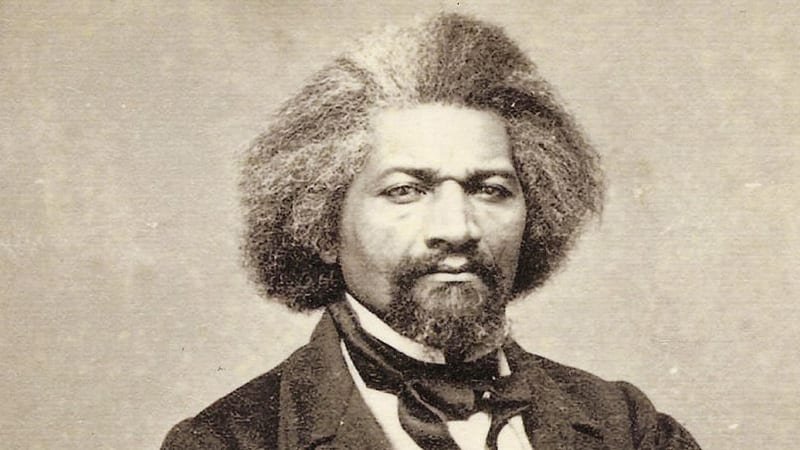
Frederick Douglass, the Fourth of July, and the Contradiction That Has Never Been Resolved By Eric Lawrence Frazier, MBA The Man and the Moment On July 5, 1852, a man stood before an audience of approximately 600 people in Corinthian Hall in Rochester, New York, and delivered an address that remains, 174 years later, the most precise and most devastating examination of the American contradiction ever spoken from an American stage.1 The man was Frederick Douglass. The occasion was an Independence Day celebration organized by the Rochester Ladies’ Anti-Slavery Society. The audience was predominantly white, predominantly abolitionist, and had gathered because they considered Douglass one of the most powerful voices in the movement they shared. They were not prepared for what he said. Douglass did not thank them for their advocacy. He did not celebrate the progress that had been made. He did not offer the comfort of a movement united behind a common cause. He stood before that audience and held up a mirror. What the mirror showed was a nation that had written the most eloquent statement of human equality in the modern world and then spent seventy-six years constructing an elaborate legal, theological, and social apparatus to ensure that statement applied to as few people as possible. The speech Douglass delivered that day is known for its central question. But the question is not the argument. The argument is the structure Douglass built around the question — the legal reasoning, the constitutional analysis, the theological indictment, and the moral framework that together produced something that no one in that hall, and no one since, has been able to honestly refute. Understanding what Douglass actually argued that day — as opposed to the single sentence most often quoted — is the purpose of this essay. But before we can understand what he argued, we need to understand who was arguing it. Because Frederick Douglass was not speaking from an ivory tower, pontificating about principles he had studied in books. He was speaking from a life. And that life — the specific details of how it was lived, what it cost, and what it produced — is the foundation on which everything he said rests. The Life Behind the Argument Frederick Douglass was born into slavery in Talbot County, Maryland, in approximately 1818.2 He did not know the exact date of his birth. Enslaved people were not given that information. He was separated from his mother, Harriet Bailey, in infancy — a common practice on Maryland plantations, designed to prevent the formation of maternal bonds that might complicate the management of the enslaved workforce. He saw her only a handful of times before her death when he was approximately seven years old. He was not permitted to grieve her. He taught himself to read. The precise mechanics of how he accomplished this — trading bread for reading lessons with white boys in the neighborhood, studying discarded newspapers, practicing letters in the dirt — are documented in his first autobiography, published in 1845 when he was approximately twenty-seven years old.3 The act of literacy was not merely an intellectual achievement. It was a criminal one. Maryland law made it illegal to teach an enslaved person to read or write. The punishment was severe. Douglass understood this and proceeded anyway. That decision — to acquire, in secret and at considerable personal risk, the very tool that the system had determined he must never possess — tells you everything essential about the man before he has said a public word. He escaped slavery in 1838, at approximately twenty years of age, traveling north by train and steamboat using borrowed identification papers.4 He settled in New Bedford, Massachusetts, found work as a laborer, and within three years had become one of the most sought-after speakers in the abolitionist movement — a movement dominated by white intellectuals who had spent their careers arguing for the humanity of Black people and who now found themselves sharing a platform with a Black man whose command of language, logic, and moral argument exceeded their own. This is the first thing to understand about Frederick Douglass: he did not arrive at his intellectual authority through privilege or institutional support. He arrived at it by teaching himself, escaping a system designed to prevent his escape, and building — from nothing, from the scraps of opportunity that a hostile society made available to a formerly enslaved Black man in the 1840s — a platform, a newspaper, a body of writing, and an international reputation that made him the most photographed American of the nineteenth century.5 He is not a symbol of what Black people can achieve when given the right opportunities. He is the argument that no system of oppression, however comprehensive, can fully contain what a determined human being will build from whatever opening presents itself. He pulled himself up without boots. That is the point. The bootstraps argument, as it has been co-opted by those who wish to deny the reality of structural racism, imagines Douglass pointing down from a position of comfort and telling Black people to try harder. That is not what Douglass said,d and it is not who Douglass was. Douglass was a man speaking from the mud, telling the people still in it: I know exactly where you are because I was there. And I am telling you — not as a comfort but as a demand — that you have more power than they have told you. The system wants you to believe you have nothing. The act of believing them is the first and most important victory they can take from you. Do not give it to them. That is the Douglass who stood in Corinthian Hall on July 5, 1852. Not a comfortable man. Not a safe man. A man who had lived inside the apparatus this series is documenting and had emerged from it not diminished but forged. The speech he gave that day was not the product of
Black History Month Part 2: We Were Never Less: The Defiant Ascent of Black America: The Laboratory
How the Attempt to Define Us as Less Than Human Proved the Opposite By Eric Lawrence Frazier, MBA The Apparatus and Its Confession There is a principle in law that applies with particular force to the history we are about to examine. It holds that a witness who testifies against his own interest is among the most credible a court can hear. A person does not ordinarily say things that damage his own case unless those things are true. He has every incentive to withhold them. When he says them anyway — in a plantation ledger, in a military dispatch, in a commissioned medical report, in the margins of a theological argument — something real is being recorded, regardless of the interpretation the witness places on his own testimony. The people who built the apparatus of American racial slavery were not trying to document Black excellence. They were trying to justify Black subjugation. They constructed a theology to support it, a pseudoscience to validate it, a legal architecture to enforce it, and a color symbolism so deeply embedded in the language of good and evil that it operates below the level of conscious argument to this day. Every component of this apparatus was designed to produce one conclusion: that Black people were less than human, suited by nature for the condition that had been imposed upon them, and unworthy of the moral consideration that a civilization built on Christian principles would otherwise have been required to extend. The apparatus failed. Not because it was abandoned — it was maintained with considerable legislative and violent energy for four centuries and counting. It failed because the evidence it produced refused to cooperate with the conclusion it was designed to reach. The plantation records, the military dispatches, the medical reports, the anthropological studies — taken together, these documents constitute the most sustained and unintentional acknowledgment of Black human capability in the history of American letters. They were written by people who needed to prove one thing and kept documenting another. This essay enters that documentation into evidence. Not as a celebration of the people who produced it. As a prosecution of the lie they were trying to tell. And as the foundation for a question that the full historical record demands we answer honestly: what do you call a people whose gifts were so undeniable that an entire civilization had to be reorganized around containing them? The argument has never been about biology. It has always been about what people did with what they were given — and what they continued to do with what was taken from them. Before the Color Words: What Was Actually There Lerone Bennett Jr., executive editor of Ebony magazine and one of the most consequential popular historians of Black America, opened his landmark study with a title that was itself a historical argument. Before the Mayflower was not a rhetorical flourish.1 It was a correction. African people arrived in what would become the United States in 1619 — a full year before the Mayflower landed at Plymouth Rock. The Pilgrims are taught as the origin story of this nation. But the people who would build much of what this nation became were already here, already working, already woven into the foundational economic life of the colonies before the celebrated settlers arrived with their Bibles and their covenant theology. Bennett’s title does something that most American history refuses to do. It insists on a before. It establishes that the people who crossed the Atlantic in chains did not begin their existence in a hold. They came from somewhere. They had histories. They had civilizations. The Mali Empire, at its fourteenth-century height, controlled trans-Saharan trade routes and governed a territory larger than Western Europe.2 The city of Timbuktu housed the Sankore University, whose library held between 400,000 and 700,000 manuscripts at a time when most European cities did not have functioning sewer systems.3 The Ashanti Kingdom of present-day Ghana developed goldsmithing, textile production, and governance systems sophisticated enough to withstand a century of sustained British imperial pressure.4 The Kingdom of Kongo maintained diplomatic correspondence with European courts, operated a sophisticated legal system, and administered a state whose complexity impressed even the Portuguese missionaries who arrived with ambitions to civilize it. This matters for a reason that goes beyond historical accuracy, though historical accuracy alone would be sufficient justification. It matters because the apparatus of racial hierarchy required, as its foundational premise, that Black people had no meaningful existence prior to their enslavement. No history. No civilization. No cultural inheritance worth naming. The color word black was designed, in part, to accomplish exactly that erasure. A color is not a place. A color has no history, no language, no architecture, no manuscript tradition, no legal system, no agricultural knowledge, no before. By reducing a continent of peoples to a color, the apparatus attempted to strip away the very thing that made the subjugation of those peoples a moral atrocity requiring justification: the undeniable fact that they were someone before anyone decided to make them something else. It did not work. What Bennett’s scholarship established — and what this series documents across ten essays — is that the before survived. The knowledge survived. The cultural memory survived. The spiritual inheritance survived. It crossed the water in the same hold as the chains, and it never fully stopped being what it was. What the Plantation Records Actually Show The plantation owners of the American South were not scientists. They were businessmen. And like all businessmen, they kept records, because their records were financial documents. The productivity of their operations depended on understanding their workforce — what it could endure, what it could produce, what it knew, and what it cost to maintain. Those records, now archived in university libraries and historical societies across the South, constitute an involuntary testimony to the capabilities of the people they were written to document. Consider the rice economy of colonial South Carolina and Georgia —
Black History Month Part 1: We Were Never Less

The Defiant Ascent of Black America By Eric Lawrence Frazier, MBA A Note Before We Begin There is a version of Black history that gets told every February. It arrives on schedule, curated and comfortable, moving enough to satisfy the moment without disturbing anyone who needs to remain undisturbed. It features the same names, the same photographs, the same parade of firsts — and then, on March 1st, it goes back in the drawer until next year. This series is not that. What you are about to read is a ten-part documentary essay — a sustained, evidence-based examination of one of the most extraordinary stories in the recorded history of human civilization. It is the story of a people who were taken by force, stripped of language, religion, name, family, and legal identity, subjected to the most methodical and sustained system of human degradation the modern world has ever produced — and who, despite all of that, built something that cannot be erased, cannot be legislated away, and cannot be honestly denied. This is not a story about victimhood. It never was. Victimhood is a static condition. What Black Americans have demonstrated across four centuries is not static. It is dynamic, relentless, creative, and in many respects, beyond what the historical conditions should have permitted. The scholars noticed it. The scientists studied it — though their motivations were rarely honorable. The plantation owners documented it because they needed to understand what they were dealing with. The politicians feared it, which is why so much legislative energy across American history has been devoted to containing it. You cannot spend that much effort suppressing something ordinary. This series will not ask you to take that claim on faith. Every argument will be sourced. Every statistic will be documented. Every policy will have a named architect. Every atrocity will have a record. The reason is simple: if you are Black and reading this, you deserve to walk away not just inspired but armed, with the precise knowledge of what was done, what was built anyway, and what that history actually says about who you are. We begin where it began. On the water. In the hold of a ship. In the crossing that was designed to break people and instead revealed what they were made of. Ten essays. Ten arguments. One inescapable conclusion. We were never less than what we are. The Crossing What the Middle Passage Could Not Kill Before the Ships Before the first ship sailed, before the first chain was fitted, before the first African stood on an auction block in the Americas — there was a civilization. Several, in fact. West and Central Africa in the fifteenth and sixteenth centuries were not the primitive wilderness that European colonizers chose to describe in their justifications for what they were about to do. They were home to the Mali Empire, whose city of Timbuktu housed the Sankore University, one of the world’s oldest and largest centers of learning, with a library of up to 700,000 manuscripts at a time when most European cities did not have running water. They were home to the Ashanti Kingdom, whose goldsmithing, textile work, and political governance systems were sophisticated enough to outlast a century of British imperial pressure. They were home to the Kingdom of Kongo, whose legal traditions, diplomatic correspondence, and agricultural systems impressed even the Portuguese missionaries who arrived with their Bibles and their ambitions. This matters because the story of what happened next cannot be understood without understanding what existed before it. These were not people waiting to be civilized. These were people who were taken from civilizations — torn out of their own histories, their own languages, their own systems of knowledge, their own relationships with God and land and community — and subjected to one of the most violent dislocations in human history. The transatlantic slave trade operated continuously from roughly 1500 to 1875. Over the course of those four centuries, scholars estimate that between 12.5 and 15 million Africans were loaded onto ships bound for the Americas. They came from hundreds of distinct ethnic groups, speaking hundreds of distinct languages. The Wolof. The Mandinka. The Yoruba. The Igbo. The Akan. The Bakongo. The Fon. Each group carried its own knowledge systems, its own agricultural expertise, its own spiritual traditions, its own understanding of medicine, mathematics, metallurgy, and governance. All of this was in the hold of the ship with them. The captors did not know it. But it crossed the water anyway. The Ship The conditions of the Middle Passage — the ocean crossing from the West African coast to the Americas — were designed, systematically and deliberately, to dehumanize. The historian Marcus Rediker, in his definitive study of the slave ship, documented what that design looked like in practice. Men were chained together in the lower decks, lying flat in spaces as narrow as eighteen inches, unable to sit, unable to turn, unable to move without moving the man chained beside them. The crossing lasted between six and twelve weeks, depending on wind and weather. Dysentery was epidemic. Smallpox moved through the holds. Dehydration, starvation, and suffocation killed men who had survived the march from the interior and the holding pens on the coast. The psychological violence was as methodical as the physical — the noise, the darkness, the smell, the constant motion of the sea, the complete obliteration of every familiar reference point in a human life. The mortality rate on the Middle Passage averaged between ten and twenty percent. That figure is cited so often that it has lost its weight. Let us restore it. Out of every hundred people loaded onto a slave ship, between ten and twenty did not arrive. They died in the hold, or they were thrown overboard — sometimes alive — when the captain calculated that their continued presence was a liability rather than an asset. The Trans-Atlantic Slave Trade Database, the most comprehensive academic record of the trade, documents
Business Planning 101 – Part Two: The Business Reality TestBusiness Planning 101 – Part Two: The Business Reality Test ????

In Part One, I presented the data. Not opinions. Not motivation. Federal research and decades of evidence explain why most businesses fail and why no business owner is exempt. Part Two exists for one reason: to test the belief that the data does not apply to you. Many business owners read Part One and nodded politely. Some agreed intellectually. Others dismissed it emotionally. And many quietly thought, This makes sense—but it doesn’t describe my business. That belief is common. It is also dangerous. So rather than debate philosophy or mindset, this essay diagnoses. It asks practical, structural questions that do not care how hard you work, how long you have been operating, or how passionate you feel. Answer them honestly. No one else needs to see your answers—but your business already knows them. Discomfort is expected. Diagnosis always produces it. Test #1: Are You Working in the Business or on the Business? ????️ Answer yes or no. Does your business require your daily presence to operate? If the answer is yes, you do not yet have a business. You have a job that you own. That does not make you unsuccessful. But it does mean the enterprise is structurally dependent on you. If you step away, revenue slows or stops. That is fragility, not leverage. The follow-up question matters more than the first: Is this because you lack the capital to hire management, or because you lack the structure to justify it? Most owners blame capital. Structure is usually the issue. Test #2: How Many Months of Operating Capital Do You Have in Reserve? ???? How many months of operating reserves does your business have right now, in cash or near-cash? Twelve months? Six months? Three months? Or none? Most businesses operate with little to no meaningful reserves. Revenue comes in, expenses go out, and hope fills the gap. Hope is not a reserve. If revenue stopped tomorrow because of an economic shock, health emergency, regulatory issue, or market disruption, could your business survive long enough to make rational decisions—or would panic take over immediately? A business without reserves is not operating. It is reacting. Test #3: Does the Business Actually Pay You? ???? Do you pay yourself a consistent salary that allows you to: Support your household Save for retirement Fund education Maintain adequate insurance Build personal reserves Maintain strong personal credit If the business cannot do this, then it is not supporting you—you are subsidizing it. Sacrifice is not a business model. Deferred compensation without a plan is a denial. Test #4: Is Your Personal Financial Foundation Stable? ???? Do you own your home—or are you still renting? If you are renting, ask yourself why. Why did you layer entrepreneurial risk on top of housing insecurity? A child crawls before walking—walks before running. A business is no different. Personal stability—income, housing, credit, reserves—should precede entrepreneurial risk. Starting a business without a foundation is not courageous. It is exposure. I am 63 years old. I have heard every excuse. None of them changes outcomes. Test #5: Does the Business Have Its Own Credit and Insurance? ???? Does your business have: Its own credit profile? Appropriate insurance coverage? Protection beyond minimum compliance? If everything flows through your personal credit, personal guarantees, and personal finances, the business is not independent. It is an extension of you. That is risk concentration, not ownership. Test #6: Is There Continuity If Something Happens to You? ???? If something happened to you tomorrow: Could your spouse run the business? Could your children? Is there a succession plan? Is there key-person insurance? Is there a trust or continuity structure? If the business dies with you, it is not an asset. It is a liability wearing the costume of independence. Test #7: Do You Step Away Long Enough to Think? ???? Have you taken meaningful time away from your business—real time—to decompress and think? Not a weekend. Not checking email. A true break: one, two, three, or four weeks per year. If the business cannot survive your absence, that is information. Strategic thinking requires distance. Constant immersion creates tunnel vision. Burnout is not dedication. It is a warning signal. Test #8: Do You Have a Board or Circle of Advisors? ???? Do you have a group of advisors—people you trust, who understand you and your business—whom you invite into strategic conversations? Do you hold annual or semi-annual strategic planning meetings? Too many owners believe strategic planning is only for nonprofits or large corporations. In reality, it is for every business that wants to survive its own growth. Isolation is expensive. Wisdom is collective. Test #9: Do You Have a Written, Viewable Business Plan? ???? Not an idea. Not a concept. A plan. Is your business plan: Written? Complete? Viewable by others? Covering every functional area? Do you have: An accurate P&L? A cash-flow forecast? Projections for 1, 3, 5, 7, and 10 years? If it exists only in your head, it does not exist. Test #10: Is Your Legal and Tax Structure Intentional? ⚖️ Is your business structure intentional—or accidental? LLC? Corporation? S-Corp? Why that structure? For taxes? Liability? Growth? Exit? Have you considered a business trust for continuity and asset protection? If your answer is “my tax preparer set it up,” that is not a strategy. That is the default. Test #11: Do You Have a Pit Crew? ???? I love watching Formula One and the Daytona 500. The car pulls in, and instantly a pit crew goes to work—each person with a role, each movement intentional. Every serious business needs a pit crew. At minimum: CPA Business attorney Insurance agent Business lender HR specialist Technology specialist Website developer AI or systems advisor Social media manager Advertising or campaign manager And yes—your spouse matters. If they do not understand the business, that friction will show up somewhere else. Who is missing from your pit crew? Test #12: Why Are You in Business? ???? Why are you in business? Because you couldn’t get a job? Because