I Am Proud of Victor Glover.

imgonline com ua convertlv8lkfpw1tah

And Deeply Disappointed. America is applauding. I am not surprised — and I am not satisfied. Both things are true at the same time. America is applauding Victor Glover. Conservative media is celebrating him. Fox News ran the clip on a loop. The Daily Wire called it a shutdown of identity politics. OutKick said he shoved the narrative down the toilet. The people who have spent years working to remove Black history from classrooms, eliminate diversity programs from federal institutions, and argue that race no longer has any meaningful role in American outcomes — all of them, simultaneously, celebrated the same Black man’s statement from the threshold of the most historic Black achievement in the history of American space exploration. I am not surprised. I am also not applauding. Not because Victor Glover’s achievement is anything less than extraordinary. It is extraordinary. It is the continuation of an unbroken four-hundred-year record of Black exceptionalism that this country has spent four hundred years trying to minimize, erase, and deny. Victor Glover orbiting the moon is the latest chapter in that record. He belongs in the same sentence as Katherine Johnson, Charles Drew, Mae Jemison, Guion Bluford, and every Black man and woman who built excellence out of a system specifically designed to prevent it. I am proud of what he accomplished. I am proud because his achievement carries the fingerprints of every Black community, every HBCU, every Black church, every Black family that produced a child who believed the impossible was reachable. His achievement belongs to all of us. And I am deeply disappointed. Not in the man. In the moment he was given and was not prepared to meet. What He Said — The Full Picture At a press event on March 29, 2026, three days before becoming the first Black astronaut to orbit the moon, Victor Glover was asked what it meant to him to make that history. These are his full words: “I live in this dichotomy between happiness that a young woman can look at Christina and just physicalize her passion or her interests… And that young brown boys and girls can look at me and go, ‘Hey, he looks like me — and he’s doing what?’ And that’s great. I love that. But I also hope we are pushing the other direction — that one day we don’t have to talk about these firsts, that one day this is just — listen to this — that this is human history. It’s about human history. It’s the story of humanity, not Black history, not women’s history, but that it becomes human history.” — Victor Glover, March 29, 2026 The viral clip that circulated across conservative media stripped the first half. The version that Fox News amplified, that OutKick celebrated, that the Daily Wire ran as a headline began at “not Black history” and ended there. The full statement is different. He acknowledged the value of young brown boys seeing themselves reflected in him. He said he loves it. He described the tension between celebrating representation and hoping that one day it will be unnecessary. He is not a villain. He is not a traitor. He is a brilliant man who navigated a genuine internal tension — and who handed his opponents exactly what they needed because he was not prepared for the moment history placed him in. From space, he went further. Speaking to ABC News from the Orion capsule, he said: “Trust us, you look amazing, you look beautiful. You also look like one thing. Homo sapiens is all of us, no matter where you’re from or what you look like. We’re all one people.” On Easter, he delivered an unscripted message of unity and faith that moved millions. The man clearly has a generous, inclusive spirit. None of that is the problem. The problem is what happens when that generous, inclusive spirit meets the specific political weaponry of this specific moment — and arrives unarmed. He Is a Warrior. He Needed a Different Kind of Preparation. Victor Glover has spent his entire adult life inside the most demanding, excellence-driven, predominantly white professional environments this country produces — the U.S. Navy, combat aviation, test flight, and NASA. He is a U.S. Navy captain with 24 combat missions and 3,500 flight hours. He is an engineer holding four advanced degrees. He has the kind of discipline, precision, and composure that comes from decades of operating at the absolute edge of human capability. What he almost certainly did not have walking into that press room on March 29, 2026, was afrocentric media training. Training that asks: who is in this room and how will they use what you say? Training that understands the specific mechanics by which Black achievement gets appropriated, stripped of its context, and deployed as a weapon against the community that produced it. Training that knows, with precision, how a clip of six seconds travels differently from the full two-minute answer. Military media training prepares you not to say classified things. NASA media training prepares you to explain orbital mechanics to a general audience. Neither one prepares you for the specific challenge of being a Black man at a historic milestone in a political climate where every word you say about race will be cut, clipped, and circulated before your rocket clears the launch pad. That preparation gap is not his failure. It is a gap his community — his fraternity, his advisors, the Black institutions that celebrated his selection — could have helped fill. And it is a gap that produced consequences the moment his words met the machinery of conservative media amplification. He is a Phi Beta Sigma man. The motto of his fraternity is Culture For Service and Service For Humanity. He knows Black history. He listens to Gil Scott-Heron’s “Whitey on the Moon” every Monday as a reminder of the racial history of the program he serves. He is not ignorant. He is not indifferent. He is a man who

Ruby

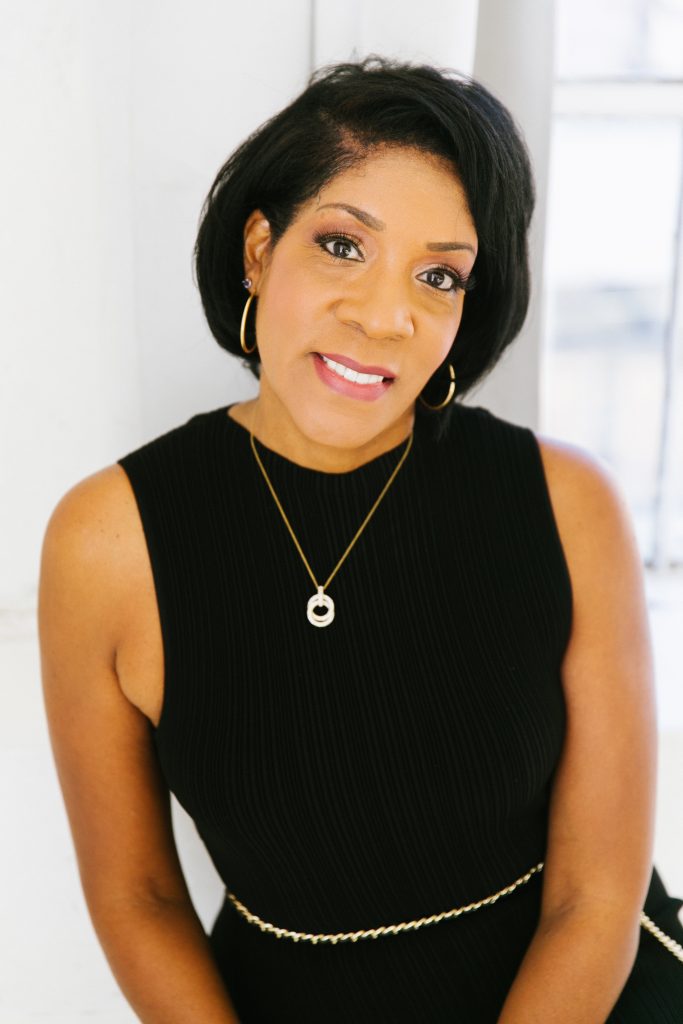
frazier group realty | branding sesssion 2020

She married young, ready to take on life, Ready to love, to lead, to be a wife, She built a house where discipline ran deep, And raised up daughters she intended to keep.   She was an entrepreneur before she knew the name, Always with an idea, always with a flame, A dealmaker, a designer, a shopkeeper, a chef, There has never been a room she could not fill with breath.   She is the root beneath the standing tree, The woman who made room for what could be, She planned the life that we can now all see, Our foundation, our world, our living destiny.   One leads in real estate and teaches the young mind, One brokers homes and leaves no student behind, One builds the stores where national commerce lands, One sources goods across the globe with steady hands.   Four different names, four different fields of ground, One mother’s voice inside them all the same, The lessons came without a single sound, They simply shaped the women that they became.   She is the root beneath the standing tree, The woman who made room for what could be, She planned the life that we can now all see, Our foundation, our world, our living destiny.   She was never decorative, she was never small, She walked the floor until the work was done, The daughters rose because she did not fall, She is our ray of light, the warmth of the sun.   Forty-four years and the roots are still alive, She is still building, still pushing us to thrive, The coffee shop, the realty, the counsel, and the call — She never stopped becoming after giving us her all.   Look at the picture on the cover of this page, Five women standing, every one a sage, You see the daughters but you must see the source — Ruby Lee Frazier set them on their course.   She is the root beneath the standing tree, The woman who made room for what could be, She planned the life that we can now all see, Our foundation, our world, our living destiny.

The Frazier Woman: A Tribute to Ruby Lee Frazier and the Daughters She Raised

1101eb 289033d742ab4bf69502c2bf3602ed98~mv2

By Eric Lawrence Frazier, MBA The picture in the header of this article is one of many group pictures I have of my wife and daughters. You can see more of them on the website of FrazierGroupRealty.com. They look like women who have stepped off the cover of Ebony magazine. They are Nubian queens — absolutely beautiful, gorgeous, and among the most intelligent people God has ever made. Of course, I am very biased. What can I say? I am Ruby’s husband and their father. I love them, and I have loved them their entire lives. I have loved my wife since the day we met, forty-six years ago, and I have been married to her for forty-four of those years. Look at the picture. It is also on the cover of this issue of Faith, Family, and Finance Magazine. Each of them accomplished, each of them grounded, each of them carrying themselves with the particular kind of quiet confidence that does not need to announce itself. When I look at that image, I do not see a lucky man. I see the product of a decision made forty-four years ago by a young woman who understood, even then, that the work of building a family is the most serious work a human being can take on. I married Ruby Lee Frazier on December 19, 1981. I was nineteen years old. She was young, too, and we had no particular roadmap for what we were stepping into. What we had was each other, a shared seriousness about life, and the unspoken agreement that we were going to build something real. I have spent forty-four years now on the other side of that agreement, and I can say without qualification: everything I have built, every credential I have earned, every platform I have created — none of it happens without her. Not a page of it. This article is not a celebration of me. It is a reckoning with what women actually do — what they carry, what they build, what they sacrifice, and what they produce. My wife and our daughters are not abstractions. They are the specific evidence I am drawing from. But the argument extends far beyond our household. Women are reshaping the economic, professional, and social landscape of this country in ways that the traditional narrative has consistently underestimated. The data is no longer subtle. The women are no longer waiting for permission. The Architect of the House Ruby Frazier did not stumble into leadership. She grew into it deliberately, the way a tree grows into the shape the light demands of it. When our daughters were young, she made a choice that is difficult to fully communicate in this era of individual metrics and personal career timelines — she chose to be present. Not because she lacked ambition. Anyone who knows Ruby understands that ambition is among her most defining qualities. She chose presence because she understood what was actually at stake. She was raising human beings, not just children, and she intended to do it with the same precision and intentionality that she brought to everything else. The results speak for themselves, but the results alone do not tell the story. What our daughters’ titles and degrees do not capture is the environment that produced them — the household where expectations were clear, where education was non-negotiable, where faith was lived rather than performed, where a woman managed the complexity of family life with the skill of a seasoned executive long before she became one. By the grace of God, I was able to provide financially in a way that gave Ruby the latitude to focus on the family. The arrangement was not a diminishment of her. It was a strategic deployment of her. We understood, even before we had the language for it, that the single most impactful investment we could make was in the full attention of a brilliant woman applied to the development of our children. The return on that investment is standing in that photograph. But Ruby did not stop there. Alongside raising four daughters, she built. She ran businesses from the earliest years of our marriage — a candle and incense business in the beginning, then into mortgage and real estate operations alongside me as we built our companies. In 2006, she founded Frazier Group Realty, Inc., where she serves as President and CEO, leading a full-service real estate firm covering residential and commercial properties across the Inland Empire, Orange County, and Los Angeles. She holds the NAR GREEN designation and the BPOR designation. She has served as a Board Member of the UC Riverside Foundation Board of Trustees for seven years. She is a Charter Member of the Riverside Downtown Lions Club, an Interior Design Consultant, a Notary Public, and co-founder of Copper Goat Coffee in Riverside — a brick-and-mortar business that represents her entrepreneurial range beyond real estate. She served as First Lady of our church during my years as senior pastor. She is sought after for her counsel and wisdom by people who have known her for decades and people who have just met her. She did all of this while being the center of our family. That is not a small thing. That is, in fact, the thing. The Daughters Jessica Frazier is the oldest, and she is perhaps the clearest expression of what her mother’s investment produced. She is currently the Principal Staff Analyst for Real Property at the Orange County Sanitation District, where she serves as the agency’s expert in all matters of real property — acquisitions, dispositions, appraisals, right-of-way, easements, contracts, and title. It is complex, high-stakes public sector work, the kind that requires both legal fluency and the ability to negotiate on behalf of institutions that serve millions of people. Simultaneously, she has served as a Real Estate Instructor at UCLA Extension since 2015, for nearly a decade, teaching, curriculum development, and professional formation of the next generation of real estate

Shared National Values

img

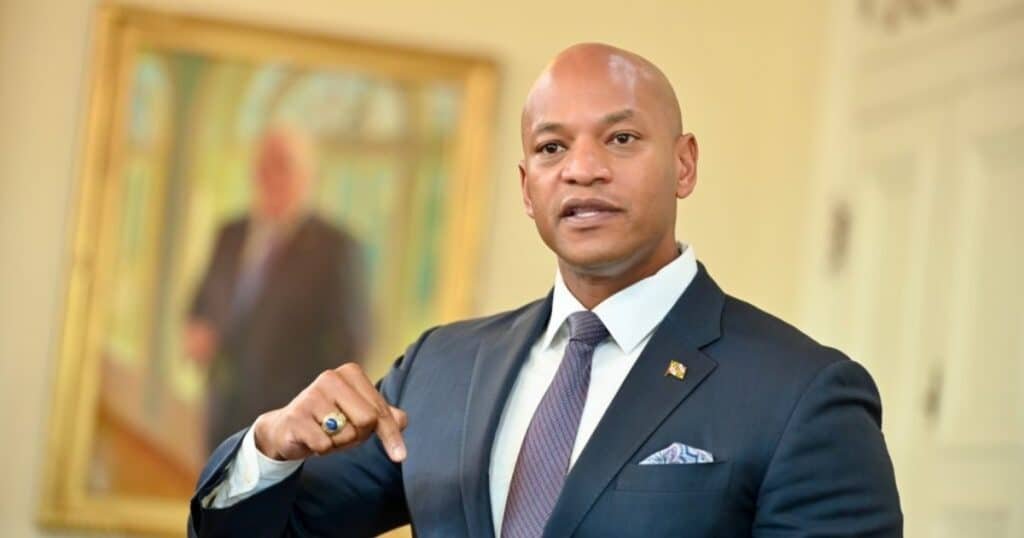
Non-White, Non-Heterosexual American History Under Erasure By Eric Lawrence Frazier, MBA On Sunday night, CBS News correspondent Norah O’Donnell sat down with Maryland Governor Wes Moore—the nation’s only Black governor—for a nationally televised town hall and asked him a question that, by now, most thinking Americans have already answered for themselves: Do you consider President Trump a racist? Moore’s response was precise. He did not say the word. He did not need to. “I think that’s a question for President Trump,” Moore said. “I can tell you I know how his actions hit Black folks, and how they hit people of color.” Then he added the line that carries the weight of this entire essay: “I think his actions probably give the answer before he even has a chance to answer it himself.” [1] The context for that exchange matters. Ten days earlier, on February 5, 2026—during Black History Month—President Trump’s official Truth Social account posted a video depicting former President Barack Obama and former First Lady Michelle Obama as apes. The video ran just over a minute, ostensibly about debunked 2020 election fraud claims. At the very end, the Obamas’ faces appeared superimposed on cartoon apes as “The Lion Sleeps Tonight” played in the background. The imagery invoked one of the oldest, most dehumanizing racist tropes in American history—one used by slave traders and segregationists for centuries to deny Black humanity. [2] The White House initially defended the post. Press Secretary Karoline Leavitt called it “an internet meme” and told reporters: “Please stop the fake outrage.” Twelve hours later, the video was deleted. A “White House staffer” was blamed. Trump refused to apologize. “No, I didn’t make a mistake,” he said aboard Air Force One. Republican Senator Tim Scott—the only Black Republican in the Senate—wrote: “Praying it was fake because it’s the most racist thing I’ve seen out of this White House.” [3] Governor Moore chose to let the record speak. And that is exactly what I intend to do here. Not because I lack the conviction to state my own position—I will get to that—but because the evidence is so overwhelming, so structurally clear, that the conclusion practically announces itself. What follows is a documented account of what this administration has done to the historical record of every American community that is not white and heterosexual. Every claim is sourced. Every source is linked. Read it. Decide for yourself. And then ask yourself what kind of country erases the truth about its own people while spending ten million dollars to restore a monument to the Confederacy. The Executive Framework On March 27, 2025, President Trump signed Executive Order 14253, titled “Restoring Truth and Sanity to American History.” The order directed the removal of what it called “divisive, race-centered ideology” from Smithsonian museums, educational and research centers, the National Zoo, and the National Park Service. It prohibited the Smithsonian from hosting or funding exhibits that “degrade shared American values, divide Americans based on race, or promote programs or ideologies inconsistent with Federal law and policy.” The order directed Vice President JD Vance, in his capacity on the Smithsonian’s Board of Regents, to oversee the elimination of “improper, divisive, or anti-American ideology” from all Smithsonian properties. [4] The Interior Department subsequently issued Secretary’s Order 3431, implementing the executive order across the National Park Service. The Department of Defense separately ordered a department-wide “digital content refresh” to remove diversity, equity, and inclusion material from all platforms. [5] These are the legal instruments. Everything that follows flows from them. But the question no one in the White House wants to answer is this: shared by whom? And at whose expense? Because when you examine the actions taken under these orders—not the rhetoric, not the press releases, but the actual physical acts of removal, deletion, and erasure—a pattern emerges that is impossible to misread. The Erasure of African American History Philadelphia: The President’s House In January 2026, National Park Service crews descended on the President’s House Site at Independence National Historical Park in Philadelphia and physically removed thirteen interpretive panels from the exhibit titled “Freedom and Slavery in the Making of a New Nation.” The panels documented the lives of nine people enslaved by George and Martha Washington during the 1790s, when Philadelphia was the nation’s capital. Among the stories told was that of Oney Judge, who famously escaped bondage and remained free despite Washington’s repeated attempts to recapture her. Workers used crowbars. [6] This exhibit was the product of eight years of activism by attorney Michael Coard and the Avenging the Ancestors Coalition. It was the first slavery memorial of its kind on federal property in the history of the United States. It was not a theory. It was not ideology. It was a biographical fact about real human beings who lived, worked, suffered, and in some cases escaped from that specific location. The Interior Department justified the removal by saying the panels did not align with “shared national values”—and then called Philadelphia’s lawsuit to restore them “frivolous,” aimed at “demeaning our brave Founding Fathers.” [7] On Presidents’ Day—February 16, 2026—U.S. District Judge Cynthia Rufe, a George W. Bush appointee, issued a forty-page opinion ordering the exhibit restored. She opened with George Orwell: “As if the Ministry of Truth in George Orwell’s 1984 now existed, with its motto ‘Ignorance is Strength,’ this Court is now asked to determine whether the federal government has the power it claims—to dissemble and disassemble historical truths when it has some domain over historical facts. It does not.” The judge ruled the removal “arbitrary and capricious” and found it caused “irreparable harm.” [8] Harriet Tubman and the Underground Railroad In February 2025, the National Park Service rewrote its webpage on the Underground Railroad. Harriet Tubman’s photograph was removed from the top of the page. Her famous declaration—“I was the conductor of the Underground Railroad for eight years, and I can say what most conductors can’t say—I never ran my train off the track, and I never

The Measure of a Life in the Age of Outrage
jpeg

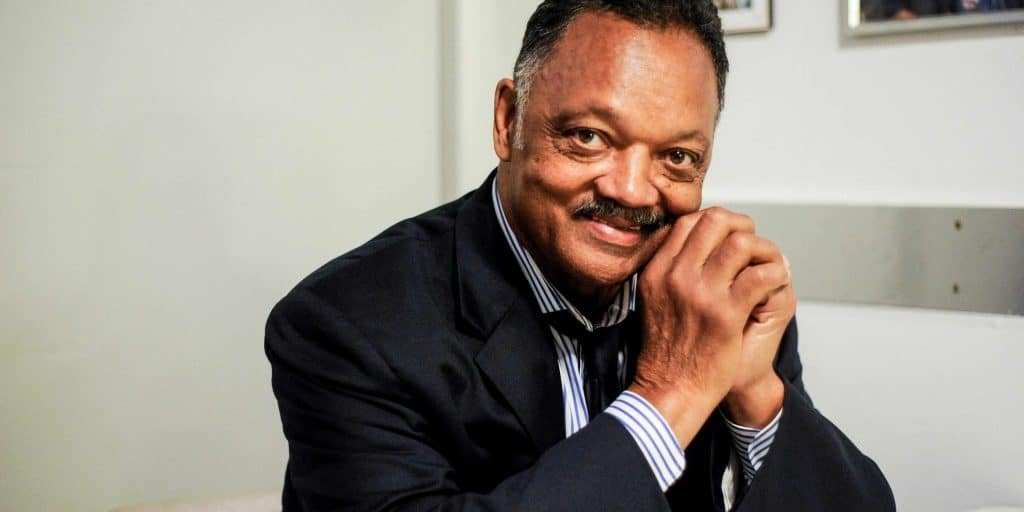
How Civilizations Decide What to Remember When a public figure dies, the first headline becomes the first verdict. Before the memorial services are planned, before the family has fully grieved, before the arc of history has had time to settle, the media decides which sentence will introduce that life to the next generation. Reverend Jesse Louis Jackson died at the age of eighty-four. Within hours, major outlets led with a moral scandal from the late 1990s — an extramarital affair that became public in 2001 and was acknowledged, apologized for, and absorbed into the public record more than twenty-five years ago. The event is not disputed. It happened. It was wrong. It was addressed. But the more significant question is not whether it occurred. The more significant question is this: What does it reveal about a society when that becomes the headline of a life that helped shape modern America? That is not a defense of a man. That is an examination of a culture. The Outrage Economy and the Incentives of Memory We do not live in a purely journalistic age. We live in an engagement-driven age. The modern media ecosystem operates within what can be called the outrage economy, a market structure in which emotional intensity, especially moral scandal and indignation, drives engagement; engagement drives algorithmic amplification; amplification drives advertising revenue; and revenue shapes editorial emphasis. In this system, proportion is often subordinate to provocation. A nuanced reflection on decades of civil rights advocacy does not outperform a morally charged headline. Algorithms do not reward balance; they reward reaction. The metric is not historical accuracy. The metric is engagement velocity. This does not require malice. It requires incentives. When the economic structure rewards outrage, outrage becomes the lead. The consequence is subtle but profound: the architecture of memory becomes distorted. A chapter becomes the book. A mistake becomes the measure. And if this is how we now remember leaders, it reveals something larger than media preference. It reveals a shift in how civilization weighs human lives. The Ethics of Remembrance Every society chooses what it amplifies in memory. That choice reveals its moral framework. If we elevate scandal above sacrifice, we train future generations to fear leadership rather than pursue it. If we collapse a lifetime of institutional impact into a private moral failure, we teach that redemption has no civic value. If we demand moral perfection as the prerequisite for public contribution, we will inherit silence instead of courage. History has never been written by flawless people. It has been shaped by people willing to act despite imperfection. The American founding generation was imperfect. Presidents have been imperfect. Civil rights leaders have been imperfect. Legislators, judges, organizers, activists — all imperfect. Yet we do not erase their contributions because of their humanity. We measure them by the scale of their public impact. The measure of a life is not the absence of failure, but the scale of its contribution. Jesse Jackson in Historical Continuity To understand Jesse Jackson’s life, one must situate it within the arc of African-American political development. He was born in 1941 into the legal architecture of segregation. He emerged in the 1960s as a protégé of Dr. Martin Luther King Jr., working within the Southern Christian Leadership Conference and leading Operation Breadbasket — a program that translated moral protest into economic leverage. He confronted corporations not with rhetoric alone, but with organized boycotts demanding jobs and investment in Black communities. That was not symbolic activism. It was a structural intervention. In the 1970s and 1980s, he founded what would become the Rainbow PUSH Coalition, expanding the conversation from civil rights to political empowerment and economic inclusion. Then came the presidential campaigns of 1984 and 1988. In 1988, Jesse Jackson won primaries and caucuses. He built multiracial coalitions. He mobilized voters who had never been treated as central to national politics. He expanded the Democratic electorate. Before Barack Obama’s candidacy became viable, the psychological barrier had already been weakened. The image of a Black man standing on a presidential debate stage demanding national leadership had already been normalized. Jackson did not arrive at the mountaintop of electoral victory. But he expanded the pathway. History does not only record who wins. It records who makes winning possible. Private Failure and Public Contribution A private moral failure affects family, trust, and personal integrity. It deserves acknowledgment. It requires accountability. Public life affects institutions, laws, coalitions, economic access, and political possibilities. These are distinct domains. To confuse them is to collapse categories. Jesse Jackson’s affair in the late 1990s was a moral failure within the realm of personal life. His decades of advocacy, organizing, coalition-building, and political mobilization operated within the realm of public institutional transformation. One does not negate the other. If it did, no leader would survive historical scrutiny. The danger is not in acknowledging imperfection. The danger is in allowing imperfection to eclipse structural contribution. The Uneven Standard of Memory History reveals that moral failures do not universally define public legacies. Founding Fathers who owned enslaved people are still primarily remembered as architects of constitutional government. Presidents with documented personal scandals are still measured by legislative impact and geopolitical consequence. Public memory has always involved proportion. The question, then, is not whether imperfection should be reported. It should. The question is whether the proportion should be preserved. If standards of remembrance fluctuate depending on cultural convenience, then memory becomes political theater rather than historical assessment. A mature civilization must be capable of holding complexity without collapsing into caricature. Redemption and Continuity There is another dimension often ignored in contemporary commentary: the possibility of continued contribution after failure. Jesse Jackson did not disappear after 2001. He continued advocating. He continued organizing. He continued speaking. He continued shaping conversations around economic justice, voting rights, and corporate accountability. If public life allows no room for repentance, apology, and continued contribution, then we have abandoned one of the most foundational moral principles within Western and Christian ethical

What If Death Is Not What We Think It Is?

coff

On grief, presence, and the permanence of life By Eric Lawrence Frazier, MBA A friend of mine died recently. I did not attend the funeral. I have not yet spoken to his wife. I have known this family for most of my spiritual life, and when it mattered most, I was not there. There is no way to dress that up. It is a failure of presence—the one thing that cannot be replaced by a card, a call, or an apology after the fact. His death reminded me of something I already knew but constantly ignore—perhaps because it is too much for me to handle. To live with the awareness that death is rapid, unceasing, and indiscriminate is to live in a kind of low-grade terror that most of us manage by simply not thinking about it. But what do you do with the fact that life is impermanent? Not as a concept—as a reality. What do you do with it emotionally? Practically? Operationally? What do you do with the fact that the people you love—and the people you have yet to call back, visit, or sit with—can be gone before you get around to it? My friend was here. Now he is not. And no amount of regret changes the arithmetic of that. This is not an abstract ideology. It is not philosophical. It is not some transcendental meditation statement that we nod at in conversation and then forget by dinner. It is the immediate, undeniable reality of the human condition. And there is no intellectual access to some grand theology or mystic teaching that will change the reality of the facts. Every single night, I turn on the news and learn that someone else is gone. A family seated in a restaurant, sharing a meal—and a car crashes through the wall. A commuter on the freeway, ten minutes from home. Children in a school. Passengers on a flight. People who made plans for the evening and never saw the afternoon. No doctrine prepares you for that. No sermon makes it manageable. The facts simply are. And yet—we do not live in ignorance of our eternal being. We know something. We have always known something. Not because a preacher told us, and not because a book instructed us, but because we experience it every moment we are alive. We are here, right now, not plugged into anything, not powered by any external source, not sustained by any machinery of our own design. We are the living and breathing manifestation of something that operates under its own power—or, more precisely, under divine power. Every plant knows this. Every animal knows this. Every living creature on this earth operates the same way—unplugged, self-sustaining, animated by a force that no laboratory has ever produced and no technology has ever replicated. The evidence is overwhelming, and it has been in front of us since the day we were born: life is. It has no beginning we can locate and no ending we can verify. It simply is—just like the Creator. And death is not its opposite, because life has no opposite. It is time that we look at death differently. We have to—for the very sake of our mental sanity. We cannot allow death to drive us into paralysis, into fear, into a state where we stop receiving all that life brings us continuously and incessantly. The sun does not recognize death the way we recognize death. The ocean does not. The forest does not. Because there is no death—not in the way we have been taught to understand it. There is only change. There is only transition. There is only the body reaching the limit of what it can hold, and the life within it moving beyond that limit into what is next. Our problem with seeing death differently is that our minds will not let us. The mind is a remarkable instrument, but it is also a cage. It limits us to the present moment and the pain that moment contains. It drags us into the past—into grieving over what we miss, what we should have done, what we could have done—and forces us to relive that pain by projecting us into the future, where anxiety and fear wait with their catalog of what could happen, what might happen, what probably will happen. The mind oscillates between regret and dread, and it calls that oscillation “reality.” But here is what the mind cannot account for: you can observe it. You can watch your own mind think. You can step outside the thought, examine it, critique it, and decide whether to follow it or let it pass. That capacity—that ability to observe the observer—is not the mind. It is something beyond the mind. It is the evidence that you are operating with an intelligence that transcends your own cognitive machinery. You are not your thoughts. You are not your fears. You are not the grief that floods you when the phone rings with bad news. You are the awareness that watches all of it happen and remains after the wave passes. That awareness is not biological. It is not chemical. It is not generated by neurons. It is the eternal part of you—the part that was here before your first memory and will be here after your last breath. And it is the proof, available to you right now in this moment, that you are more than the body and more than the mind that inhabits it. If that is true—if we are eternal beings temporarily housed in bodies that are not—then everything we have been taught about death needs to be reexamined. Not from theology. Not from philosophy. From the direct experience of being alive right now and recognizing that the life in you did not come from you and is not sustained by you. It is sustained by something else entirely. And that something does not die. The Assumption We Never Question When someone dies, we say they are

The Intellectual Weight of Freedom

wesmorre

Reading, Thought Leadership, and the Responsibility of American Citizenship By Eric Lawrence Frazier, MBA I recently watched an interview with Governor Wes Moore and read his LinkedIn post recommending works by Black authors. What struck me was not merely the list of books, but what the list revealed. You can learn a great deal about a leader by observing what they read, what they recommend, and what intellectual traditions shape their thinking. A person’s reading habits form the architecture of their convictions. Books reveal the scaffolding of belief. After reading his post, I sent a message to my children encouraging them to continue reading deeply and consistently. To be clear, my children are grown adults—the youngest is thirty-two years old. This was not a new exhortation. I have urged them to read their entire lives. Reading has always been a discipline in our household because it sharpens the mind, refines judgment, and strengthens the ability to lead responsibly. Governor Moore’s recommendations did not introduce the idea of reading to me; they reinforced the importance of intellectual formation in leadership. Black literature has always served as both a historical record and a moral compass. It preserves memory, challenges complacency, and forces engagement with difficult truths. When a leader publicly affirms that tradition, it communicates something important about how he understands identity, struggle, and responsibility. Black leadership informed by Black literature carries a depth that cannot be manufactured through political branding. It is rooted in narrative, sacrifice, endurance, and disciplined thought. However, true leadership in America cannot be confined to race, ethnicity, or religious identity. Black intellectual tradition strengthens Black leadership, but American leadership must ultimately rise above categories. Real leadership in this nation is forged through diversity—diversity of thought, background, belief systems, economic experiences, immigration histories, and political philosophies. That diversity is not an obstacle to unity; it is the foundation of our constitutional experiment. The strength of the United States has never been uniformity. It has always been pluralism. Our freedoms are sustained by the coexistence of disagreement without disintegration. We argue fiercely, sometimes imperfectly, but we remain one nation because our constitutional structure protects dissent. That architecture—separation of powers, representative government, checks and balances—prevents power from consolidating in a single personality. America’s greatness has never been embodied in one individual. Presidents come and go. Administrations change. Movements rise and fall. But the nation remains because it is rooted in law, institutions, and the will of a diverse population. Immigration has strengthened this country generation after generation. Debate has refined it. Reform has expanded its promise. The idea that our greatness depends on a single figure misunderstands the source of our endurance. At its core, leadership in America requires citizens who are willing to carry the intellectual weight of freedom. Freedom is not self-executing. Liberty is not automatic. Representative government demands participation from individuals who are informed, disciplined, and courageous enough to speak. A thought leader is not someone waiting for permission to articulate a position. A thought leader is someone prepared to express convictions on life, family, business, economics, politics, and faith—and to defend those convictions with clarity and reason. Every human being has the capacity to influence thought. The relevant questions are whether one desires that responsibility, whether one has developed the discipline necessary to sustain it, and whether one is willing to endure criticism without retreating into silence. Intellectual courage is not loudness. It is steadiness. It is the ability to articulate disagreement without dehumanizing opponents. It is the willingness to engage in substance rather than insult. I believe leadership is a calling. I began preaching at nine years old. That early formation instilled in me the understanding that words carry responsibility. Yet the ministry cannot remain confined to doctrinal repetition or internal debates. Faith must engage life. It must address marriage, employment, economics, governance, education, and public policy. Leadership that does not engage the realities people face each day becomes performance rather than service. I consider myself a citizen willing to carry the intellectual weight of freedom. I write daily. I articulate my views on what is happening in this country. I disagree when I believe leaders—whether presidents, members of Congress, governors, or local officials—depart from representing the will of the people. That is not rebellion; it is citizenship. Our constitutional framework presumes engaged participation. Silence in the face of conviction is not humility; it is abdication. My love for this country does not ignore its history. America bears the scars of subjugation—of Native peoples, of enslaved Africans, of segregation and exclusion. Those chapters are not to be denied or romanticized. They are to be confronted honestly. Yet it is equally true that we have progressed. Over nearly 250 years, the definition of liberty has expanded. The circle of participation has widened. The work is unfinished, but the trajectory is real. The journey is not over. In many respects, we are still in the early chapters of our democratic maturation. Our current challenges are not rooted in a lack of innovation, wealth, or intellectual capacity. They are rooted in the erosion of civil discourse, in substituting ridicule for argument, in elevating loyalty above principle, and in leading with fear rather than collaboration. Those tendencies weaken institutions more than disagreement ever could. Freedom requires citizens who read deeply, think critically, and debate honorably. It requires individuals willing to hold all leaders accountable without surrendering to cynicism. It requires engagement that rises above party allegiance and focuses on constitutional integrity. America does not need spectators. It needs participants. I am one of them. I will continue to read. I will continue to write. I will continue to speak thoughtfully and firmly about the issues shaping this nation. I will do so not out of hostility, but out of responsibility. The preservation of freedom demands intellectual discipline and moral courage from ordinary citizens. America endures not because a president declares it great, but because its people sustain its principles. That work belongs to each of us. The question

The Pre-Approval Trap: What a Mortgage Really Is—and Why Most Buyers Confuse Approval With Affordability

image (24)

I have worked with homebuyers for years—across boom markets, rate shocks, bidding wars, and “normal” markets that never feel normal when you are the family trying to buy your first home. I have sat at kitchen tables, reviewed paystubs and bank statements, explained Loan Estimates line by line, and watched the same emotional pattern repeat itself with different faces. Most buyers want more house than they can afford. I understand why. A family is living in a 1,000-square-foot apartment with two or three children. Somebody is always in somebody’s way. Privacy is gone. Noise is constant. Stress is a background hum that never turns off. They do not only want space—they want relief. They want dignity. They want a fresh start. So the dream starts assembling itself in their minds before they ever talk to a lender. The wife imagines a big kitchen—granite countertops, an island, new appliances, that magazine-spread feeling of “I made it.” The husband imagines a three-car garage, a workshop corner, a big backyard, a place where the kids can run. Both of them imagine the neighborhood: tree-lined streets, safety, good schools, a white picket fence, the feeling of finally being “out” of the apartment life. Nothing about wanting better is wrong. The danger begins when the picture in their mind costs two or three times more than their actual budget—and yet they still qualify for the loan. That single moment—the phone call or email that says “Congratulations, you’re pre-approved”—becomes psychological permission. It feels like the bank just certified their dream. It feels like a professional, objective third party just validated what their heart already wanted. It feels like the argument is over. But what most buyers do not understand is this: a pre-approval is not a budget. And that is where the dream becomes the trap. Because in reality, many buyers buy a house that fits their pre-approval but not their budget. They will make it work. They will stretch. They will hustle. They will take on overtime. They will cut corners. They will sacrifice. They will tell themselves, “It’s only for a season,” and then that season becomes a decade. They will feel proud because they moved into a better neighborhood. They will feel accomplished because their friends are impressed. They will feel successful because they “leveled up.” And then, for many, the pride slowly turns into pressure—quiet at first, then constant. The dream flips. The dream becomes a nightmare, not because homeownership is bad, not because lending is immoral, and not because the buyer is foolish. The nightmare happens because the foundation was wrong. They did not need the biggest house they could qualify for. They needed a house that fits their budget. They needed a house they can actually afford, that they can actually pay off, that gives them shelter, stability, and the margin to build real wealth. That sentence sounds simple. It is not simple in practice, because it requires a person to stop using the house as a statement of identity and start treating the house as a disciplined financial decision. To do that, we have to get clear about two things that Americans routinely confuse: What a budget is What a mortgage really is 1) Budget vs. Pre-Approval: Two Different Universes Now, in case you are lost, let me define what a budget is—because a budget is not a mortgage pre-approval. A pre-approval is what a lender is willing to lend you based primarily on your credit profile, assets, and gross income, using underwriting guidelines and ratios that are designed to protect the lender. A budget is what your life can sustain based on take-home pay, real living expenses, future goals, and the reality that problems do not ask permission before they show up. That difference is not a minor technicality. That difference is the line between a mortgage that serves your life and a mortgage that consumes your life. The first difference: a pre-approval does not take into consideration your living expenses A lender’s underwriting model is not built around your actual household rhythm. Lenders are not fully counting, in the way you experience them: groceries and household supplies gasoline, tolls, commuting, and parking utilities that rise with square footage childcare and school costs cell phones and the internet car insurance, repairs, and replacements health insurance considers payroll deductions, not your lived medical reality prescriptions, copays, dental work, and “surprise” medical bills family obligations (supporting parents, helping siblings, church giving, community commitments) the cost of being alive in a modern economy   Some of these items are “considered” indirectly through residual income calculations in certain programs, or through general assumptions, but that is not the same as your real monthly cash flow. Most buyers discover this only after they move in—when the new house has new costs, the utility bill rises, and the “unknown unknowns” show up. The second difference: a pre-approval is based on gross income, not take-home pay This is where the illusion becomes dangerous. Many underwriting ratios are based on gross income—income before taxes, before insurance, before retirement contributions, before payroll deductions. But you do not live on gross income. You live on take-home pay. So when a buyer says, “The bank says my debt-to-income ratio is 45%,” they often do not realize what that means in real life. Once you remove taxes and deductions, the household’s actual debt burden can feel like 70% to 75% of take-home pay, especially when the mortgage is at the top of the pre-approval range. That leaves a thin slice of cash flow for everything else. Food. Gas. Utilities. Insurance. Maintenance. Emergencies. Saving. Investing. Living. And here is the part nobody wants to admit until the stress becomes permanent: You cannot build wealth without margin. If your housing decision kills your margin, you might still be “approved,” but you are not stable. You are surviving. That is what happens when people treat pre-approval as permission instead of treating a budget as protection. 2) Margin: The Difference Between Homeownership and

The Super Bowl Halftime “Culture War” Is a Recruitment Campaign, Not a Lived Reality
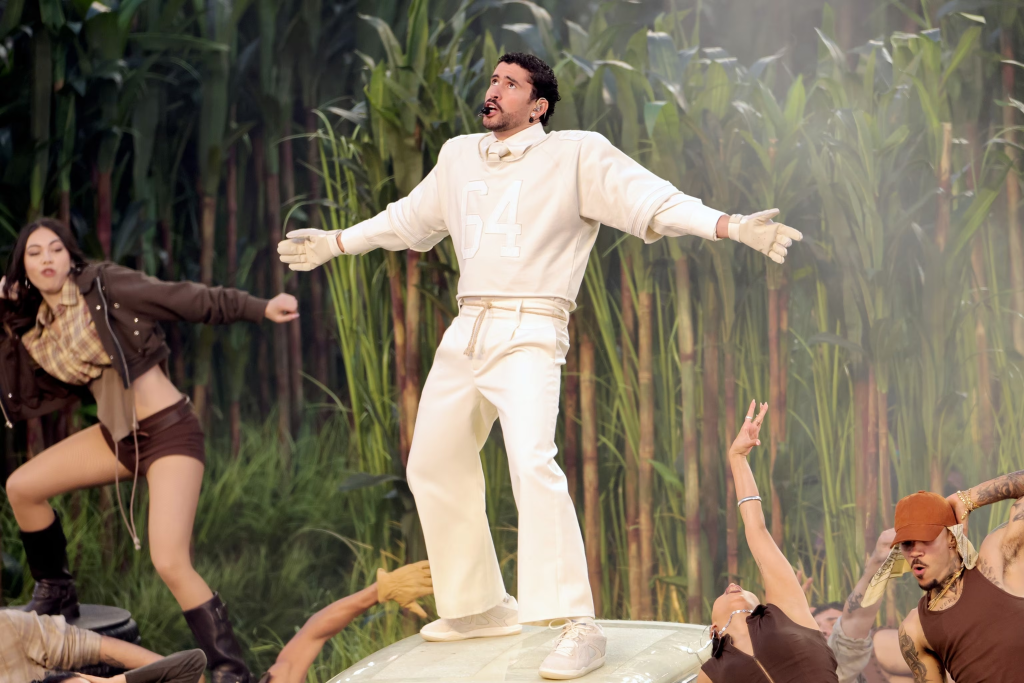
image (23)

Every year, the Super Bowl delivers spectacle. But it also delivers something more subtle and more dangerous: a ready-made interpretation package. A performance is no longer allowed to remain a performance. It becomes a moral battlefield. A set list becomes a referendum on national identity. A wardrobe choice becomes a threat. A lyric becomes an “attack.” And millions of people—many of whom were perfectly at peace an hour earlier—are suddenly told they are participants in a culture war that allegedly surrounds them at all times. That is not analysis. That is recruitment. On February 8, 2026, Bad Bunny headlined the Apple Music Super Bowl LX Halftime Show at Levi’s Stadium in Santa Clara, California. The performance leaned heavily into Puerto Rican and broader Latin cultural symbolism, included major guest appearances, and ended with an explicit unity message—“Together We Are America.” Multiple mainstream outlets summarized it as a celebration of Latin culture, Spanish-language music, and pan-American unity. Then, almost immediately, the outrage economy did what it always does: it converted symbolism into warfare. Turning Point USA promoted and staged an “All-American Halftime Show” as counterprogramming—an explicit attempt to frame the moment not as entertainment, not as taste, not as artistic preference, but as a contested battlefield over “who America is.” Wired covered the counter-event as exactly what it was: a culture-war reaction product built from outrage over the halftime show.  ABC News also reported the counterprogramming concept directly: a parallel “halftime show” positioned as an alternative.  The Los Angeles Times noted the same dynamic in its reporting on how the halftime show came together, including reference to the opposing event. That sequence is the point. A real war does not need to be manufactured through content strategy and counterprogramming. A real war does not require a marketing plan to sustain the perception that it exists. If your “war” must be continuously launched, refreshed, and fed, what you have is not a war in any ordinary sense. What you have is a monetizable narrative frame. What’s really happening: symbolic events get turned into recruitment opportunities A halftime show is entertainment. But in an outrage economy, entertainment becomes a weaponized symbol—because symbols are easier to weaponize than facts. Facts require patience, verification, and context. Symbols can be framed in seconds. The playbook is consistent. First, a cultural moment happens: a halftime show, a movie, a classroom dispute, a corporate ad. Then a framing class arrives—commentators, activists, political entrepreneurs—and interprets the moment not as one event among many, but as an existential threat. Then counterprogramming is launched: alternative shows, boycotts, callouts, and “patriotic” versions designed to present the nation as two opposing camps. The platforms amplify it because outrage drives engagement, and engagement drives revenue. Finally, people become the product: their anger becomes fuel that powers the system. At that point, the important question is not “Who won?” The important question is “Who profits?” Because the truth is simple. Your attention is the commodity. Your outrage is the metric. Your indignation is the revenue stream. And the “war” narrative is the sales pitch that keeps you scrolling, donating, posting, and fighting. The war frame turns ordinary citizens into predictable consumers of grievance—and that predictability is what can be monetized. The war frame is not neutral; it is a demand for allegiance The culture-war framing is not merely describing society. It is asking you to enlist. It pressures you to interpret every symbolic difference as hostility and every disagreement as betrayal. It tells you that you must pick a side, perform loyalty, and treat neighbors as threats. It trains you to experience pluralism as danger and disagreement as invasion. But America isn’t one culture with one rightful default identity. It is a plural society made up of overlapping communities—regional, religious, ethnic, generational, professional—each with its own histories, tastes, and moral languages. That reality is not automatically a crisis. It becomes a crisis only when someone insists that pluralism is warfare. This is why I reject the war story. Not because disagreement doesn’t exist, but because the war frame is an instrument. It is used to create a constant emotional emergency, to convert normal human differences into permanent antagonism, and to turn ordinary people into predictable, profitable voters and consumers. The evidence is not theoretical; it is empirical and personal My argument does not require you to accept my worldview. It requires you to look at your schedule. Look at your family. Your job. Your mortgage statement. Your retirement account. Your daily obligations. Your neighborhood. Your friendships. Your faith community. Your real problems. Now ask yourself, without performing for anyone: is your life truly organized around a “culture war,” or is your life organized around survival, love, responsibility, and practical goals? Do you wake up thinking about culture war strategy, or are you thinking about what you need to get done today? Are you fighting strangers to be your friend or to adopt your worldview, or do you mostly spend time with people who already see the world the way you do? Is the “culture war” sitting at your dinner table, in your carpool line, at your workplace, on your street? Is it coming into your home demanding that you take a position on a halftime show? For most people, the honest answer is no. Most people are not living a war. They are living a life. The “war” is primarily something that arrives through screens, through clips, through reaction reels, through outrage commentary, through algorithmic amplification. If the “war” is mostly on your phone, mostly in your feed, mostly in the performance of outrage, then it is not a war you are living. It is a war you are being recruited to perform. And I refuse recruitment. Two extremes, one business model The halftime show and the “All-American alternative” are presented as two extremes. But the deeper commonality is that both become content units in the same attention economy. One becomes a celebration that draws mass attention. The other becomes a counter-ritual designed to