
Juneteenth Part 2: Free on Paper, Not in Practice: The Deliberate 2.5-Year Delay Nobody Talks About Enough

The gap between the Emancipation Proclamation and Juneteenth was not an accident. It was a choice. Every American schoolchild learns, at some point, that Abraham Lincoln signed the Emancipation Proclamation on January 1, 1863. What they are far less often taught is what happened or didn’t happen in the 913 days that followed. Because between January 1, 1863 and June 19, 1865, an estimated 250,000 enslaved people in Texas continued to wake up, work, be bought and sold, be punished, and be kept in chains. Legally free. Practically enslaved. And the people who had the power to tell them otherwise, in many cases, chose not to. The 2.5-year gap is not a footnote. It is the whole point of Juneteenth. And understanding it honestly, not as a communication failure or a bureaucratic delay, but as a calculated act of economic self-interest, changes what it means to celebrate June 19th entirely. What the Proclamation Actually Was Before getting to the delay, it matters to understand what the Emancipation Proclamation actually did and what it didn’t. Implementation of the Emancipation Proclamation was limited in areas still under Confederate control, meaning that even after it took effect on January 1, 1863, it could not be enforced in places where Union troops had no presence. Texas was the furthest west of the Confederate states, deeply hostile to Union authority, and crucially, almost entirely free of the Union military presence that would have been required to enforce the order. A lack of Union troops in the rebel state of Texas made the order difficult to enforce. Some historians blame the lapse in time on poor communication in that era, while others believe Texan slave-owners purposely withheld the information. Both explanations are technically accurate. But the second one is far more damning, and far more relevant to understanding not just Juneteenth, but the pattern it established. Texas Was Not Ignorant It Was Strategic The popular mythology around the delay treats it as a matter of distance and slow communication, that the news simply hadn’t reached Texas yet. This is, at best, a half-truth designed to soften what was actually happening. In early 1865, Texas newspapers still contained advertisements of slaves for sale, as Texans went about their slaveholding business openly defying compliance with the proclamation. This was not ignorance. These were people who knew, who had access to newspapers, who were aware the war was turning. They simply had no intention of complying. What made Texas uniquely resistant was not geography alone, it was a deliberate strategy of concentration. The slave population in Texas increased dramatically from 182,000 in 1860 to more than 230,000 by the end of the war, as slaveholders from other Southern states transported enslaved people to Texas specifically to avoid invading Union armies. Texas had become, in effect, a last refuge for the institution of slavery, a place where enslavers from Louisiana, Mississippi, and other states relocated their human property when Union forces started closing in elsewhere. Some 150,000 enslaved people were taken to Texas after Union forces captured Vicksburg, moved specifically to prevent their escape to Union lines. Think about what this means. Enslaved people who had been living in states where the war’s turning tide was bringing them closer to freedom were physically removed, transported westward, and placed behind a Confederate wall that the Union had not yet penetrated. Texas was a safe haven for slaveholders because of the limited Union presence in the state, and slave owners attempted to “refugee” their slaves, removing them away from Union lines, hiding them from federal troops, sometimes at gunpoint or in shackles. Freedom was not slow in arriving. It was being actively outrun. The Harvest That Couldn’t Wait Even when the war ended in April 1865, two months before Juneteenth, the announcement of freedom in Texas did not follow immediately. One account holds that federal troops actually waited for slave owners to reap the benefits of one last cotton harvest before going to Texas to enforce the Emancipation Proclamation. Whether that specific account is literally true is debated by historians. What is not debated is what scholar Henry Louis Gates documented: on plantations, masters had to decide when and how to announce the news, and it was not uncommon for them to delay until after the harvest. Even in Galveston city, after General Granger arrived and read the order, the ex-Confederate mayor flouted the Army by forcing the freed people back to work. The freedom that arrived on June 19, 1865, was not, therefore, the clean and complete moment of liberation it is sometimes portrayed as. It was one announcement, made in one port city, by one General with 2,000 troops, in a state where enforcement was patchy at best and violently resisted at worst. After Juneteenth The Freedom That Wasn’t Here is the part that is almost never taught: Juneteenth was not the end of enslavement in Texas. For many, it was merely the beginning of a new, legally rebranded form of it. Some of the formerly enslaved who spoke in the Texas Slave Narratives, a Federal Writers’ Project that collected firsthand accounts of slavery from 1936 to 1938, reported not being freed for several months or years, even after Granger’s arrival in Galveston. According to historian Elizabeth Hayes Turner, one former slave, Katie Darling, continued working for her mistress another six years after emancipation and said, “She whip me after the war just like she did ‘fore.” Six years after Juneteenth. Six years after the legal proclamation. Six years of continued bondage because the law existed on paper and nowhere else in her world. Some Texas slaves reported being held in bondage for as much as six years after emancipation. And after Juneteenth, Black people were murdered, lynched, and harassed by whites. “The war may not have brought a great deal of bloodshed to Texas,” noted historian Elizabeth Hayes Turner, “but the peace certainly did.” The slave patrols that had enforced bondage before the war didn’t dissolve overnight. Patrols
Juneteenth Part 1: The Woman Who Walked So a Holiday Could Run

The story of Opal Lee — the 89-year-old in tennis shoes who refused to let America forget Most Americans who took June 19th off work in 2022, the first year Juneteenth was widely observed as a federal holiday, probably do not know the name, Opal Lee. They may have grilled food, attended a community festival, or simply enjoyed a long weekend. And while all of that is fine, the near-total erasure of the woman behind that holiday from mainstream public consciousness is exactly the kind of thing that should make us uncomfortable. Because behind every federal holiday, there is almost always a political process. Behind this one, there was a 89-year-old Black woman in tennis shoes walking through America with a petition and a plan. Opal Lee’s story does not begin with activism in the conventional sense. It begins with fire. Born Into a Country That Was Already on Fire Opal Lee was born on October 7, 1926, in Marshall, Texas, where she grew up learning about Juneteenth from the annual neighborhood celebrations around her. Her family moved to Fort Worth when she was 10. It was a new city, a new neighborhood and a new kind of hostility. In 1939, 82 years before June 19th became a federal holiday, a white mob of 500 people surrounded the family’s home in Fort Worth and burned it to the ground. The date on the calendar when the mob came: June 19th. The same day the family was quietly celebrating Juneteenth. Although police arrived at the scene, they were unable or unwilling to keep the rioters from destroying everything the family owned. She was 12 years old. While being interviewed decades later for the Fort Worth Star-Telegram, Lee said: “The fact that it happened on the 19th day of June has spurred me to make people understand that Juneteenth is not just a festival.” That sentence, quiet and plain, contains everything you need to understand what drove the next eight decades of her life. She didn’t just lose a house on Juneteenth. She watched the America that Juneteenth was supposed to celebrate burn that house down. The irony was not lost on her. It never was. The Years Nobody Talks About Before she became the “Grandmother of Juneteenth,” Lee was a teacher, a school counselor, and a quiet but tireless community organizer. After a career as an educator and home school counselor, Lee retired in 1976 and became active in community causes in the Fort Worth area, organizing the city’s annual Juneteenth celebration and co-founding the Tarrant County Black Historical and Genealogical Society. These decades, the 1970s, 80s, 90s, tend to get skipped in the telling of her story, because the world wasn’t paying attention yet. But this is where the real work happened. In the 1980s she became involved with a local food bank, which expanded under her leadership and led her to start Opal’s Farm. Using land donated by the local government, she planted fields of watermelon, tomatoes, potatoes, and greens to provide fresh food to food banks, hiring workers who were formerly incarcerated and couldn’t find other employment. She was also a founding member of Citizens Concerned with Human Dignity, which assists individuals in finding affordable housing in Fort Worth, and her volunteer work with Habitat for Humanity eventually led to a seat on their Land Acquisition Board. She was also involved in a project converting a former Ku Klux Klan auditorium into a center for arts and community healing. None of this made national headlines. None of it was supposed to. It was the work of someone who had decided, somewhere between the ashes of 1939 and the quiet rhythms of community organizing, that the way you fight a country that burns your house down is by building things, slowly, stubbornly, and without waiting for applause. The Walk That Changed Everything By 2016, Opal Lee was 89 years old. Most people her age are done fighting. Lee was just getting started on the part that history would remember. She gained national attention in 2016 when, at 89, she began a 1,400-mile trek from Fort Worth to Washington, D.C., petitioning for the recognition of Juneteenth as a national holiday. The walks were symbolic and specific: she walked 2.5 miles in cities across the country to symbolize the 2.5 years it took for the news of the Emancipation Proclamation to reach Texas and free the enslaved. “I was thinking that surely, somebody would see a little old lady in tennis shoes trying to get to Congress and notice,” Lee told NPR. It is a characteristically self-deprecating way of describing what was, in practice, a sophisticated piece of public advocacy, one that used symbolism, movement, and storytelling in ways that press conferences never could. The 2.5-mile walk wasn’t just exercise. It was a living monument to delayed freedom, repeated in city after city across America. In 2019, she further amplified her advocacy with an online petition that garnered over 1.6 million signatures in support of national holiday recognition. The signatures went to Congress. Congress, for the most part, continued to do what Congress does, which is not much, until it suddenly does everything at once. The Moment It Happened On June 17, 2021, 154 years after Major General Gordon Granger arrived in Galveston, Texas, to inform enslaved people of their delayed freedom, Lee witnessed President Joe Biden sign the Juneteenth National Independence Day Act, officially establishing June 19 as a national holiday. She was 94 years old. She stood in the front row. Biden got down on one knee to greet her. On that day, she famously said, “Now we can celebrate freedom from the 19th of June to the 4th of July!” It is a line worth sitting with. Not just celebration, but expansion, a push to extend the frame of American freedom outward, to make it bigger, to insist that the story of emancipation belongs in the same breath as the story of independence. “Over the course of
Homeownership Part 12: 1.82 Million Missing Households: Gen Z, Millennials, and the Parents’ Basement Problem

There is a concept in housing research called a “missing household” — a household that, based on historical patterns of how Americans move through adulthood, should exist but doesn’t. It refers to an adult or group of adults who would, in a normally functioning housing market, have formed an independent household by now: renting an apartment, buying a starter home, setting up a life. Instead, they are living with parents, sharing space with multiple roommates out of financial necessity, or staying in arrangements they would have left years ago if the math had worked out differently. In 2025, the United States had 1.82 million of these missing households — the highest count in four years, and the clearest single statistic for understanding what the housing affordability crisis is doing to a generation. About 1.82 million Gen Z and Millennial households who, based on historical trends, should have formed independent households, were forced instead into what researchers are calling a state of suspended adulthood by a mix of low inventory and high borrowing costs. These are not people who have chosen to live at home or who prefer the arrangement. They are people the housing market has structurally excluded from the next chapter of their lives — and the consequences of that exclusion run far deeper than the inconvenience of a shared address. The numbers behind the disappearance The 2026 Housing Supply Gap Report from Realtor.com found that 1.82 million Millennial and Gen Z households were missing in 2025 — the highest count in four years. Among 18- to 44-year-olds, headship rates have declined over the past decade as high housing costs and limited supply have delayed independent living. The share of young adults living with parents was, on average, 2.7 percentage points higher by age than during the 2010 to 2014 period. That 2.7-point difference might look modest in isolation, but applied across the full population of young adults in America, it represents millions of people whose life trajectories have been altered — not by personal choices, but by a market that has priced them out of independence. About 1.5 million more adults under 35 live with their parents today than a decade ago — a 6.3% jump, more than double the rate of growth for the young adult population overall. This trend is not a post-pandemic blip. It has been building steadily for years, accelerating as home prices outpaced income growth, as mortgage rates rose and stayed elevated, and as the starter home — the traditional first rung on the property ladder — became an increasingly rare product in new construction pipelines squeezed by high material costs, labor shortages, and builder economics that favor more profitable, higher-priced units. Over 70% of Gen Z and Millennials said survival spending is their norm and that wealth is out of reach, according to a March 2026 survey by Beyond Finance. Only 32% said the American Dream is still attainable. A Wells Fargo study released in the same month found that 64% of parents with Gen Z children are still providing financial support, and 56% say doing so is straining their own finances — a sign the affordability crisis is rippling upward through families, not just hitting young adults alone. The burden of a generation priced out of independence is not contained to that generation. It is being distributed across households, across ages, and across family balance sheets in ways that compound the financial stress at every level. What is actually keeping them out The barriers facing young buyers are often described as a single problem — affordability — but they are in practice a stack of distinct and compounding obstacles, each of which would be significant on its own and which together create a nearly insurmountable barrier for buyers without meaningful financial support from family. The income threshold is where the math first fails for most young buyers. The minimum income needed to purchase a median-priced starter home in 2025 was approximately $86,000 — a figure that is far higher than what many workers in their twenties and early thirties actually earn. High rents make it hard to save for a down payment, and starter homes are often priced well above what early-career incomes can support. The entry-level market is very tight, and younger buyers are often competing with repeat buyers who already have equity — a structural disadvantage that cash offers and existing equity only widen. Student debt is the second layer. Gen Z and Millennials collectively carry a disproportionate share of the nation’s student loan burden — debt that affects debt-to-income ratios, constrains mortgage qualification, and reduces the disposable income available for saving. Student loan payments severely constrain mortgage qualification and down payment savings. Even with income-driven repayment plans, debt service limits housing budgets for millions of young buyers entering the market. The borrower who earns enough to qualify for a mortgage on paper may still fail the debt-to-income test because of a student loan balance accumulated before they ever earned a meaningful paycheck. Then there is rent. In most metropolitan areas, rental costs have risen so sharply — from April 2020, the typical U.S. apartment rent climbed by 28.7%, while median household income grew by only approximately 22.5% over the same period — that the act of simply paying rent each month has become an obstacle to the saving required to exit renting. The family paying $2,000 a month in rent is not building equity. They are subsidizing someone else’s mortgage while watching their own down payment timeline extend by years. The longer rent consumes a household’s income, the longer the path to ownership becomes — and for millions of young households, the path has become so long that many have stopped believing it leads anywhere reachable. The financial nihilism problem One of the more underreported consequences of sustained housing unaffordability among young adults is what researchers and financial analysts have begun calling financial nihilism — the behavioral shift that occurs when homeownership, and the broader promise of
Homeownership Part 11: What Executive Order 14394 Actually Does and Doesn’t Do for Buyers
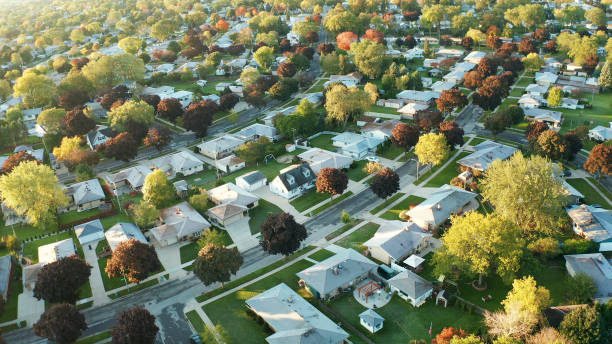
When a president signs an executive order on housing, it generates a predictable news cycle. The announcement lands. Headlines describe sweeping action. Advocates on both sides issue statements. And then, fairly quickly, the coverage moves on leaving most ordinary Americans, including the aspiring homeowners who actually have a stake in what the order does, with a vague sense that something happened but little clarity on what it was or whether it matters to them. That is the situation with Executive Order 14394, signed by President Trump on March 13, 2026, and formally titled “Removing Regulatory Barriers to Affordable Home Construction.” The order has been celebrated by the homebuilding industry as a meaningful step toward supply side relief. It has been criticized by housing policy advocates as a document that targets the wrong problems, leaves the biggest ones untouched, and introduces new contradictions through policies in other parts of the administration. And it has been largely misunderstood by the general public, who deserve a clear explanation of what the order actually does, what it doesn’t do, and what its likely impact on the housing market and on aspiring buyers will realistically be. This is that explanation. What the order says it’s trying to do The order’s stated purpose is direct: the American dream of homeownership depends on a dynamic housing market in which a varied inventory of new homes is built and renovated each year. Layers of unnecessary regulatory barriers, slow permitting processes, and onerous mandates at all levels of government have delayed construction, restricted development, and driven up the costs of new housing. It is the policy of this administration to reduce those regulatory barriers and to steward taxpayer dollars in a manner that promotes housing affordability. That is a reasonable diagnosis, as far as it goes. Regulatory costs do add meaningfully to the price of new construction. Permitting delays do slow housing delivery. Inconsistent building codes do add friction and cost to development projects. These are real problems with real consequences for supply. The question the one that matters for buyers trying to understand whether this order changes anything for them is whether the specific mechanisms the order uses to address those problems are the right ones, whether they are powerful enough to move the needle, and whether other policies from the same administration are working against what the order is trying to accomplish. What the order actually directs The order directs federal agencies to reduce regulatory burdens on residential development, streamline environmental permitting, and encourage state and local governments to adopt housing friendly policies. It includes several key provisions that developers and homebuilders should be aware of. The first set of provisions targets federal environmental permitting. The order directs the Secretary of the Army and the Environmental Protection Agency to revise permitting standards including stormwater permits, wetlands permits under Section 404 of the Clean Water Act, and related construction site requirements with the goal of reducing housing construction costs and streamlining regulatory decision making. These are legitimate friction points in the development process, particularly for projects near water bodies or in areas with complex environmental conditions. Streamlining them could meaningfully reduce timelines for some projects. Critics, however, note that these are also protections that exist for reasons managing runoff, protecting wetlands, maintaining water quality and that weakening them carries environmental risks that do not appear in the order’s cost benefit calculus. The second major provision targets energy efficiency mandates. The order directs HUD and USDA to take appropriate action to reform and where appropriate eliminate unduly burdensome or costly energy efficiency, water use, or alternative energy requirements for housing, including manufactured housing. Reducing energy code requirements could lower construction costs in the short term. It would also, depending on how aggressively implemented, reduce the long term energy efficiency of new homes meaning buyers could pay less at closing and more in utility bills for the life of the home. That tradeoff is not mentioned in the order. The third provision and arguably the most practically significant for the housing market involves HUD’s role in pressuring state and local governments toward housing friendly land use policies. By May 12, 2026, the HUD Secretary must issue best practices for state and local governments addressing, among other things, streamlined permitting, by right development for single family homes, limits on green energy mandates, acceptance of manufactured and modular housing, and removal of urban growth boundaries and similar restrictions. These best practices may become conditions for federal housing grants. This last element tying federal housing grant dollars to local land use reform is the order’s most powerful lever. The federal government cannot directly override local zoning laws, which remain under local and state jurisdiction. But it can use the substantial funding it distributes through housing programs as a carrot and a stick: communities that adopt housing friendly policies gain access to federal dollars, and those that don’t face the prospect of losing them. This approach has precedent, and when implemented with meaningful enforcement, it can change local behavior in ways that no amount of federal guidance alone can accomplish. The order also directs the Treasury Department and HUD to evaluate ways to better align Opportunity Zone tax incentives with the goal of expanding housing supply using an existing tax incentive framework to channel more private capital into residential development in underinvested communities. The companion order on mortgage access EO 14394 was signed alongside a second housing related order EO 14393, titled “Promoting Access to Mortgage Credit.” EO 14393 establishes a federal policy to improve the availability and affordability of mortgage credit by reducing regulatory burdens, particularly for community and smaller banks, and directs federal agencies to consider reforms to mortgage lending, supervision, and housing finance systems. The two orders together represent a two track approach: one targeting the supply side of the housing equation, the other targeting the credit access side. The mortgage credit order is notable for its focus on community banks institutions with under 100 billion dollars in assets which
Homeownership Part 10: The 4 Million Home Deficit: How America Built a Housing Crisis

Every conversation about housing affordability eventually arrives at a number that is large enough to feel abstract but concrete enough to explain nearly everything else: 4 million. That is approximately how many homes the United States is short of meeting the housing needs of its population right now. Not 4 million luxury units. Not 4 million vacation properties. Four million homes that should exist, starter homes, rental units, townhouses, apartments, and simply don’t, because for more than a decade, the country has built far less housing than the number of households being formed. That shortfall is not a statistic sitting in a single report. It is the denominator of the entire affordability crisis. It is why home prices have surged 50% since 2020. It is why rental costs have climbed fast enough to make saving for a down payment nearly impossible for middle income earners. It is why first time buyers are competing in the same market against investors, move up buyers, and cash purchasers with existing equity to deploy, and consistently losing. Understanding the supply gap does not require a degree in economics. It requires understanding one simple principle: when there are significantly more buyers than available homes, prices go up, and they stay up until supply catches up. Supply has not caught up. It is falling further behind. A decade of underbuilding coming due The housing shortage in the United States continued to widen in 2025, with the national supply gap reaching an estimated 4.03 million homes according to Realtor.com’s 2026 Housing Supply Gap Report. In 2025, approximately 1.41 million new households were formed across the country while only 1.36 million housing starts were recorded, an annual shortfall of about 50,000 homes that, while modest on its own, compounds a cumulative deficit built over more than a decade of underbuilding. The South carries the largest regional deficit at approximately 1.62 million homes, followed by the Northeast at 952,000, the Midwest at 865,000, and the West at 660,000. Measured against total construction since 2012, the Northeast faces the most acute gap even after modest improvement in recent starts. These are not regions where housing was expected to be unaffordable. Several of these markets, particularly in the Midwest and South, were long considered the country’s affordable alternatives to expensive coastal cities. The shortage has found them too, and the people who moved there hoping to escape unaffordable markets have discovered that the problem followed them. Even when annual construction and household formation are roughly balanced, the market is still digging out from more than a decade of underbuilding, as Realtor.com’s chief economist Danielle Hale noted. The fact that it would take roughly seven years to eliminate the deficit even under an optimistic building scenario highlights just how significant and persistent this shortage has become. Seven years is not a near term fix. It is a generational timeline for a problem that is affecting buyers right now, today, who cannot wait seven years for the market to rebalance. Why builders aren’t building faster The instinctive response to a shortage is to build more, and builders have tried. Housing completions in 2025 remained historically elevated. Single family and multifamily starts have been running at levels not seen since before the Great Recession in some years. The problem is not that the industry has been idle. The problem is that the structural obstacles to construction are so numerous, so entrenched, and so resistant to quick resolution that even elevated building rates have not been enough to close a gap this large. Zoning is where the analysis typically begins, and for good reason. Single family zoning, which restricts large swaths of residential land in most American cities and suburbs to detached single family homes only, remains one of the most significant regulatory barriers to increasing housing density. Local zoning boards influenced by NIMBYism have historically blocked or delayed higher density development, from duplexes and accessory dwelling units to apartment buildings near transit corridors. The result is a landscape in which land is technically available for housing but legally restricted from being used for the types of housing that the market actually needs most, smaller, denser, and more affordable units. At the local level, there remain too many review cycles in permitting, and limited consistency from town to town with local inspectors. One developer reported he couldn’t get a certificate of occupancy for two months because the town requested he change the property’s address. In Colorado alone, there are over 300 different building codes. This fragmentation of regulatory authority is not a minor inconvenience. It adds time, cost, and uncertainty to every development project, and at the margins, it is enough to tip projects that might have proceeded into abandonment. Labor is another constraint that has worsened. The construction industry has faced workforce challenges since the Great Recession, when approximately one million workers left the sector and did not return. Immigrants make up about 30% of the construction labor force, and the ongoing immigration crackdown is expected to reduce that supply further going forward. High interest rates have compounded the problem, with loan rates for smaller builders rising sharply. Regulatory costs now add an estimated $94,000 per home, about one quarter of the total price, underscoring the need for deregulation to improve affordability. The cost of building materials has risen 41.6% since the COVID 19 pandemic, far outpacing overall inflation. Recent tariff actions alone are estimated to add an average of $10,900 to the cost of constructing a new single family home. As builders shift toward constructing higher priced homes to cover their expenses, the entry level housing that first time homebuyers rely on is disappearing from new construction pipelines. This last point is particularly important. Even when builders are building, the economics of construction push them toward larger, more expensive homes where margins are easier to achieve. The starter home, the traditional entry point into homeownership for first time buyers, has become increasingly rare in new construction, precisely because it is the hardest
Homeownership Part 9: You Can Buy a Home With a Section 8 Voucher. Most People Have No Idea.
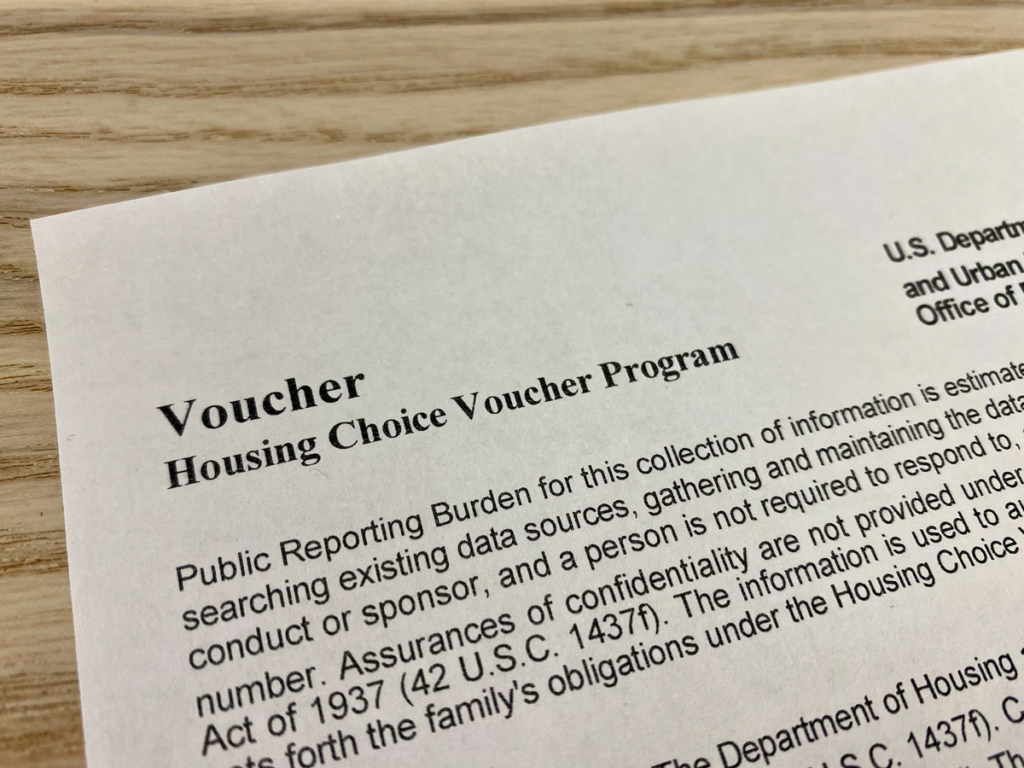
There are roughly 2.3 million households in the United States receiving Housing Choice Vouchers, the federal rental assistance program most people know as Section 8. For the vast majority of those families, the voucher works the same way it always has: a local public housing authority determines how much rental assistance the family qualifies for, the subsidy goes to a landlord each month, and the family pays the difference. Month after month, year after year, the voucher pays rent. It builds nothing. It accumulates nothing. When the lease ends, the family moves, and the cycle starts again. What most of those 2.3 million households do not know, and what most housing professionals, policymakers, and advocates rarely discuss with adequate urgency, is that the voucher can do something fundamentally different. It can pay a mortgage instead of rent. It can help a family buy a home, build equity, and begin the process of wealth accumulation that homeownership makes possible. A program exists specifically to enable this transition, it has been authorized by federal law since 2000, and as of early 2024 it had facilitated just over 10,000 closings nationwide in more than two decades of existence. That number, 10,000 purchases from a pool of 2.3 million eligible voucher holders, captures in a single statistic the size of the gap between what this program is and what it could be. What the program actually is The Housing Choice Voucher Homeownership Program, administered by the U.S. Department of Housing and Urban Development, allows eligible HCV recipients to redirect their rental subsidy toward the costs of homeownership rather than rent. The program allows families assisted under the HCV program to use their voucher to buy a home and receive monthly assistance in meeting homeownership expenses. It is limited to first time homeowners who have received housing counseling and meet minimum income requirements. The mechanics are straightforward. Participants typically pay 30% of their income toward mortgage costs, while the voucher covers the remainder, the same structure used for rental assistance but applied to homeownership expenses instead. Time limits apply: assistance lasts up to 15 years for most participants, with no time limit for elderly or disabled families. The subsidy covers a broad range of homeownership costs, including mortgage principal and interest, property taxes, insurance, and in some cases utilities, essentially the same basket of costs the voucher would have covered in a rental situation, redirected toward building ownership rather than paying a landlord. The financial logic of this redirection is powerful and direct. Instead of rent payments that disappear permanently, monthly housing payments build equity, creating an asset that grows over time. As one Sacramento participant said: “For the first time, I feel like I’m investing in my future, not just surviving month to month.” That shift, from subsidizing a landlord’s asset to building the voucher holder’s own, is the core of what makes this program so significant and its underuse so consequential. Why almost nobody uses it The HCV Homeownership Program’s 10,000 closing track record over 25 years is not evidence that the program does not work. It is evidence that the program is barely being used. Several structural barriers explain why the gap between the program’s potential and its actual reach has remained so wide for so long. The first and most fundamental barrier is that participation is optional for local public housing agencies. All public housing authorities that administer the HCV program have the option to establish an HCV homeownership program in their community. The operative word is option. PHAs are not required to offer the homeownership program, and a significant number simply do not, whether due to administrative capacity constraints, lack of familiarity with the program requirements, staff bandwidth, or institutional inertia. The limited participation of PHAs presents a significant hurdle, not every housing authority offers the program, creating geographical barriers for many families. A voucher holder whose local PHA has not established a homeownership program has no path to use this option regardless of how well qualified they might otherwise be. The second barrier is awareness, or the near complete absence of it. The Section 8 homeownership program remains one of housing policy’s best kept secrets. This is not hyperbole. Most voucher holders have never been told the option exists. Many housing counselors and social workers who work with voucher holding families are unfamiliar with the program’s mechanics. Lenders who have never processed a homeownership voucher transaction may not know how to underwrite one. The information ecosystem around this program is so thin that even motivated, financially prepared voucher holders frequently hit dead ends simply trying to find someone who can explain how to proceed. The eligibility requirements add another layer of complexity. Beyond holding an active voucher, applicants must meet income thresholds, demonstrate steady employment history, typically 30 hours per week for at least one year, qualify as a first time homebuyer, and complete a HUD approved housing counseling program. The existing HUD PHA homeownership program has had very limited success, with most successful homebuyers having higher incomes. This reflects a real tension at the program’s core: the families most in need of a pathway out of long term rental dependency are often the ones who face the most difficulty meeting the income and employment requirements designed to ensure sustainable homeownership. The program is most accessible to voucher holders who have already made significant financial progress, not those at the earliest stages of that journey. What the program looks like in practice At the PHAs that have chosen to make the homeownership program available and have invested in making it work, the results are genuinely transformative. The Grand Rapids Housing Commission in Michigan, for example, has structured its program to provide not just administrative processing but active support, working with local lenders and realtors to guide participants through the full purchase process, from orientation meetings to closing. Once a family closes on a home, the housing commission sends a predetermined housing assistance payment directly to the family each
Coastal Development Shifts in San Diego County—How New Housing Exemptions Are Reshaping Supply Along the Coast

San Diego County has long faced one of the most complex housing challenges in California. With over 70 miles of coastline, strict environmental protections, and strong demand from both residents and investors, building new housing near the coast has historically been difficult, expensive, and time-consuming. For decades, coastal permitting requirements—particularly those governed by the California Coastal Commission—have slowed development and limited supply in some of the most desirable areas of the region. That dynamic is beginning to change. Recent legislative updates between 2024 and 2026 have introduced targeted exemptions and streamlining measures aimed at accelerating housing production, even in coastal zones. These changes are not removing environmental protections entirely, but they are redefining how projects are reviewed, approved, and challenged. At the same time, San Diego’s housing market continues to face intense pressure, with median home prices exceeding $900,000 and average rents approaching $3,000 per month. Understanding how these policy shifts are influencing coastal development is critical for anyone involved in real estate. This article examines the evolving regulatory framework, its impact on housing supply, and what it means for developers, investors, and buyers navigating San Diego’s coastal market. The Coastal Constraint: Why Development Has Been Limited San Diego’s coastal housing shortage is rooted in a combination of geography and regulation. Coastal zones are governed by the California Coastal Act, which prioritizes environmental preservation, public access, and scenic protection. While these goals are important, they have also introduced layers of review that can extend project timelines significantly. In many coastal areas, developers have faced approval timelines ranging from 18 to 36 months, with additional risk of appeals that can delay projects even further. These delays increase carrying costs, which in turn raise the final price of housing. Construction costs in coastal San Diego currently range between $350 and $500 per square foot, significantly higher than inland areas. As a result, new housing supply in coastal communities such as La Jolla, Del Mar, and Encinitas has remained limited. This supply constraint has contributed to sustained price growth, with some coastal submarkets experiencing annual appreciation rates of 5% to 7% even in a higher interest rate environment. New Legislative Changes and Coastal Exemptions Recent housing legislation has introduced targeted exemptions designed to reduce barriers for certain types of development in coastal areas. One of the most notable changes allows qualifying housing projects—particularly those that meet affordability or density requirements—to bypass portions of the traditional coastal permitting process. These exemptions apply primarily to infill projects located within existing urbanized areas, especially those near transit or previously developed land. In practical terms, this means that developers can avoid full coastal development permits in some cases, reducing approval timelines to as little as 9 to 15 months. Additionally, reforms have limited the scope of appeals that can be filed against qualifying projects. Historically, appeals to the Coastal Commission have been a major source of delay. By narrowing the grounds for appeal, recent legislation has reduced uncertainty and improved project feasibility. These changes are not universal. Environmentally sensitive areas and projects that do not meet specific criteria still require full review. However, for a growing segment of developments, the path forward is becoming more predictable. Impact on Housing Supply and Market Dynamics The early effects of these reforms are beginning to appear in San Diego’s housing data. Between 2024 and 2025, coastal-adjacent building permits increased by approximately 10%, with a noticeable uptick in multifamily and mixed-use developments. This increase in supply is modest relative to overall demand, but it represents a shift in a market that has historically been constrained. In neighborhoods where new development is taking place, there are early signs of stabilization in rent growth. Average rent increases have slowed from nearly 8% annually in 2022 to around 4% in 2025. Home prices, however, remain elevated. The median home price in San Diego County continues to hover between $900,000 and $950,000, with coastal properties often exceeding $1.5 million. Limited inventory, combined with strong demand, continues to support high valuations despite broader economic pressures. Opportunities for Developers and Investors For developers, the most significant advantage of these policy changes is reduced risk. Shorter approval timelines and fewer legal challenges make it easier to move projects from concept to completion. This is particularly important in a market where financing costs remain high, with commercial loan rates often exceeding 6.5% in 2025. Infill development near the coast is becoming increasingly attractive, especially for projects that meet affordability thresholds or incorporate higher density. Developers are also exploring mixed-use projects that combine residential units with retail or office space, maximizing land use in high-value areas. Investors are taking note of these shifts. Land prices in coastal-adjacent areas have increased by approximately 7% to 9% over the past year, reflecting growing interest in development opportunities. At the same time, rental properties near the coast continue to generate strong returns, with average monthly rents ranging from $3,000 to $4,500 depending on location and property type. Ongoing Challenges and Limitations Despite these positive developments, significant challenges remain. Community opposition continues to play a role in shaping development outcomes, particularly in high-income coastal neighborhoods where residents are resistant to increased density. Environmental considerations also remain a central factor. Projects located in sensitive habitats or areas at risk of coastal erosion still face strict oversight, and compliance costs can be substantial. Additionally, rising insurance costs related to climate risk are beginning to affect both development feasibility and long-term investment returns. Interest rates and construction costs continue to add pressure as well. Even with streamlined approvals, the financial viability of projects depends on careful planning and market conditions. San Diego County’s coastal housing market is entering a period of gradual but meaningful change. Recent legislative reforms are reducing some of the barriers that have historically limited development, opening the door for increased housing production in areas where supply has long been constrained. While these changes are not a complete solution to the region’s housing challenges, they represent an important step toward a more balanced
Homeownership Part 8: Billions in Down Payment Assistance Exist. Almost Nobody Knows.
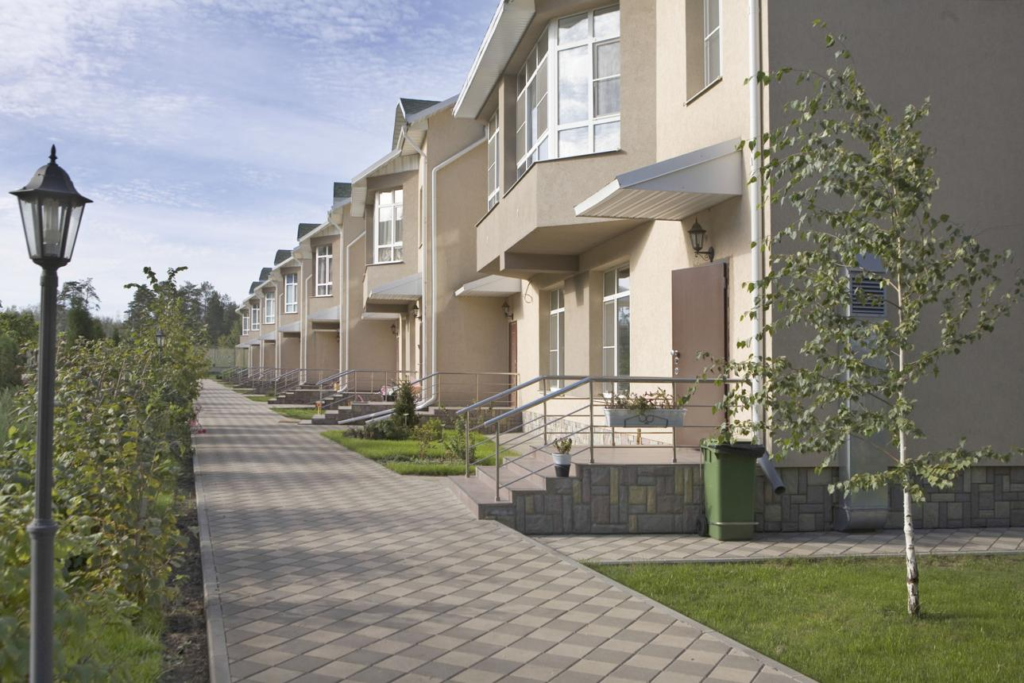
Ask most aspiring homeowners what is standing between them and a purchase, and the answer comes back quickly and consistently: the down payment. Not the monthly mortgage payment, which for many buyers would actually be comparable to or lower than their current rent. Not the interest rate, frustrating as rates have been. The down payment, that large, upfront sum required before a buyer can even get to the table, is the wall that most people hit first, and for millions of aspiring owners, it is the wall they never get past. The assumption baked into that frustration is understandable but, for a significant share of buyers, incorrect. There is money available to help with down payments. A lot of it, spread across thousands of programs at the federal, state, and local level, administered by housing finance agencies, nonprofits, municipalities, and financial institutions. Programs that offer outright grants that never need to be repaid. Programs that offer forgivable loans that disappear after a few years of residency. Programs that cover not just down payments but closing costs, rate buydowns, and other upfront expenses that derail purchases before they start. The money exists. Most of the people it was designed to help have never heard of it. That gap between available funding and actual use is not a minor inefficiency. It is one of the most consequential and least discussed failures in the American homeownership system. The scale of what’s available As of April 2026, there are 2,679 homebuyer assistance programs available nationwide, up from 2,619 in the previous quarter. Support for first-time buyers remains strong, with 1,666 programs, 62% of all available programs, specifically available to those entering the market for the first time. These programs are not concentrated in a handful of high-cost coastal states. Every U.S. county has at least one down payment assistance program, and more than 2,000 counties have 10 or more available. California leads with 353 programs from 223 providers, Florida has 196 from 128 providers, and Texas offers 128 programs from 63 providers. DownpaymentresourceHousingWire The range of what these programs offer is substantial. At the federal level, FHLBank Chicago’s Downpayment Plus program, which launched $28 million in 2026 grants for Illinois and Wisconsin, provides eligible households with up to $10,000 in forgivable assistance applied at closing, with grants forgiven on a monthly basis over a five-year retention period. The assistance is provided as a forgivable grant paid on behalf of the borrower at the time of closing, and a companion program extends access to homebuyers participating in nonprofit-led homeownership programs. Fhlbc State-level programs go significantly further in many cases. New York City’s HomeFirst program offers eligible first-time buyers up to $100,000 toward the down payment or closing costs. In Nevada, Federal Home Loan Bank–backed assistance programs can reach $50,000 in grant support. Across multiple states, buyers can access forgivable second mortgages, deferred-payment loans, and targeted assistance tied to occupation or income level. New York City + 2 The result is a system that, on paper, contains substantial financial support for entry into homeownership. The challenge is not absence of programs. It is fragmentation and visibility. The gap between eligible and enrolled With thousands of programs and billions in funding, usage would be expected to be high. It is not. The gap between eligibility and participation is one of the clearest signals that the system is not functioning as intended. Analysis of HMDA data found a gap of nearly 65 percentage points between eligible borrowers and actual program participation, suggesting that most qualified buyers never access assistance. Among conventional borrowers, about 44% were eligible for down payment assistance, yet fewer than 10% used it. HousingWire That means the majority of buyers who could have reduced upfront costs significantly did not. Not because they were denied, but because the pathway never reached them. Industry leaders consistently point to awareness as the central issue. Many buyers simply do not know these programs exist. Others assume they will not qualify. Some discover them too late in the process, after financing terms are already set. As Rob Chrane of Down Payment Resource has noted, eligibility often goes unused because buyers never encounter the information at the right stage of the transaction. New American Funding This is not just a consumer education gap. It is a structural delivery gap in how assistance is integrated into mortgage origination itself. Who the gap affects most The consequences of this disconnect are not evenly distributed. First-generation buyers, lower-income households, and buyers of color are the most affected, largely because they are least likely to have access to informal guidance networks that explain how the system works. Harvard’s Joint Center for Housing Studies has estimated that a $25,000 down payment intervention could meaningfully increase Black and Hispanic homeownership by over 1.1 million households. National League of Cities Yet the very households that would benefit most are often the least connected to lenders, counselors, or financial advisors who routinely surface these programs. Instead, many enter the market assuming they must reach a full 20% down payment on their own, a standard that has never reflected the reality of available assistance. Even when programs are technically accessible, complexity becomes a barrier. Each program has its own eligibility rules, income caps, property restrictions, and application steps. Without guided navigation, many buyers abandon the search entirely. How assistance is meant to function Down payment assistance is not a single system but a network. Programs are distributed across federal, state, and local institutions, often accessed only through participating lenders or housing counselors. In practice, this means a buyer must be working with a lender who is both aware of and enrolled in specific programs. If not, the assistance remains invisible. HUD-approved housing counselors often serve as the most reliable entry point, offering structured guidance at no cost. State housing finance agencies also maintain searchable program databases. Tools like Down Payment Resource attempt to unify fragmented listings into a usable system. Homebuyer education courses, which are required in many cases,
Homeownership Part 7: Community Land Trusts: The Quiet Model That Actually Works
Every conversation about the housing affordability crisis eventually arrives at the same impasse. Home prices are too high. Wages haven’t kept up. Down payments are out of reach. Mortgage rates are elevated. Supply is short. The problems are well-documented, endlessly discussed, and, from the perspective of most aspiring homeowners, maddeningly resistant to solution. What rarely gets discussed with the same urgency is the question of whether the standard model of homeownership itself, the one where a buyer purchases land and structure together at full market price, is the only model worth pursuing. It isn’t. And the alternative that has been quietly demonstrating results for decades deserves far more attention than it typically gets. Community Land Trusts — CLTs — are nonprofit organizations that permanently remove land from the speculative market, hold it in trust for the benefit of a community, and sell the homes sitting on that land to income-eligible buyers at prices that reflect the cost of the structure rather than the full market value of the combined property. The buyer owns the home. The CLT owns the land. The result is a purchase price that is often dramatically more affordable than anything available on the open market, and a model of ownership that has proven more stable, more equitable, and more durable than conventional homeownership in almost every metric that matters. Where the model came from The origins of the CLT model in the United States are rooted directly in the civil rights movement. The first modern CLT in the United States was established in Albany, Georgia, in 1969 by Robert Swann and Slater King. Born out of the civil rights movement, the New Communities land trust consisted of more than 5,000 acres of farmland where African-American families, many of them poor farmers from the South, could affordably access, build on, and farm land at a time when the community faced significant obstacles to land ownership and financing. The CLT was not designed as an idealistic experiment or a fringe alternative to mainstream homeownership. It was a practical response to a specific and urgent problem: a community that was systematically excluded from conventional land ownership needed a model that could work around those exclusions while building long-term stability. That founding purpose, advancing racial equity and community stability in the face of a market that was working against marginalized communities, remains central to the CLT movement today. There are now hundreds of active community land trusts operating across the United States, with steady growth over the past decade. The expansion is not concentrated in places where housing is traditionally cheapest. It is happening in regions where affordability has become increasingly strained, pushing policymakers and communities to explore structural alternatives. How it actually works The mechanics of the CLT model are straightforward, even if they require a shift in how most people think about property ownership. When a buyer purchases a CLT home, they pay only for the structure, the actual building, at a subsidized price that reflects their income and the CLT’s affordability mission. The land beneath the home is leased to the buyer through a long-term ground lease, typically renewable every 99 years, at a modest monthly fee. Because the purchase price is substantially lower, the mortgage is smaller, and the monthly payment is more manageable, often significantly so, even in markets where standard homeownership is completely out of reach for moderate-income earners. The buyer builds equity in the home as they pay down the mortgage, and they are entitled to a share of any appreciation in the home’s value when they sell. The share is defined by a resale formula that varies across CLTs, but is generally designed to allow the homeowner to capture a fair return on their investment while ensuring the home remains affordable for the next buyer. Homeowners build wealth in two ways: through the forced savings of paying down mortgage principal, and through the share of appreciation allocated under the resale formula. The equity accumulated is more modest than in market-rate ownership, but it is real, stable, and insulated from extreme market volatility. The strict formulas CLTs use to calculate resale values effectively remove these properties from speculative market swings, providing protection during downturns while preserving long-term affordability. The stepping stone most people don’t know about Perhaps the most compelling feature of the CLT model is what happens after ownership. While often framed as a permanent alternative to market-rate housing, in practice it frequently functions as a stepping stone. A significant share of CLT homeowners eventually transition into market-rate ownership. The CLT provides an entry point into homeownership that would otherwise be inaccessible, allowing buyers to build credit history, accumulate savings, and establish equity. That foundation can then be leveraged into conventional housing opportunities that were previously out of reach. In many cases, initial investments required to enter CLT ownership are relatively small compared to traditional down payments, and the equity gained over time, though modest, becomes meaningful when applied toward a later purchase. For many households, the CLT is less an endpoint than a bridge into broader housing stability. What the data shows about stability Beyond affordability, CLTs demonstrate strong performance in housing stability. Homeowners in CLTs are significantly less likely to experience foreclosure or delinquency during market downturns compared to conventional homeowners in similar income brackets. This resilience is not accidental. CLTs typically provide pre-purchase education, structured underwriting, and ongoing support to homeowners after purchase. This relationship-based model allows early intervention when financial stress emerges, preventing issues from escalating into default. During the 2008 housing crisis, CLT homeowners experienced far lower foreclosure rates than the broader market. The model’s combination of affordability, education, and ongoing stewardship created a buffer against the shocks that destabilized conventional homeownership. Research also indicates that CLTs contribute to neighborhood stability. Rather than depressing surrounding property values, CLTs often help stabilize or even increase nearby home prices by reducing vacancy, preventing distress sales, and maintaining long-term affordability in areas under pressure from speculation. The growth that
The First Keepers of the Claim: Hiram Revels, Joseph Rainey, and the Black Men Who Entered Congress While Slavery Was Still Breathing
You need to be logged in to view this content. Please Log In. Not a Member? Join Us