
The $300,000 Barrier: Why Coastal San Diego Homeownership Now Requires Elite Incomes in 2026
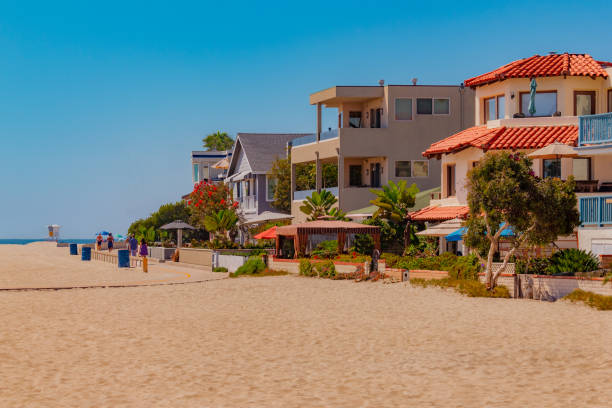
San Diego County’s coastline has long carried a premium, defined by limited land, strong demand, and a lifestyle that continues to attract high-income buyers. In 2026, that premium has reached a point where affordability is no longer just a pricing issue—it has become a qualification barrier. The challenge is no longer simply whether a home is expensive, but whether buyers can meet the financial thresholds required to secure financing in a high-rate environment. Median home prices across coastal communities such as La Jolla, Del Mar, and Encinitas now exceed $1.8 million, with many properties trading well above $2.5 million. At the same time, mortgage rates have stabilized between 6.5% and 7%, significantly increasing the cost of borrowing compared to the sub-3% environment seen just a few years ago. This shift has created a widening gap between household incomes and mortgage qualification requirements. Buyers who might have qualified in 2021 are now priced out not because of listing prices alone, but because financing standards have tightened relative to income. The result is a housing market where eligibility itself has become the primary constraint. The True Cost of Coastal Ownership To understand the scale of the challenge, it is necessary to break down the financial requirements for purchasing a typical coastal home in San Diego County. With a median coastal price of approximately $1.9 million, a buyer putting down 20%—roughly $380,000—would need to finance about $1.52 million. At a 6.75% interest rate on a 30-year fixed mortgage, the monthly principal and interest payment alone would reach approximately $9,850. When property taxes are added, at an average rate of 1.1%, the annual tax burden comes to about $20,900, or $1,740 per month. Insurance and maintenance costs can conservatively add another $600 to $800 monthly, bringing the total housing cost to nearly $12,400 per month. Lenders typically require that housing costs do not exceed 28% to 31% of a borrower’s gross monthly income. Using a 30% benchmark, a buyer would need to earn approximately $41,300 per month, or just under $500,000 annually, to comfortably qualify for this property. This figure places coastal homeownership far beyond the reach of the typical San Diego household. The county’s median household income sits near $95,000, meaning the income required for coastal ownership is more than five times the median. Even dual-income households earning a combined $200,000 fall significantly short of qualifying thresholds. Mortgage Rates and the Redefinition of Eligibility The current affordability crisis is not driven by home prices alone. Mortgage rates have fundamentally altered the qualification landscape. A comparison illustrates the magnitude of this shift. In 2021, a $1.52 million loan at a 3% interest rate would have resulted in a monthly payment of approximately $6,400. At that level, the required annual income to meet a 30% debt-to-income ratio would have been around $256,000. By 2026, the same loan at 6.75% increases the monthly payment by over $3,400, raising the required income by nearly $240,000. This represents a 93% increase in income required to qualify for the same property, without any change in price. Debt-to-income ratios further complicate eligibility. Many borrowers carry additional obligations, including student loans, auto loans, and credit card balances. Lenders often cap total debt obligations at 43% to 45% of gross income. For a buyer already allocating $12,400 monthly to housing, even modest additional debts can push them beyond allowable limits, disqualifying them entirely. As a result, qualification is increasingly limited to high-net-worth individuals, executives, and buyers with significant liquidity. Cash buyers have also become more prominent in coastal transactions, accounting for an estimated 28% to 32% of sales in certain high-end submarkets. A Market Defined by Exclusion The consequences of this financing reality are visible across San Diego County’s housing market. Coastal areas continue to command strong prices, but transaction volume has become more selective. In 2025, sales in the $2 million-plus segment declined by approximately 7%, even as prices remained stable or increased slightly. Meanwhile, the pool of eligible buyers has narrowed sharply. First-time buyers are effectively absent from coastal markets, while move-up buyers face significant barriers due to the cost of trading up into higher-rate mortgages. Many homeowners who secured low-interest loans between 2020 and 2022 are choosing to stay in place rather than re-enter the market at current rates, further reducing supply. This dynamic has created a bifurcated market. Coastal properties remain expensive and relatively stable, but accessibility has diminished to a small segment of the population. Inland markets, while more affordable, are experiencing their own pressures as displaced demand shifts away from the coast. Affordability as a Qualification Crisis Framing the issue as a pricing problem alone misses the core challenge. Even if coastal home prices were to decline by 10%, the impact on affordability would be limited. A $1.9 million home dropping to $1.71 million would still require a loan exceeding $1.36 million, resulting in monthly payments above $8,800 at current rates. The required income would remain well above $400,000 annually. This highlights a critical point: affordability in 2026 is driven as much by financing conditions as by property values. Mortgage rates, underwriting standards, and income thresholds are now the primary determinants of market access. Without a significant decline in interest rates or a substantial increase in incomes, the gap between qualification requirements and household earnings is unlikely to close. This suggests that the current affordability constraints are not temporary but structural. San Diego County’s coastal housing market illustrates a broader shift taking place across high-cost regions. Homeownership is no longer defined solely by the ability to meet a purchase price; it is defined by the ability to qualify under increasingly demanding financial conditions. With required incomes approaching $500,000 for typical coastal properties, the market has effectively moved beyond the reach of even well-compensated professionals. Mortgage rates have amplified this divide, turning affordability into a question of eligibility rather than aspiration. Until financing conditions ease or incomes rise significantly, coastal homeownership will remain concentrated among a narrow group of buyers. For the broader market, the challenge
Before the Headline
You need to be logged in to view this content. Please Log In. Not a Member? Join Us
Juneteenth Part 10: Juneteenth Belongs to Everyone, Or Does It?
Between Black Texas history, Pan-African diaspora, and a country still figuring out who a holiday is for, the most honest conversation about Juneteenth has barely begun In Greenville, South Carolina, in 2022, a newly formed organization called Juneteenth GVL hung banners throughout downtown to promote their Juneteenth celebration. The banners depicted couples from various racial backgrounds, Black, Asian, Hispanic, and white. The backlash was immediate. Community members and rival organizers called the banners an act of “whitewashing,” a visual statement that dilutes a Black holiday by centering non-Black faces. The organization’s founder, himself Black, stood by the decision, saying the banners were designed to reflect unity in a divided city. “We did not want to make this exclusively Black,” said founder Reuben Hays. “That is not in the spirit of unity.” One controversy. Two entirely coherent positions. And underneath both of them, a question that nobody has fully answered, even four years into Juneteenth’s existence as a federal holiday: who does this holiday belong to? Who is it for? And what happens to its meaning depending on how you answer those questions? This is the conversation that the mainstream coverage of Juneteenth consistently sidesteps, the internal and external debates about ownership, expansion, cultural specificity, and diaspora solidarity that live underneath the festival stages and the federal proclamations. It is also, arguably, the most important conversation the holiday needs to have. The Specific Story at the Root Before engaging the debate about who Juneteenth belongs to, it is worth being precise about what Juneteenth actually is at its historical root, because the specificity matters to every argument that follows. Juneteenth is not, in its origins, a Pan-African holiday. It is not a celebration of Black liberation generally. It is the commemoration of one specific event: June 19, 1865, in Galveston, Texas, when Union General Gordon Granger read General Order No. 3, informing approximately 250,000 enslaved people in Texas that they were free, two and a half years after the Emancipation Proclamation had already legally declared them so. It is a Texas story. It is a Black American story. And it is a story rooted in a very particular injustice: the deliberate withholding of freedom by enslavers who knew the law and chose to defy it. Juneteenth commemorates the emancipation of enslaved African Americans on June 19, 1865, in Galveston, Texas. As a celebration, Juneteenth is not rooted in a particular political ideology but instead marks a specific historical event, a story of self-emancipation, a testament to the resilience, courage, and unwavering pursuit of freedom by enslaved African Americans who fought to free themselves and others, resisting the oppressive system of slavery in ways that culminated in the Emancipation Proclamation. This struggle was fought on American soil, by individuals and communities who identified as Americans. That specificity is what some Black Texan voices and community historians have been most vocal about protecting. As one writer who grew up near Galveston put it: “Calling it ‘America’s Freedom Day’ and turning it into another opportunity for those to take a day off or host a cookout has cheapened its meaning. The Juneteenth I remember celebrating was about Black people remembering their ancestors, while focusing on what freedom truly meant for them then and us now.” This is not a fringe position. It is the grounded, historically rooted argument that the holiday’s meaning depends on its specificity, and that expansions of that meaning, however well-intentioned, risk becoming a form of erasure. The Case for Diaspora Connection On the other side of the debate sits a different and equally grounded tradition: the long history of Black Americans understanding their freedom struggle as connected to and continuous with the freedom struggles of Black people across the African diaspora. As part of the global African diaspora, people of African descent in the United States have long viewed their role in history as critical not just to their own development but to that of the world. Antebellum Black scholars started observing the milestones in the struggle of people of African descent to gain freedom and equality, commemorating the Haitian Revolution, the end of the slave trade, and the end of slavery in Jamaica, alongside American emancipation through Watch Night, Jubilee Day, and Juneteenth celebrations. Emancipation Day is celebrated in Canada to honor the end of slavery in the British Empire, marked by parades, educational programs, and cultural performances. The connection between Caribbean people and Juneteenth is underscored by shared histories of slavery and colonialism, and Emancipation Day is observed in countries including the United States, the United Kingdom, and several African nations, with events that highlight the shared struggle for freedom and equality. The Smithsonian’s National Museum of African American History and Culture has itself leaned into this framing, hosting Juneteenth programming that honors the enduring legacy of freedom through the vibrant traditions of the African diaspora in the United States and the Caribbean. The diasporic argument is not, therefore, a corporate invention or a social media trend. It reflects a genuine and long-standing current within Black intellectual and cultural life, one that sees the specific Texas story not as the boundary of Juneteenth but as its anchor point, from which broader solidarity can radiate outward. The Tension With Non-Black Participation Then there is a third conversation, distinct from the diaspora debate and considerably more fraught: what role, if any, do non-Black Americans, particularly white Americans, play in Juneteenth? Journalist Jelani Cobb pointed out as early as 2018 that “Juneteenth exists in this kind of cultural borderland, acknowledged by African Americans, scarcely noticed by most whites, because embracing the date requires a willingness to countenance slavery’s legacy in this country.” That observation, made before the holiday became federal, identified exactly the reason why mainstream white American participation in Juneteenth has been so awkward: not because the history is irrelevant to white Americans, but because genuinely engaging with it requires acknowledging things that a significant portion of white America would prefer not to sit with. One of the most
Juneteenth Part 9: The Wound That Doesn’t Show: Juneteenth, Generational Trauma, and Black Mental Health

The psychological dimension of a freedom celebration, and why true liberation has always included the mind Every year on June 19th, Americans are invited to celebrate freedom. There are parades and festivals, music and food, speeches and proclamations. The imagery of Juneteenth is overwhelmingly one of joy — and that joy is real, earned, and entirely deserved. But underneath the celebrations, for millions of Black Americans, there is something else that Juneteenth surfaces: a psychological weight that does not lift with a federal holiday, that does not resolve with a barbecue, and that cannot be adequately addressed with a corporate solidarity statement. It is the weight of a wound that runs not just through living memory, but through biology itself. The intersection of Juneteenth and mental health is the angle that most mainstream coverage consistently avoids. It is also, for many Black therapists, scholars, and community members, the most important conversation that could be happening on June 19th — and the one that is most consistently not. What Generational Trauma Actually Means The term “generational trauma” has entered popular culture in recent years, sometimes stripped of its clinical and scientific weight in the process. It is worth being precise about what the research actually says. Researchers and clinicians recognize something called historical trauma — the idea that communities that have faced systemic harm, like slavery, segregation, and racial violence, may continue to experience the effects of that harm across generations. This trauma is not about being “stuck in the past.” It is about living in a present where structural racism, discrimination, and inequality still exist. The stress of navigating this reality — often called racial battle fatigue or racial trauma — can affect physical health, emotional well-being, and mental health access. This is not a metaphor. The science supporting the transmission of trauma across generations has grown substantially over the past two decades, rooted in the field of epigenetics — the study of how environmental experiences alter gene expression in ways that can be inherited. Dr. Joy DeGruy became especially interested in epigenetics because the changes to genetic expression can be passed down from generation to generation. DeGruy realized this meant that the trauma of slavery might still be encoded in the genes of many Black Americans today. In one experiment she cites, researchers found that children of pregnant survivors of a 1998 snowstorm had a genetic tendency towards obesity — a biological response attributable to one traumatic experience their mothers had undergone. “These children weren’t there, and yet they are exhibiting different biological responses,” said DeGruy. If a single weather event during pregnancy can alter a child’s biology, what does 246 years of chattel slavery, followed by a century of legalized segregation and racial terror, do to the bodies and minds of the people who survived it — and the generations who came after them? Post-Traumatic Slave Syndrome: A Framework for Understanding Dr. Joy DeGruy has spent more than two decades developing the scholarly framework that attempts to answer exactly that question. Post-Traumatic Slave Syndrome — PTSS — is a theory that explains the etiology of many adaptive survival behaviors in African American communities throughout the United States and the diaspora. It is a condition that exists as a consequence of multigenerational oppression of Africans and their descendants resulting from centuries of chattel slavery, a form of slavery predicated on the belief that African Americans were inherently inferior to whites, followed by institutionalized racism that continues to perpetuate injury. DeGruy writes: “Healing must occur on multiple levels because the injury occurred on multiple levels — individuals, families, communities, and society itself.” This is the core of what makes PTSS different from a simple diagnosis. It is not a condition that can be treated purely at the individual level, because it was not inflicted at the individual level. It was inflicted systemically, institutionally, and generationally — and the healing, by DeGruy’s framework, must match the scale of the wound. DeGruy asserts: “We need to know the traumas of our ancestors in order to fully understand the strength of our people to survive and at times even thrive in some of the harshest conditions — strength that has been passed down to us. That we are here at all can be seen as a testament to our willpower, spiritual strength, and resilience. However, 385 years of physical, psychological, and spiritual torture have left their mark.” That framing — resilience and wound, held simultaneously — is important. The generational trauma framework is not an argument that Black Americans are broken or damaged. It is an argument that surviving an extraordinary and sustained assault on one’s humanity leaves traces, and that those traces deserve to be named, understood, and addressed — not minimized, not dismissed, and not papered over with a holiday. The Numbers Behind the Invisible Crisis The statistics on Black mental health in America are sobering in ways that mainstream conversations rarely fully reckon with. According to the American Psychological Association, African Americans are 20% more likely to experience serious mental health problems than the general population. Scholars like Dr. Joy DeGruy have linked centuries of racial trauma to present-day mental health issues, arguing that the lasting psychological impact of slavery and racial prejudice has resulted in generational stress and increased vulnerability to mental health disorders among African Americans. Generational trauma, socio-economic disparities, and continuous exposure to racial discrimination contribute to higher rates of mental health challenges, including anxiety, depression, and PTSD, within the Black community. But the crisis does not stop at diagnosis rates. It extends into the deep structural barriers that prevent Black Americans from accessing care even when they recognize they need it. According to the NAACP, Black Americans and other communities of color experience barriers to mental and behavioral health care including systemic racism and discrimination, mental health stigma, less satisfaction with the system of care including past negative encounters, provider shortage — with only 2% of psychiatrists and 4% of psychologists being Black — and
Juneteenth Part 8: Freedom Was Never Free: Juneteenth and the Reparations Debt
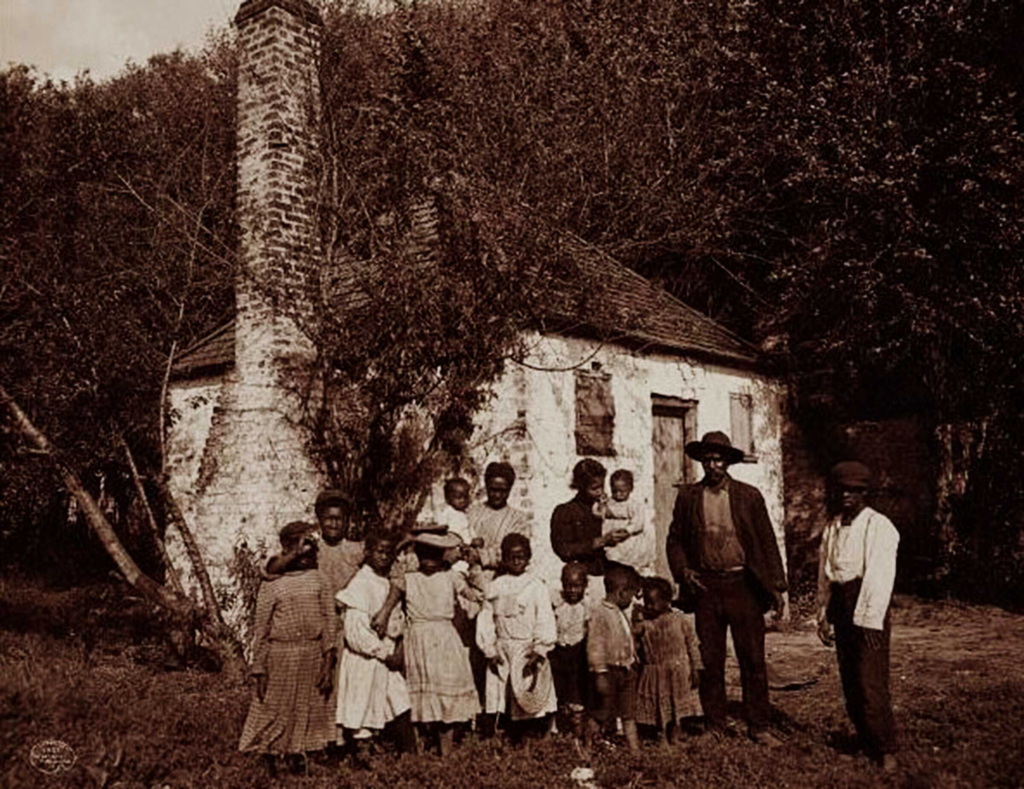
The emancipation of enslaved people came with a promise of economic foundation. That promise was broken within the year, and the bill has been accumulating ever since. The emancipation of enslaved people came with a promise of economic foundation. That promise was broken within the year — and the bill has been accumulating ever since. There is a version of the Juneteenth story that ends on June 19, 1865 — Union troops arrive in Galveston, General Order No. 3 is read aloud, 250,000 enslaved people in Texas learn they are free, and the chains come off. That version is incomplete to the point of being misleading. Because what happened on June 19, 1865 was not the end of an injustice. It was the beginning of a new phase of it — one in which the same people who had been enslaved for generations were declared legally free and then immediately stripped of the material foundation that would have made that freedom real. Understanding that sequence — emancipation followed by systematic dispossession followed by 160 years of compounding economic disadvantage — is essential to understanding why the conversation about reparations is not separate from Juneteenth. It is the logical continuation of it. The Promise: 40 Acres and a Mule The story begins, as so many pivotal American stories do, with a promise made and broken in quick succession. In January 1865, as the Civil War neared its end, Union General William T. Sherman met with a group of Black ministers in Savannah, Georgia. He asked them directly what freed people needed. Their answer, as recorded in history, was unambiguous: land. “The way we can best take care of ourselves is to have land and turn it and till it by our own labor,” said the Reverend Garrison Frazier, spokesperson for the group. On January 16, 1865, Sherman signed Field Order 15, reserving 400,000 acres of Confederate land along the Atlantic coast for distribution to freed Black families in parcels of 40 acres each. As many as 40,000 freedmen settled on the redistributed land in the months that followed, building homes, planting crops, and beginning to construct the economic foundation that genuine freedom required. The promise was the first systematic attempt to provide a form of reparations to newly freed slaves, astonishingly radical for its time, proto-socialist in its implications. What most people don’t know is that the idea was generated by Black leaders themselves, not handed down by a benevolent government, but demanded and articulated by the people who needed it most. It lasted less than a year. President Andrew Johnson, who had owned slaves and publicly shared his beliefs in white supremacy, overturned Field Order 15 before the end of 1865 and returned the 400,000 acres to the Confederate landowners and traitors who had originally owned it. The long-term financial implications of this reversal are staggering: by some estimates, the value of 40 acres and a mule for those 40,000 freed families would be worth $640 billion today. That figure, $640 billion, is not an abstraction. It represents generational wealth that was promised, created, and then seized back by a government that had just spent four years fighting a war ostensibly to end slavery. The people who had been enslaved were freed with their bodies. The economic foundation of that freedom was taken back within months. What Followed the Betrayal The revocation of Field Order 15 was not an isolated decision. It was the first in a long chain of structural choices that would systematically prevent Black Americans from building the wealth that every other group of Americans was being helped to accumulate. The betrayal did not stop with 40 acres and a mule. America doubled down on keeping Black people from owning land and building wealth through Jim Crow laws that restricted where Black people could live, own businesses, and buy property, through redlining that saw banks and the federal government deny Black families access to home loans and insurance, through racially restrictive covenants that barred Black families from buying homes in entire neighborhoods. Each of these mechanisms did not just prevent Black wealth accumulation in the moment. They prevented the transmission of that wealth across generations, which is precisely how wealth works in America. White families who bought homes in restricted neighborhoods in the 1940s and 1950s, subsidized by federal mortgage programs that explicitly excluded Black applicants, passed those homes to their children and grandchildren. The wealth compounded. The exclusion compounded too. From 2019 to 2022, the mean gap in net worth between Black and white households grew from $841,900 to $1.15 million, a 38 percent increase that far outpaced inflation during the same period. The modern racial wealth gap is not shrinking. It is growing. Today, only 44% of Black individuals own a home compared to nearly 73% of white individuals, a gap that is a direct vestige of discriminatory housing practices such as redlining. In 2022, for every $100 in wealth held by white households, Black households held only $15. These numbers are not the result of individual choices or cultural differences. They are the documented, measurable outcome of policy decisions made across generations, beginning with Andrew Johnson’s return of the 40 acres in 1865, continuing through the Federal Housing Administration’s explicitly racist lending policies of the mid-20th century, and extending to the present day through the compounding logic of inherited wealth. H.R. 40: Thirty-Six Years of Asking to Be Heard The legislative response to this history has been, to put it diplomatically, slow. H.R. 40, the Commission to Study and Develop Reparation Proposals for African Americans Act, was designed to address the fundamental injustice, cruelty, brutality, and inhumanity of slavery, its subsequent racial and economic discrimination against African Americans, and the impact of these forces on living African Americans, to make recommendations to Congress on appropriate remedies. This bill does not propose direct payments. It does not define a reparations program. It proposes, simply, a commission to study whether one is warranted. And yet,
Juneteenth Part 7: The Holiday That Keeps Getting Smaller
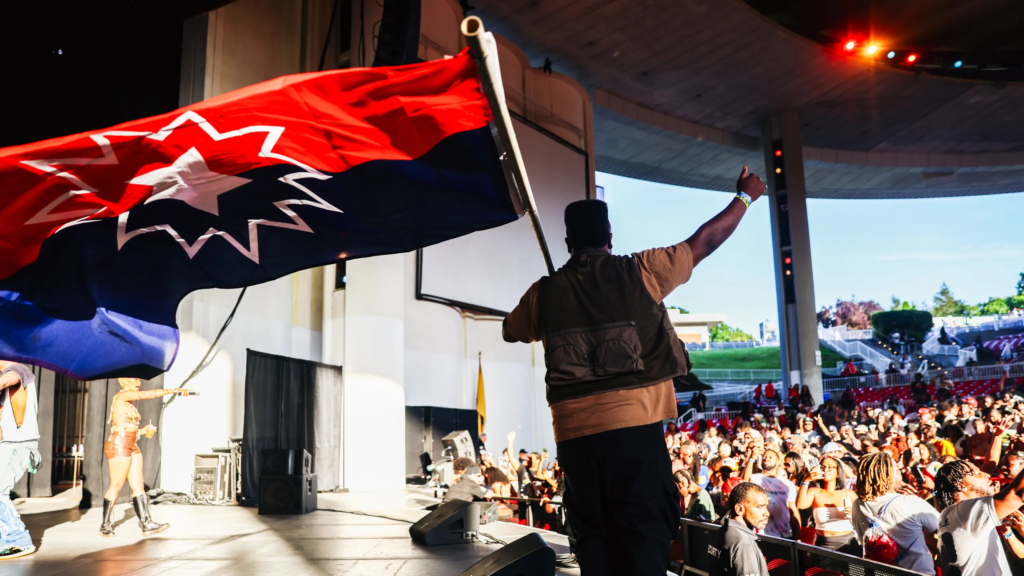
City by city, venue by venue — how Juneteenth 2025 shrank in plain sight, and what that silence cost The story of how Juneteenth gets diminished does not happen in one dramatic announcement. There is no single moment, no one villain, no press conference where the holiday is officially declared unwanted. It happens incrementally, through a spreadsheet in Denver showing sponsor after sponsor clicking decline, through a Facebook post in Plano, Illinois announcing that no event will be held this year, through an email to a San Diego nonprofit informing them that their $25,000 arts grant “no longer aligns” with the agency’s priorities. It happens in the gap between what a celebration used to be and what it became in 2025. That gap is the story. And it is far more detailed than most national coverage has captured. From Growth to Retreat: The Arc in Numbers To understand how sharp the 2025 decline was, you need the context of what preceded it. By 2021, more than half of all states had declared Juneteenth an official holiday or observance. Cities like New York, Chicago, and Los Angeles hosted large-scale public celebrations. In smaller Illinois towns like Plano and Elgin, community organizers held block parties, history panels, and musical performances, efforts often led by Black community leaders working in tandem with local governments. Corporate money was flowing. Governments were issuing proclamations. The holiday appeared, after 156 years, to finally be gaining the mainstream recognition Black communities had always known it deserved. Then the political atmosphere shifted. The steepest corporate growth in Juneteenth recognition happened before and immediately after its federal designation, and it slowed sharply once the holiday became part of the regular calendar. Then 2025 brought a visible pullback. Corporate sponsors withdrew from public events across the country. A study found that 15% of organizations said they would stop recognizing identity and heritage events amid the wider backlash against DEI programs. What that percentage looks like in actual communities is a different and more human kind of accounting. Plano, Illinois: The First City That Stopped Plano, Illinois holds a particular symbolic weight in this story, it was the first city in the state to officially adopt Juneteenth as a holiday. Jamal Williams, the first Black member of Plano’s city council and an organizer of the city’s Juneteenth events for years, watched the celebration’s attendance fall from 1,100 people in 2022 to roughly 500 in 2024. In 2025, he decided not to hold an event in Plano at all, citing a lack of sponsors willing to participate, though he supported an event in nearby Yorkville. His explanation for what happened was direct and painful. “I got labeled as someone that only wanted to support the Black community, not necessarily the people in Ward 2, which I was elected to do,” Williams said. Read that again. An elected official in a city that pioneered Juneteenth recognition in its state was made to feel, by his own constituency, that organizing a celebration of emancipation was a partisan act, something that divided rather than united. The social pressure to step back was not a government mandate. It was a community climate. Bend, Oregon: When Safety Becomes the Reason The Juneteenth cancellation in Bend, Oregon hit differently from the others, because the reason given was not budget cuts or sponsor withdrawals. It was physical safety. The Father’s Group, which organizes Bend’s annual Juneteenth celebration at Drake Park, an event that had drawn an average of 15,000 people in past years, canceled in April 2025. The group stated: “In today’s increasingly volatile political climate, with rising incidents of racial aggression and threats, particularly toward Black and Latino communities, safety must come first.” Kenneth Adams, the executive director of The Father’s Group, explained that it was not possible to move the event to a more secure private location given the crowd size. He said: “It’s better to be safe than sorry. I literally have witnessed people being accosted just for walking down the street, and getting yelled at because they look a certain way, or they come from a certain country.” Central Oregon had been dealing with a steady series of high-profile racist incidents in the years leading up to the cancellation, from racial slurs being screamed during a Bend public meeting to rocks being thrown at a mariachi band in Redmond. The cancellation was not an overreaction to an abstract threat. It was a measured response to a documented pattern of racial violence in the specific geographic area where the celebration was supposed to take place. In 2025, in the United States of America, Black community organizers canceled a celebration of freedom because they were afraid their community would be attacked for gathering in a public park. That sentence should not require emphasis. It should speak loudly enough on its own. Denver, Colorado: The Flagship That Shrank Denver’s Juneteenth Music Festival is one of the largest and longest-running Juneteenth events in the country, anchored in the historically Black Five Points neighborhood. In 2025, the festival was reduced from a two-day event to a single day due to a more than 60% drop in corporate sponsorship, leaving an $80,000 funding gap even after scaling back. Executive Director Norman Harris attributed the shortfall to “shifting corporate priorities,” noting that several long-standing sponsors had reduced or withdrawn their support. Harris credited grassroots donors and small businesses for stepping in when larger backers stepped aside, a detail that matters, because it tells you who actually shows up when the corporate logos disappear. Not the Fortune 500 companies that had been buying naming rights to Juneteenth stages for the previous three years. Small businesses. Individual donors. Community members who understood what the event meant and dug into their own pockets to keep it alive. San Diego: When the Federal Government Pulls the Grant The Cooper Family Foundation, which organizes one of the largest Juneteenth celebrations in San Diego, received an email from the National Endowment for the Arts in May 2025
Juneteenth Part 6: What the History Books Still Won’t Tell You
Juneteenth was celebrated for 155 years before Congress noticed. The story of how Black communities kept it alive, despite Jim Crow, the Great Depression, and a country that refused to acknowledge it, is the real holiday. Before there was a federal holiday, before there was a Walmart ice cream controversy, before there were corporate logos on festival banners and hashtags trending on social media, there was a group of formerly enslaved men and women in Galveston, Texas standing in a public square on June 19, 1866, one year, almost to the day, after they had finally learned they were free. They organized a procession. They gathered in a church on Broadway. They sang. They told each other the story of what had happened, and what it meant. And they committed to doing it again, every year, so that the children who had not been there would also know. That gathering, one year after Juneteenth, organized by people who had been enslaved just twelve months earlier, is the true origin of what Americans now celebrate as a federal holiday. Not a congressional vote, not a presidential signature, not a press release from a corporation announcing solidarity. A group of free people choosing to remember, in public, together, despite a country that was already working to roll back their freedom through violence, intimidation and the quiet machinery of white supremacy. Understanding that origin changes everything about how you read the history that follows, including the history of the present. The First Celebrations: Resistance in Plain Sight In 1866, freedmen in Texas organized the first of what became the annual celebration of “Jubilee Day” on June 19. In the ensuing decades, Juneteenth commemorations featured music, barbecues, prayer services and other activities. As Black people migrated from Texas to other parts of the country, the Juneteenth tradition spread. What the history books rarely capture is how politically radical these early celebrations were. In the immediate post Civil War South, gathering publicly as Black Americans, organized, joyful, and proud, was itself an act of defiance. The same structures of white supremacy that had enforced slavery were still largely intact, now operating through sharecropping contracts, Black Codes, and the constant threat of mob violence. To hold a parade, to wear your best clothes, to stand in front of a church and read the Emancipation Proclamation aloud, was to assert a dignity that the surrounding society was determined to deny. A significant and often overlooked tradition of those early celebrations involved dressing up, particularly meaningful because many enslaved people in America had been strictly prohibited from wearing anything besides the rags they were given. At early Juneteenth celebrations, formerly enslaved people ceremoniously tossed their rags into the river and put on clothes they had taken from their former slave owners, a symbolic and profoundly public act of separation from bondage. Those rags in the river were not just a gesture. They were a statement made to a watching white community that the old order was finished, that these were free people now, and that they intended to look like it. Buying the Ground Beneath Their Feet As Juneteenth celebrations grew in the years after emancipation, Black communities across the South encountered a specific and defining obstacle. They were frequently denied access to public parks and spaces for their gatherings. Rather than abandon the celebrations, they did something remarkable. They bought the land themselves. Just seven years after learning of their freedom, a group of formerly enslaved Black Texans purchased land in 1872 to establish Houston’s Emancipation Park, a dedicated space to celebrate Juneteenth and build community. The purchase was led by Reverend Jack Yates of Antioch Baptist Church. The 10 acre park in Houston’s Third Ward was purchased on July 10, 1872, by African American community leaders for 800 dollars, to serve as a dedicated space for Juneteenth celebrations. These Black Houstonians were not the only African Americans purchasing land for their celebrations. During the years following emancipation, African Americans across Texas and the South collected money to buy property dedicated to Juneteenth celebrations and Emancipation Days, creating a network of community owned gathering spaces built specifically for the purpose of communal remembrance. Emancipation Park was the only park open to Black Houstonians during the Jim Crow era. The park that was originally purchased as a gathering place for joy and freedom became, under segregation, the only outdoor public space where Black Houstonians were permitted to exist. Jim Crow and the Outskirts of Town The Jim Crow era did not eliminate Juneteenth celebrations. But it did reshape them profoundly. For decades, many Southern Black communities were forced to celebrate Juneteenth on the outskirts of town due to racism and Jim Crow laws. To ensure they had a safe place to gather, Juneteenth groups would often collectively purchase plots of land in the city on which to celebrate. Communities that wanted to celebrate their freedom from enslavement were required to do so in the margins of the city, away from white spaces, away from public parks and public squares. Freedom, commemorated in the spaces set aside for the unfree. And yet the celebrations continued. Year after year, generation after generation, Juneteenth persisted. Because Black communities understood that the act of remembering was itself a form of resistance. The Great Migration and the Spread of a Holiday Between 1910 and 1970, an estimated six million Black Americans left the rural South and moved to Northern and Western cities. The freed people from Texas took Juneteenth with them, transplanting its traditions, foods, music, and meaning into entirely new geographies. During the Civil Rights Movement, Juneteenth celebrations were temporarily eclipsed by the urgency of the struggle for legal rights, but they reemerged in the 1970s with renewed cultural force. The 1960s dip reflects not abandonment, but prioritization. The fight for survival in the present moment consumed attention, and once legislative victories arrived, Juneteenth reemerged as both cultural memory and political identity. Texas, 1979: The First Official Recognition Texas became the
Juneteenth Part 5: Only 28 States Actually Made It Real
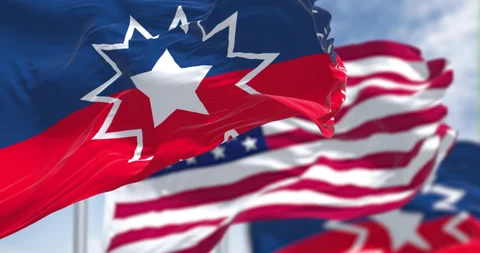
A federal holiday that isn’t fully honored nationwide, and the uncomfortable geography of who gets the day of When President Biden signed the Juneteenth National Independence Day Act into law on June 17, 2021, the narrative that followed was largely one of triumph. A long-overdue federal recognition. A bipartisan moment, the bill passed the Senate unanimously and the House 415-14. A country finally acknowledging, in law, the significance of June 19, 1865. What got far less attention in that celebratory moment was a quieter, more complicated reality: the federal government declaring something a holiday does not mean the country actually observes it. And four years on, the gap between what Juneteenth is on paper and what it is in practice for millions of Americans remains wide, revealing and largely undiscussed. The federal holiday designation covers federal employees. For everyone else, it depends entirely on where you live, and in a substantial portion of the United States, the answer is that Juneteenth is not a day off, not a state holiday, and not a protected observance in any meaningful legal sense. What “Federal Holiday” Actually Means This is the foundational confusion most Americans carry about Juneteenth and about federal holidays in general. A federal holiday designation applies specifically to federal government offices and employees. While Juneteenth became a U.S. federal holiday in 2021, private businesses are not automatically required to give employees the day off. Whether a company observes Juneteenth as a paid holiday depends on federal and state regulations and company policies. In other words, the same bill that made national headlines as a historic moment of recognition created a binding obligation for approximately 2 million federal workers and a voluntary suggestion for the other 155 million employed Americans. The holiday exists at the federal level. Whether it reaches the people who need to observe it most depends entirely on the decisions of fifty separate state governments and millions of individual employers. Only 28 states have recognized Juneteenth as a permanent state holiday, with the remaining states doing so in less formal ways or on a year-to-year basis. The federal holiday designation doesn’t automatically make it a state holiday. That means in roughly 22 states, depending on how you count incomplete recognitions and governor’s proclamations, a significant portion of state employees, teachers, DMV workers, state university staff, public health workers, were expected to clock in on June 19th as if it were an ordinary Thursday. The States That Said No, and the States That Said Nothing States with no official provision for Juneteenth include Alaska, Arizona, Arkansas, Florida, Hawaii, Indiana, Iowa, Kansas, Kentucky, Mississippi, Montana, New Hampshire, North Carolina, North Dakota, Oklahoma, South Carolina, Wisconsin and Wyoming. This is not a trivial list. It includes some of the most populous states in the South, the geographic region most directly implicated in the history Juneteenth commemorates. Florida’s approach is particularly illustrative. Governor Ron DeSantis issued a proclamation recognizing Juneteenth in 2020 but has not done so since. Florida does recognize the day slavery ended in the state, but marks it as “Emancipation Day,” celebrated in May, rather than as Juneteenth, and it is not a paid holiday. The state has effectively created its own parallel commemoration, one that coincidentally avoids using the word “Juneteenth” and grants no one a day off. The Alabama story is particularly layered. For years, Black Democratic legislators in Alabama fought to make Juneteenth a state holiday and were repeatedly blocked. When the state House finally passed a bill in 2025, it came after years of proposals that were either rejected or, in one particularly striking year, required to be paired with Jefferson Davis’ Birthday, forcing Black lawmakers to decide whether to support a bill that treated the emancipation of their ancestors and the birthday of the slaveholder who fought to keep them enslaved as equivalent holidays deserving equal status. Several Black Democrats said publicly they struggled with whether to support the legislation under those conditions. The Confederate Holiday Comparison Perhaps no detail in the geography of Juneteenth recognition makes the political stakes clearer than the Confederate holiday comparison. Mississippi and Alabama each celebrate three Confederate holidays as paid days off for state employees, including Robert E. Lee Day, Confederate Memorial Day and Jefferson Davis’ Birthday. Let that sit for a moment. In states where state legislators have repeatedly blocked or delayed making Juneteenth a paid holiday, citing costs, lack of public interest, or the administrative burden of another day off, those same states already give their employees paid days off to commemorate the man who was president of the Confederacy, the general who led Confederate armies, and the fallen soldiers of a war fought to preserve slavery. That trend infuriates Black leaders and community organizers who view making Juneteenth a paid holiday as the bare minimum state officials can do to help honor an often overlooked and ignored piece of American history. The argument that states cannot afford another holiday rings particularly hollow when the states making that argument are already funding three paid days of Confederate commemoration annually. Several states, including Arkansas, Georgia, Kentucky, North Carolina, South Carolina, Tennessee and Texas, commemorate Confederate holidays throughout the year. These are not obscure holdovers from another era that nobody actually takes. They are scheduled, paid, institutionally supported days off on the state government calendar. Juneteenth, in many of the same states, is not. The Private Sector Gap The picture becomes even more uneven when you move from state employees to private sector workers, the majority of the American workforce. The share of large employers offering Juneteenth as a paid holiday rose from 9% in 2021 to about 33% in 2022, then 39% in 2023, and 41% in 2024, before flattening and, in 2025, beginning to pull back as DEI rollbacks took effect. Even at the peak, that meant more than half of private sector workers had no paid Juneteenth holiday. And the workers least likely to receive the day off, those in lower-wage service jobs, retail,
Juneteenth Part 4: DEI Didn’t Save the Celebration

How the rollback of diversity programs in 2025 quietly dismantled Juneteenth events across America — without ever canceling the holiday There is a particular kind of political maneuver that works not by outlawing something, but by making it uncomfortable, unfunded, and quietly impossible to sustain. You do not need to ban a holiday to kill it. You just need to defund the organizations that celebrate it, discourage the agencies that observe it, withdraw the corporate money that underwrites it, and then post on social media about the economic cost of “non-working holidays.” Over the course of 2025, that is roughly what happened to Juneteenth, and it happened with a precision that deserves more scrutiny than it has received. The legal status of Juneteenth never changed. The cultural and financial infrastructure around it was systematically dismantled. What the Law Actually Says and Doesn’t Start with the legal reality, because it matters for understanding the full picture. “Juneteenth is a federally declared holiday,” said Jeremy Paul, professor at Northeastern University School of Law. “Holidays are established by Congress and cannot be revoked just by a president.” That protection is real. In 2021, the bill passed the House 415-14 after the Senate unanimously passed the legislation. “He lacks the legal authority” to cancel the holiday, Paul said. This is important to understand: nothing that happened to Juneteenth in 2025 was, strictly speaking, illegal. The Trump administration did not cancel the holiday. Federal employees still had the day off. The Smithsonian stayed closed. The mail didn’t run. What the administration did instead was more surgical, and in some ways, more effective. Since his reelection, Trump made the elimination of DEI programs a centerpiece of his administration, cracking down on diversity efforts in the federal government with a series of executive orders. Those executive orders did not mention Juneteenth by name. They didn’t have to. The Memo That Said It All The signal came early, in January 2025, weeks before any Juneteenth celebration was even being planned. The Defense Intelligence Agency ordered a pause of all activities and events related to Martin Luther King Jr. Day, Black History Month, Juneteenth, LGBTQ Pride Month, Holocaust Remembrance Day and other “special observances” to comply with President Trump’s executive order aimed at curtailing diversity, equity and inclusion programs. This was not a fringe agency or a rogue actor. This was a senior military intelligence organization, responding in writing to presidential direction, placing Juneteenth on a list alongside Holocaust Remembrance Day as observances to be suspended. The Department of Defense stated flatly that “identity months are dead,” while other high-ranking government members including Treasury Secretary Sean Duffy publicly declared their refusal to celebrate Black History Month or other “identity-based observances.” The messaging from the top of the federal government was consistent: these commemorations were not welcome in official spaces. The administration also removed Black American history content from federal websites and discouraged some federal agencies from recognizing racial heritage celebrations. Content about Juneteenth that had lived on government sites, historical context, educational resources, recognition statements, was quietly removed. The holiday remained. Its official acknowledgment, in many federal corners, did not. The Chilling Effect on the Ground Here is where the mechanics get important. Federal executive orders do not bind private organizations or local governments directly. But they create what legal scholars call a chilling effect, an atmosphere in which people and institutions self-censor or self-limit, not because they are legally required to, but because they are afraid of what association with a disfavored cause might cost them. Some towns and cities scaled back Juneteenth celebrations or canceled them altogether due to concerns about violating the Trump administration’s executive orders banning DEI initiatives, even though Trump’s executive orders don’t cancel the federal holiday and only Congress can repeal it. Civil rights groups contend the DEI bans are having a chilling effect on Juneteenth, arguing the bans undermine the principles of equality and equal opportunity that the holiday represents. The most vivid example was in New Jersey. Congressman Frank Pallone Jr. issued a statement in response to the cancellation of a NAACP Juneteenth celebration in Edison, New Jersey, an annual event scrapped due to fear of violating a Trump-era executive order targeting DEI. “Who could blame organizations that depend on federal funding for trying to avoid the wrath of a spiteful administration that sees diversity and inclusion not as cornerstones of our democracy, but as threats to be eliminated?” Pallone said. This is the chilling effect in action. The NAACP in Edison was not banned from celebrating Juneteenth. They were not fined or prosecuted. They simply looked at the political environment, looked at their federal funding dependencies, and made a calculation that the risk was not worth it. That calculation, repeated in communities across the country, was exactly what the executive orders were designed to produce. City by City The Damage Report The ground-level impact across American cities in 2025 was substantial. In Scottsdale, Arizona, city council members dissolved their DEI office in February, which directly led to the cancellation of the city’s annual Juneteenth festival. In Colorado Springs, around five companies sponsored the Southern Colorado Juneteenth Festival compared to dozens in prior years, with organizers explicitly reporting that sponsors said their budgets had been cut because of DEI. In Oregon, the situation was even more blunt. Planners in Bend, Oregon, cited “an increasingly volatile political climate” in a statement explaining why they canceled their Juneteenth celebration entirely. Not safety concerns. Not budget issues. A volatile political climate. In 2025, in the United States of America, community organizers were canceling celebrations of the end of slavery because the political climate felt too dangerous. West Virginia dropped official state activities entirely, while the National Endowment for the Arts pulled funding for numerous grants in May, leaving local organizations who had planned celebrations scrambling. The Cooper Family Foundation in San Diego, which throws one of the largest Juneteenth celebrations in the city each year, was among dozens of groups told by the
Juneteenth Part 3: Corporate America Found a New Holiday to Sell You
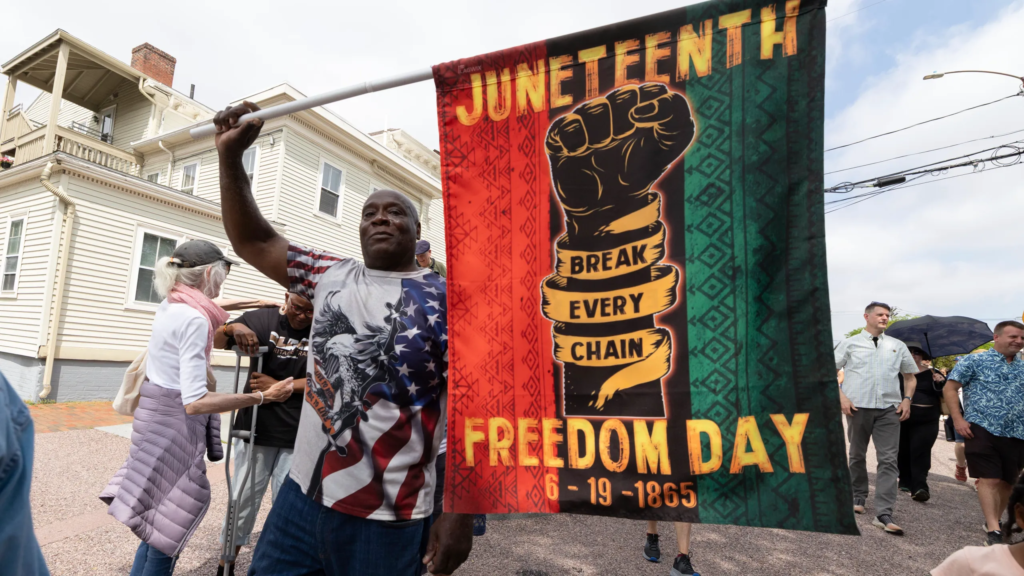
From Juneteenth ice cream to pulled sponsorships, how the market turned emancipation into a product, then abandoned it when it became inconvenient America has a well-established tradition of taking its most sacred and historically weighted moments and turning them into merchandise. Christmas became a retail season. Martin Luther King Jr.’s legacy became a mattress sale. Memorial Day became a car dealership event. So perhaps no one should have been surprised when Juneteenth, the commemoration of the end of slavery, barely survived its first year as a federal holiday before corporations figured out how to put it on a label and charge $4.99 for it. What is surprising, and worth examining carefully, is how quickly those same corporations abandoned it the moment supporting it stopped being profitable. The arc of corporate America’s relationship with Juneteenth, from enthusiastic monetization, to viral humiliation, to quiet withdrawal, tells you more about how businesses actually view Black history than any press release ever could. Year One: The Rush to Capitalize The Juneteenth National Independence Day Act was signed on June 17, 2021. Corporate America moved with unusual speed. Within twelve months, the holiday that Black communities had observed quietly for over 150 years had become a product category. The share of large employers offering Juneteenth as a paid holiday rose from 9% in 2021 to about 33% in 2022, then 39% in 2023, and 41% in 2024. Companies announced solidarity statements. Retailers stocked themed merchandise. It looked, on the surface, like a moment of genuine recognition. Then the products started appearing on shelves and the problems became impossible to ignore. Walmart introduced a “Celebration Edition: Juneteenth Ice Cream,” a red velvet and cheesecake flavor, with a label reading “Share and celebrate African-American culture, emancipation and enduring hope.” After a firestorm of criticism on social media calling the item “tone deaf,” Walmart pulled the product and issued an apology. The backlash was swift and pointed. One widely shared tweet cut straight to the issue: “We said REPARATIONS… not Red Velvet.” Dollar Tree also faced backlash for promoting a Juneteenth-inspired line of party supplies and tableware using the Pan-African colors of green, red, and yellow, rather than the actual Juneteenth colors of red, white, and blue, suggesting the team behind the product had not researched even the basic symbolism of the holiday they were selling. But Walmart and Dollar Tree were not alone. Microsoft-owned 343 Industries renamed an emblem in its Halo Infinite video game meant to celebrate Juneteenth that had initially been labeled “Bonobo,” the name of a great ape, only changing it to “Freedom” after social media backlash. The Children’s Museum of Indianapolis also expressed regret for selling a “Juneteenth watermelon salad,” which was called out for invoking a longstanding racist stereotype. In the space of one June, corporate America had managed to package the emancipation of enslaved people alongside a great ape reference, a racist food trope, and wrong-colored party napkins. If it were a coordinated effort to demonstrate how little these companies actually knew about the history they claimed to be honoring, it could hardly have been more effective. The Pattern Keeps Repeating One might expect that after the public humiliations of 2022, major retailers would approach the following years with more care. The evidence suggests otherwise. In 2025, a Kroger store in Atlanta went viral when a TikTok user posted video of the store’s Juneteenth cookie cakes featuring sloppily piped slogans like “June 19 FREE” and “Free @ Last.” The video garnered over 7 million views. Critics pointed out that “Free at Last” is a direct lift from the closing words of Dr. Martin Luther King Jr.’s “I Have a Dream” speech, itself drawn from a classic Negro spiritual, truncated to a casual “@” sign and scrawled across a dessert. Kroger’s response was to remove the cakes but not to replace them with anything more thoughtful. The company cited “quality control” failures, a framing that missed the point entirely: the problem was not the execution but the conception. Three years of corporate Juneteenth missteps, same companies, same basic failure, same cycle of backlash and apology, tells you this is not a series of individual mistakes. It is systemic. As several social justice and public policy experts have pointed out, the sudden commercial recognition of a holiday Black families have been celebrating for more than 160 years misses its historical importance. It would be more meaningful to see corporations create scholarship funds, sponsor anti-racism public service announcements, or review and address corporate policies that inhibit diverse hiring. Instead, the response has been paper plates and cookie cakes. The Expert Verdict The academic community has been consistent on what corporate Juneteenth behavior actually reveals. According to William Darity, a public policy professor at Duke University and racial equity expert, once any significant event is declared a national holiday it becomes subject to potential commercialization. He added that Juneteenth’s national acknowledgement, ironically, may take away from “the compelling need for a comprehensive national program for Black American reparations.” “Imagine how different the landscape would look if Juneteenth had been designated as a federal holiday after reparations had been paid,” he said. That framing is important. The holiday itself, in this reading, functions as a substitute, a symbolic acknowledgment that corporations and politicians can point to as evidence of progress, while the structural and economic inequities that Juneteenth actually represents remain entirely unaddressed. Turning the history of slavery into paper plates and limited-edition ice cream reduces the long, painful, complicated journey of African American people into a comfortably consumable commodity. It also implies that journey is over, that Black people in the United States have reached a place of freedom and equality. As we know, this is not true. The Fastest U-Turn in Corporate History If years two, three, and four of corporate Juneteenth were defined by clumsy product launches, year five revealed something arguably more damaging: how conditional that corporate support had been all along. Denver’s Juneteenth Music Festival, a cornerstone celebration of Black