The Intellectual Weight of Freedom

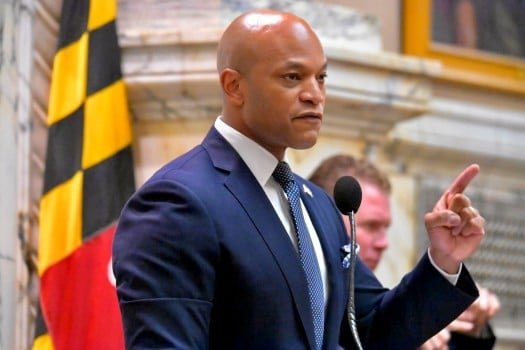
Reading, Thought Leadership, and the Responsibility of American Citizenship By Eric Lawrence Frazier, MBA I recently watched an interview with Governor Wes Moore and read his LinkedIn post recommending works by Black authors. What struck me was not merely the list of books, but what the list revealed. You can learn a great deal about a leader by observing what they read, what they recommend, and what intellectual traditions shape their thinking. A person’s reading habits form the architecture of their convictions. Books reveal the scaffolding of belief. After reading his post, I sent a message to my children encouraging them to continue reading deeply and consistently. To be clear, my children are grown adults—the youngest is thirty-two years old. This was not a new exhortation. I have urged them to read their entire lives. Reading has always been a discipline in our household because it sharpens the mind, refines judgment, and strengthens the ability to lead responsibly. Governor Moore’s recommendations did not introduce the idea of reading to me; they reinforced the importance of intellectual formation in leadership. Black literature has always served as both a historical record and a moral compass. It preserves memory, challenges complacency, and forces engagement with difficult truths. When a leader publicly affirms that tradition, it communicates something important about how he understands identity, struggle, and responsibility. Black leadership informed by Black literature carries a depth that cannot be manufactured through political branding. It is rooted in narrative, sacrifice, endurance, and disciplined thought. However, true leadership in America cannot be confined to race, ethnicity, or religious identity. Black intellectual tradition strengthens Black leadership, but American leadership must ultimately rise above categories. Real leadership in this nation is forged through diversity—diversity of thought, background, belief systems, economic experiences, immigration histories, and political philosophies. That diversity is not an obstacle to unity; it is the foundation of our constitutional experiment. The strength of the United States has never been uniformity. It has always been pluralism. Our freedoms are sustained by the coexistence of disagreement without disintegration. We argue fiercely, sometimes imperfectly, but we remain one nation because our constitutional structure protects dissent. That architecture—separation of powers, representative government, checks and balances—prevents power from consolidating in a single personality. America’s greatness has never been embodied in one individual. Presidents come and go. Administrations change. Movements rise and fall. But the nation remains because it is rooted in law, institutions, and the will of a diverse population. Immigration has strengthened this country generation after generation. Debate has refined it. Reform has expanded its promise. The idea that our greatness depends on a single figure misunderstands the source of our endurance. At its core, leadership in America requires citizens who are willing to carry the intellectual weight of freedom. Freedom is not self-executing. Liberty is not automatic. Representative government demands participation from individuals who are informed, disciplined, and courageous enough to speak. A thought leader is not someone waiting for permission to articulate a position. A thought leader is someone prepared to express convictions on life, family, business, economics, politics, and faith—and to defend those convictions with clarity and reason. Every human being has the capacity to influence thought. The relevant questions are whether one desires that responsibility, whether one has developed the discipline necessary to sustain it, and whether one is willing to endure criticism without retreating into silence. Intellectual courage is not loudness. It is steadiness. It is the ability to articulate disagreement without dehumanizing opponents. It is the willingness to engage in substance rather than insult. I believe leadership is a calling. I began preaching at nine years old. That early formation instilled in me the understanding that words carry responsibility. Yet the ministry cannot remain confined to doctrinal repetition or internal debates. Faith must engage life. It must address marriage, employment, economics, governance, education, and public policy. Leadership that does not engage the realities people face each day becomes performance rather than service. I consider myself a citizen willing to carry the intellectual weight of freedom. I write daily. I articulate my views on what is happening in this country. I disagree when I believe leaders—whether presidents, members of Congress, governors, or local officials—depart from representing the will of the people. That is not rebellion; it is citizenship. Our constitutional framework presumes engaged participation. Silence in the face of conviction is not humility; it is abdication. My love for this country does not ignore its history. America bears the scars of subjugation—of Native peoples, of enslaved Africans, of segregation and exclusion. Those chapters are not to be denied or romanticized. They are to be confronted honestly. Yet it is equally true that we have progressed. Over nearly 250 years, the definition of liberty has expanded. The circle of participation has widened. The work is unfinished, but the trajectory is real. The journey is not over. In many respects, we are still in the early chapters of our democratic maturation. Our current challenges are not rooted in a lack of innovation, wealth, or intellectual capacity. They are rooted in the erosion of civil discourse, in substituting ridicule for argument, in elevating loyalty above principle, and in leading with fear rather than collaboration. Those tendencies weaken institutions more than disagreement ever could. Freedom requires citizens who read deeply, think critically, and debate honorably. It requires individuals willing to hold all leaders accountable without surrendering to cynicism. It requires engagement that rises above party allegiance and focuses on constitutional integrity. America does not need spectators. It needs participants. I am one of them. I will continue to read. I will continue to write. I will continue to speak thoughtfully and firmly about the issues shaping this nation. I will do so not out of hostility, but out of responsibility. The preservation of freedom demands intellectual discipline and moral courage from ordinary citizens. America endures not because a president declares it great, but because its people sustain its principles. That work belongs to each of us. The question
WE THE PEOPLE: The Accountability Series — Part 4: The Blueprint
A Monthly Accountability Calendar for the Executive Branch and Congressional Leadership The people are the employer. The employer has the right to demand answers. In Part 1, I framed the press as a proxy—not because journalists are flawless, but because the American people cannot physically occupy the halls of government and ask questions in real time. In Part 2, I clarified the job description: Congress writes laws and controls spending; the President executes laws and administers the executive branch. In Part 3, I named the breakdown: when Congress stops supervising consistently, executive power expands through access control and narrative management, and the press room becomes a stage rather than a system of public accountability. Part 4 is the corrective structure. Accountability is not an emotion, and it is not a moment. Accountability is a scheduled obligation—like payroll, audits, board meetings, performance reviews, and compliance reporting. No serious organization accepts “we’ll explain when we feel like it” from leadership. Public office should not be the only job in America where the employee decides whether the employer deserves answers. This blueprint begins with a simple proposition: public questioning is not an attack on leadership. It is the proof that leadership is legitimate. A government that governs in daylight can withstand questions. A government that cannot withstand questions has already revealed what it thinks of the employer. Other democracies treat scheduled accountability as normal. The United Kingdom holds Prime Minister’s Questions on a fixed weekly schedule—every sitting Wednesday at noon—where the prime minister answers questions publicly in Parliament.1 Canada’s House of Commons holds Question Period on sitting days as a routine accountability forum, set aside for a maximum of forty-five minutes.2 Germany, too, institutionalizes public questioning of government through formal parliamentary scrutiny mechanisms that compel answers and create a record.3 The claim is not that these systems are perfect. The claim is that they share a public ethic we have allowed to erode: predictable, recurring questioning is not a concession; it is the cost of public power. So the question becomes unavoidable: why are we exempt? Why do we tolerate a model where senior officials behave as though accountability is discretionary rather than integral to their job? When an administration or Congress refuses a reasonable accountability schedule, it is not refusing reporters. It is refusing the employer. That brings me to the most common defensive maneuver in Washington: performative accountability. We are told that members of Congress already “meet the people” because they hold town halls, do cable interviews, deliver floor speeches, and occasionally take questions in the hallway. That is not accountability. That is content. It is access on their terms, in formats designed for control. A real accountability system is not measured by whether an official appears on camera. It is measured by whether the employer has a consistent, predictable forum where decision-makers must answer unscripted questions, accept follow-up, and commit to deadlines on the public record. One of the weakest substitutes is the empty-chamber performance. YouTube is filled with monologues delivered to an empty House or Senate chamber—one member, a camera, a script, and a staffer. That is not the public holding anyone accountable. It is self-publication optimized for clips, fundraising, and partisan theater. Another substitute is the selective interview circuit. Senators, representatives, and presidents choose the venue, choose the anchor, choose the time, narrow the topics, and shape the segment into a narrative of accomplishment. Even when an interviewer is skilled, the format is still episodic and controlled. It does not create a durable record, and it rarely compels systematic answers across budget, enforcement, legal posture, implementation, and results. The hallway scrum is the weakest substitute of all. Five minutes between votes is not accountability; it is a soundbite that preserves the official’s power to end the exchange at will. No serious employer would accept a leadership model where the employee answers only when convenient, briefly, and then disappears behind a door. Here is the simplest standard the public should remember: if the official can choose the forum, choose the interviewer, choose the topics, and end the exchange at will, then the employer is not in control. The employee is. Measured against real work, what I am proposing is modest. One full day out of a month is not extreme—it is the minimum a serious employer would demand from leadership entrusted with vast power, trillions in spending, and life-altering enforcement authority. In most professions, employees do not negotiate whether they will be accountable; they negotiate how they will be accountable. The cultural correction America needs is to treat public office like employment with obligations rather than royalty with privileges. If officials refuse a predictable schedule, the refusal reveals the issue: not workload, but attitude—an inversion of the servant–sovereign relationship that a republic requires. The accountability calendar is therefore straightforward. The United States has fifteen executive departments led by cabinet-level officials who carry out the day-to-day administration of the federal government.4 Those departments enforce federal law, issue regulations, manage programs, oversee grants, and shape daily life across housing, labor, education, civil rights enforcement, health policy, national security, immigration operations, and economic policy. The public cannot pretend government is transparent if these departments do not answer questions in a consistent forum. The blueprint is direct: each of the fifteen executive departments devotes one full day every month to public questioning in a predictable forum.4 The day is fixed and recurring—for example, “the second Tuesday of every month”—so the employer can expect it and measure compliance. Predictability is not a cosmetic feature; predictability is transparency. A calendar that the public can anticipate is a calendar that the government cannot quietly evade. The non-negotiable rule is equally direct: no surrogates. A press secretary can coordinate. A communications director can brief. A deputy can support. None of them can replace the accountable decision-maker. The Secretary is the principal. The Secretary controls policy direction, operational priorities, budget execution, enforcement posture, and public responsibility. If accountability is outsourced to a surrogate, then the department is
WE THE PEOPLE: The Accountability Series — Part 3: The Broken Check
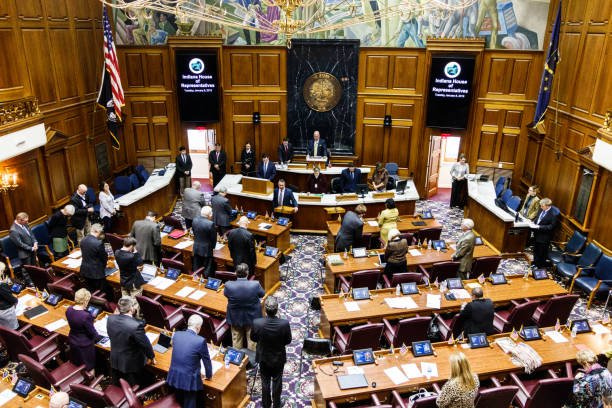
Why Congress Stopped Supervising the Executive—and Why the Press Room Became the Battlefield The people are the employer. The employer has the right to demand answers. Part 2 clarified the job description: the President executes laws, and Congress writes laws and controls spending. That division is not academic. It is the architecture of accountability. When that architecture fails, the nation gets performance instead of governance. Part 3 is about the broken check: why Congress stopped supervising the executive branch with consistency, how the press briefing room became a substitute arena for accountability, and why the public is watching a communication war instead of a functioning constitutional system. The first failure: Congress delegated power and then stopped managing what it delegated Congress creates agencies, structures them, funds them, and delegates authority to carry out statutes. The executive branch is supposed to operate within those statutes and appropriations.1 Congress is not a helpless bystander watching the executive “expand.” Congress designs the bureaucracy and can redesign it. Congress can also counteract agency action through later legislation and oversight tools.2 The problem is not delegation alone. Delegation is inevitable in a modern economy. The problem is delegation without consistent supervision. Congress hands off broad discretion and then acts surprised when the executive branch governs through administrative machinery that Congress created and no longer closely monitors. There is a name for the limit Congress is not supposed to cross: the nondelegation doctrine, rooted in the principle that Congress cannot transfer strictly legislative power to another branch, even though it can confer substantial discretion to implement and enforce law.3 That legal line matters because when Congress becomes a legislature in name only—writing broad aspirations and leaving the details to the executive—then the executive becomes the de facto lawmaker in the public mind. That is how the employer loses the ability to assign responsibility. Everything becomes blurry. Congress escapes blame. The White House becomes the focal point of rage and worship. The public becomes emotionally manipulated because it cannot see where the decision actually came from. The second failure: oversight became episodic and performative Oversight is not a slogan. Congress has a defined set of tools—hearings, subpoenas, investigations, appropriations constraints, confirmations, statutory reforms, and more.4 These tools exist so the employer can see government working in the open. But oversight has increasingly become episodic—activated only when it is politically profitable—or theatrical—built for clips, not governance. The public can feel the difference. Real oversight is boring and relentless. It reads documents. It demands records. It follows money. It produces consequences. Performative oversight produces headlines and then evaporates. When Congress does not do the daily grind of supervision, the executive branch fills the vacuum with press operations—messaging, framing, and access control. That is not a conspiracy. It is what institutions do when external accountability weakens: they prioritize narrative management. The third failure: the press briefing room became the nation’s accountability substitute When Congress does not consistently interrogate the executive branch in public, the press becomes the most visible check in real time. That is why the briefing room matters. It is not entertainment. It is a proxy space for the employer to hear questions and hear answers. The White House Correspondents’ Association says that restricting journalists’ access to communications spaces that have long been open for newsgathering hinders the press corps’ ability to question officials, ensure transparency, and hold government accountable “to the detriment of the American public.”5 That statement should not be read as “press complaining.” It should be read as “employer losing visibility.” Then it escalated. In October 2025, Reuters reported the White House restricted access to “Upper Press” (Room 140) in the West Wing, requiring appointments to enter areas where journalists historically gathered information and interacted with senior communications officials.6 The justification offered centered on sensitive materials and operational concerns. The effect is simple: less friction, fewer spontaneous questions, fewer unscripted moments, and less accountability. The same month, reporters walked out of the Pentagon and turned in their access badges in protest of new restrictions tied to their reporting and inquiry practices.7 That walkout was a signal: access is being conditioned, and the public should not ignore it. When access is restricted, a government can still communicate. It can issue press releases. It can post videos. It can publish curated statements. But it cannot be questioned in real time by independent actors. That is the difference between communication and accountability. The leak narrative is being weaponized to punish scrutiny A government obsessed with stopping “leaks” is often revealing a deeper fear: exposure. The mature response to internal disclosures is internal governance—clear classification rules, lawful handling of sensitive materials, disciplined internal processes, and accountability for internal breaches. What we are watching more often is displacement: rather than fixing internal management, institutions attempt to control external accountability by tightening access and recasting journalism as an enemy function. Reuters reported the administration cited concerns about reporters eavesdropping, recording conversations, and photographing confidential material in the restricted West Wing area.6 Here is the employer’s question: if internal plans are leaking, why is the press punished for publishing what insiders revealed? The public needs to treat many “leaks” as what they frequently are: whistleblowing. They are internal alerts that the employer would otherwise never see. Not every disclosure is righteous. Not every source is noble. But the blanket framing—“leaks are betrayal, the press is the problem”—is a convenient institutional strategy. It shifts blame away from internal misconduct and toward external scrutiny. The press room is not the real solution—and that is the point The press briefing room is a proxy, not the ideal. It exists because the employer cannot be in the room. But the proxy has become a substitute for direct accountability, and now it is being treated as a battleground rather than a constitutional necessity. The country does not need better press theatrics. It needs officials to answer for decisions in the forum that exists for public accountability. That means this: the executive branch needs to stop hiding behind surrogates. A press
WE THE PEOPLE: A Blueprint for Accountability Part 2: The Job Description
What the President Can Do Without Congress—and What He Cannot The American people are the boss. That is not a metaphor. That is the design. “We the People” is the source of authority in the United States, which means elected officials and executive officers are employees of the public, paid with public money, empowered by public consent, and accountable to the public record. Accountability breaks down fastest when the employer—the American people—does not understand the job description of the employees: the President and Congress. Most Americans can describe what a CEO “feels like,” but very few can tell what the President can lawfully do alone, without Congress. Very few can describe what Congress controls that the President cannot touch. That gap in civic knowledge is not harmless. It is how power expands without consent. It is how the executive branch becomes a stage instead of an administrative role. It is how Congress escapes scrutiny while the public focuses on personalities. The President is the chief executive of the federal government. The Constitution vests executive power in the President, not legislative power.1 The President executes laws. Congress makes laws. That division is the first line of defense against monarchy. The President is also constrained by the most practical reality in government: money. No policy becomes real without resources, and the Constitution is explicit that money cannot be spent unless Congress appropriates it by law.2 If the public understood those two facts at a deep level—(1) the President executes, and Congress legislates; (2) Congress controls spending—then it would be harder for any administration to govern through performance while operating through secrecy behind the scenes. What the President can do without Congress (the short list) There are presidential powers that come directly from the Constitution. Some are significant. Some are ceremonial. Many are misunderstood. Here is the practical list of what a President can do without Congress voting first. 1) Issue pardons for federal offenses (with limits) The President can grant reprieves and pardons for offenses against the United States—federal crimes—with a key limitation: pardons do not apply to impeachment cases.3 This is one of the broadest unilateral authorities in the Constitution.4 Pardons do not erase state criminal liability, and they do not reverse an impeachment conviction.3 2) Serve as Commander in Chief (but not as Congress) The President is Commander-in-Chief of the armed forces. That title is real. It is not limitless. Congress retains core war and military authorities through its enumerated powers—including funding, regulation of the armed forces, and other war-related powers.5 The War Powers Resolution reflects Congress’s effort to reassert its role in decisions that introduce U.S. forces into hostilities, emphasizing limits on unilateral presidential action absent a declaration of war, specific statutory authorization, or a national emergency created by an attack on the United States or U.S. forces.6 Commander in Chief does not mean “Commander over Congress.” It does not mean “Commander over the Constitution.” It means the President commands the military within a constitutional system where Congress controls authorization and funding. 3) Direct the executive branch and manage federal administration The President runs the executive branch. That includes setting priorities, supervising agencies, and directing how laws are enforced and administered through the departments and officers of the United States. The Take Care Clause requires the President to “take Care that the Laws be faithfully executed.”7 That is the job. Execution of law is the President’s constitutional obligation—whether the President likes the law or not. 4) Issue executive orders, proclamations, and memoranda—within legal authority Executive orders are often treated like “presidential law.” They are not statutes. An executive order can have legal effect only if it is grounded in either (a) the President’s Article II constitutional authority, or (b) authority delegated by Congress through statute.8 Courts can review executive orders and strike them if they are unlawful.8 Executive orders are not magic. Their legitimacy is borrowed from the Constitution or from Congress. 5) Conduct certain foreign affairs functions (with limits) The President plays a central role in diplomacy and recognition, and the Constitution also assigns the President specific foreign-relations functions.9 The President can negotiate treaties, but treaties require Senate advice and consent, with two-thirds concurrence of Senators present.10 The President can negotiate. The Senate must approve treaties. That prevents one person from binding the nation unilaterally. 6) Veto legislation The President can veto bills passed by Congress. Congress can override with the required supermajority, but the veto itself is a presidential power in the constitutional design.11 7) Nominate and appoint officials (with Senate confirmation for most senior roles) The President nominates and, with Senate advice and consent, appoints ambassadors, judges, and other principal officers. Congress may allow some “inferior officers” to be appointed without Senate confirmation, but that is controlled by law.10 This is accountability architecture. It limits the President’s ability to staff the government solely with loyalists who face no external review. 8) Fill vacancies during Senate recess (temporary) The Constitution provides a recess appointment mechanism allowing the President to fill vacancies that happen during the Senate’s recess, with commissions expiring at the end of the Senate’s next session.12 What the President cannot do without Congress (the bigger list) The most dangerous civic illusion is believing the President is a national legislator. The President does not hold the power of the purse. The President does not write statutes. The President does not levy taxes. The President cannot spend money because he “feels” an emergency. The President cannot convert speeches into law. 1) The President cannot appropriate funds The Appropriations Clause is blunt: no money shall be drawn from the Treasury except by appropriations made by law.2 Budgets are not talking points. They are legislation. Every major federal program depends on Congress. 2) The President cannot tax, borrow, or legislate the way Congress can Congress holds enumerated powers, including taxing, borrowing, and regulating commerce—core functions of governing a modern nation.5 When the public blames the President for everything that Congress controls, or praises the President for outcomes Congress
WE THE PEOPLE: A Blueprint for Accountability — Part 1: The Sovereign and the Proxy

Why the White House Press Briefing Room Exists—and Why the Country Needs Real Accountability Again Most people reading this are doing it the same way I read the news: in between responsibilities. You are probably on a break between meetings. You might be checking this on your phone while you are waiting for a call to start. You have an inbox full of expectations. You have a deadline. You have someone who is expecting an answer from you—your boss, your client, your customer, your vendor, or your team. If you miss a deadline, you have to explain yourself. If you blow a budget, you have to explain yourself. If you fail to perform, someone calls you in, and you have to explain yourself. That is accountability. You live in it every day. You cannot hide from it, and you cannot outsource it to someone else. One question should bother every working American: Why is less accountability expected from the people we hire to run the country than the accountability expected from us in our own jobs? The President is not a king. The President is an employee. Congress is not royalty. They are employees. Governors, mayors, agency heads, and employees. They work for one employer: the American people. When Americans stop acting like the employer, the public office becomes something else. It becomes a celebrity. It becomes entitlement. It becomes a performance platform instead of a service role. It becomes a career where people act as if they do not owe the employer an explanation. “We the People” is neither poetry nor decoration. It is a contract. It is the legitimacy claim of the entire American system. The people authorize the government. The people delegate authority. The people can withdraw that authority through the vote, Through organized civic pressure, Through the refusal to reward officials who treat public accountability like a nuisance. The briefing room exists because the employer cannot be in the room every day ???? Every day, Americans cannot sit inside the White House briefing room and question the executive branch in real time. Most people are working. Raising families. Handling life. Paying bills. Fighting traffic. Managing stress. Trying to stay afloat. A practical arrangement fills that gap: the press sits there, asks questions, records answers, and publishes what is said. The White House Correspondents’ Association describes the job directly: questions are asked “on behalf of the American people,” and the mission includes holding the administration accountable.1 A briefing room without real questioning is not accountability. It is marketing. The press secretary’s role is not the issue. The substitution is the issue.The press secretary role exists because modern government communicates at scale. President Herbert Hoover formalized the role in 1929.2 The substitution is where the public loses the plot. A department makes a major enforcement change; the spokesperson did not make that call. An international conflict escalates; the spokesperson did not execute that operation. A policy shift affects housing, labor, education, civil rights, immigration, or finance; the spokesperson did not draft the internal guidance, sign off on implementation, or run the machinery that hits the public in real life. A surrogate cannot replace accountability. A surrogate can manage perception. Access is power—and access is being tightened ???? Control access, and you control who gets answers. Control who gets answers, and you control what becomes public knowledge. Control public knowledge, and you can govern with less accountability—because accountability depends on information. Reuters reported in October 2025 that the White House implemented new restrictions limiting journalists’ access to senior press offices in the West Wing, requiring appointments and restricting entry to “Upper Press.” The White House Correspondents’ Association criticized the change as a threat to transparency.3 The Pentagon walkout showed what happens when the government tries to convert access into obedience. ???? The Pentagon showed the country what it looks like when the government tries to convert access into compliance. In October 2025, reporters turned in their Pentagon access badges and walked out rather than accept new restrictions tied to how they do their jobs.4 Reuters also reported that the Pentagon policy required journalists to acknowledge rules that could lead to credentials being revoked if journalists sought employees’ disclosure of classified—and in some cases certain categories of unclassified—information, framing routine newsgathering as a potential “security risk.”5 That matters because it reveals the underlying logic: embarrassment gets treated like a security crisis, and public questioning gets treated like misconduct. The “leak” problem is being used as an excuse to punish accountability ⚠️ A serious organization manages leaks internally. It strengthens internal governance, clarifies classification rules, trains staff, enforces ethics, and holds internal actors accountable. The public cannot be protected by punishing the press for doing its job. Reporting on the Pentagon’s response to leaking included proposals for nondisclosure agreements and expanded polygraph programs aimed at staff—an approach critics described as intimidation and information control rather than mature governance.6 Then the country is told the press isae threat because it published what insiders revealed. Not every disclosure is noble. Not every source is clean. Many disclosures function as whistleblowing in practice—people inside the system exposing information the public needs to judge power honestly. Calling those people “leakers” can be a convenient way to discredit what they are revealing. When officials cannot control internal discipline, they try to control the public record. The public knows what accountability looks like—and keeps tolerating the opposite ???? Americans are not imagining the dysfunction. People feel it because they know what accountability looks like. They live it. You cannot tell your boss, “That’s a hostile question.” You cannot tell your client, “I’m offended you asked for documentation.” You cannot tell your company, “I’m not going to answer because you are biased.” That posture now shows up routinely in political communication. Questions are treated as attacks. Basic accountability is framed as disrespect. Transparency is called hostility. A spokesperson is deployed to battle the press as if the public record itself is the enemy. That is a breakdown
Greenland Tariff Threats

Every Sunday morning, like clockwork, I watch Face the Nation. It has become a kind of civic liturgy for me—coffee in hand ☕, listening not just for answers, but for whether anyone in Washington still understands the weight of the questions. And I have to say this plainly: Margaret Brennan has grown into one of the most formidable interviewers in American media. She is now fearless. She does not flatter power. She presses it. And in an era where too many journalists confuse access with accountability, that matters. ???? This past interview—featuring Mike Turner, the Republican congressman from Ohio—was one of those moments where the fog lifted just enough to reveal a deeper problem. On the surface, the discussion was about Greenland, tariffs, NATO, and presidential authority. But beneath it all was a far more troubling reality: Congress has become increasingly ineffective at managing the country, and the presidency is expanding into that vacuum in ways that should alarm anyone who believes in representative government. Let’s be clear at the outset. Greenland is not a new issue. Congressman Turner rightly pointed out that the United States has raised the question of Greenland multiple times, dating back to the 1800s, with several serious discussions in the 20th century. We have a 1951 defense agreement with Denmark. We already maintain a military presence there. Anyone serious about national security understands the Arctic’s importance. The Arctic is no longer a frozen afterthought; it is a strategic frontier where Russia and China are actively positioning themselves. On that point, I actually give the president credit. Thinking about the future of American security is his job. Greenland is geographically positioned to serve as a critical node for missile defense, early-warning radar, space surveillance, and Arctic operations. No credible defense strategist disputes that. What is baffling—and dangerous—is how we got here and how this issue is being handled. ???? At one point, the United States had 19 military installations in Greenland. Today, we are down to essentially one major base, with a fraction of the personnel once stationed there. That is not the result of Greenland pushing us out. That is not the result of Denmark blocking cooperation. That is the result of American strategic neglect—decades of assuming the post–Cold War peace dividend would last forever. We didn’t “lose” Greenland. We deprioritized it. We took our eye off the Arctic while our adversaries did not. So now we arrive at the present moment, where the president is threatening escalating tariffs—and even floating military language—against allies unless Greenland is handed over to the United States. That is where this conversation crosses a line. ⛔ The United States is not a real estate syndicate. The presidency is not a monarchy. And America is not supposed to be governed by impulse, leverage, and pressure campaigns aimed at our own allies. We are a democracy. A constitutional republic. A representative government. The president is a leader, not a sovereign. ???????? Congressman Turner made an essential point that cannot be overstated: presidential desire does not equal presidential authority. Article I, Section 8 of the Constitution reserves control over international trade to Congress. Tariff authority, where delegated, is narrow and conditional—typically tied to sanctions or genuine national emergencies, not coercing NATO partners into territorial concessions. Even that limited tariff authority is currently under legal scrutiny. More importantly, there is no authority—constitutional, statutory, or moral—for a U.S. president to threaten military force against a NATO ally to seize territory. None. Zero. And the fact that this even needs to be said tells us how far we have drifted. ???? What disturbed me most in this interview was not the president’s rhetoric—presidents come and go—but Congress’s posture. Congressman Turner was clear-eyed and responsible. But the larger institution he represents appears paralyzed. This is a moment where Congress must decide whether it still intends to function as a coequal branch of government or whether it will continue to cede ground until the presidency becomes, in practice, authoritarian. We did not sign up for this. Yes, America has problems. Yes, the Electoral College no longer reflects a modern, diverse society—that’s another blog entirely. Yes, our politics are polarized, dysfunctional, and often unserious. But the solution to democratic weakness is not executive dominance. It is institutional courage. ???? Our global leadership has never been rooted in force alone. It has been rooted in alliances, trust, and presence. NATO is not just a European defense pact; it is the infrastructure of American power. Our bases in Europe are not only about Europe. They are launchpads for global operations, intelligence sharing, nuclear deterrence, and diplomatic leverage. When we threaten that alliance—publicly, casually, transactionally—we do real damage. That is why European allies responded to this rhetoric by sending troops to Greenland—not to threaten the United States, but to reaffirm collective defense. And yet, somehow, this was interpreted as hostility rather than solidarity. That inversion of meaning should worry us all. This is also where the conversation turns geopolitical in the most sobering way. When the United States publicly destabilizes the strongest democratic alliance in history, it doesn’t need to fire a shot to benefit our adversaries. Vladimir Putin doesn’t have to do anything at all. The erosion happens to him. ???? There is a tragic irony here. The very architecture that allows the president to project power—our alliances, our bases, our treaties—is what is being put at risk by this approach. You cannot lead the world while threatening the partners that make leadership possible. And here’s the part that truly puzzles our allies: we already have what we need. Through partnership, not purchase. Through cooperation, not coercion. Enhanced basing agreements, expanded radar systems, joint Arctic commands, shared missile defense—all of this can be achieved without violating international norms or undermining democracy. Greenlanders, like all people, have the right to self-determination. They are not a commodity. ???? Congressman Turner said something that stuck with me. This isn’t “The Art of the Deal.” It’s more like the dating game. You don’t
When Power Goes Unchecked: Congress, Intelligence, and the High Cost of Executive Drift
Part Two: Paralysis, Power, and a Republic on Autopilot ⚖️ In Part One, I focused on what the first interview on Face the Nation revealed about America’s global overextension—how chasing oil, threatening allies, and misallocating military resources has left us late where moral leadership actually matters. Part Two is about something even more dangerous. It is about what happens when Congress checks out, intelligence warnings are acknowledged but not acted upon, and executive power fills the vacuum—not through competence, but through momentum. This second interview, still anchored in the same episode and the same national security context, confirmed what many Americans intuitively feel but rarely hear stated plainly: The problem is no longer just bad decisions. The problem is the absence of institutional resistance. ???? The Illusion of Oversight ????️ We like to believe that somewhere—behind closed doors—adults are in the room. That intelligence briefings are being absorbed. That Congress is quietly but firmly doing its job. What this episode exposed is that much of that belief is performative comfort. The intelligence community knows what is happening. Members of Congress know what is happening. Privately, there is concern. Quietly, there is disbelief. But publicly, there is paralysis. And paralysis in a constitutional system is not neutral. It is permission. When executive actions go unchecked—not because they are lawful, but because they are politically inconvenient to confront—power does not pause. It expands. ⬆️ Trade Authority Is Not a Suggestion ???? Let’s return to the issue of tariffs, because it is a perfect case study in institutional failure. The Constitution does not ambiguously “lean” toward Congress on trade. It explicitly grants Congress authority over tariffs and commerce with foreign nations. That division of power exists for a reason: trade wars are economic wars, and economic wars affect every household. Yet we are watching tariffs deployed unilaterally—against allies, no less—without congressional authorization, debate, or recorded consent. What does Congress do? It murmurs privately. It expresses concern off-camera. It avoids confrontation publicly. That is not governance. That is surrender by inertia. When representatives fail to assert their authority, they do not preserve stability. They create precedent. And precedent, once normalized, becomes doctrine. ⚠️ Intelligence Without Enforcement Is Theater ???? One of the most unsettling subtexts in the interview was how clearly intelligence assessments are being acknowledged and then ignored. There is no imminent intelligence-based threat to Greenland from Russia or China. That is not an opinion. That is assessment. And yet the United States has managed to alarm NATO allies to the point where they feel compelled to consider collective responses to American behavior. Intelligence exists to inform policy. Policy exists to serve national interest. But when intelligence is treated as background noise—something to be “noted” rather than acted upon—it becomes ceremonial. A republic cannot survive on ceremonial governance. Executive Power Thrives on Congressional Silence ????️➡️????️ Here is the uncomfortable truth Part Two makes unavoidable: The presidency has not become more powerful because presidents are smarter or more capable. It has become more powerful because Congress has become more afraid of accountability. Fear of primaries. Fear of donors. Fear of being labeled disloyal. Fear of media backlash. So instead of checking power, Congress waits for the next news cycle. But power does not wait. And the result is a foreign policy that feels improvised, punitive, and incoherent—not because there is no strategy, but because there is no discipline. The Cost Is Not Abstract ???????? This is not a theoretical separation-of-powers debate. The cost shows up in: Weakened alliances Confused military posture Delayed humanitarian response Economic instability Domestic anxiety Global reputational damage When Canada’s leadership publicly suggests that China may be a more dependable partner, that is not a soundbite. It is a warning flare. ???? Alliances are built on predictability. Leadership is built on trust. Power without restraint breeds suspicion, not respect. A Republic Cannot Run on Autopilot ???? The framers did not design a system where Congress comments and the President governs alone. They designed friction on purpose—because friction slows bad decisions and forces deliberation. What we are witnessing now is a system running on autopilot, where momentum replaces judgment and silence replaces consent. That is not a strength. That is drift. And drift, in history, is how republics quietly lose their center. Why This Interview Still Matters ????️ Once again, this brings me back to the role of the media. This episode of Face the Nation mattered because it did not soothe. It did not entertain. It did not choose sides. It illuminated. Margaret Brennan did what journalists are supposed to do: she asked the questions that reveal institutional failure without turning the interview into a spectacle. That is rare. And it deserves recognition. ✔️ Thank You & Call to Action ???? Thank you for reading this blog. I appreciate your continued support in raising awareness about the issues that impact our relationships, families, friendships, and the institutions and environments—political, social, and economic—in which we live and work. Please share this blog—and explore my other articles and videos—each one created to educate, empower, and uplift. Together, we can challenge the belief systems that hold us back and press forward into openness, love, consideration, and peace—opening doors of opportunity for all. Subscribe to The Power Is Now TV to connect with me live every weekday, Monday through Friday, from 10:00 AM to 11:00 AM PST, as we record television shows across the Power Is Now TV Network. As a subscriber, you can participate in live tapings, engage in real-time discussions, and connect directly with industry leaders. Visit ThePowerIsNow.com to access real estate magazines, books, podcasts, television shows, and exclusive media content focused on homeownership, business, and wealth-building. For personalized support, consulting, and advisory services in real estate, mortgages, business, and personal finance, visit EricFrazier.com to schedule a consultation and learn more about my work as your trusted advisor in business and wealth. Schedule a consultation: https://calendly.com/ericfrazier/real-estate-mortgage-consultation-clients Eric Lawrence Frazier, MBA Your trusted advisor in business and wealth www.ericfrazier.com | www.thepowerisnow.com NMLS #451807
When Journalism Still Matters: What Face the Nation Revealed About America’s Global Breakdown
I watch Face the Nation every Sunday morning. Not because I agree with every guest or every perspective, but because—remarkably—it has become one of the last places in American media where serious questions are still asked without ideological choreography. ???? Margaret Brennan deserves credit for the way she conducts these interviews. She has stepped up her game. She is asking the kinds of questions journalism was built for—questions that do not flatter power, do not signal partisan loyalty, and do not pre-answer themselves. She presses. She listens. She follows the logic where it leads. That should not feel exceptional. But in this moment in American history, it does. ???? Somewhere along the way, we lost the idea that asking a hard question is not an act of political betrayal. Today, merely asking the question is enough to get you labeled. Ask a Republican something uncomfortable and you “hate conservatives.” Ask a Democrat something uncomfortable, and you’re “carrying water for the right.” This is a serious problem. ⚠️ We no longer have a shared expectation that journalism’s job is to interrogate power and then get out of the way so citizens can decide. Instead, we’ve trained audiences to assume that every question hides an agenda. The result is a media environment that is either partisan theater or timid silence. That is why this interview—Margaret Brennan’s conversation with Mark Warner, Vice Chair of the Senate Intelligence Committee—was so illuminating. Because for once, the truth wasn’t buried. It was spoken plainly. ???? A Nation Overextended—and Late Where It Matters Most ???? What struck me first, and hardest, was how clearly the interview exposed America’s overextension. We currently have a significant portion of our naval forces positioned off the coast of Venezuela. Not symbolically. Not briefly. Substantively. Assets that, under normal strategic circumstances, would be positioned to respond to or deter crises in the Middle East, particularly Iran. And that is where the conversation stopped being abstract and became morally confronting. Because whatever one believes about bombing Iran—and reasonable people can disagree—the people of Iran have been asking for help. They have been protesting. Resisting. Organizing. Risking their lives. They have been looking outward, hoping the democratic world would not abandon them. And we are late to the party. ⏳ Not because we lack power. Not because we lack intelligence. But because we are overextended—fighting for oil, blockading regimes, and projecting force without a coherent hierarchy of priorities. That should trouble anyone who believes American power should serve something larger than resource extraction and reactive posturing. Congress Has Checked Out—And Everyone Knows It ????️ Another moment in the interview that should alarm every civics student in this country was the discussion of tariffs and trade authority. This is not a gray area. Article I, Section 8 of the U.S. Constitution explicitly grants trade authority to Congress, not the President. And yet we are watching tariffs used as leverage against our closest allies—Canada, France, Germany, the United Kingdom, and Denmark—without meaningful congressional debate, authorization, or public accountability. Since when do we weaponize tariffs against allies? Since when does Congress simply bow its head and allow executive overreach to become normal operating procedure? Congress represents the people. If tariffs are going to be used as instruments of economic coercion, there should be open debate, recorded votes, and public reasoning. Instead, silence. And silence in a constitutional republic is not neutrality. It is abdication. ❗ When Allies Begin to Fear Us ???????? Perhaps the most jarring revelation in the interview was this: There is no current intelligence-based security threat to Greenland from Russia or China. That assessment came directly from the Vice Chair of the Senate Intelligence Committee. The only perceived threat right now, according to our NATO partners, is the United States itself. Read that again. ???? The United States—the longest ally of Denmark—is now viewed with alarm. That is not a strength. That is reputational damage of the highest order. When Congress feels compelled to consider legislation like the NATO Unity Protection Act—designed to prevent the United States from threatening or coercing NATO allies—you know something fundamental has gone wrong. Legislatures do not write laws to guard against imaginary dangers. One Year In—and What a Mess ???? This week marks one year of the current presidency. And I say this without satisfaction: what a mess. A mess in international relationships. A mess in diversity, equity, and inclusion. A mess in unemployment and labor stability. A mess in social programs like SNAP. A mess in healthcare and the Affordable Care Act. A mess in immigration enforcement and America’s global reputation. We are damaging ourselves—and doing it loudly, chaotically, and without a coherent narrative of purpose. I never imagined living in a country where Americans feel the need to walk around with passports domestically. I never imagined immigration enforcement becoming a daily source of fear for families who have lived, worked, and paid taxes here for decades. I never imagined allies questioning whether the United States is still a stabilizing force. Yet here we are. And when I try to think about the next three years, I can’t. I genuinely can’t. I’m worried about this year. ???? Why This Interview Matters ????️ This is why journalism matters. This is why programs like Face the Nation matter. This is why Margaret Brennan deserves credit. We do not need the media to tell us what to think. We need the media to tell us what is happening and ask the questions that power would rather avoid. Truth should not be partisan. Questions should not be treated as treason. Citizens should not have to dig through independent platforms just to hear reality spoken plainly. This interview did that. And it deserves to be watched, studied, and discussed—because what it revealed is not just about foreign policy. It is about whether we still remember how this system is supposed to work. Thank You & Call to Action ???? Thank you for reading this blog. I appreciate your continued support in
Congress Is a Bust: The “No-Plan Plan,” the Power of the Purse, and the Theater That Keeps Americans Uninsured
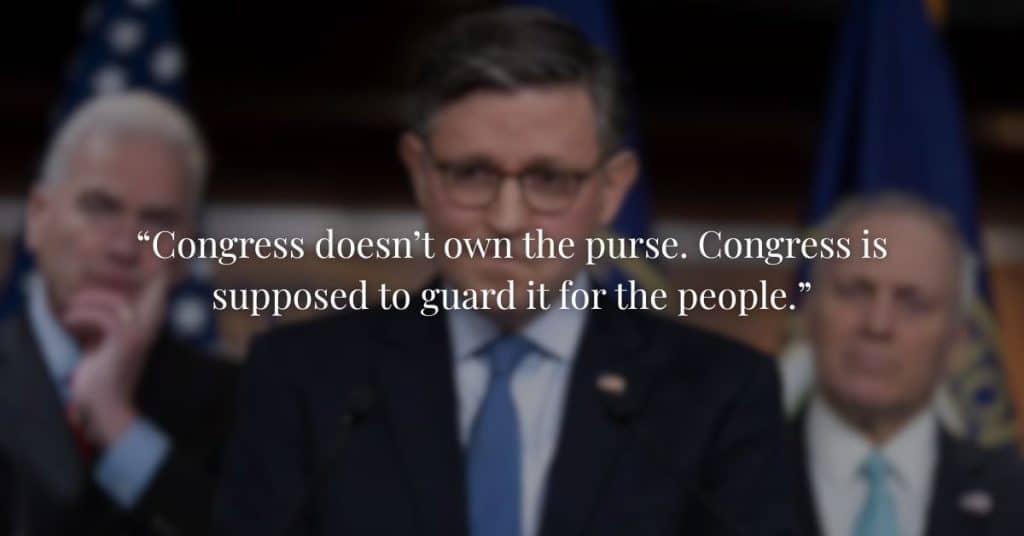
Where is the Congress that represents us? They are not our trustees but guards for corporate trust. They are not like us. They are not like us. Our faith in them has turned to dust. Congress is a bust. My forthcoming book (releasing in January on ThePowerIsNow.com) is titled: The Affordable Care Act: The Structure of Failure, the Possibility of Reform, and the Responsibility of a Nation. That refrain above opens a poem in the book because it is the only honest way to describe what Americans are watching in real time: a legislative body that can solve the affordability problem, understands the consequences of refusing to act, and still treats the public like an afterthought. This is not a “healthcare debate” anymore. It is a trust crisis. Congress doesn’t own the nation’s money. Congress holds the purse for the people. Congress is a trustee of the public treasury—constitutionally empowered to tax and spend, and constitutionally required to appropriate funds before any money leaves the Treasury. When I say “purse,” I’m not being funny. I’m being literal. And trustees have a duty to the beneficiaries. When trustees repeatedly protect private interests while exposing beneficiaries to predictable harm, that is no longer “politics as usual.” That is a breach of trust. The Purse Is the Point The modern argument over the Affordable Care Act is dressed up in slogans: freedom, choice, socialism, dependency, personal responsibility, market discipline. All of that is smoke. The real question is simple: What does Congress choose to purchase with public money? Congress has the authority to extend affordability protections. Congress has the power to prevent a predictable coverage and premium crisis. Congress also has the power to do nothing—and pretend that doing nothing is neutral. It is not neutral. The Congressional Research Service (CRS) lays out the situation plainly: the Affordable Care Act’s premium tax credit continues, but the enhanced premium tax credit rules—expanded eligibility and larger subsidies—are scheduled to expire under current law, with the sunset date January 1, 2026, unless Congress extends them. If the enhanced help expires, the subsidy structure tightens: the 400% of poverty income cap returns and premium contributions increase for many households, and CBO expects fewer subsidized enrollees, lower federal expenditures, and a higher uninsured rate. That’s not ideology. That’s policy mechanics. So now, Americans are forced to watch a spectacle: lawmakers arguing as if the question is whether “Obamacare” deserves to live, while the operational reality is this—millions of real people will pay more, some will drop coverage, and Congress knows it. If Congress Knows the Outcome and Still Refuses to Prevent It, Congress Owns the Harm This is the sentence that ends the confusion: If Congress knows the outcome, has the authority to prevent it, and chooses not to prevent it—Congress is responsible for the harm. No one needs to keep asking, “Where is the plan?” That is the plan. The plan is the no-plan plan. The no-plan plan is not just the absence of policy; it is a strategy of avoidance. It precipitates a crisis by allowing a known deadline to arrive. It creates budget “savings” through expiration. It allows lawmakers to posture about fiscal discipline without taking direct ownership of the human cost. Every plan that produces a predictable disaster also comes with a PR plan. In this case, the PR plan is to blame the insurance companies. The Emotional Scapegoat: “Blame the Insurance Companies” Public relations is storytelling. Storytelling requires a protagonist and an antagonist. Movies run on it. Campaigns run on it. Cable news runs on it. The moment the story is framed, people stop thinking like analysts and start reacting like jurors hungry for a verdict. Americans love a villain with a logo. So the easiest political move is to paint insurers as the monster, point the cameras, and let the public’s anger do the rest. But I refuse to let emotion outrank evidence. Yes, insurance is part of the system and part of the problem. But the data does not support the fantasy that insurer profit is the primary explanation for America’s healthcare cost crisis. The National Association of Insurance Commissioners (NAIC) reported that in 2024 the health insurance industry’s profit margin fell to 0.8%, down from 2.2% in 2023, with net income dropping sharply—driven by increased medical costs and record-high utilization. That report also notes that total hospital and medical expenses rose significantly year over year. That is not a conspiracy. That is fact. And it also explains why people misunderstand “profit.” Thin margins can still produce enormous dollars at massive scale. That is how Walmart makes billions. That is how Costco makes billions. It’s volume. When everyone needs what you sell, you don’t require a fat margin to generate huge totals. Healthcare has the same scale dynamic. Millions need care. Premium dollars are enormous. That does not make insurers innocent. It does make one point unavoidable: “Insurer greed” is not a sufficient explanation for this national crisis. So why is Congress so comfortable hiding behind that story? Because the real power centers of healthcare spending are harder to confront. What’s Really Driving Costs: Provider Prices and Corporate Structure KFF’s comparative analyses across developed countries have made this point repeatedly: the United States spends far more per person on healthcare than peer nations, and a major reason is higher prices, not simply higher use of care. Prices are not an abstract concept. Prices come from bargaining power and market structure. When large health systems dominate regions, when hospitals acquire physician practices, when private equity and corporate consolidation reshape care delivery, pricing power increases. The patient does not negotiate. The patient is processed. Research coverage and peer-reviewed work have linked consolidation dynamics to price increases without matching quality gains in many cases. The pattern is not subtle: market power pushes prices up, and consumers pay—through premiums, deductibles, copays, taxes, and medical debt. So here is what Americans are watching: Congress avoids direct confrontation with the most powerful cost drivers—consolidation, pricing leverage, the corporate structure of care—then turns around and “saves money” by letting affordability
The Shutdown Is Over. The Damage Isn’t.
Why a 43-day, self-inflicted crisis leaves scars you won’t see in GDP. Update — November 13, 2025: The federal government reopened late last night when the President signed a stopgap funding package ending the record 43-day shutdown. Most agencies are funded only through January 30, 2026, which means another cliff is already on the calendar. Health-care fights—including whether to extend enhanced ACA subsidies—were punted to later negotiations. This is a Band-Aid, not a cure. The thesis in one line Shutting down a government doesn’t just pause services—it destroys productive capacity that never fully returns. GDP can rebound on paper; time, coordination, and trust do not. The Congressional Budget Office estimates $7–$14 billion in output from this episode will never be recovered. I. A manufactured crisis in a monetary sovereign We are a sovereign issuer that pays its bills in its own currency. The shutdown—and the recurring debt-ceiling theater that often accompanies it—is a choice, not an economic necessity. The debt limit is a statutory tripwire that periodically blocks the Treasury from paying obligations Congress already approved, creating avoidable risk without commensurate benefit. That’s not stewardship; it’s brinkmanship. Actionable fix: End default threats by abolishing the debt ceiling or nullifying its binding effect—and adopt an automatic continuing resolution (ACR) so agencies don’t shutter when appropriations lapse. Policymakers across the spectrum (CRS, Brookings, BPC) have mapped credible options. II. Who was represented here? This crisis protected those with cash and clout while shifting the risk and costs to workers, small firms, and vulnerable households. Meanwhile, the ACA’s coverage gains—which helped push the uninsured rate toward historic lows and set enrollment records in 2024–2025—were treated as bargaining chips. Coverage stability is not a luxury item; it’s an economic infrastructure for productivity. III. GDP vs. productivity vs. time (the X-factor) GDP measures transactions; productivity creates them. Time is not inventory. When work depends on coordination—research, software, permitting, procurement—lost weeks don’t slide neatly to the right on a calendar. Networks fragment; projects die; innovations that would have existed simply don’t. What vanished during the 43-day freeze? Main Street Capital: SBA’s flagship 7(a) and 504 lending froze, stalling payrolls, build-outs, and acquisitions. Some deals will “catch up,” but many windows closed permanently. Science cycles: NIH announced no peer-review meetings during the lapse; universities relayed halted reviews and delayed awards. You can repay wages; you can’t recreate a missed review round on time. Housing channels: USDA rural home loans were paused—buyers and builders ate the carrying costs, and some closings fell through. Hiring and compliance: E-Verify was offline for more than a week, forcing employers into manual workarounds and delaying starts. Goldman Sachs’ long-standing rule of thumb quantifies the mechanical hit: ~0.2 percentage points off annualized quarterly growth for each week of a broad shutdown—followed by partial snap-back. Forty-three days fits the range of a 1–1.5 percentage-point drag on the affected quarter’s growth—before you even account for the X-factor below. IV. How to value the “time that doesn’t come back” Don’t stop at “wage × hours.” Use a stacked estimate you can explain on air: Direct labor: furloughed/idle hours × (wage + benefits). Coordination markup: add ~25% to reflect idle teams, equipment, and managerial time. Uncertainty drag: apply +10–30% to (1+2) for the quarter, mapping to documented investment/hiring pullbacks during policy uncertainty spikes. Pipeline wedge: SBA: (frozen $$ / $1M) × jobs-per-$1M × sector output-per-worker. NIH/NSF: expected award $ × success probability × discounted ROI over 5–10 years. This method turns “intangibles” into a disciplined, scenario-based range—and its direction is consistent with CBO’s permanent loss finding. V. Accountability—bipartisan, specific, and fair Longest on record: 43 days. That didn’t happen by accident; it happened because Congress chose the tactic, then chose a short stopgap that guarantees we’ll do this again in weeks. Real people paid the price: workers, borrowers, patients, and students—not the policymakers who kept their pay structures and health security. Outcome: a Band-Aid that reopens doors but doesn’t restore capacity. CBO’s math says some output is gone for good. VI. What competent governance would do now Make default and shutdowns impossible. End the debt-ceiling hostage play and enact an automatic CR. Protect the arteries of future growth. Put SBA lending, NIH/NSF peer review, and statistical agencies on minimal “excepted” operations so the innovation and data pipelines never fully close. Stabilize health coverage. Stop using ACA subsidies as political poker chips. Markets price uncertainty; families absorb the shock. Record enrollments show demand for coverage; policy should match it. Washington reopened the doors, but the bill for 43 days won’t be paid by Congress; it’ll be paid by workers, small businesses, patients, and students. GDP will bounce; capacity won’t. CBO says $7–$14 billion is gone for good. End the manufactured crises. Make default and shutdowns impossible. Protect the pipelines—SBA, NIH, NSF—that create tomorrow’s growth. If Congress insists on health security for itself, then every American deserves the same baseline. Thank you for reading this blog. I appreciate your continued support in raising awareness about the issues that impact our relationships, families, friendships, and the institutions and environments—political, social, and economic—in which we live and work. Please share this blog—and explore my other articles and videos—each one created to educate, empower, and uplift. Together, we can challenge the belief systems that hold us back and press forward into openness, love, consideration, and peace—opening doors of opportunity for all. Eric Lawrence Frazier, MBAYour trusted advisor in business and wealthwww.ericfrazier.com | www.thepowerisnow.comNMLS #451807 | CA DRE #01143484???? Schedule a consultation: https://calendly.com/ericfrazier/real-estate-mortgage-consultation-clients Resources 1. Congressional Budget Office (CBO). (2025). The effects of the 2025 federal government shutdown on economic output. Congressional Budget Office.https://www.cbo.gov 2. Goldman Sachs Research. (2025). U.S. macro outlook update: Fiscal deadlines and short-term shutdown impacts. Goldman Sachs Group.https://www.goldmansachs.com 3. National Institutes of Health. (2025). Notice of cancellation of peer review meetings during lapse in appropriations. U.S. Department of Health and Human Services.https://www.nih.gov 4. U.S. Small Business Administration. (2025). SBA lending operations during federal government shutdown: Program pause notice for 7(a) and 504 loans. U.S. Small Business Administration.https://www.sba.gov