
Women’s History Month Part 3: Lisa Rice: The Woman Who Has Been Dismantling Redlining One Case at a Time

In 1963, while waiting for her daughter to be born, Lisa Rice’s mother decided she wanted to buy a home. She selected Sylvania — a suburb of Toledo, Ohio, that was at the time entirely white. She called a real estate agent. The agent told her that she could not be shown a home in Sylvania. The agent went further: she told Lisa Rice’s mother that showing a house in that neighborhood to a Black family could cost her her real estate license. The family was redirected to the Parkside Extensions neighborhood in Toledo. There, at the second desk in what should have been a straightforward home purchase, they encountered the other half of the system: no mainstream mortgage lender would give them a loan for a home in that neighborhood. They were steered to a subprime lender. They paid a higher interest rate than their income and creditworthiness warranted. Rice’s description of that transaction, delivered decades later in an interview, is exact and unsparing: “Everybody was squarely middle income or upper income, but that didn’t matter. It was the complexion of the people who were living in the home.” That sequence — the agent who wouldn’t show the house, the neighborhood the family was steered to, the subprime loan they were forced to accept — was not an anomaly. It was the American housing and credit system operating precisely as designed. The Fair Housing Act was passed in 1968, five years after Rice’s parents tried to buy in Sylvania and the year Rice herself was born. The law said the system was illegal. The system continued anyway, adapting its methods while preserving its outcomes. Lisa Rice spent the next thirty-five years of her professional life making sure those methods could not operate invisibly, at scale, with impunity. At fifteen years old, she interned at the Toledo Fair Housing Center. Her account of that experience is simple and complete: “With that internship, I got bitten by the fair housing bug.” She has never recovered. She was eventually appointed CEO of the Toledo Fair Housing Center and simultaneously founded the Northwest Ohio Development Agency — a community development financial institution that provided below-market interest loans, grants, and financial services to historically underserved markets. At the Toledo center, she built a reserve fund of more than $10 million. She developed and implemented Restoring the Dream — the state of Ohio’s first anti-predatory lending remediation program — under which hundreds of consumers victimized by predatory lending were refinanced into affordable, sustainable prime loans or received loan modifications that helped them avoid foreclosure. She was building, in Toledo, the operational model she would later scale to the entire country. The Bias Is Not a Bug. It Is a Feature. She Has Said So Under Oath. Lisa Rice joined the National Fair Housing Alliance — the nation’s only national civil rights agency solely dedicated to eliminating all forms of housing discrimination — and rose through vice president and executive vice president before being named President and CEO in April 2019. NFHA is the trade association for more than 200 fair housing and justice-centered organizations across the United States. It is the institutional infrastructure of the American fair housing movement, and Rice now leads it. She has testified before Congress multiple times. Her Senate Banking Committee testimony in April 2021 contains a formulation that belongs in any serious examination of how the American housing and credit system actually works. She said: “The bias in our markets is not a bug but a feature. They were built that way and intended to operate in a discriminatory fashion. They will continue to do so until we make systemic and cultural changes. From the inception of this nation our housing and finance policies were explicitly discriminatory. They created biased systems that still exist today — residential segregation, the dual credit market, and other unfair systems.” That is not advocacy rhetoric. That is an accurate historical and structural description of the American housing market, delivered under oath to the United States Senate. The Homestead Act distributed 1.6 million land grants, almost exclusively to white citizens. The Federal Housing Administration adopted the Home Owners’ Loan Corporation’s redlining maps as the basis for mortgage insurance underwriting decisions, systematically denying credit to Black communities from the 1930s onward. The GI Bill’s housing benefits were administered in ways that largely excluded Black veterans. The Fair Housing Act was passed in 1968 and has been systematically under-enforced for more than half a century. The system Rice is describing was not an accident. It was a policy architecture, built deliberately, that has compounded across generations. The evidence is in the gap. The Black homeownership rate stands at 42.3 percent. The white homeownership rate stands at 72.2 percent. That thirty-percentage-point gap is not the product of different preferences or different financial discipline. It is the product of a system that has, across centuries, transferred wealth to white households and extracted it from Black households through the very mechanisms Rice has spent her career investigating: discriminatory lending, biased appraisals, insurance redlining, racial steering, and now algorithmic discrimination embedded in the automated systems that have replaced the redlining maps with code. The Cases. Each One a Structural Argument in the Form of a Settlement. The legislative achievement most directly traceable to Rice’s work is the Office of Fair Lending within the Consumer Financial Protection Bureau — the federal enforcement body created by the Dodd-Frank Wall Street Reform and Consumer Protection Act of 2010. Rice played a major role in crafting the fair lending provisions of Dodd-Frank and in establishing the Office of Fair Lending specifically. That office is the institutional mechanism by which the federal government enforces fair lending law against the largest financial institutions in the country. Its creation was not inevitable. It required sustained advocacy from people who understood both the law and the lending system well enough to architect the enforcement infrastructure. Rice was one of them. The Fannie Mae case is the most significant
Women’s History Month Part 2: Graça Machel: A Lifelong Advocate for Children, Education, and Social Progress
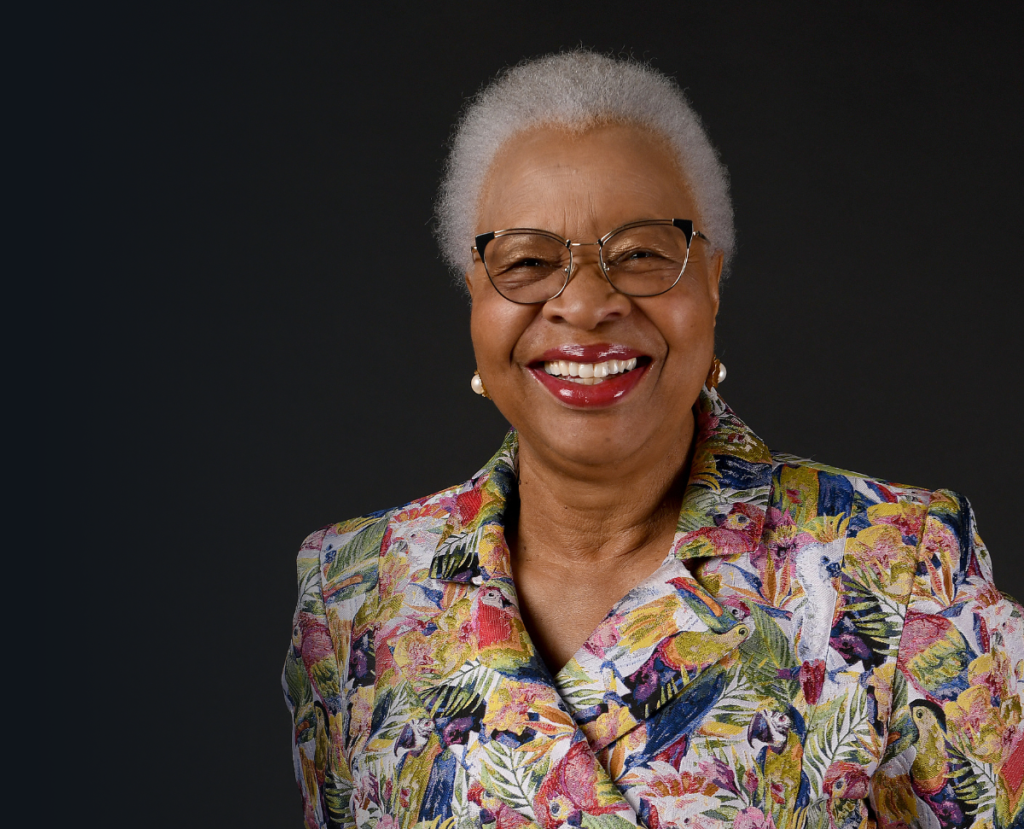
From the early years of Mozambique’s independence to the global stage of humanitarian advocacy, Graça Machel’s life work has centered on protecting the rights of children and expanding opportunities for communities that have historically been overlooked. Her voice has shaped conversations about education, social justice, and child welfare across Africa and around the world. Machel’s influence began at home in Mozambique, where she served as the nation’s first Minister of Education and Culture after independence and oversaw major increases in school enrollment and literacy. She later captured international attention for her leadership in research and advocacy on how armed conflict affects children — a role that helped redefine how governments and international organizations respond to the needs of young people in conflict zones. Over the decades that followed, her commitment to children’s rights and social development translated into a network of institutions devoted to education, nutrition, empowerment, and human dignity. Through her leadership and advocacy, Machel has become a respected voice among world leaders, humanitarian organizations, and policymakers. Her work demonstrates that long‑term progress often begins with protecting the rights and well-being of the youngest members of society. Early Life, Education, and Mozambique’s Independence Graça Machel was born Graça Simbine on October 17, 1945, in the rural community of Incadine in southern Mozambique, then under Portuguese colonial rule. Her early education took place in mission schools, where she developed a keen interest in learning and the social conditions around her. A scholarship later enabled her to study at the University of Lisbon in Portugal, where her political awareness grew as she became involved with other Africans advocating for independence. Her education abroad and exposure to colonial politics helped shape her commitment to social justice. When Mozambique won independence in 1975, she returned with a vision for how education could be the foundation of national transformation. Mozambique’s struggle for self‑rule had revealed deep inequalities in access to opportunity, and Machel saw education as a cornerstone for building a more equitable society. Shortly after independence, she was appointed as the nation’s Minister of Education and Culture — a historic role that placed her at the center of efforts to expand learning opportunities across a country emerging from decades of colonial neglect. Transforming Education and Expanding Opportunity During her tenure as Minister of Education from 1975 to 1989, Graça Machel guided a dramatic expansion of access to education. Mozambique had inherited a fragmented educational system that left many children without formal schooling. Under her leadership, the government prioritized increasing school enrollment and reducing illiteracy. As a result of her efforts, significantly more children gained access to schooling, and the proportion of children attending school increased across both urban and rural areas. Though precise enrollment figures vary by source, available data indicate that primary education saw dramatic gains during her term — evidence of her ability to translate policy into tangible results. Her approach extended beyond expanding enrollment numbers. Machel championed teacher training, community engagement, and literacy campaigns designed to embed education within broader social development strategies. She believed that schooling was not just a pathway to literacy but a force for building more resilient and prosperous communities. Shaping Global Understanding: The Impact of Conflict on Children After leaving government service, Machel shifted her focus to the international stage, where she worked tirelessly to elevate the rights of children affected by war. In 1996, she was appointed by the United Nations Secretary‑General to lead a landmark study titled “The Impact of Armed Conflict on Children.” The report broke new ground in how the international community understood the consequences of war on young lives. It documented not just the physical dangers faced by children in conflict zones, but also psychological trauma, disruption of education, displacement, and vulnerabilities to exploitation. Its findings influenced how the United Nations and member states craft humanitarian responses to protect children in wartime settings and laid the groundwork for strengthened global policies on child protection. This work marked a turning point in humanitarian advocacy, shifting greater attention and resources toward the unique needs of children in crises. Building Institutions for Social Progress Machel’s impact extended beyond reports and policy frameworks. She has built and led multiple organizations that work on community development, social empowerment, and human rights. In 1994, she founded the Foundation for Community Development (FDC) in Mozambique — a non‑governmental organization focused on partnering with communities to promote education, health, food security, and democratic participation. In 2010, she established the Graça Machel Trust, a Pan‑African advocacy organization focused on advancing children’s rights, women’s economic empowerment, education, nutrition, and good governance. The Trust works with partners across the continent to amplify voices and influence policy decisions that affect women and children, underscoring her belief that advocacy and grassroots mobilization must go hand‑in‑hand. The Trust’s initiatives include expanding access to quality education for children who are out of school, supporting adolescent health and development, and strengthening civil society networks across African nations. Its programs operate in more than 20 countries, reflecting a continental approach to social change. Machel also serves in leadership and advisory roles across global development bodies. She is a founding member and Deputy Chair of The Elders, a group of global leaders working for peace and human rights. She has also supported efforts such as Every Woman Every Child and serves on advisory boards for organizations focused on child health, educational access, and development policy. Awards, Honors, and International Recognition Graça Machel’s contributions have been recognized with numerous prestigious awards and honors over the years. In 1995, she received the Nansen Medal from the United Nations High Commissioner for Refugees for her humanitarian work with refugee children — a recognition that highlights her longstanding commitment to protecting displaced children affected by conflict. She was made an honorary Dame Commander of the Order of the British Empire (DBE) in 1997 for her services in human rights and education, further underscoring her contributions well beyond Africa. Machel has also been honored with the World Health Organization Gold Medal for
Women’s History Month 2026 Part 1: Maggie Lena Walker
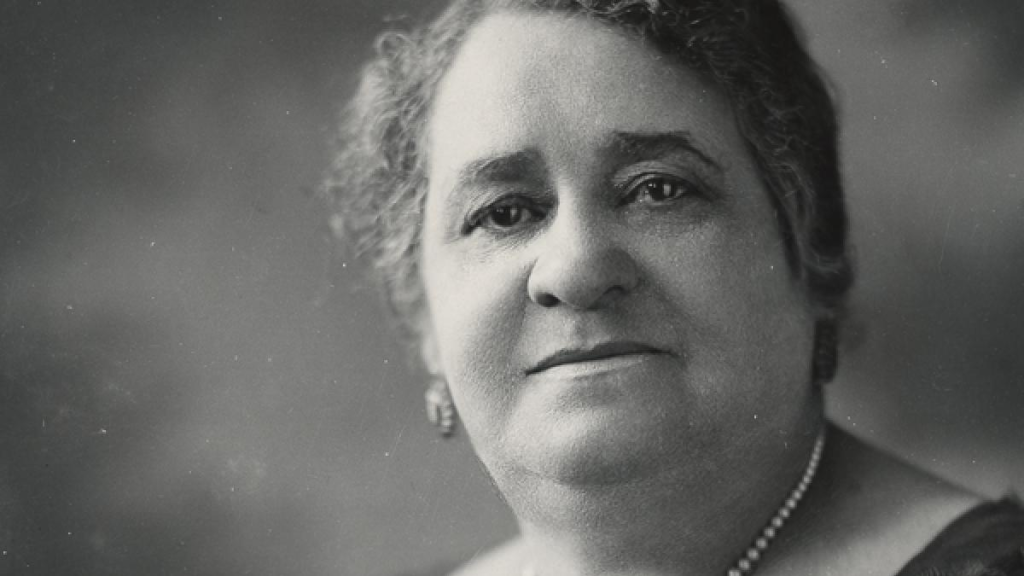
MAGGIE LENA WALKER Banker. Entrepreneur. Richmond, Virginia | 1864 – 1934 | Banking, Finance & Black Economic Self-Determination By Eric Lawrence Frazier, MBA | The Power Is Now Media WHO SHE WAS, IN FULL There is a house on Leigh Street in Richmond, Virginia, that the National Park Service now maintains as a historic site. It is a modest Victorian row house — solid, dignified, unremarkable from the outside to anyone who does not know what it represents. Maggie Lena Walker lived there. She built her life there. And from that city, in that era, under those conditions, she did something that no woman in American history had done before her. In 1903, Maggie Lena Walker chartered the St. Luke Penny Savings Bank and became its first president. She was not the first Black woman to work in banking. She was not the first Black woman to advocate for financial literacy. She was the first woman of any race — Black or white, North or South, educated at the finest institutions or self-taught — to charter a bank and sit in its president’s chair in the United States of America. That fact requires no embellishment. It requires context. When I first learned what Maggie Walker accomplished — at 63 years old — I was not inspired. I was embarrassed. Not at her. At myself. At all of us. Here is a woman who did something no woman in this country had ever done, and I arrived at her story more than six decades into my own life. She deserved to be in my hands at six, not sixty-three. That is not her failure. That is ours — and it is precisely why this series exists. II. THE WORLD SHE ENTERED Richmond, Virginia in the post-Reconstruction era was a city conducting two parallel experiments simultaneously. One was the legal architecture of white supremacy — the reimposition of racial control through Black Codes, convict leasing, disenfranchisement, and the systematic destruction of whatever economic ground Black Richmonders had gained during the brief democratic opening of Reconstruction. The other was the determined, disciplined, and largely unacknowledged project of Black economic self-organization — mutual aid societies, fraternal orders, benevolent associations, and community institutions built by Black people who understood, with perfect clarity, that the state would not protect them and that survival required collective infrastructure. Maggie Lena Walker was born into this second experiment. Her mother, Elizabeth Draper, had been enslaved. Her stepfather, William Mitchell, worked as a butler at a Richmond hotel. The family was not wealthy. They were not connected to the thin layer of Black Richmond society that had accumulated property before the war. They were working people navigating a city that had been the capital of the Confederacy less than two decades before Maggie Walker was learning to read. She joined the Independent Order of St. Luke at age fourteen. This organization is not a footnote — it is the institutional foundation of everything Walker would later build. The Independent Order of St. Luke was a Black mutual aid society, founded in 1867 by Mary Prout, a formerly enslaved woman who had purchased her own freedom. Mutual aid societies were the financial infrastructure of Black America in the absence of banks that would serve Black depositors, insurance companies that would cover Black policyholders, or government programs that acknowledged Black economic existence. Members paid dues. The organization paid death benefits, sick benefits, and provided community support. It was, in structural terms, a proto-insurance company, a credit union, and a social safety net — built by Black people, for Black people, governed by Black people, at a time when every one of those functions was either denied by law or made inaccessible by practice. Walker rose through the Order’s ranks with a combination of administrative precision and strategic vision the organization had not previously seen. By 1899, she was elected Right Worthy Grand Secretary — the executive director, in modern terms — of an organization that was, at that moment, nearly insolvent. She was thirty-five years old. The Order had 1,080 members and debts it could not service. What she did next is the actual subject of this biography. III. WHAT SHE BUILT, DECIDED, OR CHANGED Walker did not merely stabilize the Order of St. Luke. She transformed it into an economic ecosystem. Within four years of taking the executive position, she had grown membership from 1,080 to over 100,000 across 28 states. She launched the St. Luke Herald, a newspaper that served as the Order’s communications organ and, more importantly, as an instrument of economic education and community organizing. She established the St. Luke Emporium — a department store owned and operated by the Order, designed to employ Black women and to circulate Black dollars within Black Richmond rather than watching them flow out to white-owned establishments. And in 1903, she chartered the St. Luke Penny Savings Bank. The bank was not a vanity project. It was a structural intervention. Walker understood something about capital that most people in her community had no framework to articulate: that wealth is not merely accumulated — it is organized. Individual savings, scattered across mattresses and shoeboxes and the few Black-friendly institutions that existed, did not compound. They did not build credit. They did not fund mortgages or business loans or the next generation’s education. A bank organized that dispersed capital into deployable wealth. A bank gave the community a mechanism to lend to itself. She opened the bank with the explicit goal of lending to Black Richmonders for home purchases — at a moment when mortgage credit for Black borrowers was either unavailable or predatory. She understood, before the academic literature on the racial wealth gap existed, that homeownership was the primary mechanism by which American families built intergenerational wealth, and that Black families were being systematically excluded from that mechanism. The bank survived the economic panics of the early twentieth century. It survived World War One. It survived the Depression — barely, but
Ruby

She married young, ready to take on life, Ready to love, to lead, to be a wife, She built a house where discipline ran deep, And raised up daughters she intended to keep. She was an entrepreneur before she knew the name, Always with an idea, always with a flame, A dealmaker, a designer, a shopkeeper, a chef, There has never been a room she could not fill with breath. She is the root beneath the standing tree, The woman who made room for what could be, She planned the life that we can now all see, Our foundation, our world, our living destiny. One leads in real estate and teaches the young mind, One brokers homes and leaves no student behind, One builds the stores where national commerce lands, One sources goods across the globe with steady hands. Four different names, four different fields of ground, One mother’s voice inside them all the same, The lessons came without a single sound, They simply shaped the women that they became. She is the root beneath the standing tree, The woman who made room for what could be, She planned the life that we can now all see, Our foundation, our world, our living destiny. She was never decorative, she was never small, She walked the floor until the work was done, The daughters rose because she did not fall, She is our ray of light, the warmth of the sun. Forty-four years and the roots are still alive, She is still building, still pushing us to thrive, The coffee shop, the realty, the counsel, and the call — She never stopped becoming after giving us her all. Look at the picture on the cover of this page, Five women standing, every one a sage, You see the daughters but you must see the source — Ruby Lee Frazier set them on their course. She is the root beneath the standing tree, The woman who made room for what could be, She planned the life that we can now all see, Our foundation, our world, our living destiny.
The Frazier Woman: A Tribute to Ruby Lee Frazier and the Daughters She Raised

By Eric Lawrence Frazier, MBA The picture in the header of this article is one of many group pictures I have of my wife and daughters. You can see more of them on the website of FrazierGroupRealty.com. They look like women who have stepped off the cover of Ebony magazine. They are Nubian queens — absolutely beautiful, gorgeous, and among the most intelligent people God has ever made. Of course, I am very biased. What can I say? I am Ruby’s husband and their father. I love them, and I have loved them their entire lives. I have loved my wife since the day we met, forty-six years ago, and I have been married to her for forty-four of those years. Look at the picture. It is also on the cover of this issue of Faith, Family, and Finance Magazine. Each of them accomplished, each of them grounded, each of them carrying themselves with the particular kind of quiet confidence that does not need to announce itself. When I look at that image, I do not see a lucky man. I see the product of a decision made forty-four years ago by a young woman who understood, even then, that the work of building a family is the most serious work a human being can take on. I married Ruby Lee Frazier on December 19, 1981. I was nineteen years old. She was young, too, and we had no particular roadmap for what we were stepping into. What we had was each other, a shared seriousness about life, and the unspoken agreement that we were going to build something real. I have spent forty-four years now on the other side of that agreement, and I can say without qualification: everything I have built, every credential I have earned, every platform I have created — none of it happens without her. Not a page of it. This article is not a celebration of me. It is a reckoning with what women actually do — what they carry, what they build, what they sacrifice, and what they produce. My wife and our daughters are not abstractions. They are the specific evidence I am drawing from. But the argument extends far beyond our household. Women are reshaping the economic, professional, and social landscape of this country in ways that the traditional narrative has consistently underestimated. The data is no longer subtle. The women are no longer waiting for permission. The Architect of the House Ruby Frazier did not stumble into leadership. She grew into it deliberately, the way a tree grows into the shape the light demands of it. When our daughters were young, she made a choice that is difficult to fully communicate in this era of individual metrics and personal career timelines — she chose to be present. Not because she lacked ambition. Anyone who knows Ruby understands that ambition is among her most defining qualities. She chose presence because she understood what was actually at stake. She was raising human beings, not just children, and she intended to do it with the same precision and intentionality that she brought to everything else. The results speak for themselves, but the results alone do not tell the story. What our daughters’ titles and degrees do not capture is the environment that produced them — the household where expectations were clear, where education was non-negotiable, where faith was lived rather than performed, where a woman managed the complexity of family life with the skill of a seasoned executive long before she became one. By the grace of God, I was able to provide financially in a way that gave Ruby the latitude to focus on the family. The arrangement was not a diminishment of her. It was a strategic deployment of her. We understood, even before we had the language for it, that the single most impactful investment we could make was in the full attention of a brilliant woman applied to the development of our children. The return on that investment is standing in that photograph. But Ruby did not stop there. Alongside raising four daughters, she built. She ran businesses from the earliest years of our marriage — a candle and incense business in the beginning, then into mortgage and real estate operations alongside me as we built our companies. In 2006, she founded Frazier Group Realty, Inc., where she serves as President and CEO, leading a full-service real estate firm covering residential and commercial properties across the Inland Empire, Orange County, and Los Angeles. She holds the NAR GREEN designation and the BPOR designation. She has served as a Board Member of the UC Riverside Foundation Board of Trustees for seven years. She is a Charter Member of the Riverside Downtown Lions Club, an Interior Design Consultant, a Notary Public, and co-founder of Copper Goat Coffee in Riverside — a brick-and-mortar business that represents her entrepreneurial range beyond real estate. She served as First Lady of our church during my years as senior pastor. She is sought after for her counsel and wisdom by people who have known her for decades and people who have just met her. She did all of this while being the center of our family. That is not a small thing. That is, in fact, the thing. The Daughters Jessica Frazier is the oldest, and she is perhaps the clearest expression of what her mother’s investment produced. She is currently the Principal Staff Analyst for Real Property at the Orange County Sanitation District, where she serves as the agency’s expert in all matters of real property — acquisitions, dispositions, appraisals, right-of-way, easements, contracts, and title. It is complex, high-stakes public sector work, the kind that requires both legal fluency and the ability to negotiate on behalf of institutions that serve millions of people. Simultaneously, she has served as a Real Estate Instructor at UCLA Extension since 2015, for nearly a decade, teaching, curriculum development, and professional formation of the next generation of real estate