
The Votings Right Act Part 3: When Race Becomes Politics
byfsxlsabtqgydxgflgilh2rm73fnqgemxvdb9nl1bdjm3om1iydjrlfqu82x3fhcf koiwsgkdpv5hg8 xfubj1kpsfxnbfilupknkwvysau45ck7ki ajpcr97soeu72oowmwopgugadzwzgwy4shhekwoat0ccchyssnrsgaxnbupugkx siqhgfervy6

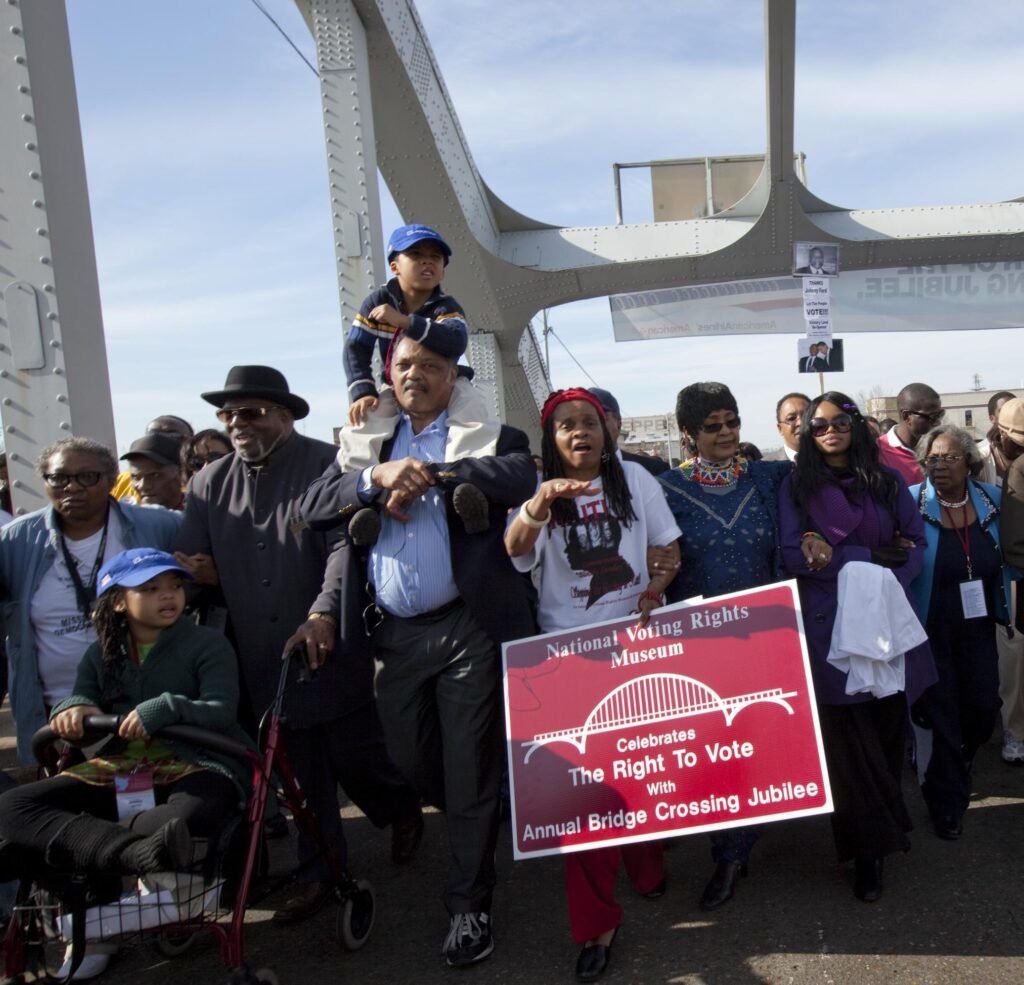
Section 5, Section 2, and the Illusion of a Level Playing Field By Eric Lawrence Frazier, MBA The Voting Rights Act of 1965 has me wrestling with myself. I am trying to understand how this country arrived at this moment, and I am trying to remove myself, as much as I can, from the emotional and cultural history that naturally influences how I see this issue. That is not easy for me, because this law is not merely a statute sitting in a federal code book. It is tied to blood, humiliation, exclusion, resistance, and a long history of African Americans being told in one form or another that citizenship existed on paper but not in practice. Still, I want to understand the other side of the argument. I want to ask whether America has changed enough that the extraordinary protections of the Voting Rights Act, especially Section 5 and the enforcement strength of Section 2, are no longer necessary in the way they once were. I have to acknowledge what the Voting Rights Act accomplished. Black political representation in America is not what it was in 1965. There are African Americans in Congress, in mayoral offices, in state legislatures, in county offices, and throughout public life. Black political organizing is alive, sophisticated, and influential. It would be foolish for me to pretend the law did not change America. It did. The question is whether its success proves that its protections can now be weakened, or whether its success proves that federal protection was the reason progress happened in the first place. That is where the argument becomes complicated. The conservative response to the question “Has America forgotten?” is essentially, “No, America has not forgotten; America has changed.” Their position is that we are no longer living in the 1890s, the 1920s, the 1930s, the 1940s, or the early Jim Crow years when states openly used poll taxes, literacy tests, intimidation, violence, and fraud to block Black citizens from voting. Their position is that Black citizens can vote today, that Black candidates can win office today, that Black voters have substantial political influence today, and that states should not remain under extraordinary federal supervision forever because of sins committed generations ago. That argument deserves to be stated fairly because many Americans believe it sincerely. But fairness requires more than stating the argument. Fairness also requires examining what that argument leaves out. The question is not whether America has changed. America has changed. The question is whether the incentives that once made voter suppression politically useful have disappeared. The question is whether the structures that translate population into political power have become neutral. The question is whether states with long histories of racial exclusion can now be trusted to redraw political maps, move district lines, and restructure voting power without federal oversight when race and party identity remain deeply intertwined. This is where I believe the modern debate becomes intellectually dishonest. The new language is not always racial. It is political. States no longer need to say they are weakening Black voting power. They can say they are pursuing partisan advantage. They can say they are protecting incumbents. They can say they are drawing lawful maps based on political data. They can say race was not the motive. But in much of the South, race and party are not separate realities floating in different universes. They are often joined at the hip by history, geography, housing patterns, church networks, school systems, and voting behavior. Pew Research Center has reported that Black voters remain overwhelmingly Democratic, while white voters are much more likely than voters in other racial and ethnic groups to associate with the Republican Party. In the 2024 presidential election, Reuters reported Edison Research exit-poll results showing Donald Trump winning white voters while Kamala Harris won the overwhelming majority of Black voters. That does not mean every white Republican is racist. It does not mean every Black Democrat votes only because of race. It does not mean political identity is reducible to skin color. But it does mean that in states where Black voters are heavily Democratic and white voters are heavily Republican, a map drawn to weaken Democrats may also weaken Black political power. That is the uncomfortable reality many legal arguments try to avoid. If the state says, “We are not targeting Black voters; we are targeting Democrats,” the response cannot simply be, “Fine, then race is irrelevant.” In some places, that distinction may be legally convenient, but socially and historically false. This is the heart of Part Three. The Voting Rights Act was born because states learned how to use law, procedure, timing, geography, fear, and bureaucracy to achieve racial exclusion without always announcing racial hatred as their official policy. Section 5 was created precisely because Congress understood that after one discriminatory device was struck down, another could appear. Preclearance required certain jurisdictions with documented histories of discrimination to obtain federal approval before changing voting rules. The burden was on the state to show the change would not discriminate. That mattered because it stopped harm before it happened, instead of forcing Black voters to suffer the injury first and litigate later. In Shelby County v. Holder, the Supreme Court did not strike down Section 5 by name. It invalidated the Section 4 coverage formula that determined which jurisdictions had to seek preclearance. The practical effect was devastating because Section 5 could no longer operate without a valid coverage formula. The Court reasoned that the formula relied on outdated data and that conditions in the covered jurisdictions had changed substantially. That was the legal theory. But from the perspective of civil-rights enforcement, the ruling removed the fire alarm because there had been fewer fires while the alarm was working. The recent decision in Louisiana v. Callais has intensified this crisis. In that case, the Supreme Court’s majority described Section 2 as designed to enforce the Constitution “not collide with it,” while warning that lower courts had applied

Women’s History Month Part 5: Ursula M. Burns: Engineer. Executive. The First. – Footnotes

EBSCO Information Services. Research Starters: Ursula Burns Biography. Ipswich, MA. Accessed March 17, 2026. https://ebsco.com/research-starters/biography/ursula-burns. Encyclopaedia Britannica. Ursula Burns: American Business Executive. Encyclopaedia Britannica, Inc. Accessed March 17, 2026. https://britannica.com/money/Ursula-Burns. BecomingX. Ursula Burns: Leadership and Resilience Story. BecomingX Foundation. Accessed March 17, 2026. https://becomingx.com/films/ursula-burns. BecomingX. Ursula Burns: Leadership and Resilience Story. BecomingX Foundation. Accessed March 17, 2026. https://becomingx.com/films/ursula-burns. Encyclopaedia Britannica. Ursula Burns: American Business Executive. Encyclopaedia Britannica, Inc. Accessed March 17, 2026. https://britannica.com/money/Ursula-Burns. EBSCO Information Services. Research Starters: Ursula Burns Biography. Ipswich, MA. Accessed March 17, 2026. https://ebsco.com/research-starters/biography/ursula-burns. Columbia University. Ursula Burns: Black History and Leadership Profile. Columbia University, New York. Accessed March 17, 2026. https://blackhistory.news.columbia.edu/people/ursula-burns. EBSCO Information Services. Research Starters: Ursula Burns Biography. Ipswich, MA. Accessed March 17, 2026. https://ebsco.com/research-starters/biography/ursula-burns. GoRick. Did You Know Edition 28: Leadership Lessons from Ursula Burns. GoRick Career Resources. Accessed March 17, 2026. https://gorick.com/blog/did-you-know-edition-28. BlackVentures. Ursula M. Burns: Corporate Leadership Profile. BlackVentures.org. Accessed March 17, 2026. https://blackventures.org/blackleaders/ursula-m-burns. Fortune. “Ursula Burns: The First Black Woman to Run a Fortune 500 Company.” December 2, 2021. Fortune Media. https://fortune.com/2021/12/02/ursula-burns-the-first-black-woman-to-run-a-fortune-500-company. BlackVentures. Ursula M. Burns: Corporate Leadership Profile. BlackVentures.org. Accessed March 17, 2026. https://blackventures.org/blackleaders/ursula-m-burns. EBSCO Information Services. Research Starters: Ursula Burns Biography. Ipswich, MA. Accessed March 17, 2026. https://ebsco.com/research-starters/biography/ursula-burns. Encyclopaedia Britannica. Ursula Burns: American Business Executive. Encyclopaedia Britannica, Inc. Accessed March 17, 2026. https://britannica.com/money/Ursula-Burns. EBSCO Information Services. Research Starters: Ursula Burns Biography. Ipswich, MA. Accessed March 17, 2026. https://ebsco.com/research-starters/biography/ursula-burns. CNBC. “Ex-Xerox CEO Ursula Burns: This Superpower Helped Me Rise to the Top.” February 19, 2025. CNBC LLC. https://cnbc.com/2025/02/19/ex-xerox-ceo-ursula-burns-this-superpower-helped-me-rise-to-the-top. Fortune. “Ursula Burns: The First Black Woman to Run a Fortune 500 Company.” December 2, 2021. Fortune Media. https://fortune.com/2021/12/02/ursula-burns-the-first-black-woman-to-run-a-fortune-500-company. Fortune. “Ursula Burns: The First Black Woman to Run a Fortune 500 Company.” December 2, 2021. Fortune Media. https://fortune.com/2021/12/02/ursula-burns-the-first-black-woman-to-run-a-fortune-500-company. CNBC. “Ursula Burns on Work-Life Balance and Leadership.” March 14, 2022. CNBC LLC. https://cnbc.com/2022/03/14/ursula-burns-first-black-woman-ceo-in-fortune-500-on-work-life-balance. EBSCO Information Services. Research Starters: Ursula Burns Biography. Ipswich, MA. Accessed March 17, 2026. https://ebsco.com/research-starters/biography/ursula-burns. Encyclopaedia Britannica. Ursula Burns: American Business Executive. Encyclopaedia Britannica, Inc. Accessed March 17, 2026. https://britannica.com/money/Ursula-Burns. CNBC. “Ursula Burns on Work-Life Balance and Leadership.” March 14, 2022. CNBC LLC. https://cnbc.com/2022/03/14/ursula-burns-first-black-woman-ceo-in-fortune-500-on-work-life-balance. Fortune. “Ursula Burns: The First Black Woman to Run a Fortune 500 Company.” December 2, 2021. Fortune Media. https://fortune.com/2021/12/02/ursula-burns-the-first-black-woman-to-run-a-fortune-500-company.

Women’s History Month Part 4: Ellen Johnson Sirleaf: The Leadership That Helped Rebuild Liberia – Footnotes

Ellen Johnson Sirleaf – Biographical. NobelPrize.org. Retrieved March 13, 2026 from https://www.nobelprize.org/prizes/peace/2011/johnson_sirleaf/biographical/ Ellen Johnson Sirleaf. Encyclopaedia Britannica. Retrieved March 13, 2026 from https://www.britannica.com/biography/Ellen-Johnson-Sirleaf The Nobel Peace Prize 2011 Laureates. The Nobel Peace Prize. Retrieved March 13, 2026 from https://www.nobelpeaceprize.org/laureates/2011 Walsh, Colleen. Sirleaf Wins Nobel Peace Prize. Harvard Gazette. Retrieved March 13, 2026 from https://news.harvard.edu/gazette/story/2011/10/sirleaf-wins-nobel-peace-prize/ Ellen Johnson Sirleaf Biography. United Nations Migration Conference. Retrieved March 13, 2026 from https://www.un.org/en/conf/migration/assets/pdf/Ellen-Sirleaf-Bio.pdf Ellen Johnson Sirleaf Profile. Deutsche Welle. Retrieved March 13, 2026 from https://www.dw.com/en/profile-three-female-nobel-peace-prize-winners/a-15445077 Ellen Johnson Sirleaf – Speed Read. NobelPrize.org. Retrieved March 13, 2026 from https://www.nobelprize.org/prizes/peace/2011/johnson_sirleaf/speedread/ Ellen Johnson Sirleaf. Academy of Achievement. Retrieved March 13, 2026 from https://achievement.org/achiever/ellen-johnson-sirleaf/

Black History Month Part 9: We Were Never Less: The Defiant Ascent Of Black America: The Misrepresentation Industry
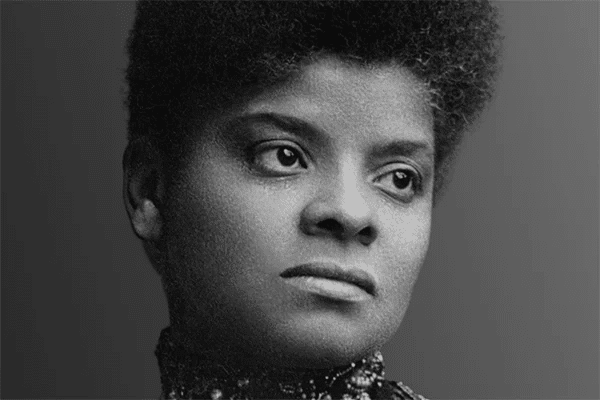
ida b wells

How This Nation Has Hidden What It Did By Eric Lawrence Frazier, MBA The first weapon deployed against Black America was not the whip. It was the pen. Before the last Confederate soldier surrendered, before the ink dried on the Thirteenth Amendment, before the first Reconstruction legislature was seated — the project of rewriting what had happened was already underway. The men who lost the war understood something the men who won it did not fully appreciate: that the battle for memory is longer than the battle for territory, and considerably more decisive. What Parts One through Eight of this series document is what was done. The Middle Passage. The constitutional codification of racial hierarchy. The systematic destruction of Reconstruction. The federal architecture of the racial wealth gap. The War on Drugs has documented racial suppression. The foreign policy calculus has consistently valued some lives over others. The evidence is in the public record. It has always been in the public record. Part Nine documents what was then done to make sure most people never found it. The Misrepresentation Industry is not a conspiracy. Conspiracies require coordination, secrecy, and a small group of actors. This is something more durable than a conspiracy. It is an infrastructure — academic, cinematic, journalistic, political, and now governmental — that has operated continuously since 1865, that has employed thousands of credentialed people who believed they were doing legitimate work, and that has succeeded so completely that its central product — the mythology of American benevolence — is still the default assumption of most Americans when they think about their own history. The infrastructure has a beginning. It has architects. It has named products. And it has a present chapter — the most explicit in its history — being written right now. The Lost Cause: The Original Rewrite In 1866, one year after Appomattox, former Confederate general Jubal Early began organizing what would become the Southern Historical Society. His explicit purpose was to establish a historical record of the Civil War that would, as he wrote to fellow Confederate veterans, “secure the truth of Confederate history.” The truth Early had in mind bore no resemblance to the documented truth. It would become the most successful historical fabrication in American history. The Lost Cause doctrine held that the Confederacy had not fought to preserve slavery but to defend states’ rights and a noble agrarian civilization against Northern aggression. It held that enslaved people had been content, even faithful, participants in a benevolent social order. It held that Reconstruction was a corrupt imposition by Northern radicals and their Black political instruments upon a prostrate South. And it held that the Confederate cause, though defeated on the battlefield, had been morally correct.1 None of this was historically defensible. The Confederate states had published their own declarations of secession, and those declarations named slavery as their cause with a directness that left no interpretive room. Mississippi’s declaration stated it plainly: “Our position is thoroughly identified with the institution of slavery — the greatest material interest of the world.” South Carolina’s declaration named the threat to slavery fourteen times. These were not documents that required interpretation. They required suppression. The suppression was systematic. In 1919, the United Daughters of the Confederacy published a guide for school textbooks that instructed publishers and school districts to reject any textbook that “glorified Abraham Lincoln,” “vilified Jefferson Davis,” or “stated that the war was fought to perpetuate slavery.” The guide was distributed to school boards across the South. Compliant textbooks were adopted. Noncompliant textbooks were removed. Generations of American schoolchildren — not only in the South — were educated in the Lost Cause version of events.2 Former Confederate general Edward Pollard, who coined the phrase “the Lost Cause” in his 1866 book of the same title, was explicit about the strategy. What the South had lost on the battlefield, he wrote, it could still win “in a war of ideas.” That war was prosecuted through monuments, textbooks, memorial associations, and the political rehabilitation of men who had committed treason. By 1920, there were Confederate monuments in front of courthouses across the South — not memorials to the dead, but political statements about who held power and what history meant.3 The Lost Cause was not folk mythology. It was an organized, funded, institutionally supported rewriting of the historical record by people who understood exactly what they were doing. It was the first chapter of the Misrepresentation Industry. Every chapter that followed used the same template. The Academic Machinery: The Dunning School Lost Cause mythology required academic legitimacy to survive. It found it at Columbia University. William Archibald Dunning was a professor of history and political philosophy at Columbia from 1886 until his death in 1922. His scholarship on Reconstruction — particularly his 1907 book Reconstruction, Political and Economic — became the dominant academic framework for understanding that period for the first half of the twentieth century. The Dunning School, as his approach came to be known, treated Reconstruction as a catastrophe imposed on the South by corrupt Republican politicians and unqualified Black officeholders who were incapable of self-governance. It treated the violent overthrow of Reconstruction governments as a legitimate act of self-defense by white Southerners reclaiming their civilization.4 Dunning’s students spread his framework across American universities. Walter Lynwood Fleming at Vanderbilt. J.G. de Roulhac Hamilton at North Carolina. William Garrott Brown at a succession of institutions. Each produced scholarship that built on the Dunning framework, extended it into new states and new periods, and gave it the apparatus of legitimate historical inquiry — footnotes, archives, university press imprints. By 1915, the year D.W. Griffith released The Birth of a Nation, the Dunning School’s version of Reconstruction was the version taught at American universities. The consequences were not abstract. The historical framework that depicted Black political participation as inherently corrupt and incompetent provided the intellectual justification for the disenfranchisement laws, the poll taxes, the literacy tests, and the systematic removal of Black Americans from political

Black History Month Part 9: We Were Never Less: The Defiant Ascent Of Black America: The Misrepresentation Industry – Footnotes

Early, Jubal A. A Memoir of the Last Year of the War for Independence in the Confederate States of America. Lynchburg: Charles W. Button, 1867. Southern Historical Society founding correspondence documented in Gallagher, Gary W. The Confederate War. Cambridge: Harvard University Press, 1997. United Daughters of the Confederacy. “A Measuring Rod to Test Text Books, and Reference Books in Schools, Colleges and Libraries.” 1919. Documented in Wineburg, Sam. Why Learn History (When It’s Already on Your Phone). Chicago: University of Chicago Press, 2018. Pollard, Edward A. The Lost Cause: A New Southern History of the War of the Confederates. New York: E.B. Treat, 1866. Dunning, William Archibald. Reconstruction, Political and Economic, 1865–1877. New York: Harper & Brothers, 1907. Du Bois, W.E.B. Black Reconstruction in America, 1860–1880. New York: Harcourt, Brace, 1935. Reprint: Free Press, 1998. Stokes, Melvyn. D.W. Griffith’s The Birth of a Nation: A History of “The Most Controversial Motion Picture of All Time.” New York: Oxford University Press, 2007. Klan membership figures: MacLean, Nancy. Behind the Mask of Chivalry: The Making of the Second Ku Klux Klan. New York: Oxford University Press, 1994. Levin, Josh. The Queen: The Forgotten Life Behind an American Myth. New York: Little, Brown, 2019. Reagan campaign speeches, 1976, documented pp. 1–22. Dixon, Travis L., and Daniel Linz. “Overrepresentation and Underrepresentation of African Americans and Latinos as Lawbreakers on Television News.” Journal of Communication 50, no. 2 (2000): 131–154. Moynihan, Daniel Patrick. The Negro Family: The Case for National Action. Washington, D.C.: Office of Policy Planning and Research, U.S. Department of Labor, 1965. Personal Responsibility and Work Opportunity Reconciliation Act of 1996, Pub. L. 104-193, 110 Stat. 2105 (1996). Analysis: Grogger, Jeffrey, and Lynn A. Karoly. Welfare Reform: Effects of a Decade of Change. Cambridge: Harvard University Press, 2005. Shelby County v. Holder, 570 U.S. 529 (2013). Roberts, C.J., majority opinion. Voter restriction laws implemented post-decision: Brennan Center for Justice. “New Voting Restrictions in America.” 2019. https://www.brennancenter.org/new-voting-restrictions-america Southern Poverty Law Center. “Timeline: The Trump Administration’s Attacks on History Since 2025.” Updated February 2026. https://www.splcenter.org/resources/hatewatch/attacks-history-timeline-trump-administration Executive Order 14253, “Restoring Truth and Sanity to American History,” March 27, 2025. Federal Register, Vol. 90. Human Rights Watch. “The Trump Administration’s Assaults on Black History.” April 10, 2025. https://www.hrw.org/news/2025/04/10/trump-administrations-assaults-black-history Tensley, Brandon. “The Quiet Deletion of Black History Within Federal Agencies — and the Fight to Stop It.” Capital B News, December 9, 2025. https://capitalbnews.org/trump-smithsonian-tubman-dei-order-erases-black-history/ Poynter Institute. “Trump Is Reshaping How the Federal Government Presents Black History.” February 2026. https://www.poynter.org/fact-checking/2026/trump-administration-altering-black-history/. New York Times 200-word flagging list: reported February–March 2025. Center for American Progress. “The Trump Administration Is Erasing American History Told by Public Lands and Waters.” October 23, 2025. https://www.americanprogress.org/article/the-trump-administration-is-erasing-american-history-told-by-public-lands-and-waters/ Philadelphia citizen response documented: Washington Informer. “Trump Administration Rewriting History.” September 16, 2025. https://www.washingtoninformer.com/trump-administration-rewriting-history/ Woodson, Carter G. The Mis-Education of the Negro. Washington, D.C.: Associated Publishers, 1933. Negro History Week founding: Journal of Negro History 11, no. 2 (1926). Fourth Circuit Court of Appeals. Ruling on DEI executive order preliminary injunction. March 2025. Reported by multiple outlets including The Washington Post and Reuters.

The Anti-Resolution Movement — And Why I’m Still Writing Mine

The Anti-Resolution Movement

I didn’t set out to write a blog about resolutions. I stumbled into it standing in line at the grocery store. I’ve been thinking seriously about 2026. My business plan is complete. That part was easy—numbers, strategy, staffing, expansion. But my personal plan required something different. Reflection. Intention. Honesty. So I started talking to people I trust—my children, my spouse, close friends. Then, out of curiosity, I started asking strangers. What I heard surprised me. “I don’t make resolutions anymore.” “It’s all a game.” “It’s just marketing—gyms, apps, stuff you won’t use.” There was something underneath those answers. Not confidence. Not clarity. Apathy. Weariness. Almost resignation. I’ll be honest—it was unsettling. Not because I doubted my own direction, but because of how widespread this sentiment has become. Still, as of January 5, my resolutions for 2026 were finalized and firmly on the books. That decision deserves explanation. The Rise of the Anti-Resolution Movement What I’m encountering feels bigger than personal preference. It feels cultural. Almost philosophical. A quiet anti-resolution movement. If it is a movement, it isn’t organized. There are no hashtags, no meetings, no manifestos. Just millions of individuals quietly deciding that hope feels naïve, planning feels dangerous, and expectation feels like a setup. This isn’t people giving up on life. It’s people giving up on narratives of transformation that no longer align with their lived experience. We are living in a moment where time feels compressed, stability feels fragile, institutions feel unreliable, and the future feels less predictable than it did a generation ago. In that environment, long-range promises lose credibility. People aren’t rejecting growth itself—they are rejecting performative optimism—the kind that sounds inspiring, sells products, but collapses under the weight of real life. Psychologically, this matters. The Deeper Question We’re Avoiding When someone says, “I don’t do resolutions anymore,” the real question isn’t about January rituals. The real question is this: Do you still believe your actions can meaningfully shape your future? Psychologists call this belief agency. Agency is the engine behind every plan, goal, discipline, prayer, and strategy. When agency erodes, people don’t just stop making resolutions—they stop imagining. And imagination is not fantasy. It is rehearsal. It is the mind’s way of preparing the future. When people stop imagining, change becomes psychologically impossible long before it becomes practically impossible. This is why the anti-resolution sentiment feels so heavy. It isn’t rebellion. It’s fatigue. People are tired of trying inside systems that feel stacked against effort. Tired of failing publicly. Tired of being told that discipline alone can overcome time, economics, biology, and complexity. Avoiding resolutions becomes emotional self-preservation. A Reframe, Not a Rebuttal Arguing people back into resolutions is a losing battle. The resistance is not logical—it’s emotional and experiential. The alternative is not abandoning resolutions, but redefining them. Resolutions were never meant to be public declarations or moral tests. At their best, they are private experiments. Not: “This year I will become someone else.” But: “This year, I will test one belief about myself and see if it still holds.” That kind of intention doesn’t invite shame. It invites curiosity. And curiosity—unlike motivation—does not burn out easily. The irony is this: the people who reject resolutions most strongly often care deeply about meaning. They are not shallow. They are discerning. They are exhausted by hype and allergic to false promises. Which means the anti-resolution movement is not the end of aspiration. It is a signal. A pause. A demand for honesty about how change actually happens in real human lives. And paradoxically, that may be the most hopeful starting point of all. What I’ve Learned About Resolutions Here’s what experience has taught me: too many resolutions is the same as none at all. That insight was sharpened by The ONE Thing by Gary Keller. The core idea is simple but profound: in every area of life, there is one thing that—if done consistently—makes everything else easier or unnecessary. This principle is rooted in the Pareto Principle: the vital few outweigh the trivial many. So instead of endless lists, I’ve limited my resolutions to four categories, with one primary commitment in each. Faith. Family. Health. Business. Faith: The Anchor My faith resolution is singular: Commit to at least one hour every day to spiritual development and education. That hour may include reading, study, prayer, reflection, listening, or writing. Strengthening my faith is not optional or secondary. When faith is strong, clarity improves. Anxiety softens. Perspective returns. Everything else flows from that center. Family: Presence Over Proximity My family resolution is this: Devote time to meaningful conversation with my spouse every single day. That means intentional check-ins in the morning, reconnecting during the day, and in the evening putting the phone away and being fully present—talking about life, work, challenges, and what matters most. Relationships don’t erode from lack of love; they erode from lack of attention. Health: Strength First, Not Leftover My health resolution: Devote the early morning hours every day to physical health and strength. I walk three miles a day and work out for an hour. I’m adding a gym membership to increase strength training and anchoring all health activity to the morning so it never competes with the rest of the day. When health comes first, it doesn’t get negotiated away. Business: Freedom Through Scale My business resolution is clear and measurable: Double my income in 2026 across media, real estate, and consulting—by expanding people, not hours. This is not about working more. It’s about hiring additional personnel and management so my direct involvement decreases while the organization grows. Scale creates freedom. Systems create sustainability. Why I Still Believe in Resolutions This conversation is not about January. It’s about agency. Opting out of intention does not protect us from disappointment—it guarantees drift. You may not control the economy, culture, or institutions around you. But you do control what you commit your attention to, what you practice daily, and what you allow to shape your thinking. That is not motivational talk. That is psychological reality. So write your resolutions. Write them thoughtfully. Write them narrowly. Write them honestly. Not because

The 50-Year Mortgage: America’s New Architecture of Delay

the 50 year mortgage america’s new architecture of delay

By Eric Lawrence Frazier, MBA I have spent more than four decades in real estate, mortgage banking, lending, and housing policy, and it is rare for a proposed change to the mortgage system to surprise me genuinely. Yet the emerging push for a 50-year mortgage demands that we pause, reflect, and take a long, serious look at what this means—not just mathematically, but historically, economically, morally, and socially. Once you understand where this idea comes from and what it represents, the truth becomes stark: the 50-year mortgage is not innovation. It is an extension. It is a continuation of America’s long habit of delaying real solutions and expanding long-term debt rather than developing real opportunity. Before we can evaluate the 50-year mortgage, we must return to the era before 1934, when home financing bore no resemblance to what we know today. Before the National Housing Act, families typically relied on short-term, interest-only loans lasting three to ten years, often paired with a large balloon payment. Seller financing was standard. Local banks carried nearly all the risk. Lending was conservative due to limited liquidity. And home prices reflected reality—what families could truly afford—not what the mortgage market could stretch. This meant something profound: a home was purchased to be owned, not endlessly financed. It was paid off as quickly as possible. It was not viewed as an investment vehicle, nor was it used to leverage additional debt. It was a place to live, age, and pass down. The mortgage did not define the home; the family did. All of that changed dramatically with the National Housing Act of 1934, which introduced the long-term amortized mortgage and brought the federal government squarely into the center of American home finance. The FHA established underwriting standards, provided government insurance, and paved the way for the 20- and eventually 30-year mortgage. This transformed access to homeownership, especially for working families. Yet it also introduced consequences—some intended, some unintended, and some deeply damaging—that still define the American housing market today. “The 30-year mortgage democratized homeownership—and institutionalized long-term debt.” By allowing borrowers to stretch payments over three decades, the Act enabled families to afford higher-priced homes. Sellers quickly recognized this. If buyers could borrow more, sellers could charge more. Prices rose not because homes suddenly became more valuable, but because the mortgage structure allowed for greater debt. In effect, the mortgage became the engine of home price appreciation—not wages, not savings, not the intrinsic value of the home. Unintended Consequences: Inflation, Exclusion, and the Structure of American Capitalism The introduction of the long-term mortgage brought extraordinary benefits for white middle-class families but carried devastating consequences for African Americans. The early FHA underwriting guidelines openly discouraged lending in Black neighborhoods and prohibited insuring homes in racially integrated communities. White families gained access to low-cost, government-backed credit. Black families were systematically denied the very tool that anchored wealth creation for the next century. “If buyers can finance more, sellers will charge more. That is the logic that inflates prices.” But we must also acknowledge that even beyond racial discrimination, the logic of capitalism exerted its own influence. Capitalism rewards profit and maximization of value, not fairness, equity, or human well-being. Once the federal government absorbed the risk of mortgage lending, the private sector maximized that opportunity: builders expanded developments, banks expanded lending portfolios, and developers raised prices as far as the mortgage market could bear. This dynamic is not unique to housing. In healthcare, pharmaceuticals, and higher education, we see identical patterns: prices rise as soon as credit or insurance expands. The market charges what the market can bear—not what is just, humane, or sustainable. Housing followed the same path. Federal guarantees made large loans safe for lenders, and lenders responded rationally: by expanding debt and driving prices upward. “Capitalism rewards profit, not fairness. Housing reflects that truth more clearly than any other industry.” The result is a housing market that rewards those who enter early and punishes those who join late. White families who accessed low-cost mortgages in the 1930s through the 1960s benefited from appreciation. Black families who were systematically excluded missed those decades of price growth. By the time discrimination was formally outlawed, the cost of entry had already multiplied. The wealth gap became mathematically cemented. The Secondary Market: The Invisible Engine of Inflation Another rarely discussed consequence of the 1934 Act was the creation of the secondary mortgage market. Initially led by FHA-insured loans and later expanded through Fannie Mae and Freddie Mac, this system allowed lenders to originate loans, insure them, sell them to the government, and immediately regain liquidity. Risk shifted from local banks to the federal government and, by extension, the taxpayer. This created a nationalized mortgage pipeline that funded the modern housing market—and inflated it. With constant liquidity and federal insurance behind them, lenders could issue far more loans than ever before. Builders could raise prices. Developers could scale. Mortgage-backed securities became central to the financial system. All of this matters today because the new 50-year mortgage proposal is coming not from a private lender or speculative investor but from the Federal Housing Finance Agency (FHFA)—the government regulator overseeing Fannie Mae and Freddie Mac. This means the 50-year mortgage would almost certainly be treated as a government-backed, qualified mortgage. Its rate would likely match or only slightly exceed the 30-year rate—not the 1.5 to 2 percent premium associated with non-qualified mortgages. If the 50-year mortgage receives government backing, then once again: Buyers will be able to borrow more. Sellers will charge more. Prices will rise. And long-term debt, not affordability, will be the outcome. “A system that offers debt instead of ownership is not solving a crisis; it is extending it.” The Math: A Longer Mortgage Is Not Better—Just Longer At current rates, the comparison tells the story plainly. A $750,000 mortgage at 6.75 percent (30-year fixed) creates a payment of approximately $4,864.A 50-year mortgage at roughly 7.25 percent creates a payment of approximately $4,853. The difference is negligible.The equity

No Kings, No Chaos: What Are We Really Protesting?
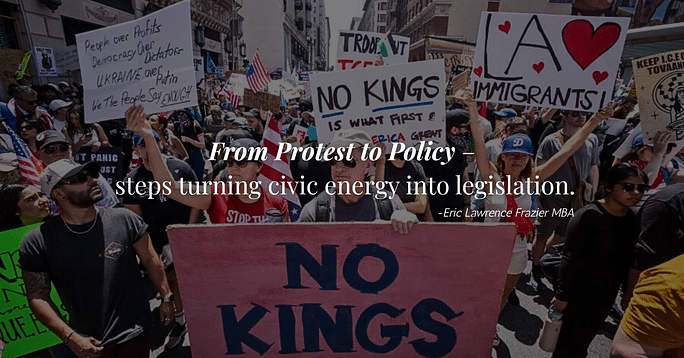
image 2025 11 04 180150217

Across all fifty states, in more than 2,700 cities, an estimated seven million Americans gathered on No Kings Day. According to national and local reports, it has now been confirmed as the largest single-day protest in U.S. history. From Boston Common to Los Angeles City Hall, from small towns in Iowa to downtown Atlanta, streets overflowed with handmade signs declaring “No Kings,” “Keep the Republic,” and “We the People Still Matter.” Under ordinary circumstances, such a turnout would be called a movement—a spontaneous, nationwide act of civic conscience. But these are not ordinary times. When asked about the demonstrations, the President dismissed them with a single line: “These people do not represent our country.” Yet anyone watching those crowds knows better. Most of us know someone who marched—a coworker, a pastor, a veteran, a teacher, a student. They are not extremists. They are the republic itself: the diverse, striving mix of Americans who still believe that democracy is theirs to protect. And still, the question remains: What exactly are we protesting? Are we standing against tyranny—or simply reacting to the discomfort of seeing power used in ways we did not choose? Because if the President has broken no law—and the courts say he has not—then our outrage must find a new home: not in the streets, but in the system we built to correct itself. The Republic Still Stands This nation was born out of rebellion against monarchy. “No Kings” was not just a slogan—it was our founding declaration. We built a system that did not depend on saints but on structure. The founders assumed that human beings would always be flawed—that presidents would have egos, that ambition would forever compete with virtue. So they built guardrails: checks, balances, co-equal branches, and the slow, grinding machinery of law. So when people say the Republic is dying, I ask: How can it be dying if its very institutions are still the instruments of resistance? The Supreme Court rules, Congress legislates, and elections proceed. Protesters march, journalists question, and citizens vote. That’s not collapse—that’s democracy breathing. That’s freedom with a pulse. When Outrage Becomes a Mirror Even when the President has tested the limits of the law—and the Supreme Court has stopped him, or at times endorsed him—what we are witnessing is not tyranny; it is democracy in motion. This is how our Republic was designed to work. The courts interpret. Congress legislates. The President executes. Each branch pushes, pulls, challenges, and restrains the other. That’s not dysfunction—that’s design. And whether a Democrat or a Republican sits in the Oval Office, the machinery keeps turning, because the Constitution has no party—it has purpose. One administration ago, Congress advanced the agenda of a Democratic president. Today, it advances the agenda of a Republican one. Tomorrow, it may swing again. Everything that happens in Washington—laws passed, orders signed, budgets approved—is the direct result of what the democracy voted for. We the people are still in charge. We are not ruled—we are represented. And representation means that sometimes government will reflect our vision, and sometimes it will reflect our neighbor’s. That is the price and privilege of freedom. If the person in office is who you voted for, you are pleased. If not, you are angry. But what unites you both is far greater than what divides you: he is still your President, and this is still your democracy. You don’t have to like the outcome to believe in the process. That belief is what separates a democracy from a mob. When Protest Loses Its Purpose Protest has always been a sacred act in America. From the Boston Tea Party to Selma, from women’s suffrage to civil rights, protest has changed the course of our nation. But protest was never meant to be therapy—it was meant to be strategy. It existed to achieve something concrete. So I must ask, respectfully:What is “No Kings” really demanding?Are we seeking new laws—or simply new headlines?Are we opposing tyranny—or just venting emotion at a man we dislike? Because once protest becomes emotional theater instead of civic purpose, it loses the very power that made it sacred. Accountability is not canceled by calm. Protest has its place—but the greater act of patriotism is to preserve the structure that allows protest to exist at all. To question authority is not to reject it. It is to remind authority—and ourselves—that it exists to serve, not to rule. We Elected Humanity, Not Holiness Every President—whether admired or despised—is a reflection of us. Each one embodies our national temperament at a given moment. Some represent our hope; others, our anger. But none are divine. Presidents are human. They err, they boast, they overreach. The founders knew this. That’s why I say to both sides: we do not need a perfect man in the White House; we need a faithful people in the Republic. Faithful to truth. Faithful to process. Faithful to the idea that no one man, and no one protest, defines America. Cynicism asks nothing of us. Citizenship demands everything. The Republic is kept not by those who shout the loudest, but by those who stay the longest. So Now What? If the courts are functioning and the Constitution is holding, then the next question is: What do we do with our freedom while we still have it? Because protest without purpose is noise—but protest with a plan becomes policy. Let’s start with what we can actually control: Fund the government. Stop using shutdowns as weapons. Stability is patriotic. Extend the tax credits that keep healthcare affordable. Invest in infrastructure. Roads, schools, energy, housing—the arteries of national life. Rebuild civic education. Democracy dies in ignorance long before it dies in tyranny. Vote in every election. Serve where you stand. The most powerful protest is service. These are the revolutions that still matter. Not the ones on TV, but the ones that happen quietly, every day, in the hearts of people who refuse to give up on America. A Republic Worth Keeping Benjamin Franklin, when asked what kind of government the Constitutional Convention had created, replied: “A Republic—if you can keep it.” That warning wasn’t meant for kings or presidents. It was